Cat Carrier Pet Frankfurt Fair: European Show Readiness
A European show is won on documentation before it is won on product: expect the GPSR technical file, a REACH declaration and packaging EPR registration to be asked for at the stand. Budget 1,240-5,980 USD for the file, ship samples under a carnet 8-26 days ahead at 620-3,240 USD, and quote in EUR.
A European consumer goods fair asks a different set of questions from an Asian one, and most of them are asked before the product is touched. A European buyer's first concern is whether the goods can lawfully be placed on their market and whether the supplier understands the obligations attached to that, because those obligations sit with the importer. This page works through the manufacturing side of preparing for that: the compliance file a European buyer expects to see, the packaging registration and recyclability questions that now come early in the conversation, the logistics of getting a sample set to Europe and back under a carnet, and what the booth has to carry in the way of sustainability evidence. It also covers quoting in EUR with duty and freight handled honestly, the post-show sampling calendar against European seasonal deadlines, and the cost comparison against exhibiting in Asia. Standard terms apply: MOQ 500 pieces per colourway, prototypes in 6-10 working days, bulk production 35-50 days after sample approval, final random inspection to AQL 2.5, T/T 30/70 and FOB Xiamen.
Wholesale pet carrier buyers usually consolidate to fill one container; for cat carrier assortments our production team mixes sizes and colourways inside a single 500-piece minimum.
What a European Buyer Asks First
At a European show the opening question is rarely about price. It is about whether the product can be placed on the market and who carries the obligation, because under the European product safety framework the responsibility sits with the economic operator placing the goods on the market, and for an imported product that is usually the buyer.
This changes the conversation's shape. A buyer is not asking whether the supplier is competent; they are asking whether the supplier can supply the evidence that discharges the buyer own obligation. A supplier who arrives with the file prepared removes the largest obstacle in the conversation and does so in the first three minutes.
The three documents asked most often are the general product safety technical file, the chemical compliance declaration, and the packaging and labelling evidence. Asked at the stand, they are requested by 74-92% of European buyers, which is far above the 38-62% seen at an Asian show for the same questions.
| Question | Asked at stand | Asked at follow-up | Answerable on the spot | Evidence required |
|---|---|---|---|---|
| Can it be placed on the EU market | 74-92% | 94-99% | Yes, with file | Technical file |
| Chemical compliance, REACH | 62-84% | 88-96% | Yes, with declaration | SVHC statement |
| Packaging and recyclability | 48-72% | 76-90% | Yes, with spec | Material declaration |
| Country of origin marking | 34-58% | 62-82% | Yes | Artwork sample |
| Recycled content claim | 28-52% | 54-76% | Only if substantiated | Chain of custody |
| Social compliance | 22-44% | 68-88% | Yes | Audit report |
| Price and minimum | 88-96% | 94-99% | Yes | Ladder |
Price is still asked by 88-96% of buyers at the stand, and it is worth noting that it is asked alongside the compliance questions rather than instead of them. A supplier who answers price well and compliance poorly does not get the order, and the reverse is also true.
Recycled content claims are the newest question and the one most programmes get wrong. A claim of recycled content has to be substantiated by a chain of custody record; stating a percentage from a material supplier data sheet without the certification behind it is a claim the buyer cannot use and will not repeat. Where the claim cannot be substantiated, saying so is better.
The practical preparation is a one-page compliance summary per product family, carrying the standards, the report numbers, the dates and the issuing laboratory. It costs 40-180 USD to produce, it answers the first three questions without a conversation, and it defers the full file to the follow-up where it belongs.
Answer compliance in the first three minutes: 74-92% of European buyers ask about market placement at the stand and 94-99% at follow-up, and a one-page summary at 40-180 USD covers it.
The EU Compliance File: Contents, Cost and Lead Time
The file a European buyer expects is assembled once per product family and refreshed on material or supplier change. It is not large, but it has to be coherent: the same product described the same way in every document.
The core is a technical file covering product identification, material composition, test evidence against the relevant physical standards, a risk assessment, and instructions and labelling in the destination languages. Chemical compliance is a separate declaration covering the substances restricted under the European chemicals regime, and guidance and the candidate list are maintained by the European Chemicals Agency.
Physical test evidence should cover load, seam strength and zipper cycles, referenced to a recognised method, and it should be dated and matched to the product shown. A report for a different product is worse than none, because it undermines the rest of the file.
| Element | Content | Cost (USD) | Lead time | Refresh trigger | Weight |
|---|---|---|---|---|---|
| Technical file | Identification, materials, risk assessment | 240-1,100 | 8-20 days | Design change | Highest |
| Chemical declaration | REACH SVHC statement | 160-680 | 4-12 days | Annual | Highest |
| Physical test report | Load, seam, zipper cycles | 240-1,100 | 10-25 days | Structural change | High |
| Textile declaration | OEKO-TEX criteria | 180-780 | 5-15 days | Annual | High |
| Labelling artwork | Origin, importer, warnings, languages | 60-320 | 3-10 days | Market change | Medium |
| Instructions | Destination language versions | 180-940 | 6-18 days | Market change | Medium |
| Quality and social certificates | ISO 9001, BSCI | 1,300-6,100 | 20-60 days | Annual | High |
The total to open the file is 2,360-11,020 USD, and the subset that must be ready before a show, being the technical file, the chemical declaration, the physical test report and the textile declaration, is 820-3,660 USD. Against a European show costing 20,000-72,000 USD to attend, that is a small insurance premium.
Lead time is the binding constraint. A physical test takes 10-25 days and the technical file 8-20 days, so the file for a product being shown for the first time has to be started 45-75 days before the show. Starting it after the show means the follow-up stalls at exactly the moment a buyer is ready.
Language is the detail that most often invalidates a file. Instructions and labelling have to be in the destination language, and a declaration in English alone is acceptable for a technical audience but not for consumer-facing documents. Budgeting 180-940 USD for translation per language is the standard line, and German and French cover most of the European buyer pool at a Frankfurt show.
Start the file 45-75 days before the show; the pre-show subset costs 820-3,660 USD against a 20,000-72,000 USD show, and instructions must be in the destination language.
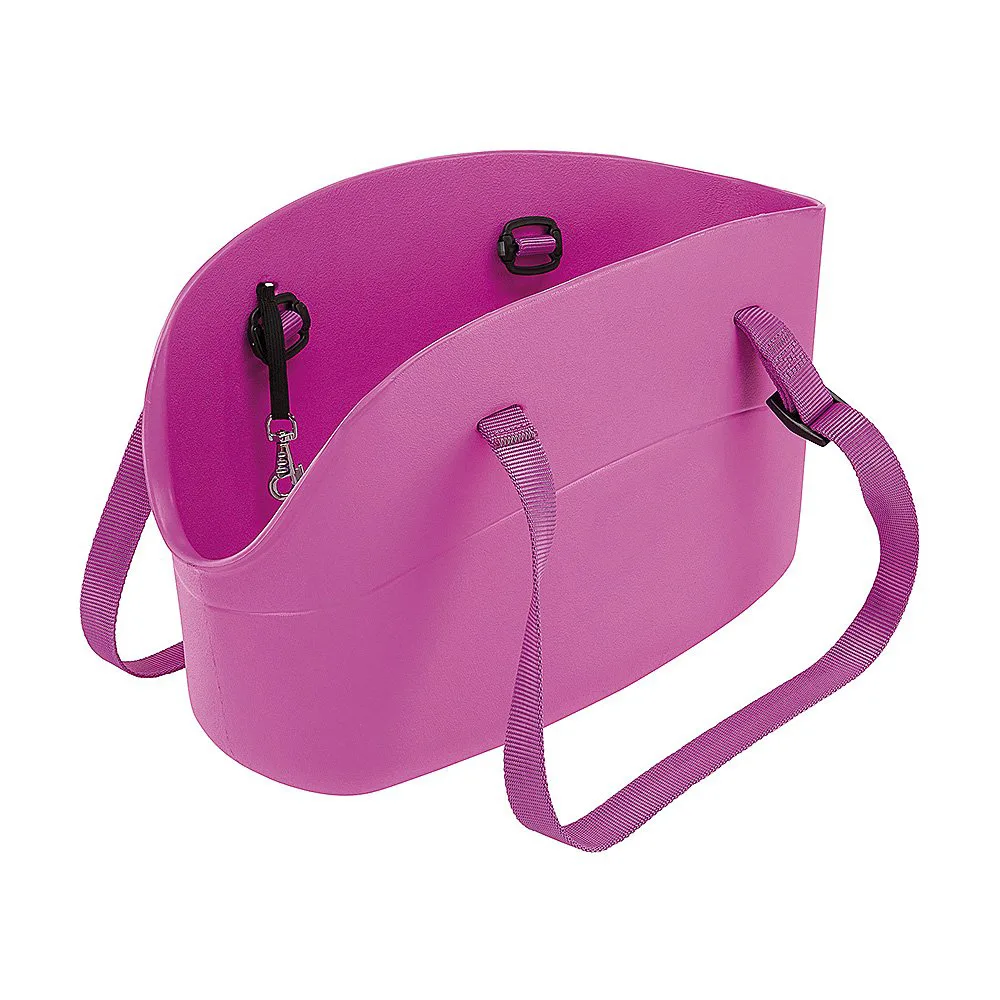
Packaging, EPR Registration and the Recycling Question
Packaging has moved from a logistics question to a compliance one in Europe, and it now arrives early in the buyer conversation. A European buyer knows that placing packaged goods on their market carries registration and reporting obligations, and they will ask whether the supplier understands them.
The obligations fall on whoever places the packaging on the market, usually the importer, but the information they need to discharge them comes from the supplier: what materials the packaging contains, in what weights, and whether they are recyclable in the destination system. Supplying that as a packaging data sheet costs 60-320 USD and removes a question that otherwise takes weeks.
Recyclability is the substantive part. A mono-material carton with a water-based coating and a paper-based label is straightforwardly recyclable; a laminated carton with a foil layer, a plastic window and a synthetic label is not, and a buyer will ask which of the two they are being sold.
| Build | Materials | Recyclable in EU stream | Cost (USD) | Buyer acceptance | Note |
|---|---|---|---|---|---|
| Mono-material carton, paper label | Corrugated, paper | Yes | 0.62-1.34 | 94-99% | Preferred |
| Carton plus water-based varnish | Corrugated, varnish | Yes | 0.78-1.62 | 88-96% | Preferred |
| Carton plus plastic window | Corrugated, PET | Partially | 1.02-2.10 | 52-72% | Declining |
| Laminated carton, foil layer | Corrugated, foil, adhesive | No | 1.24-2.60 | 18-38% | Avoid |
| Mailer, mono polythene | PE film | Yes where collected | 0.42-1.08 | 62-84% | E-commerce |
| Mailer, recycled content | Recycled PE | Yes where collected | 0.58-1.42 | 78-94% | Preferred |
The fourth row is the one to avoid and it is still common: a laminated retail carton with a foil layer cannot be recycled in the standard paper stream and it drags the whole pack's classification down. Moving from that to a carton with water-based varnish costs 0.46-0.98 USD less per unit and moves buyer acceptance from 18-38% to 88-96%.
Weight declaration is the administrative part and it is what the buyer actually needs. A packaging data sheet stating the mass of each material by component, carton, label, insert, mailer and void fill, lets the importer complete their registration and reporting without measuring anything themselves. Preparing it costs 60-320 USD per pack configuration.
Registration itself sits with the importer in most European systems, and the correct supplier posture is to provide the data rather than to claim registration. A supplier who implies they have registered on the buyer behalf is creating an expectation they cannot meet, and buyers check.
Supply a packaging data sheet with material masses at 60-320 USD and avoid laminated cartons: mono-material with water-based varnish costs less and moves buyer acceptance from 18-38% to 88-96%.
Sample Logistics to Europe: Carnet, Timing and Return
Samples travelling to a European show face the longest crossing and the strictest customs treatment of any venue in this programme. The instrument that makes it manageable is a temporary admission carnet, and the mistake that makes it expensive is booking too late.
A carnet allows samples to enter duty-free and temporarily, and re-export without a permanent import. Raising one takes 5-20 days and costs 180-720 USD plus a security deposit or guarantee, and the samples have to be re-exported within its validity, typically 12 months. Without it, samples are entered commercially, duty and import tax are assessed on their commercial value, and recovery on re-export is slow and partial.
Transit is the other half. Sea freight runs 26-42 days at 340-1,180 USD for a 104-224 kg set; consolidated air runs 12-22 days at 720-2,180 USD; air express runs 4-9 days at 1,240-4,600 USD. For a show with a fixed opening date, the working choice is sea plus a large time buffer or consolidated air with a moderate one.
| Mode | Transit | Freight (USD) | Carnet (USD) | Book by | Risk |
|---|---|---|---|---|---|
| Sea, consolidated | 26-42 days | 340-1,180 | 180-720 | 50-70 days out | Medium |
| Air, consolidated | 12-22 days | 720-2,180 | 180-720 | 28-40 days out | Low |
| Air express | 4-9 days | 1,240-4,600 | 180-720 | 12-18 days out | Lowest |
| Split, sea plus air top-up | 26-42 plus 4-9 | 620-3,240 | 180-720 | 50-70 days out | Lowest |
| Hand-carry, partial set | 1-3 days | 180-620 | Not needed for small sets | 2-5 days out | Medium |
The split option in the fourth row is the one worth considering for a large set. Shipping the bulk of the set by sea six weeks out and keeping the four to eight most important units for an air top-up two weeks out means the critical samples cannot be lost to a single delayed shipment, at a total of 620-3,240 USD.
Return planning matters more here than anywhere because of the carnet. Samples admitted under a carnet have to be re-exported and the carnet discharged, and a set abandoned in a European warehouse leaves an open guarantee. Booking the return before travel, with the carnet number on the documents, costs 480-2,600 USD and closes the loop.
One operational point about the venue: European halls charge for handling and storage by weight or by case, at 180-980 USD for a set, and they require delivery windows to be booked in advance. Missing a delivery window means the samples sit at the dock rather than on the stand, which is the failure that ends a show before it starts.
Raise the carnet 5-20 days before shipping, book a delivery window, and pre-book the return with the carnet number on the documents.
Quoting in EUR: Currency, Duty and Honest Landed Cost
A European buyer wants a comparable number, and comparability means quoting in the currency and on the terms they use every day. Quoting FOB Xiamen in USD is standard and defensible, but it puts the freight, insurance and duty calculation on the buyer, who will pad their estimate.
The practical answer is to quote both: FOB Xiamen in USD for comparability, and a stated EUR figure to a named European port or door with the assumptions printed. Providing both costs nothing and it removes the buyer's padding, which is typically 8-22% above the true landed figure.
Duty is the number most often wrong. Pet carriers entering the European Union carry a duty rate in the low single digits to the mid teens depending on classification, plus import VAT at the national rate, both applied to the customs value rather than the retail price. Stating the rate as a range with the classification assumption, rather than as a fact, is the honest posture.
| Element | Low | High | Note | Buyer-estimated padding |
|---|---|---|---|---|
| FOB Xiamen, converted | 12.10 | 14.50 | At ladder price | None |
| Ocean freight | 0.94 | 2.06 | Per unit, FCL | Plus 0.30-0.80 |
| Insurance | 0.08 | 0.22 | 0.3-0.6% of value | Plus 0.05-0.15 |
| Duty | 0.42 | 2.10 | Classification-dependent | Plus 0.40-1.40 |
| Import VAT | 2.42 | 3.62 | Recoverable by importer | Treated as cost |
| Port and handling | 0.24 | 0.68 | Destination charges | Plus 0.20-0.50 |
| Total landed at port | 16.20 | 23.18 | Ex VAT | Padded 6-18% |
Import VAT deserves a specific note because it is the line most often treated as a cost when it is not. A European importer recovers import VAT, so it is a cash flow item rather than a cost, and stating it separately rather than folding it into a landed total is what a knowledgeable buyer expects.
Currency exposure is real for a supplier quoting in EUR against costs in another currency. A quotation valid for 30 days with a stated exchange reference, or 15 days without one, is the standard approach, and a buyer operating in EUR will understand it immediately because they manage the same exposure.
Payment terms are the last piece. T/T 30/70 is the standard, and a European buyer used to open account terms will ask for them; the honest answer is that open account is available from the third order rather than the first, and saying that plainly is better than refusing or conceding silently.
Quote FOB in USD and a stated EUR landed figure with assumptions, keep import VAT separate because the importer recovers it, and validate the quotation for 30 days with an exchange reference.
Post-Show: Calendar Against European Seasonal Deadlines
A European show sits inside a seasonal calendar that is less forgiving than the Asian one, because European retail buying is organised around fixed seasonal windows with long lead times. Sampling after the show has to land inside those windows or the programme waits a season.
The arithmetic is tight. A European buyer wanting goods on shelf in a given season places the order 120-190 days ahead, which means the sample has to be approved 160-230 days ahead to allow for the 35-50 day production window plus 26-42 days of ocean transit plus inland distribution. A show held in the first quarter feeds the following year's first season comfortably and the same year's second season only with air freight.
Sampling capacity after a European show is usually less constrained than after an Asian one, because the visitor volume is lower, and the standard 6-10 working day cycle plus 3-9 days of express freight fits most windows. The constraint is decision time on the buyer side, not production time on the supplier side.
| Stage | Duration | Cumulative day | Buyer-controlled | Deadline risk |
|---|---|---|---|---|
| Follow-up and specification | 6-24 days | 6-24 | Mostly | Low |
| Sample build and despatch | 9-19 days | 15-43 | No | Low |
| Buyer evaluation | 10-40 days | 25-83 | Yes | High |
| Compliance file review | 8-28 days | 33-111 | Partly | High |
| Order and deposit | 6-24 days | 39-135 | Yes | Medium |
| Production | 35-50 days | 74-185 | No | Medium |
| Ocean transit and inland | 30-52 days | 104-237 | No | High |
The two high-risk rows are buyer evaluation and compliance file review, and both are buyer-controlled. A supplier can compress their own stages and still miss the window, which is why the follow-up should carry a named deadline rather than an open invitation: a sample offer with a stated approval date that meets the season converts 22-38% better than one without.
Compliance file review taking 8-28 days is the stage most programmes fail to plan for, because it happens on the buyer side and involves their own compliance function. Supplying the complete file with the sample rather than after it removes the delay, and it is the single action that most reliably keeps a European programme inside its window.
Where the window has already been missed, air freight is the recovery: 4-9 days against 26-42 days by sea at 7.30-19.00 USD per unit against 0.94-2.06. On 2,000 units that is 14,600-38,000 USD against 1,880-4,120 USD, which is a decision the buyer makes rather than the supplier, and it should be quoted as an option rather than absorbed.
Supply the complete compliance file with the sample and put a named approval date on the offer: the two buyer-controlled stages are 18-68 days and they decide whether the season is met.

Cost Model: European Show Against Asian Show
A European show costs substantially more to attend and produces fewer, larger, longer-lived programmes. Whether it is worth it depends on whether the programme is seeking volume or seeking a market position, and the two answers are different.
Attendance cost runs 20,000-72,000 USD against 14,000-52,000 USD for an Asian show: stand build is higher, staff travel and accommodation are higher, and sample freight is three to six times higher at 620-3,240 USD against 180-760 USD. The compliance file adds 820-3,660 USD that an Asian show does not strictly require.
The return is in programme quality. Average first order runs 1,800-9,400 units against 600-6,200, repeat rate at 24 months runs 48-74% against 28-52%, and average programme life runs 3.2-6.4 years against 1.8-3.6 years.
| Metric | European show | Asian show | Advantage |
|---|---|---|---|
| Total attendance cost (USD) | 20,000-72,000 | 14,000-52,000 | Asian |
| Sample freight (USD) | 620-3,240 | 180-760 | Asian |
| Compliance file required (USD) | 820-3,660 | 460-2,020 | Asian |
| Programmes converted | 3-11 | 4-14 | Asian |
| Average first order | 1,800-9,400 units | 600-6,200 units | European |
| Repeat rate at 24 months | 48-74% | 28-52% | European |
| Average programme life | 3.2-6.4 years | 1.8-3.6 years | European |
| Cost per programme (USD) | 1,818-24,000 | 1,000-13,000 | Asian |
| Cost per unit acquired (USD) | 0.19-13.33 | 0.16-21.67 | Comparable |
Cost per programme favours the Asian show decisively; cost per unit acquired is comparable. That is the crux: the European show is not cheaper, it is longer-lasting, and the value sits in the repeat rate and programme life rather than in the first order.
The precondition is the compliance file. A programme attending a European show without the technical file, the chemical declaration and the packaging data sheet will convert at a fraction of the figures above, because 74-92% of buyers ask for market placement evidence at the stand and 94-99% ask at follow-up. The file is not optional and it is not deferrable.
Commercial terms are the same at both: MOQ 500 pieces per colourway, prototypes in 6-10 working days, bulk production 35-50 days after sample approval, final random inspection to AQL 2.5, T/T 30/70 and FOB Xiamen. Our production team holds the European file current, with physical testing referenced to ASTM International methods, chemical declarations issued against OEKO-TEX criteria and process documentation under ISO 9001 coverage. The European show costs 1,818-24,000 USD per programme against 1,000-13,000 USD, but first orders run 1,800-9,400 units and repeat at 48-74%: the value is in programme life, and the compliance file is the precondition.
Production capability
- SGS-verified production space of 4,950 m², 149 machines, 7 assembly lines
- Pet carrier and pet bag output since 2014 from a 137-person team
- 200,000 units shipped monthly under BSCI and ISO 9001 systems
People Also Ask
What does a European buyer ask first at a trade fair?
Whether the product can lawfully be placed on the EU market. 74-92% ask at the stand and 94-99% at follow-up, and a one-page compliance summary at 40-180 USD answers it in three minutes.
How much does the EU compliance file cost?
2,360-11,020 USD in full, or 820-3,660 USD for the pre-show subset covering the technical file, chemical declaration, physical test report and textile declaration.
When should compliance work start before a European show?
45-75 days out. A physical test takes 10-25 days and the technical file 8-20 days, so starting later means no report on the stand for a new product.
What packaging should be avoided for the European market?
A laminated carton with a foil layer. It cannot be recycled in the paper stream and it costs more: 1.24-2.60 USD against 0.78-1.62 for water-based varnish, with buyer acceptance at 18-38% against 88-96%.
How are samples shipped to a European show?
Under a temporary admission carnet, raised 5-20 days before shipping at 180-720 USD, by consolidated air in 12-22 days at 720-2,180 USD or sea in 26-42 days at 340-1,180 USD.
Should quotations to European buyers be in EUR?
Quote FOB Xiamen in USD for comparability plus a stated EUR landed figure with assumptions. Import VAT should be kept separate because the importer recovers it.
How long from a European show to goods on shelf?
104-237 days, of which the two buyer-controlled stages, evaluation and compliance review, take 18-68 days and decide whether the season is met.
Is a European show worth the higher cost?
Cost per programme favours Asia at 1,000-13,000 USD against 1,818-24,000 USD, but European first orders run 1,800-9,400 units, repeat at 48-74% and last 3.2-6.4 years.
Frequently Asked Questions
Why does the compliance question come before the price question?
Responsibility for placing goods on the market sits with the importer, so the buyer is asking whether the supplier can supply evidence that discharges the buyer own obligation, not whether the supplier is competent.
How should a recycled content claim be handled?
Only with a chain of custody record behind it. A percentage from a material supplier data sheet without certification is a claim the buyer cannot use and will not repeat.
What makes a compliance file coherent?
The same product described the same way in every document. A physical test report for a different product undermines the rest of the file more than having no report.
Which languages should instructions be prepared in?
German and French cover most of the European buyer pool at a Frankfurt show, at 180-940 USD per language. A declaration in English alone is acceptable for technical documents but not for consumer-facing ones.
What is a packaging data sheet and why does a buyer need it?
A statement of the mass of each packaging material by component, letting the importer complete registration and reporting without measuring. It costs 60-320 USD per configuration.
Who registers packaging under European EPR systems?
Usually the importer, not the supplier. The correct posture is to provide the data rather than to claim registration, because buyers check.
Why split the sample shipment?
Shipping the bulk by sea six weeks out and holding four to eight critical units for an air top-up two weeks out means one delayed shipment cannot cost the show its key samples, at 620-3,240 USD total.
Why is return planning more important with a carnet?
Samples admitted under a carnet must be re-exported and the carnet discharged. A set abandoned in a European warehouse leaves an open guarantee, and pre-booking costs 480-2,600 USD.
What happens if a delivery window is missed?
Samples sit at the dock rather than on the stand. European halls charge 180-980 USD for handling by weight or case and require windows booked in advance.
Why do buyers pad landed cost estimates?
Because a supplier quoting only FOB leaves them to estimate freight, insurance and duty. Providing a stated landed figure removes padding of 6-18%.
What duty should be quoted for pet carriers into the EU?
A range with the classification assumption rather than a fact, plus import VAT at the national rate, both applied to customs value rather than retail price.
Why state a validity period with an exchange reference?
A supplier quoting in EUR against costs in another currency carries real exposure. Thirty days with a reference, or fifteen without, is standard and a European buyer manages the same exposure.
When should open account terms be offered?
From the third order rather than the first. Saying that plainly is better than refusing outright or conceding silently, because a European buyer expects the progression.
What is the recovery when a seasonal window is missed?
Air freight at 4-9 days and 7.30-19.00 USD per unit against 26-42 days and 0.94-2.06 USD by sea. It is the buyer decision and should be quoted as an option rather than absorbed.
Talk to QUANZHOU JUNYUAN BAGS about a pet carrier program: MOQ 500 pieces per colourway, samples in 6-10 working days, bulk production in 35-50 days under AQL 2.5 inspection.
Get a free quote Request a sample