Dog Carrier Backpack for Dobermans: Athletic Build
A Doberman carrier is proportioned for a deep, narrow chest rather than for mass alone. The 27-45 kg class takes a 400-450 mm interior width against 620-680 mm of height, a 6-7 mm floor board with a pressure-mapped 6 mm interface pad, 38-44% mesh open area with no insulation layer, a #8 zipper at 38 mm webbing, and a shell at 780-950 g/m² with all structural seams relocated off the rib cage contact line.
This page derives an athletic-breed specification from body proportion instead of body weight. A Doberman is lean, deep-chested and short-coated, which produces three requirements that a weight-based specification misses: interior geometry that is tall and narrow rather than wide, thermal behaviour that removes heat rather than retaining it, and interface padding that protects bony prominences which carry almost no subcutaneous fat. Each requirement is converted into a numeric value below, with the acceptance methods attached. Commercial terms follow the standard program: MOQ 500 pieces per colourway, prototypes in 6-10 working days, bulk production in 35-50 days after sample approval, final random inspection at AQL 2.5, T/T 30/70 payment and FOB Xiamen loading. Quality management runs to ISO 9001, and transport welfare limits are read against guidance published by the American Veterinary Medical Association. Production is executed by our production team at an SGS-verified production base.
Wholesale pet carrier programmes for dog carrier backpack ranges run 35-50 days after sample approval, shipped FOB Xiamen under T/T 30/70 terms.
Doberman Proportion: Deep Chest, Narrow Beam and Interior Geometry
The Doberman is the clearest example in the large-breed set of a dog whose carrying problem is geometry rather than mass. Males run 34-45 kg and females 27-41 kg, which is modest, but the body is built around a deep keel-shaped sternum and a tucked loin: chest depth reaches 32-38 cm while the beam across the rib cage is only 22-26 cm, and shoulder height runs 61-72 cm. The animal is therefore taller and narrower than its weight suggests, and a carrier sized by mass alone will be too wide and too short.
The interior is set from the standing animal rather than the lying one, because a lean dog with prominent spine and hip bones does not settle comfortably onto a flat floor and tends to stand or brace. Nominal interior is 400-450 mm wide, 720-800 mm long and 620-680 mm high. The height figure is the controlling dimension: it is derived from withers height minus a clearance of 40-60 mm, and it is what prevents the animal from having to travel with its back flexed.
Length is the second controlling dimension and comes from the leg. A Doberman stands on long limbs with a pronounced angulation, so the standing footprint is longer than the torso length would suggest, and the floor must support the full stride triangle rather than the torso alone. Reducing floor length to save material produces a unit the animal cannot stand in squarely, and this is the most common sizing error in inexpensive large-dog carriers.
Dynamic load follows the athletic character. This breed accelerates hard and changes direction quickly, so the dynamic factor for internal movement is set at 2.3 rather than the 2.0 used for heavier, slower animals: 45 kg plus 2.5 kg of gear gives a design load of 1.07 kN. The lateral component is disproportionately high for the same reason, at 0.4 to 0.55 times body weight, roughly 0.20-0.24 kN into a side wall during a turn.
Interior volume therefore ends up around 0.20 cubic metres for a 45 kg animal, against roughly 0.24 cubic metres for a 60 kg Rottweiler of similar height. That inversion is the practical proof that mass is the wrong input variable for this breed.
Thermal Position: Short Coat, Low Body Fat and Cooling Priority
A Doberman has a single, close-lying coat of 8-15 mm with no undercoat, and a body fat fraction well below that of a companion breed. The thermal consequence is that the animal loses heat quickly in cool conditions and gains it quickly under exertion, and the carrier must be designed for the second case while offering an optional answer to the first.
The base build has no fixed insulation. The shell is single-layer 780-950 g/m² with a reflective 12 micron metallised film on the inner face of the roof only, and the floor is deliberately conductive. Thermal resistance of the roof assembly is held to 0.18-0.28 m² K/W so that solar gain is reflected rather than retained.
Heating is handled by a removable liner rather than by built-in wadding. The optional liner is a 60-100 g/m² quilted shell covering the two side panels and the roof, retained by six snap fasteners, which raises total thermal resistance to 0.45-0.60 m² K/W and is shipped as a separate SKU. This approach keeps the base unit usable in warm markets and avoids the common failure of a fully lined carrier that cannot be sold into a hot climate.
Verification is by chamber measurement rather than by material data sheet. Interior temperature is logged at the resting position for one hour at an ambient of 24 C and again at 32 C, with a heat source of 45 W representing the animal. Acceptance is an interior rise under 3 C at 24 C and under 5 C at 32 C with the intake panels fully open, and no surface above 48 C on any contact face, since a short-coated animal has little protection against a hot surface.
Pressure Mapping and the Interface Layer for a Lean Body
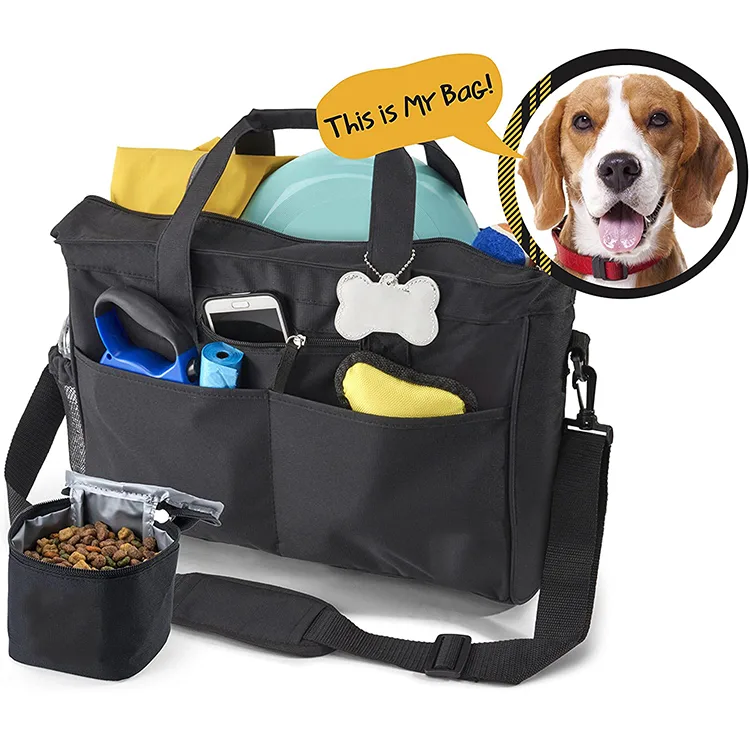
Pressure distribution is where athletic breeds are most often let down. With little subcutaneous fat, the load of a lying animal is carried on the tuber coxae, the greater trochanter, the elbow and the sternum, and the contact pressure at those points is two to three times the average pressure over the body. Sustained pressures above roughly 4 kPa at a bony prominence are associated with tissue ischaemia over time, so the interface layer is specified against a measured peak rather than a nominal thickness.
The measurement method is a capacitive pressure mat of 40 x 40 sensors at 12.5 mm pitch, placed on the floor of the carrier, with a ballasted dummy of the design mass or a cooperative live animal. Acceptance is a peak contact pressure under 4.0 kPa at the hip and under 3.2 kPa at the elbow when the animal is in lateral recumbency, with a contact area above 55% of the torso projection.
The interface layer that achieves this is 6 mm of closed-cell EVA at 55-75 kg/m³ density with a 25 mm perimeter chamfer, faced with a 4-way stretch knit of 220-280 g/m². Density matters more than thickness here: a 10 mm layer at 35 kg/m³ bottoms out under a 45 kg animal and transfers the load straight to the board, while a 6 mm layer at the specified density holds the peak under the limit. Compression set after 22 hours at 70 C is held under 10%.
The mat is removable and reversible, with a waterproof TPU face on one side and the knit on the other, retained by a 20 mm hook-and-loop tape at two edges. Reversibility is not a marketing feature but a hygiene one: the waterproof side is used during transit and the knit side during rest, and the whole mat is machine washable to 40 C.
Seam and Stitch Placement Against Chafe
Chafe control is a patterning decision made at the same time as the pressure map. Every seam that would fall within 80 mm of a bony prominence is moved outward, and where a seam cannot be moved it is bound with a 12 mm tape and laid flat rather than raised. Stitch density is 9-10 stitches per 25 mm on interior faces with a soft polyester thread of 30 tex, because a heavier bonded thread produces a raised seam that abrades a short coat within an hour of travel.
Shell Specification, Abrasion and Cleanability
Shell mass is driven by the need to hold shape without adding bulk. The specification is 780-950 g/m² in a 900D polyester with a PU or TPU coating at 25-35 g/m², chosen because the animal is light enough that abrasion life is not the limiting property. Martindale acceptance is 20,000 cycles at 12 kPa to ISO 12947-2, which is deliberately below the 30,000 figure used for giant breeds and is justified by the lower mass.
Shape retention comes from the frame rather than from the fabric, and that has a cost benefit: because the shell does not carry structural load, a lighter and cheaper material can be used across the upper panels, saving 1.60-2.60 USD against a 1680D build with no measurable loss of function. The lower 250 mm of each side wall is upgraded to 1050D at 950-1100 g/m² where claws and paws land.
Cleanability is specified for this class because the short coat sheds little but transfers skin oils readily. The inner face is a wipe-clean TPU film at 0.18-0.25 mm rather than a textile lining, welded at the seams rather than sewn, which removes the absorption path entirely and reduces cleaning time for professional users. Welded seams are made at 180-200 C with a 20 mm weld wheel and a 3 second dwell, and every weld is peel-tested at 40 N per 25 mm.
Colour fastness is set at grade 4-5 light to ISO 105-B02 and grade 4 dry and wet rubbing to ISO 105-X12. A near-infrared reflective pigment is specified on dark colourways because a black short-coated animal in a black carrier is the worst case for solar gain, and the pigment has been measured to lower surface temperature by 7-12 C under 900 W/m².
Floor, Frame and the Long-Limb Load Path
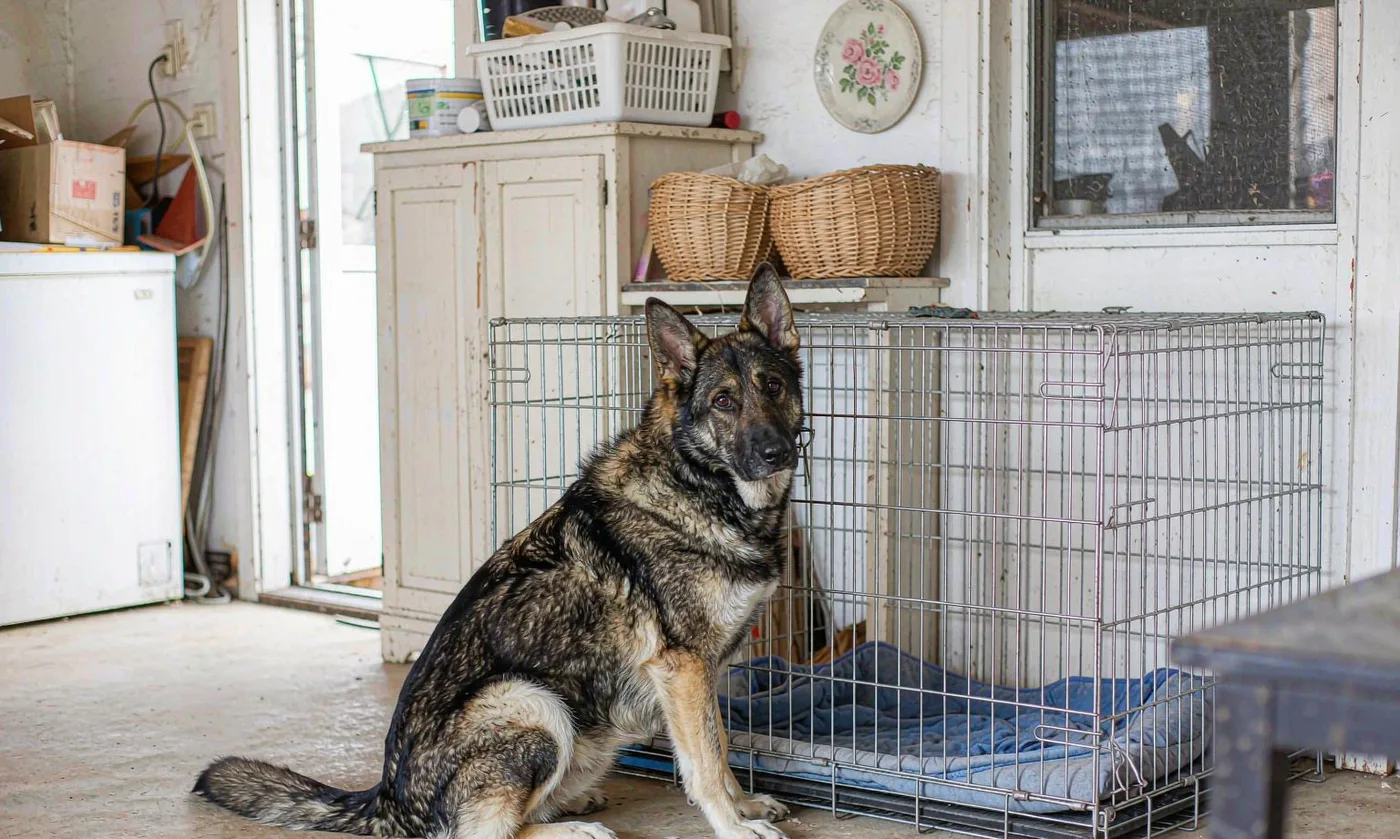
The floor board for this class is 6-7 mm laminated, made up of 2 mm EVA over a 3.5 mm PP honeycomb core and a 1 mm skin, with a deflection limit of 3.5 mm at the centre of a 400 mm span under the 1.07 kN design load. A thinner board is viable here because the mass is lower, but the span is not: the interior length of 720-800 mm means the board is supported at four points rather than two, with a transverse rib at mid-span bonded at 30 mm width.
The frame is a 6061-T6 tube of 16 mm outside diameter at 1.4 mm wall, or a 2.5 mm HDPE perimeter where the client prioritises weight. Because this breed travels long distances with handlers, empty mass is a genuine purchasing criterion, and the HDPE option removes 0.5-0.8 kg from the unit at a cost penalty of 1.20-2.40 USD and a stiffness penalty of roughly 15%.
| Parameter | Athletic build (Doberman) | Heavy companion (35 kg) | Giant working (60 kg) |
|---|---|---|---|
| Design mass and dynamic factor | 47.5 kg at 2.3 | 38 kg at 2.0 | 63 kg at 2.2 |
| Design load | 1.07 kN | 0.76 kN | 1.36 kN |
| Interior W x L x H | 400-450 x 720-800 x 620-680 mm | 430-480 x 680-760 x 540-600 mm | 500-560 x 760-840 x 600-660 mm |
| Floor board | 6-7 mm, mid-span rib | 6-7 mm | 10 mm |
| Interface pad | 6 mm EVA at 55-75 kg/m³, mapped | 4 mm EVA | 6 mm EVA plus mat |
| Shell mass | 780-950 g/m² | 780-900 g/m² | 900-1450 g/m² |
| Mesh open area | 38-44% | 34-38% | 30-34% plus flap |
| Fixed insulation | none | 100-160 g/m² | none, airflow priority |
| Webbing / zipper | 38 mm, 9 kN / #8 | 38 mm, 9 kN / #8 | 50 mm, 12 kN / #10 |
| BOM cost FOB | 21-36 USD | 19-31 USD | 34-62 USD |
Suspension geometry follows from the tall interior. The hip belt sits at the top of the iliac crest line of the frame rather than at mid-height, and the shoulder straps are set at a 200-240 mm spacing to clear the animal's neck when the unit is carried, because a narrow strap spacing drives the straps into the handler's arms at this interior height.
Closure, Escape Resistance and Handler Access
Escape risk in this breed is cognitive rather than physical. A Doberman is quick, learns mechanisms fast and can reach a surprising height with its forepaws, so the closure strategy prioritises mechanism denial over brute strength. This is the opposite of the protective-breed approach, where the requirement is resistance to a sustained push.
The primary closure is a #8 reverse-coil chain with two sliders, one lockable, with the locking slider engaging at any point. The chain sits behind a 20 mm welt held by hook-and-loop tape, and the welt is continuous so there is no free end for a nose or a paw to lift. Slider pull force is specified between 12 and 25 N, low enough for a handler and high enough that a nudge will not move it.
The top panel is the second escape path and is the one usually underestimated. A Doberman standing in a 620-680 mm interior can place its forepaws on the top rim, so the roof uses a non-stretch 900D panel with a limited travel of 30-40 mm and a perimeter webbing that transfers any upward load into the frame rather than into the roof seam. The roof is additionally supported by two transverse webbing straps at 25 mm, which is enough to prevent the roof from being pushed into a dome.
Handler access is a 90 x 140 mm side port with a #5 zipper and a mesh window, positioned at 250-320 mm above the floor, which lets a handler offer water or check the animal without opening the main door. A second, larger access at the rear with a 200 mm zipper is offered for cleaning and for the removal of the interface mat.
Ventilation Architecture and Open Area
Airflow is the primary thermal control for this breed, and the specification is the highest in the large-dog set at 38-44% open area. That figure is achievable because the shell is not heavily loaded and because the open area can be distributed across three faces rather than concentrated in the door.
Distribution matters as much as the total. Airflow is arranged as a low intake on the front and lower side panels and a high exhaust at the rear upper panel, which produces a stack effect that continues working when the carrier is stationary. With a 45 W heat source representing the animal, a stack configuration measured 0.08-0.12 m/s of internal air movement against 0.02-0.04 m/s for a symmetrical layout at the same total open area, which is the difference between an interior that tracks ambient and one that runs 4-6 C above it.
Mesh construction is a monofilament at 0.35-0.45 mm filament and 1.4-2.0 mm aperture with permeability above 1400 l/m²/s at 100 Pa, which is a finer filament than the protective-breed specification because claw loads are lower and airflow is the priority. Tear strength above 90 N is required, and the mesh is bound into a 15 mm webbing frame.
Weather management is a deployable panel rather than a permanent restriction: a 240-300 g/m² coated flap covers up to 70% of the intake area in rain, reducing open area to 14-18% for the duration of a shower and then being stowed. The flap is retained by three 20 mm hook-and-loop tabs and a single 15 mm side-release buckle so it can be deployed one-handed.
Verification Protocol: Seam Slippage, Zipper Reciprocation, Static Load and Drop
Qualification for the athletic class uses the standard four mechanical tests with loads set from the 1.07 kN design figure, and adds a pressure-map acceptance and a thermal chamber acceptance that are specific to the lean-body case. Sampling is three units per size per colourway from the first lot.
Seam slippage is measured to ISO 13936-2 with acceptance under 6 mm opening at 130 N on shell seams and under 4 mm at 160 N on structural seams. Because this class uses welded rather than sewn interior seams, the weld is covered by a separate peel acceptance of 40 N per 25 mm after thermal ageing at 70 C and 95% relative humidity for seven days, which exposes hydrolysis in PU-coated material.
Zipper reciprocation follows the ASTM method at 500 cycles for the main opening and 200 cycles for the access port, at 10 cycles per minute with a 1.5 kg lateral load. Acceptance is no chain separation, retained cross-wise strength above 90% of the uncycled value, and slider force still inside the 12-25 N band at the end of the sequence, which is the check that the mechanism has not loosened into the escape-risk range.
Static load is a 24-hour proof at 1.5 times design mass, 71 kg, hung by the suspension with the frame free. Acceptance is permanent deflection under 5 mm, no seam opening above 2 mm, no weld creep above 1 mm and full zipper function. A lateral variant applies 0.22 kN at mid-panel height for the same duration, accepting under 6 mm of panel displacement, because the lateral component is unusually high for this breed.
Drop testing is a six-face sequence from 380 mm onto concrete with a 47 kg water ballast, in an ISTA-style protocol, with acceptance of no rupture in a load-bearing seam, no frame fracture, no buckle release and full zipper function. The interface mat is separately compression-tested to 1,000 cycles at 1.07 kN with a thickness loss under 8%.
Cost Bands, Tooling and Production Scheduling
Unit cost lands at 21-36 USD FOB Xiamen. Shell and cutting account for 7-12 USD, frame and board 6-10 USD, hardware 5-9 USD, the mapped interface mat and welded liner 3-6 USD, and closing labour 4-7 USD. The pressure-mapped interface pad is the single largest differentiator against a generic large-dog product at 2.40-4.10 USD, and it is also the component most often removed by cost reduction, which is why the acceptance value is written into the specification rather than left to the pattern.
Tooling exposure is low. Profiling dies run 1,100-2,300 USD per size, sewing and welding jigs 900-1,700 USD, and print set-up 300-700 USD per colourway, so a three-size program is fully tooled under 11,000 USD. No moulded parts are required at this mass, and the welded liner needs only a hot-air welding head at 1,500-2,800 USD if it is not already on the line.
Cutting efficiency is good because the panels are narrow. Nesting on a 1,500 mm table reaches 85-90%, which is 6-11 percentage points above the giant-breed sizes and is reflected in the shell cost band. The taller interior does increase the marker length, so a 2,000 mm table is preferred for the largest size but is not mandatory.
Timing follows the standard cycle. Prototypes are delivered in 6-10 working days from confirmed specification, including patterning, first-cut samples and a fit check. Bulk production runs 35-50 days after sample approval, with the range driven by fabric lead time; a custom-colour 900D with TPU coating adds 12-18 days against stock colours. Final random inspection is to AQL 2.5 under general inspection level II, and payment is T/T 30/70 with FOB Xiamen loading. Monthly capacity across the network is 200,000 pieces, and this class uses roughly 5-7% of a line per 10,000 units.
Why brands source here
- Pet carrier programs run since 2014; founding team in sewn goods since 2004
- SGS-verified production floor of 4,950 m² with 137 workers across 7 lines
- Monthly capacity of 200,000 units, audited to BSCI and ISO 9001
People Also Ask
Why is a Doberman carrier narrower than a heavier breed carrier?
Because the body is built around a deep keel with a beam of only 22-26 cm across the rib cage, while chest depth reaches 32-38 cm. Interior width lands at 400-450 mm against 620-680 mm of height, so mass is the wrong sizing input for this breed.
How much mesh open area does an athletic breed need?
38-44%, the highest figure in the large-dog set, arranged as a low intake and a high exhaust so a stack effect continues when the carrier is stationary. That layout measured 0.08-0.12 m/s of internal air movement against 0.02-0.04 m/s for a symmetrical layout.
What peak contact pressure is acceptable on a lean dog?
Under 4.0 kPa at the hip and under 3.2 kPa at the elbow in lateral recumbency, measured on a capacitive mat of 40 x 40 sensors at 12.5 mm pitch, with contact area above 55% of the torso projection.
Is 6 mm of EVA enough padding for a 45 kg dog?
Yes, at 55-75 kg/m³ density. A 10 mm layer at 35 kg/m³ bottoms out and transfers load to the board, whereas the thinner high-density layer holds the peak under the limit. Compression set after 22 hours at 70 C is held under 10%.
Should an athletic-breed carrier include insulation?
Not as a fixed layer. The base build has none, with a reflective film on the roof only, and an optional removable liner of 60-100 g/m² is shipped as a separate SKU for cool conditions.
How is escape risk handled for a dog that learns mechanisms?
By denying the mechanism rather than resisting force: a continuous 20 mm welt over the chain with no free end to lift, a slider force between 12 and 25 N, and a non-stretch roof with 30-40 mm of travel supported by two 25 mm transverse straps.
What acceptance applies to welded interior seams?
A peel value of 40 N per 25 mm after seven days of ageing at 70 C and 95% relative humidity, which exposes hydrolysis in PU-coated material. Welds are made at 180-200 C with a 20 mm wheel and a 3 second dwell.
Frequently Asked Questions
What interior dimensions are derived for a 45 kg Doberman?
400-450 mm wide, 720-800 mm long and 620-680 mm high. Height is derived from withers height of 61-72 cm minus 40-60 mm of clearance, and length follows the standing footprint on long limbs rather than torso length alone.
Why is the dynamic factor set at 2.3 rather than 2.0?
The breed accelerates hard and changes direction quickly, so internal movement generates higher peak loads than a heavier, slower animal of the same mass. At 47.5 kg total, 2.3 gives a design load of 1.07 kN.
How high is the lateral load component for this breed?
0.4 to 0.55 times body weight, roughly 0.20-0.24 kN into a side wall during a turn, which is disproportionately high for the mass and is why a lateral static variant is included in the test matrix.
What thermal acceptance is used in the chamber test?
An interior rise under 3 C at 24 C ambient and under 5 C at 32 C with intake panels open, logged for one hour with a 45 W heat source, plus no contact surface above 48 C anywhere in the interior.
Why is the floor conductive rather than insulated?
A short-coated, low-fat animal gains heat quickly under exertion and needs a path to dump it. Insulating the floor removes that path and is the wrong trade for a breed with no undercoat.
How is the frame specified when empty weight matters?
A 2.5 mm HDPE perimeter is offered as an alternative to 6061-T6 tube, removing 0.5-0.8 kg at a cost penalty of 1.20-2.40 USD and a stiffness penalty of about 15%. Tube remains the default where stiffness is the priority.
Where is the access port positioned and why?
At 250-320 mm above the floor on the side, sized 90 x 140 mm with a #5 zipper and mesh window, so a handler can offer water without opening the main door. A larger 200 mm rear zipper is provided for mat removal and cleaning.
Why is stitch density higher on interior faces?
9-10 stitches per 25 mm in a soft 30 tex polyester thread, because a heavier bonded thread produces a raised seam that abrades a short coat within an hour of travel. Seams within 80 mm of a bony prominence are moved or bound flat.
What happens to a PU coating under humid ageing?
It hydrolyses, losing peel strength at the weld and eventually flaking. That is why the ageing step at 70 C and 95% relative humidity for seven days is part of the acceptance rather than an optional durability check.
How is the roof prevented from doming under a forepaw load?
A non-stretch 900D panel with limited travel of 30-40 mm, a perimeter webbing transferring upward load into the frame, and two transverse 25 mm straps. Without the straps, a standing animal can push the roof into a dome and reach the closure.
What is the drop height for this class?
380 mm onto concrete, six faces, one drop per face, with a 47 kg water ballast. Acceptance is no rupture in a load-bearing seam, no frame fracture, no buckle release and full zipper function retained.
How is the interface mat tested for durability?
1,000 compression cycles at 1.07 kN with a thickness loss under 8%, plus machine washability to 40 C. The mat is removable and reversible, with a waterproof TPU face for transit and a knit face for rest.
What nesting efficiency is achieved on the panels?
85-90% on a 1,500 mm table, which is 6-11 percentage points above the giant-breed sizes because the panels are narrow. The largest size prefers a 2,000 mm table for marker length but does not require one.
Does a custom colour change the production schedule?
Yes, it adds 12-18 days to fabric lead time against stock colours, which is the main source of the 35-50 day bulk range. Sewing capacity is rarely the constraint for this class.
Talk to QUANZHOU JUNYUAN BAGS about a pet carrier program: MOQ 500 pieces per colourway, samples in 6-10 working days, bulk production in 35-50 days under AQL 2.5 inspection.
Get a free quote Request a sample