Dog Carrier Backpack ODM: Original Design Manufacturing Explained
Most dog carrier backpack buyers choose between pet carrier OEM and pet carrier ODM on one question: who owns the pattern and the tooling once the programme is approved.
ODM, OEM and Private Label: The Distinctions
The three terms are used interchangeably in this category and they are not the same arrangement. The distinction that matters commercially is who owns the design and who owns the tooling, because that determines how portable the product is and how much development cost sits in front of the first unit.
Under ODM the supplier owns both the design and, usually, the tooling, and the brand selects a base model and specifies the modifications it wants. Under OEM the brand supplies the design and the supplier builds it, with tooling typically paid for and owned by the brand, while private label is a branding arrangement that can sit on top of either structure.
- ODM: supplier owns design and tooling, brand selects and modifies
- OEM: brand owns design, supplier builds, tooling usually brand-owned
- Private label: a branding layer that can sit on either arrangement
- Portability follows tooling ownership, not the label on the product
- Development cost sits where the design work sits
Portability is the practical consequence and the one that should drive the choice. An L1 ODM product can usually be moved to another supplier only by recreating the pattern, while an OEM product with brand-owned tooling can move with the tool, and that difference is worth more than any unit-price comparison between the two.
Our production team states which arrangement applies on the quotation, because confusion here causes disputes later when a brand discovers it does not own a design it never paid to develop.
The choice is not permanent. Many brands start on ODM to test a market, then commission a custom design once volume justifies the development cost. That progression is normal and should be planned rather than improvised, because a program designed to become custom later should be specified differently from day one: trim should be standardised, dimensions should be frozen early, and any brand-specific tooling should be bought with transfer in mind.
The reverse path exists too. A brand that commissioned a custom design and found the volume disappointing can move back onto a platform for a season, retaining the custom tooling for a later relaunch. Our production team supports that reversal, because keeping a program alive on a platform preserves the customer base while the owned design waits for sufficient volume.
How a Base Model Library Is Structured
A base model library is not a catalogue of finished products; it is a set of platforms with defined parameters. Each platform has a size family, a construction method, an opening geometry and a hardware set, and variations are generated by changing parameters within the platform rather than by designing from scratch.
Understanding that structure helps a brand select efficiently. Choosing a platform first and then specifying changes is faster than describing a desired product and asking for a match, because the platform already has a proven marker and a known minute count.
- Each platform defines a size family and an internal dimension envelope
- Construction method is fixed per platform: sewn, welded or hybrid
- Opening geometry and hardware set are defined by the platform
- Variation happens through parameters, not through new design work
- A proven platform has a known yield, minute count and defect profile
The known defect profile is the under-rated benefit, because a platform that has run for several seasons has already had its failure modes found and fixed in production, whereas a newly designed product will discover them in the field at the brand s expense. A platform that has run for several seasons has already had its failure modes found and fixed, whereas a new design will discover them in the field. Our production team shares the known failure history of a platform when a brand is selecting between two.
Size families matter for range planning, because a brand launching two sizes should pick them from one platform where possible so panels nest in a shared marker and trim is common across the range.
Our production team maps each base model to its dimensional envelope and its construction, which lets a brand shortlist by measurable criteria rather than by photograph.
Platform selection should also account for the compliance file. A platform already tested for a given market can be re-quoted with far less work than one that has never been tested there, because the material set and the component list are already documented. Our production team states which markets each platform has an existing test file for, since that is often the deciding factor when a launch date is fixed.
Revision history is a second selection criterion worth asking for. A platform that has been revised several times for the same fault is a poorer bet than one with a stable record, and the difference is visible in the defect profile rather than in the sample. Our production team states the current revision and the reason for each previous one.

The Three Modification Levels
Every requested change falls into one of three levels, and the level determines cost, schedule and ownership. Sorting changes by level at the outset is the single most useful exercise in an ODM program, because it converts a wishlist into a priced plan.
L1 changes colour, branding, packaging and labelling, with no tooling and no pattern change. L2 changes material, trim, panel layout and feature set, which requires a new pattern or marker but no new hard tooling. L3 changes structure: a different shell, a formed panel or a new closure geometry, and therefore needs tooling.
| Level | What changes | Tooling | Sampling effect | Design ownership |
|---|---|---|---|---|
| L1 | Colour, logo, packaging, labelling | None | Inside 6-10 working days | Supplier platform retained |
| L2 | Fabric, trim, panel layout, features | Pattern and marker only | Inside 6-10 working days | Configuration may be brand-specific |
| L3 | Shell, formed panels, closure geometry | Dies, electrodes or moulds | Adds a tooling cycle | Negotiated, usually by who pays |
| Full custom | Everything, from a brand brief | Complete new tool set | Full development programme | Brand owns design and tooling |
Most successful ODM programs are L1 with one or two L2 elements. That combination produces a product that reads as distinct on a listing while staying inside the standard sampling and production windows.
L3 is where the economics change. Once tooling is required, the cost profile approaches full custom development while the design remains on a supplier platform, so the brand should ask whether the extra differentiation is worth paying for without acquiring ownership.
A useful discipline is to sort every design request before quoting. Our production team issues a change register listing each requested feature with its level, its cost effect and its schedule effect, and asks the brand to approve the register before sampling starts. The register converts an abstract discussion about differentiation into a set of priced decisions, and it usually reveals that two L3 requests can be satisfied by L2 alternatives.
The register also protects the schedule. Once a level is assigned to each change, the sampling window can be stated with confidence instead of estimated, and a brand can decide whether to split the program: launch on the L1 and L2 elements now and schedule the L3 tooling for a second season.
From Base Model to Approved Sample
The ODM workflow is short because the hard work is already done. Selection, parameter definition, sample build, approval and bulk booking follow in sequence, and the sample stage is where the remaining decisions are made.
The first output is a parameter sheet rather than a drawing, because it states the base model, the colourway, the material substitutions, the branding positions and the packaging in a form the sample can be built to directly. A parameter sheet is faster to agree than a full technical pack, since the geometry already exists and only the variables need confirming.
- Select the platform first, then vary by parameter
- Issue a parameter sheet rather than a full drawing set
- Build and evaluate the sample against the parameter sheet
- Approve, then book material and capacity against the approved reference
- Confirm the revision being built before the bulk marker is laid
Sample evaluation should be structured, and the structure is what keeps the approval inside one round. Checking colour against the reference, construction against the parameter sheet, function against the intended use and marking against the destination requirement covers the four areas where samples fail, and our production team provides a checklist with the sample so that none of them is evaluated from memory.
Approval is a gate with a consequence. Once approved, material is booked and capacity is committed, so a change requested after approval carries both a cost and a schedule effect. Our production team states that effect at the time the change is raised rather than after it is implemented.
Countersigned references settle the rest. One approved sample is held by each party and the bulk run is compared against it for colour, hand feel, construction and marking, which removes the most common source of dispute in a program built from a shared platform. Our production team reissues the reference pair whenever a revision changes appearance or construction.
Packaging approval should run in parallel rather than after the product sample. Carton artwork, hangtag copy and marking are independent of the product revision and can be approved from a draft, which keeps them off the critical path when the sample is approved.
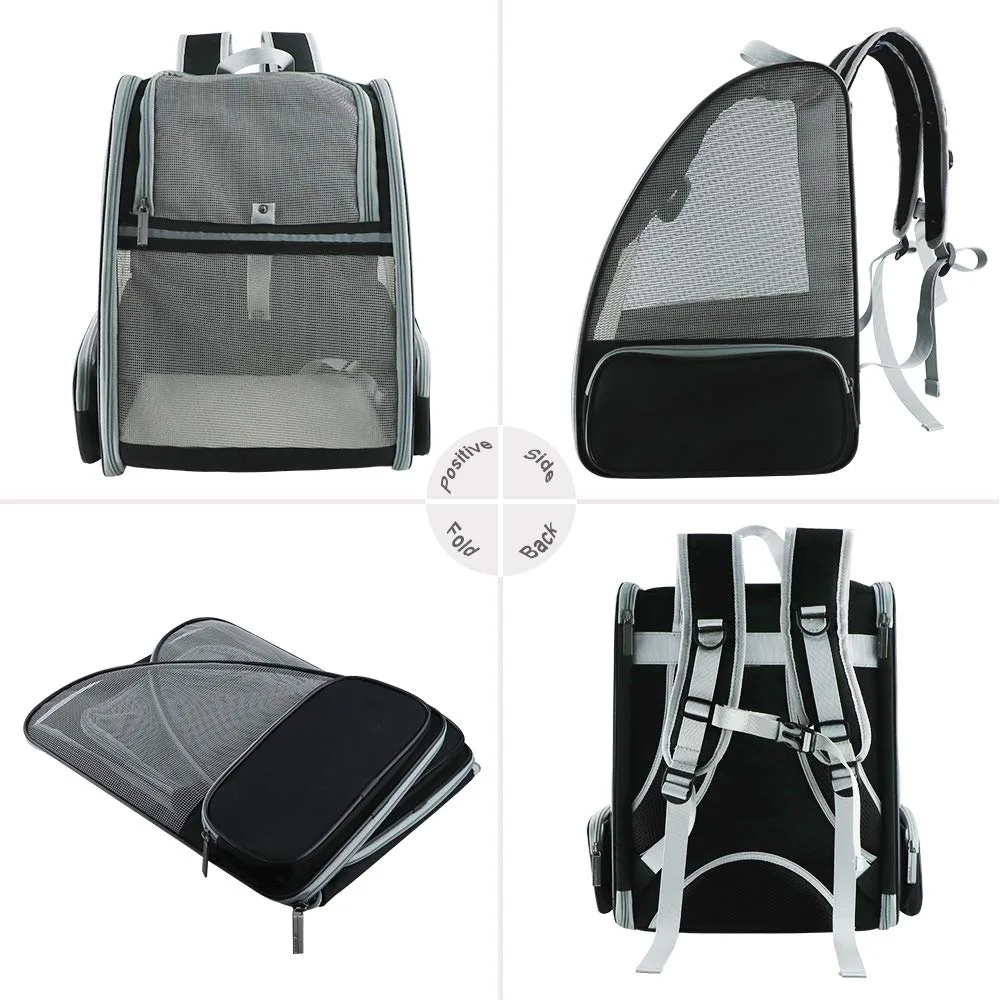
Tooling, Patterns and Ownership in ODM
Ownership in ODM is the clause most often misunderstood. The brand pays for the units and for any brand-specific tooling, but the underlying platform, its patterns and its existing tools remain the supplier s. What the brand acquires depends on what it paid to create.
The practical test is whether an asset would exist without the brand s order, and the answer is usually clear once the question is asked. A cutting die for a standard panel exists for the platform and remains a supplier asset; a die for a brand-specific pocket would not exist and is normally the brand s, provided that ownership was stated at the time it was ordered.
- Platform patterns and markers remain supplier assets
- Brand-specific tooling follows payment but must be stated
- Brand artwork and logos always remain the brand s
- Storage and access rights matter as much as ownership
- Confidentiality should cover the parameter sheet and the configuration
Access is the clause that makes ownership real. A tool owned by a brand but held at the supplier s premises without a release right is not portable, so the agreement should state notice, transport cost and condition on release.
Our production team states ownership per asset on the quotation rather than in general terms, so there is no ambiguity about which items a brand can take with it and which belong to the platform.
Design rights deserve the same precision as tooling. A brand may own the configuration while the supplier retains the platform, and the agreement should say so in those terms, because an undivided claim over a shared platform will not hold and will sour a working relationship for no commercial gain.
Insurance and storage of brand-owned tooling should also be addressed. A tool held at a production base needs a stated storage period and a stated responsibility for maintenance, since an unused mould left unmaintained for two seasons may no longer produce to the original tolerance.
Why ODM Sampling Is Faster
The speed advantage of ODM comes from what does not have to happen, which is most of the engineering. No pattern needs to be drafted from a brief, no marker needs to be proven for yield, no assembly sequence needs to be timed for the first time and no tool needs to be cut, and those four items account for the greater part of the elapsed time in a custom programme.
What remains is material sourcing and sample assembly, which is why an L1 or L2 sample fits inside the standard 6-10 working day window and why the constraint shifts from engineering to material availability.
- No pattern development: the geometry already exists and has been proven
- No marker proving: yield has already been established on previous runs
- No operation timing: the minute count is known from earlier builds
- No tooling cycle unless the change reaches L3
- The remaining constraint is material availability, not engineering
Material availability is therefore the thing to manage. A colourway from the mill standard range is available immediately; a custom shade adds a dye-lot cycle. Our production team flags any material that will extend the window before the sample is booked.
Speed has a limit worth stating. If a brand needs five rounds of sample revision, the elapsed time exceeds a custom program with two rounds, and the advantage disappears. Disciplined evaluation at each round is what preserves the benefit, and the discipline belongs to the brand as much as to the supplier. A structured checklist completed before each round removes most of the iterations that erode the ODM advantage, and a single consolidated round of comments is faster than three separate ones, because each round restarts the sample queue.

Exclusivity: What Can and Cannot Be Granted
Exclusivity is the request every ODM buyer makes and the one most often granted vaguely, which is why it causes more disappointment than any other term. It has to be defined in three dimensions: territory, channel and time, and an arrangement missing any one of them is effectively unbounded.
A supplier with a genuine platform business will usually grant configuration exclusivity rather than platform exclusivity. That means the specific combination of colourway, material and branding is reserved, while the underlying platform remains available to other buyers in different configurations.
- Exclusivity needs territory, channel and duration to be enforceable
- Configuration exclusivity is achievable; platform exclusivity rarely is
- Volume commitments usually underpin any exclusive arrangement
- The duration should be renewable against a stated performance level
- A vague exclusivity claim protects nothing and creates a dispute later
Volume is the currency. Exclusivity is a commercial concession and is normally exchanged for a committed annual quantity, with the arrangement reviewed if the quantity is not met. Our production team proposes that structure because it is the only version that survives contact with a second season.
Where a brand needs genuine platform exclusivity, the honest answer is to commission a custom design and own it. That is an L3 or full custom conversation, not an ODM one, and it should be recognised as such.
Where exclusivity is granted, the arrangement should state what happens on expiry. A renewable term tied to a performance level is cleaner than a fixed term that ends abruptly and leaves both sides unsure whether the configuration is still reserved.
Performance should be measured on something verifiable. Annual purchased quantity is the usual measure, because it is objective and already recorded, whereas a market-share or listing measure invites argument about the source of the numbers.
When to Move From ODM to Full Custom
The trigger for moving off a platform is economic rather than aesthetic, and it should be tested against numbers rather than against a desire for something distinctive. A brand should commission custom development when the volume justifies the tooling, when the differentiation cannot be achieved by parameter changes, or when portability has become commercially important.
A rough test is amortisation, and it is worth running before any emotional commitment to a custom design. If the tooling cost divided by expected annual volume is small relative to the margin, and the design has stopped changing between seasons, custom development is usually the better path. If the design is still moving, ODM remains cheaper because changes are absorbed by the platform.
- Move when volume amortises tooling comfortably within one season
- Move when parameter changes can no longer deliver the differentiation needed
- Move when portability and ownership have commercial value
- Stay on ODM while the design is still evolving season to season
- Transition on a proven specification, not on an untested one
The transition itself should be staged, and the staging is what makes it low-risk rather than merely cheaper. Take the best-selling configuration, freeze it, and commission tooling against the frozen specification, which converts a proven product into an owned one instead of gambling on a design that has never sold.
Independent evaluation of load paths and restraint behaviour is published by the Center for Pet Safety, and quality-system expectations for the transition are documented by ISO. Our production team references both when a brand moves from a platform to an owned design, and recommends making the move on a configuration that has already sold through a full season rather than on one that is still being refined.
The final consideration is what the move costs in working capital. Custom tooling is paid before the first unit and amortised afterwards, so a brand moving off a platform needs both the volume forecast and the cash to fund the tool. Our production team quotes the tooling separately so that decision can be made on its own merits.
Production capability
- SGS-verified production space of 4,950 m², 149 machines, 7 assembly lines
- Pet carrier and pet bag output since 2014 from a 137-person team
- 200,000 units shipped monthly under BSCI and ISO 9001 systems
People Also Ask
What is the difference between ODM and OEM?
Under ODM the supplier owns the design and usually the tooling, and the brand selects and modifies a base model. Under OEM the brand supplies the design and typically pays for and owns the tooling.
What is an L1 modification?
Changes to colour, logo, packaging and labelling on an existing tool set. No pattern or tooling changes are needed, so the sample fits inside the standard 6-10 working day window.
When does ODM require new tooling?
At L3, where the change affects structure: a different shell, a formed panel or a new closure geometry. That adds a tooling cycle to the sampling schedule.
Who owns the design under ODM?
The supplier owns the underlying platform, its patterns and its existing tools. The brand acquires what it paid to create, such as brand-specific tooling, and always retains its own artwork.
Can a brand get exclusivity on an ODM product?
Configuration exclusivity is usually achievable in a defined territory, channel and period, often against a volume commitment. Platform exclusivity generally is not.
When should a brand move to full custom development?
When volume amortises tooling within a season, when parameter changes no longer deliver the needed differentiation, or when ownership and portability have commercial value.
Frequently Asked Questions
Is ODM cheaper than custom development?
At L1 and L2, yes, because no tooling or pattern development is required. At L3 the cost profile approaches custom development while the design still sits on a supplier platform.
Why is an ODM sample faster?
Pattern, marker, operation timing and tooling already exist. The remaining work is material sourcing and sample assembly, so the constraint becomes material availability rather than engineering.
What is a base model library?
A set of platforms with defined size families, construction methods and hardware sets. Variation is generated by changing parameters rather than by designing from scratch.
Can two sizes come from one platform?
Yes, and it is recommended. Sizes from one platform share trim and can be nested in a shared marker, which improves yield and simplifies the trim purchase.
What should a parameter sheet contain?
The base model, colourway, material substitutions, branding positions and packaging. It replaces a full drawing set because the geometry already exists.
What happens if a change is requested after approval?
Material and capacity have already been committed, so the change carries both cost and schedule effect. Our production team states that effect when the change is raised.
How is tooling ownership decided?
By whether the asset would exist without the brand s order. Standard platform tooling stays with the supplier; brand-specific tooling follows payment and must be stated in writing.
Does ownership alone make a tool portable?
No. Access matters equally, so the agreement should state release notice, transport cost and the condition in which the tool is released.
What undermines an exclusivity clause?
Missing boundaries. Without territory, channel and duration the clause is unbounded and effectively unenforceable.
Is platform exclusivity ever granted?
Rarely. Where a brand needs it, the correct route is a commissioned custom design that the brand owns, which is a different commercial conversation.
How should the transition to custom be staged?
Freeze the best-selling configuration, then commission tooling against that frozen specification. It converts a proven product into an owned one rather than gambling on a new design.
Does ODM limit differentiation?
It limits structural differentiation. Colour, material, trim, branding and packaging variation is substantial, but the underlying geometry remains shared with the platform.
Talk to QUANZHOU JUNYUAN BAGS about a pet carrier program: MOQ 500 pieces per colourway, samples in 6-10 working days, bulk production in 35-50 days under AQL 2.5 inspection.
Get a free quote Request a sample