Dog Carrier Backpack Straps: Webbing Width and Strength
Dog carrier backpack straps should use webbing width and strength matched to the full load path, commonly 25-38 mm for adjuster sections and wider padded shoulder bodies where pressure must be distributed. Width alone does not establish capacity. Specify fiber, weave, thickness, tensile and elongation values, buckle compatibility, stitch pattern, anchor reinforcement, adjustment range, and assembled proof performance.
Executive Summary
A safe strap system begins at the dog-supporting base, transfers load through shell reinforcements and webbing anchors, and distributes it across the wearer's shoulders and torso. Webbing must be specified by fiber, width, thickness, weave, finished mass, tensile strength, elongation, colorfastness, abrasion, and approved source. The shoulder pad adds width and cushioning but does not replace continuous structural webbing. Buckles and adjusters need exact slot dimensions and must be tested with the nominated webbing because slip depends on the pair. The commercial baseline is MOQ 500 pieces per color, samples in 6-10 working days, bulk production in 35-50 days, and final inspection to AQL 2.5. Engineering verification should include component tensile checks, seam and bar-tack tests, installed proof loading, cyclic carrying, strap-slip measurements, adjustment cycling, symmetry, and post-conditioning function. Pattern geometry must keep the loaded carrier close to the back without forcing the dog compartment out of shape. Release bulk production only after anchor stacks, stitch patterns, webbing lot, padding, hardware, and adjustment range match the approved sample and controlled drawings. The production file should preserve component identity, installed load results, first-off measurements, and hidden-anchor photographs for traceable shipment release.
A pet bag supplier running dog carrier backpack orders at 500 pieces per colourway can consolidate several sizes into one cutting window and hold the dye lot across reorders.
Select Width From Load, Pressure, and Hardware Interfaces
Webbing width performs three jobs: it contributes tensile area, establishes hardware size, and influences contact or edge pressure. A 25 mm strap can be appropriate for a sternum connection or light adjuster tail, while 32 or 38 mm webbing may suit a main lower shoulder adjustment, depending on rated load and buckle system. The padded shoulder body is often wider than its internal structural webbing to spread pressure. These dimensions are examples, not universal ratings; each design needs proof and wear evaluation.
Wider webbing does not automatically create a stronger assembly. Fiber, yarn size, weave density, thickness, finish, and elongation determine strip performance. The anchor may still fail through shell tear, seam rupture, buckle fracture, or webbing slip. Conversely, an unnecessarily wide component adds mass, requires larger hardware, can be difficult to route around curves, and may chafe at the neck or arm.
Interface geometry limits selection. The adjuster slot should match webbing width and thickness with enough clearance for threading but not so much that the strap twists. Double-back routing adds layers and friction. A padded strap end needs a smooth transition into narrow adjustment webbing without a hard step. Sternum hardware must travel along its intended rail or webbing while remaining captured.
Define user range with measurable strap lengths. Minimum and maximum effective length should include the assembled buckle and routing, not raw cut length. Verify fit at both extremes under load because adjustment tails, keepers, and padding positions move. Make sure the lower anchor angle does not pull the carrier away from the back or distort side mesh.
Webbing width should be chosen by the installed load, pressure-distribution target, hardware geometry, and adjustment range rather than by a generic “heavy-duty” label. Record the rationale and the tested stack so later cost reduction cannot narrow the strap without reopening the ergonomic and structural review.
Specify Fiber, Weave, Thickness, and Elongation
Polyester and nylon are common load-webbing fibers. Polyester generally offers low moisture uptake and good dimensional stability, while nylon can provide toughness and different elongation behavior. Actual performance varies by yarn, weave, finishing, and color. Polypropylene may reduce cost and mass in some applications but needs careful review for abrasion, heat, hand feel, and long-term performance. State the verified fiber rather than relying on visual identification.
Weave controls surface texture, edge stability, buckle grip, thickness, flexibility, and elongation. Plain, herringbone, tubular, or other constructions behave differently. A smooth dense webbing may run cleanly through an adjuster but slip if the mating bar geometry is unsuitable. A coarse weave may grip well but abrade binding or clothing. Tubular forms can flatten or twist under hardware unless designed for that interface.
Thickness belongs in the specification because buckles, triglides, and sewing stacks have finite clearance. Measure under defined pressure and include tolerance. Finished mass per length, pick density, or an approved construction reference can help verify identity. Heat setting and finishes can change stiffness and shrinkage. Color processes may alter tensile or crocking behavior, especially across very dark or bright shades.
Strength data should include test direction, gauge length, loading rate, conditioning, and result basis. Record elongation at specified loads as well as ultimate tensile strength when strap stretch affects balance. Excess elongation can let the carrier sag or swing even if the webbing never breaks. Abrasion at hardware bends can lower strength over time.
A purchase description such as “38 mm polyester webbing” is incomplete until thickness, weave, tensile, elongation, color, finish, and acceptance methods are defined. Keep an approved labeled sample, but use measurable limits to detect material changes that appearance alone cannot reveal.
Material identification can combine simple production checks with periodic laboratory confirmation. Compare width at several points, thickness under fixed gauge pressure, mass per measured length, pick pattern, edge construction, and response to bending. Maintain photographs or magnified references of the approved weave. These checks can reveal a yarn or construction change before full tensile results are available. When rolls are spliced, define marking and acceptance because a hidden splice should never enter a structural strap. Record shrinkage after the validated cleaning or heat exposure if cut length and adjustment range are sensitive. A supplier declaration remains useful, but physical identity data provides the receiving team with objective evidence for every delivered lot.
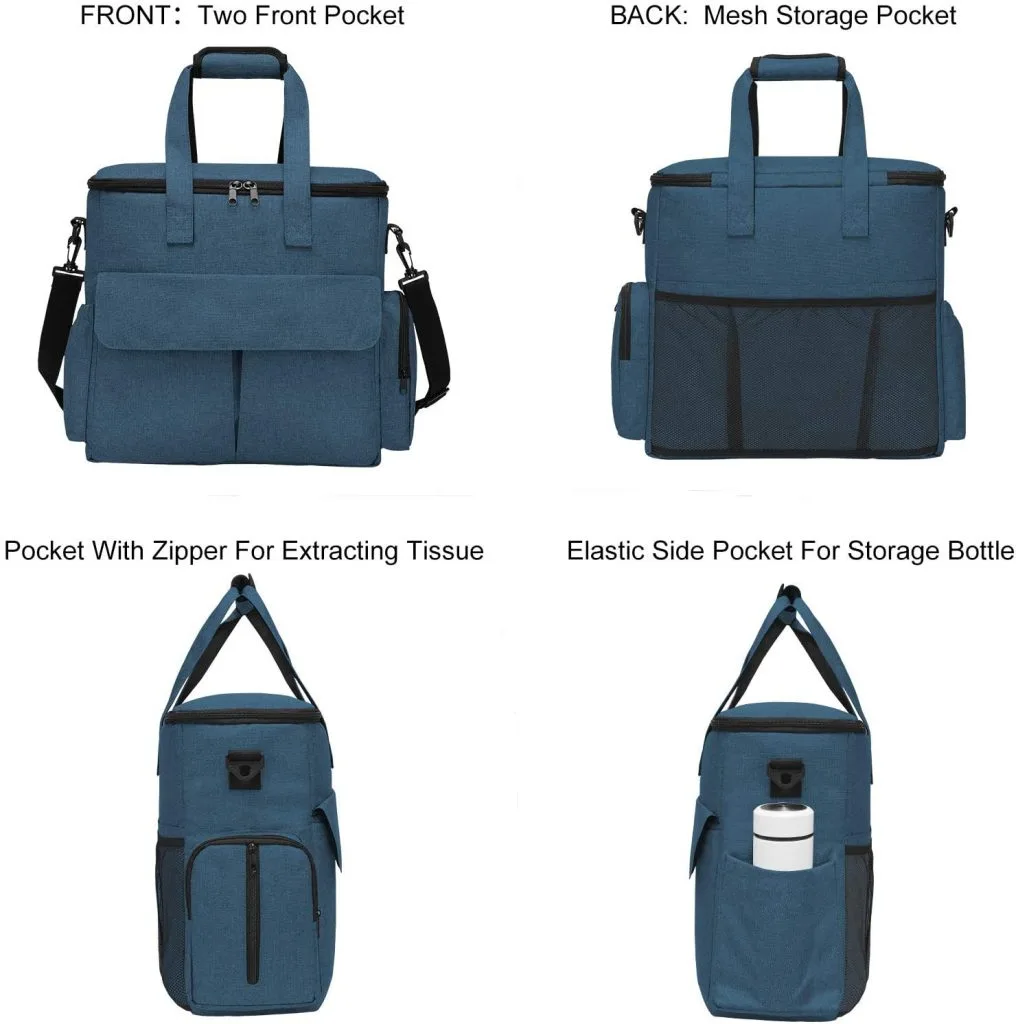
Design the Shoulder Harness Around the Center of Gravity
The shoulder harness controls how the carrier mass sits relative to the wearer's spine. Upper anchor position, lower anchor spacing, strap curvature, pad width, sternum strap height, and optional waist support determine load distribution. If the carrier hangs away from the back, leverage increases shoulder demand and can rotate the dog-supporting base. Geometry should place the occupied mass close without compressing ventilation or forcing the dog forward.
Strap curvature must match the intended torso range. A straight padded strap can lift at the edges or press near the neck; an over-curved shape may fit one body but twist on another. Build full-scale patterns and test multiple adjustment positions under controlled load. Record contact areas, edge pressure, carrier angle, sway, range, and hardware access. Padding density and taper should support rather than conceal poor geometry.
Sternum straps stabilize spacing but should not become the primary load member unless designed and rated that way. Specify height range, length, release force, rail or attachment retention, and loose-end control. A waist strap can transfer some load, but its anchor location and range must align with the intended torso. Small detachable clips require pull and retention assessment.
The animal compartment must remain structurally independent enough that tightening the harness does not collapse side panels or block mesh. Trace strap forces through a reinforced back yoke or continuous webbing path. Measure internal volume with the carrier loaded and straps tensioned. For convertible products, test backpack, hand-carry, and shoulder modes separately because force direction changes.
An ergonomic shoulder strap is a structural geometry that controls carrier position under load, not simply a wide foam pad. Approve harness shape and adjustment using defined torso references and rated test mass before cosmetic stitching or logo positions are frozen.
Engineer Anchor Stacks, Bar Tacks, and Seam Capture
Strap anchors are frequent failure points because load enters a small textile area. The technical drawing should show webbing overlap, fold direction, reinforcement patch material and dimensions, seam allowance, bar-tack or box-stitch geometry, thread, and position tolerance. If the anchor is captured in a shell seam, show the complete layer order. Attaching structural webbing only to lining is not acceptable unless the lining system is specifically engineered and verified for that force.
Reinforcement spreads stress beyond needle holes. Its orientation, stiffness, edge shape, and bond or stitch method matter. A small stiff patch can create a new tear line at its edge. Round corners and sufficient extension beyond the stitch field reduce concentration. When foam sits nearby, exclude it from the structural stitch stack unless compression and stitch stability have been validated.
Bar tacks need dimensions and stitch pattern, not just a quantity. Longer or denser is not always stronger; excessive perforation can cut webbing or shell. Needle size, thread ticket, tension, and backing influence result. Build seam coupons with production-intent materials and the actual operation, then test in the installed direction. Inspect both sides for balanced stitch formation and edge distance.
Hidden anchors require in-line hold points before lining or binding closes them. Photograph first-off overlap and patch placement using a scale. Templates can control webbing angle and bar-tack location. Trace bundles so any missed reinforcement can be contained before final assembly. A finished outside appearance cannot prove hidden capture.
The carrying capacity of a strap system is limited by the weakest installed connection among webbing, stitching, reinforcement, shell, hardware, and base structure. Qualification should therefore load the complete path, while in-line inspection protects the concealed details that create the result.
Failure review should examine the sequence, not just the final break. Mark the anchor and webbing before loading, record seam growth and shell distortion at intermediate levels, and photograph both faces. A webbing break away from the stitch field suggests a different correction from yarn cutting along needle holes, thread rupture, patch-edge tearing, or hardware slip. If the reinforcement remains intact but rotates, anchor geometry may be transferring force unevenly. Change one controlled variable where practical, then retest enough samples to confirm the effect. Update patterns, operation sheets, and inspection points together; adding an unrecorded extra bar tack on the sample-room unit does not create a production-ready fix.
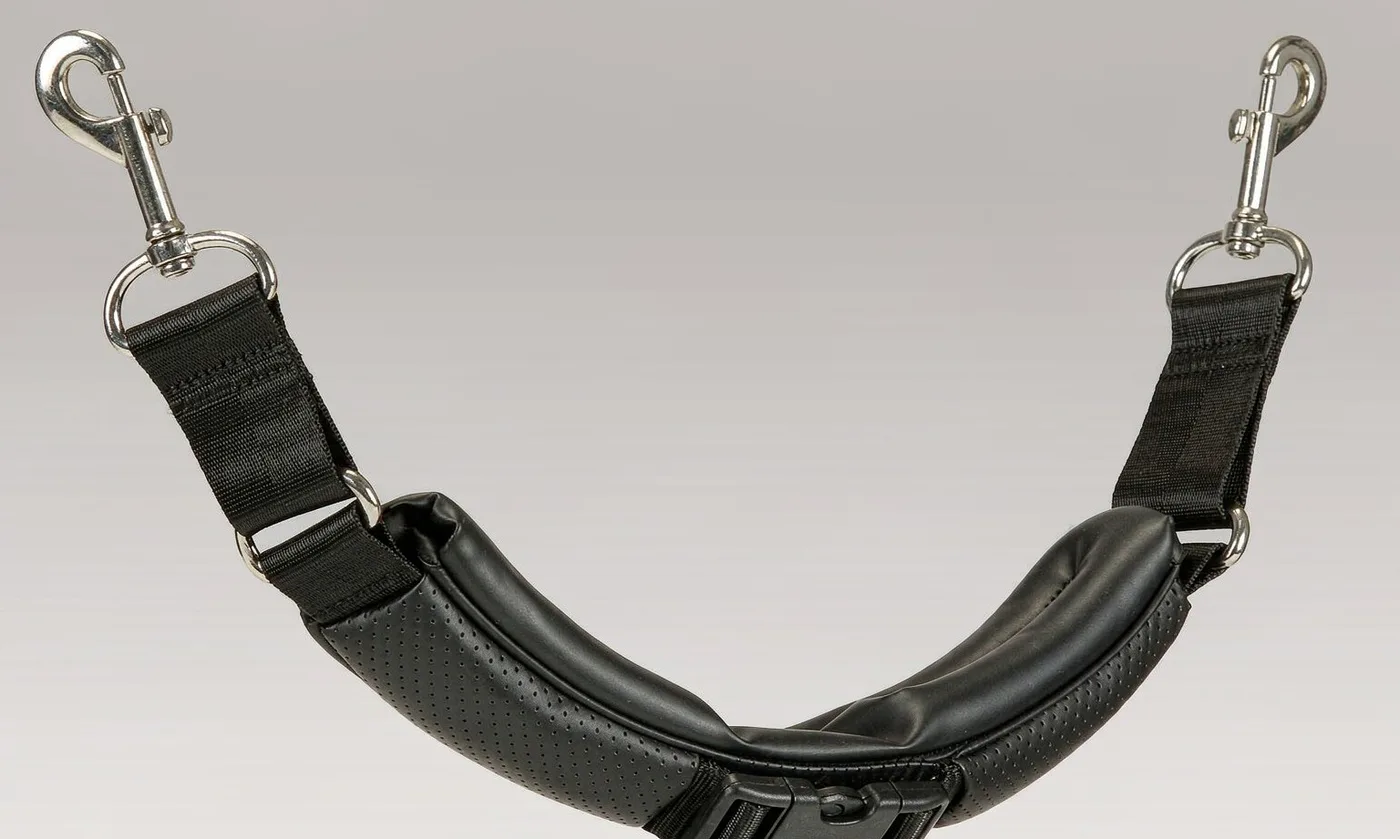
Match Adjusters, Buckles, and Keepers to the Webbing
Hardware and webbing form a friction and geometry pair. A buckle marked 25 mm may accept the nominal width but still have a slot, bar radius, tooth profile, or clearance unsuited to the webbing thickness. Test threading, adjustment force, grip, return routing, and movement under cyclic load. Use the exact production finish because coating thickness and surface texture can affect clearance and slip.
Adjustment should be possible without unintended loosening. Mark the initial webbing position, apply defined static and cyclic loading, then measure creep through the adjuster. Test dry, damp, cold, hot, or contaminated states when relevant to use. A strap can pass tensile testing yet fail function by slipping several centimeters. Define the allowable movement and reaction.
Buckles need mating checks, engagement indication, release force, proof load, cycling, and side-load review. Position them away from concentrated contact and prevent hard components from pressing through thin padding. Ensure that a loose buckle cannot enter the dog compartment. Broken fragments and sharp edges are part of the failure assessment.
Keepers control tails without locking the load path incorrectly. Elastic loops should retain recovery after stretching and aging. Plastic or metal clips need pull and edge checks. Tail length must remain sufficient at maximum extension and manageable at minimum length. Cut ends require controlled heat sealing or another finish that prevents fray without hard sharp edges.
Webbing strength is useful only when the selected adjuster and buckle preserve routing, grip, and engagement through the specified load and cycle sequence. Lock the tested webbing-and-hardware combination in the BOM; changing either side triggers an interface review.
Adjustment ergonomics should be measured as well as observed. Record the pull force needed to shorten and lengthen each strap at no load and representative load, plus buckle release force before and after cycling. Controls should be operable by the intended user without requiring so little force that they move unintentionally. Verify that adjustment tails can be reached while worn, remain clear of the animal compartment, and do not swing into moving parts. Test at minimum and maximum settings because hardware can sit against different padded zones. When two sides use the same scale or markings, confirm that equal positions produce symmetrical effective lengths on the assembled harness.
Test Components and the Complete Carrying System
Component tests screen webbing identity and hardware capability, but assembled tests establish carrier performance. Define specimen conditioning, load distribution, strap adjustment, suspension points, loading rate, duration, cycles, and acceptance. Record elongation, slippage, seam movement, anchor rotation, deformation, cracks, and post-test operation. Use multiple samples from production-intent lots.
| Test | Controlled variable | Failure criteria |
|---|---|---|
| Webbing tensile | Fiber, weave, width, gauge length, rate | Break below limit or abnormal elongation |
| Adjuster slip | Routing, webbing thickness, load cycles | Movement beyond specified distance |
| Anchor proof | Installed stack and force direction | Seam growth, tear, release, deformation |
| Dynamic carry | Distributed load, motion, strap setting | Damage, loosening, unstable geometry |
| Buckle cycle | Mating parts, finish, engagement cycles | Crack, unintended release, unusable force |
| Conditioning | Moisture, temperature, abrasion as specified | Loss of strength, grip, finish, or function |
Test-method research can use resources from ASTM International, and controlled quality records can follow principles summarized by ISO. The exact proof load and acceptance level must be set for the carrier model; no general standard link establishes the product rating.
After structural loading, recheck buckle engagement, strap adjustment, foam position, internal clearance, and mesh distortion. A carrier that remains attached but loses usable geometry has not necessarily passed. The complete system passes when it maintains structural integrity, adjustment, and occupied-space geometry after the declared load sequence.
Use a statistically meaningful spread of samples for qualification and ongoing checks. Draw webbing from different rolls or positions, hardware from several packages, and sewn anchors from planned machines and operators. Report each value, failure mode, and lot identity rather than only the highest result or arithmetic mean. Establish a minimum acceptance limit and investigate unusual scatter because it can signal stitch variation, weave inconsistency, mixed hardware, or fixture alignment. Retain failed parts and untested controls. Calibrated fixtures must load anchors in the documented direction without cutting webbing at the jaws. This sampling discipline ensures the declared capacity represents repeatable production, not one carefully selected prototype.
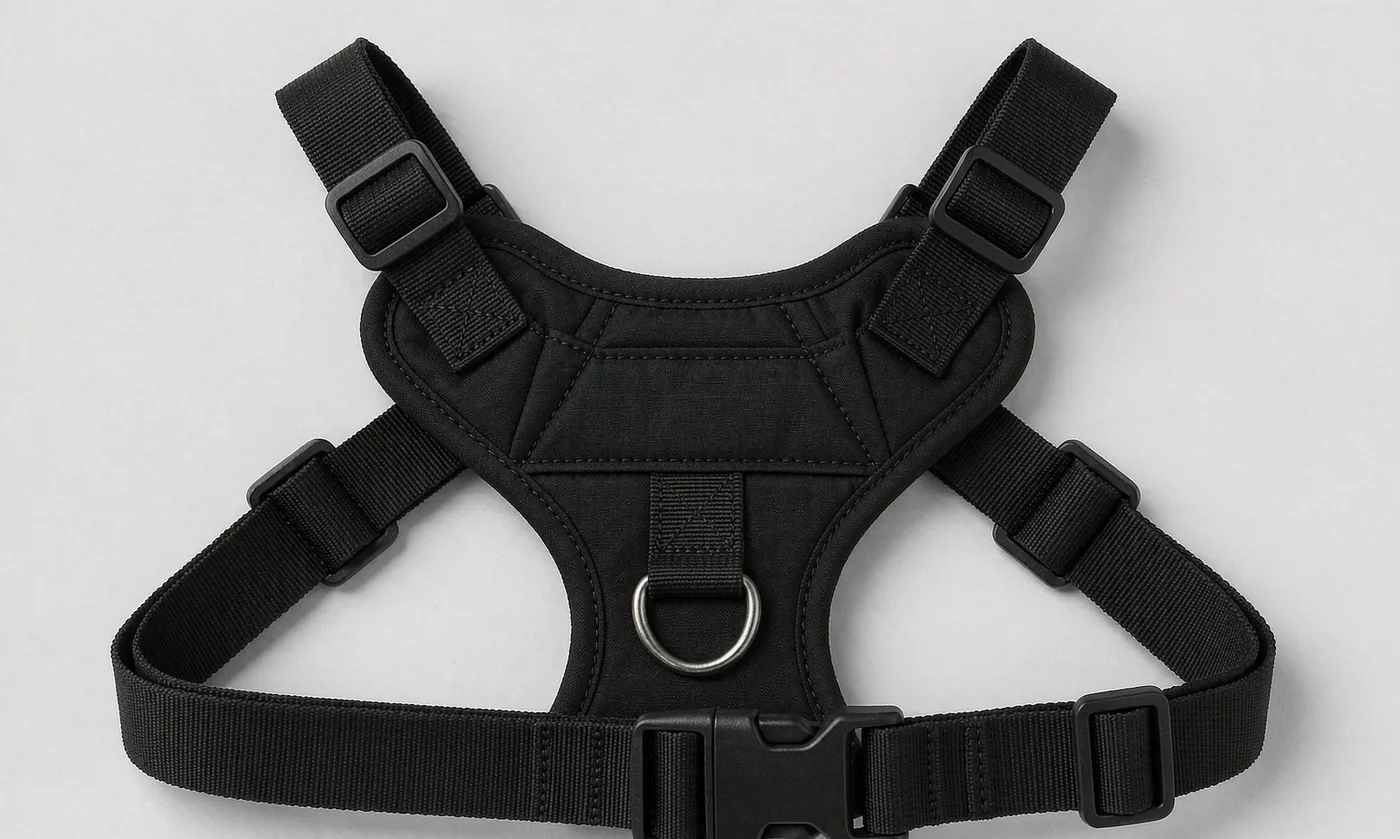
Control Abrasion, Color, Moisture, and Chemical Requirements
Webbing rubs against adjusters, shell edges, clothing, and itself. Abrasion tests should reproduce important contact geometry and assess yarn breakage, fuzzing, thinning, edge damage, color change, and residual strength. A flat abrasion result may not represent repeated bending over a narrow hardware bar. Examine high-motion interfaces on cycled carriers and update protective routing where wear concentrates.
Color approval covers shade, visual texture, crocking, migration, and fading. Dark webbing can stain light shell or lining during humid compressed storage. Create contact assemblies, apply the production pack-out and environmental condition, then inspect after recovery. Heat-sealed ends may discolor or form hard beads; define an approved appearance and edge feel.
Moisture changes some fibers, finishes, and hardware friction. Measure adjuster slip and buckle operation after wetting or humidity conditioning where relevant. Drying design matters if broad padded straps trap water. Avoid laminated stacks that retain moisture against the wearer without a stated drying method. Cleaning instructions should reflect validated materials and construction.
Chemical requirements cover fiber, dyes, finishes, coatings, printed logos, elastic, foam, and hardware. European-market planning can reference ECHA, while voluntary textile certification information is available through OEKO-TEX. Reports must trace to the exact color and component code.
Environmental approval should verify that webbing retains strength, grip, safe edges, and color compatibility after the specified abrasion, moisture, climate, and cleaning exposures. Reassess when fiber, dye process, finish, hardware, or route changes.
Sequence exposures where combined damage is plausible. Cycle webbing through the adjuster to create wear, condition the assembly in heat and humidity or low temperature, apply the validated cleaning method, and then repeat slip and load checks. Ultraviolet exposure may be relevant for outdoor positioning, but state irradiance, duration, temperature, and evaluation rather than claiming general UV resistance. Inspect yarn fuzz, broken filaments, edge curl, buckle polish, dye transfer, printed-logo cracking, and change in hand. Measure residual tensile or anchor performance when visual wear is not enough. Keep an unexposed control from the same lot so color and mechanical changes can be attributed to the sequence instead of normal lot variation.
Inspect Straps From Incoming Webbing to Final AQL
The BOM should state fiber, width and tolerance, thickness, weave, finished mass if used, tensile and elongation limits, color standard, finish, supplier code, and application. List each cut length and end treatment by location. Drawings define routing, overlap, reinforcement, stitch pattern, adjustment range, hardware orientation, and loose-end control. Substitutions require written comparison and approval.
Incoming inspection checks roll identity, quantity, width, thickness, shade, weave, edge condition, contamination, odor, splices, and sampled strength or screening properties. Measure across packages and roll positions. Segregate dye lots and label cut bundles, because similar webbing grades can look identical after cutting. Quarantine any unapproved fiber, weave, or finish.
During the 6-10 working day sample period, build strap-stack coupons, fit trials, proof-load samples, and a bulk-intent pre-production unit. At MOQ 500 pieces per color, confirm custom-dyed webbing and hardware minimums plus spare allowance. Schedule webbing delivery, conditioning, cutting, subassembly, and testing within the 35-50 day bulk plan.
In-line quality verifies cut length, sealed ends, routing, left-right symmetry, reinforcement, overlap, bar-tack geometry, stitch formation, hardware mating, and adjustment. Hidden anchor approval occurs before closure. Trend strap defects by operation and contain output since the last accepted checkpoint when a safety-critical detail fails.
Final AQL 2.5 inspection samples workmanship, dimensions, function, adjustment range, buckle engagement, packing, and critical defects. Separate qualification records prove tensile and load durability. A bulk strap system is controlled when the webbing lot, hardware pair, hidden anchors, adjustment geometry, and final carrier remain traceable to one tested revision.
Pack-out deserves a final strap check. Confirm that tails are secured without permanent creasing, buckles are protected from coated panels, padded sections are not sharply folded, and left-right routing remains visible for inspection. Hold packed cartons for the specified dwell, then unpack units and measure foam recovery, webbing twist, buckle marks, and adjustment. A reaction plan should identify affected production from the last accepted checkpoint when an anchor, slip, or symmetry defect appears. Segregate cartons, inspect concealed anchors where risk requires, correct the operation, and approve new first-off units before restart. Shipment records should link receiving lots and line dates to carton ranges so containment is precise rather than applied to every order by default.
Why brands source here
- Pet carrier programs run since 2014; founding team in sewn goods since 2004
- SGS-verified production floor of 4,950 m² with 137 workers across 7 lines
- Monthly capacity of 200,000 units, audited to BSCI and ISO 9001
People Also Ask
What webbing width is used for dog carrier backpack straps?
Main adjuster sections often use 25-38 mm webbing, but the correct width depends on load, hardware, geometry, pressure, and testing.
Is wider webbing always stronger?
No. Fiber, weave, thickness, elongation, sewing, hardware, and anchors determine installed strength in addition to width.
Should structural webbing run through the padded shoulder strap?
Usually a continuous or securely connected structural webbing path is needed; foam and cover material alone should not carry the rated load.
How is strap slippage tested?
Mark webbing at the adjuster, apply defined static and cyclic loads in the actual routing, then measure movement against the limit.
What is a bar tack on a backpack strap?
It is a dense programmed stitch pattern used at a defined anchor, with size, thread, stack, and position controlled.
How long does a strap prototype take?
A complete carrier sample normally takes 6-10 working days after webbing, hardware, dimensions, patterns, and test criteria are ready.
Frequently Asked Questions
Is polyester or nylon webbing better?
Neither is universally better; compare the specified weave, strength, elongation, moisture response, abrasion, color, and cost for the design.
Why specify webbing thickness?
Thickness affects buckle clearance, friction, slip, sewing bulk, stiffness, and compatibility even when nominal width is correct.
What is webbing elongation?
It is extension under a stated load and method; excessive elongation can let the carrier sag before the strap breaks.
Can the lining hold a shoulder-strap anchor?
Only if it is intentionally structural and tested; normal lining alone should not be assumed to carry the load path.
How long should strap overlap be?
Overlap is set by webbing, stitch pattern, reinforcement, seam geometry, force direction, and tested margin rather than one universal length.
Why test the buckle with the exact webbing?
Slot clearance, tooth geometry, bar radius, webbing weave, thickness, and finish jointly determine grip and adjustment.
How is left-right strap symmetry checked?
Use defined anchor datums, finished strap lengths, hardware positions, templates, and loaded carrier measurements.
What happens if bar tacks are too dense?
Excess needle perforation can weaken webbing or shell, create a tear line, and damage coating despite a strong appearance.
Should wet straps be load tested?
Use moisture conditioning when intended use makes it relevant, then check slip, strength, adjustment, finish, and recovery.
Does AQL 2.5 prove strap tensile strength?
No. AQL samples finished workmanship; tensile and installed load performance require separately defined qualification and lot controls.
When should webbing be requalified?
Review changes in fiber, yarn, weave, width, thickness, dye, finish, source, hardware, stitch, or anchor construction.
How is bulk webbing traced?
Link roll and dye-lot labels through cutting bundles, strap subassembly, production dates, inspection, and finished-carton records.
Talk to QUANZHOU JUNYUAN BAGS about a pet carrier program: MOQ 500 pieces per colourway, samples in 6-10 working days, bulk production in 35-50 days under AQL 2.5 inspection.
Get a free quote Request a sample