Pet Carrier Food Storage: Airtight Container
An airtight pet food container works when three numbers line up: wall permeability below 3 cc of oxygen per square metre per day, a lid gasket compressed 0.4-0.8 mm across the full perimeter, and contents held below 0.60 water activity. Specify food-grade PET or polypropylene, verify with a vacuum-decay leak test at 20-30 kPa, and require the container to be fully dry before refilling.
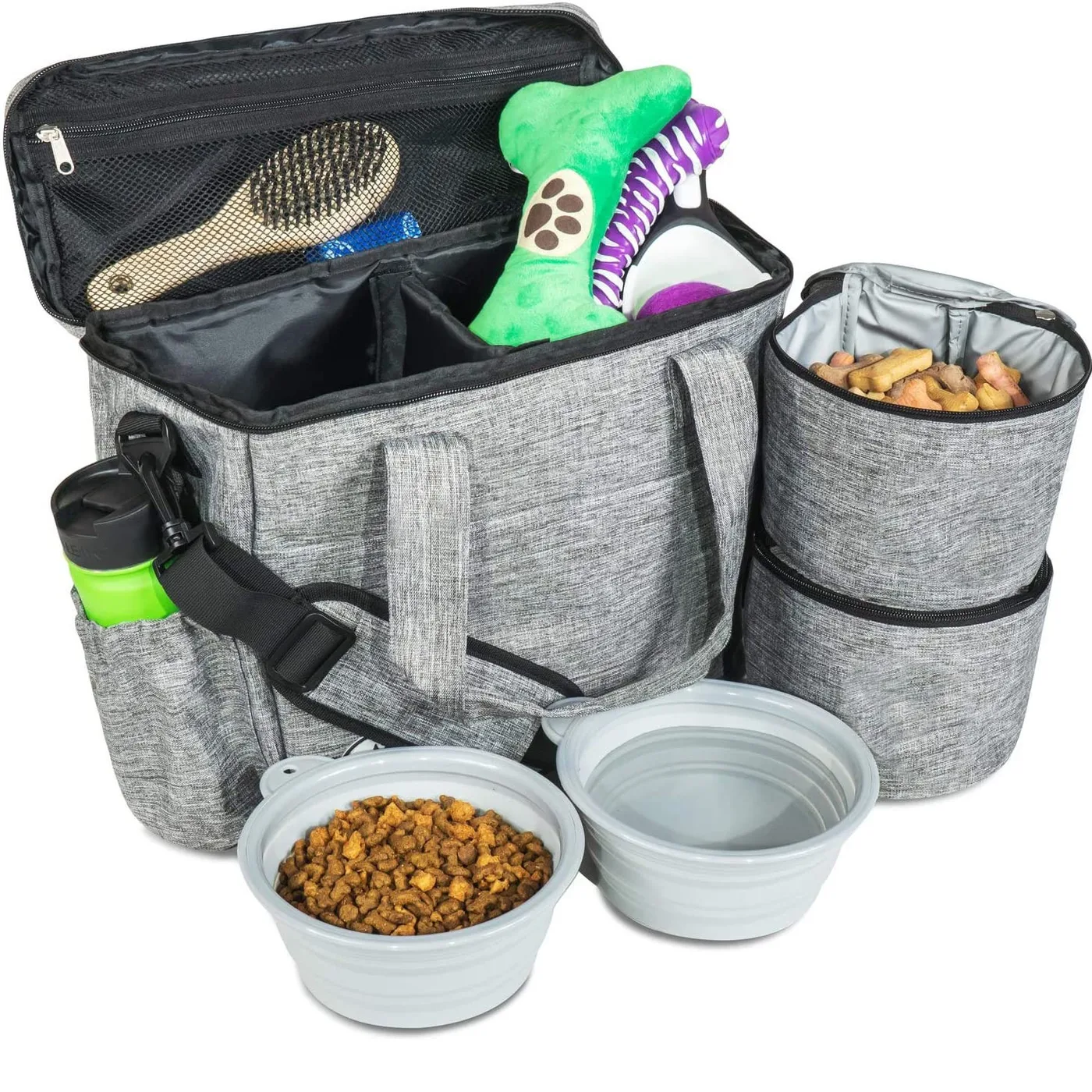
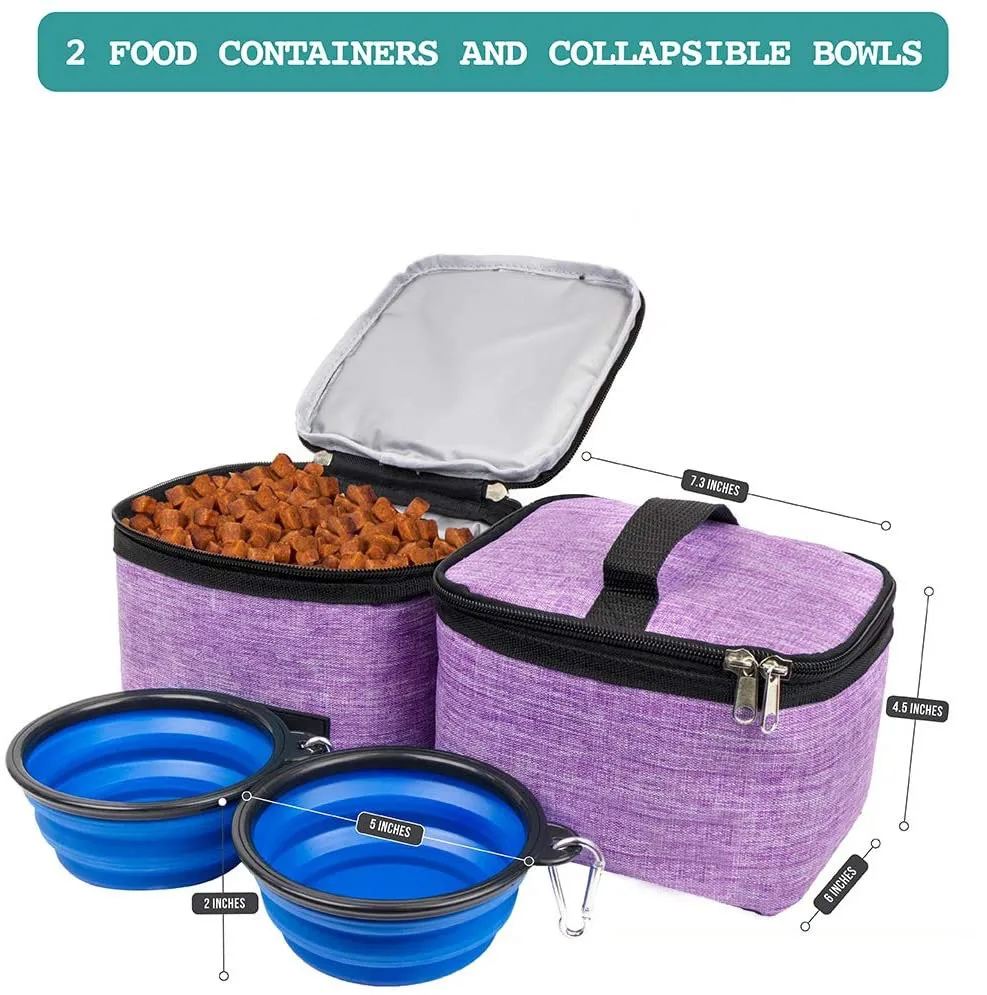
Kibble goes stale by oxidation and spoiled by moisture, and those are two different transport problems solved by two different features. Barrier is decided by wall material and thickness; sealing is decided by gasket compression and lid stiffness; and the practical failure most programmes discover late is that a perfectly sealed container holding slightly damp food grows mould faster than a leaky one holding dry food. This page covers all three: the barrier arithmetic for choosing between PET, polypropylene and high-density polyethylene, the closure mechanics that keep a gasket alive for thousands of open cycles, and the water-activity thresholds that decide whether a sealed container preserves or accelerates spoilage. It also covers the packing geometry that determines freight cost on a bulky part, and the food-contact documentation set a food-contact SKU cannot ship without. Programme terms follow the standard arrangement: MOQ 500 pieces per colourway, prototypes in 6-10 working days, bulk production 35-50 days after sample approval, final random inspection to AQL 2.5. Our production team validates seals on filled units rather than empty ones, because the deflection difference is where leakage starts.
As a pet carrier manufacturer handling pet carrier accessory programmes, our team quotes MOQ 500 pieces per colourway and returns a sewn sample in 6-10 working days.
Barrier First: Oxygen and Water Vapour Transport
Staling is oxidation of the fats coating every kibble particle, and it proceeds whether or not air is moving. The transport rate through a container wall is what a barrier specification actually constrains, and the two numbers to write into the drawing are oxygen transmission rate and water vapour transmission rate.
Oxygen transmission is expressed per unit area per day at a defined temperature and humidity differential. A 1.5 mm polypropylene wall passes roughly 60-140 cc per square metre per day at 23 degrees. A 1.5 mm PET wall passes 2-5. A multilayer wall with an ethylene vinyl alcohol core drops below 0.5. Those are differences of one and two orders of magnitude, and they translate directly into shelf life.
Water vapour matters even more in this category because kibble is hygroscopic. Typical dry pet food equilibrates at 0.40-0.60 water activity, and above about 0.70 the Aspergillus and Penicillium species relevant to stored grain products can germinate. A container that admits moisture faster than the contents absorb it will push a marginal product over that boundary.
The useful arithmetic is the ratio of wall area to contents. A tall narrow container has more wall per litre than a cube; a half-full container has vastly more air exchange per unit of food. Designers frequently improve the material and then lose the benefit by shipping a shape with 40% more surface area.
| Wall material | Thickness (mm) | OTR (cc/sq m/day) | WVTR (g/sq m/day) | Weight per litre (g) | Cost index | Suits |
|---|---|---|---|---|---|---|
| Polypropylene homopolymer | 1.5 | 60-140 | 0.6-1.4 | 28-42 | 1.00 | Short-term storage |
| High-density polyethylene | 1.8 | 80-190 | 0.4-0.9 | 32-48 | 0.94 | Bulk bins |
| PET, injection stretch | 1.2 | 2-5 | 0.8-1.6 | 22-34 | 1.16 | Default choice |
| PET with EVOH core | 1.6 | 0.2-0.6 | 0.3-0.7 | 26-38 | 1.62 | Long shelf life |
| Stainless steel 304 | 0.5 | 0 | 0 | 160-260 | 2.80 | Premium, opaque |
| Borosilicate glass | 2.5 | 0 | 0 | 420-680 | 2.10 | Retail gift |
Opportunity cost matters as much as permeability. PET and polypropylene are transparent, which is what most consumers want for a food bin, and transparency is UV exposure: light accelerates fat oxidation in the outer layers of kibble. An amber or opaque masterbatch reduces that by 60-85% at essentially no cost, which for a clear container is a trade worth making deliberately.
The usual buyer question is whether barrier improvements are worth paying for. For a container that holds two weeks of food, no — polypropylene at 60-140 cc is perfectly adequate, because staling within a fortnight is driven by how often the lid is opened rather than what crosses the wall. For a container holding two months, PET is worth the 16% cost premium and EVOH becomes defensible.
The other half of the equation is the headspace air. A full container carries perhaps 30-60 ml of trapped air per litre; a half-full one carries 500 ml. Opening the lid once a day exchanges that volume regardless of wall performance. This is why the best advice on the instruction leaflet is to size the container to about two weeks of consumption rather than to the bag size.
PET at a 2-5 cc oxygen transmission rate is the correct default for a two-week container; anything below 0.6 requires an EVOH core and is only justified at multi-month storage.
Closure Mechanics: Gasket Compression and Lid Stiffness
An airtight claim is made by the closure, and virtually every failure is one of three: insufficient gasket compression, insufficient lid stiffness to distribute that compression, or a closure that cannot keep the two consistent after hundreds of cycles.
The gasket itself is usually a silicone or thermoplastic elastomer ring seated in a groove. Durometer selection sets both sealing force and closing effort: at 40 Shore A the lid seals with very little force but extrudes out of its groove over time; at 70 Shore A it requires uncomfortable hand force. The working range is 50-60 Shore A with a cross-section that permits 0.4-0.8 mm of compression.
Compression is not a one-number property, it is a distribution around the perimeter. A four-tab lid presses hard at the tabs and barely at the midpoints between them, because the lid between tabs deflects upward under the reaction load. A continuous-ring clamp lid distributes that load evenly, which is why it seals better and costs more.
Lid stiffness is the fix for deflection, and it is bought with ribs. A flat 2.0 mm polypropylene lid deflects 1.2-2.4 mm between tabs under seal load; adding a radial rib pattern 6-10 mm deep reduces that to 0.3-0.7 mm for the same material mass. This is the single most cost-effective change available on a failing sample.
| Closure | Gasket compression (mm) | Uniformity around perimeter | Seal cycles | Close force (N) | Cost index |
|---|---|---|---|---|---|
| Friction-fit push lid | 0.1-0.3 | Poor, 40-60% | 200-600 | 15-40 | 1.00 |
| Four-tab snap lid | 0.4-0.7 | Fair, 55-75% | 1,200-3,000 | 45-90 | 1.18 |
| Six-tab, ribbed lid | 0.5-0.8 | Good, 75-88% | 3,000-6,000 | 55-110 | 1.34 |
| Continuous clamp ring | 0.6-0.9 | Excellent, 88-96% | 5,000-12,000 | 70-140 | 1.72 |
| Screw thread plus liner | 0.3-0.6 | Good, 78-92% | 2,000-5,000 | 25-60 | 1.46 |
A useful measure of real-world seal quality is the vacuum-decay test. Draw 20-30 kPa below atmospheric inside the sealed empty container and measure the pressure rise over 60 seconds. A good container holds within 2-4 kPa; a poor one recovers within 15-25 seconds entirely. This test is sensitive enough to catch warpage that visual inspection cannot.
Filled-container behaviour is different and should be tested separately. Five litres of kibble weighs 3.0-4.2 kg and pushes the side walls outward by 0.3-1.2 mm depending on wall thickness, which unloads the seal at the lid. The vulgar result is a container that passes empty and leaks when filled, and that is precisely why validation should use loaded units.
Handle load is the other real condition. A lid that must retain its seal while the whole container is lifted by that lid experiences 30-45 N pulling the rim out of plane, well beyond what the gasket was dimensioned for. Reinforcing the lift point and testing with a filled unit suspended by its own handle is the honest validation.
Add ribs to the lid and validate with a filled unit: deflection between tabs, not gasket hardness, is the usual reason an airtight sample leaks in the field.
Water Activity: Why Sealed Containers Sometimes Grow Mould
Mould in a sealed food bin is one of the most counterintuitive failures in this category and it is a specification problem rather than a hygiene one. Understanding water activity makes it predictable, and once it is predictable it is preventable.
Water activity, written as aw, is the relative humidity of the air in equilibrium with the material, expressed as a fraction rather than a percentage. Dry pet food typically sits between 0.35 and 0.60 aw. Most storage moulds relevant here need above roughly 0.70 aw before they can germinate, which is why properly dried kibble is stable indefinitely.
The container changes the local picture, not the number. In a sealed vessel, the headspace humidity equilibrates with the contents, and if there is any temperature cycling the coldest surface becomes a condensation site. A 10 degree swing between a kitchen during the day and a garage overnight is enough to move 2-8 ml of water onto the inside wall of a five-litre container.
That condensate is the problem. It does not mix back into the bulk; it forms droplets that wet the top layer of food at the contact surface, driving a localised region above 0.70 aw and producing exactly the patch of mould that customers find at the top surface rather than distributed through the contents.
| Contents aw | Condition | Mould risk | Practical outcome | Time to visible growth |
|---|---|---|---|---|
| Below 0.40 | Freshly opened, dry kibble | None | Stable, staling dominates | No growth |
| 0.45-0.60 | Typical dry food after opening | Very low | Stable if kept sealed | 6-18 months |
| 0.60-0.70 | Semi-moist food, humid climate | Low to moderate | Risk at the surface layers | 2-6 months |
| 0.70-0.80 | Condensation present locally | High | Patchy surface colonies | 7-25 days |
| Above 0.80 | Wet food, container not dried | Very high | Rapid failure, odour | 2-7 days |
The first design response is drying before refilling, and it belongs on the instruction leaflet. Every time a container is washed it must be fully dry before food goes in; a film of water on the wall is enough to lift the immediate surface layer into the risky band. This is the highest-value sentence on the card and the one most often omitted.
The second response is a desiccant strategy. A 5-20 g indicating silica sachet clipped inside the lid of a five-litre container holds headspace humidity below 45% and absorbs condensate as it forms. The sachet needs replacing every 30-90 days, which makes it both a user task and a replenishment revenue line.
The third response is geometric. Smooth vertical internal walls shed condensate downward into the headspace below the food, while internal ribs, ledges and sharp shoulders collect droplets and hold them against food contact. A container with an internal radius at every change of section and a wall draft of 1.5-3 degrees drains rather than pools.
Finally, ventilation is occasionally the right answer and it contradicts the airtight promise in an interesting way. For semi-moist food above 0.70 aw, a micro-vented lid that exchanges 20-60 ml of air per day prevents the humidity accumulation that a perfect seal creates. It is a niche answer, but it is the correct one for that product.
A sealed container preserves dry food below 0.60 aw and accelerates spoilage above 0.70; the product decision that matters is drying before refill, not tightening the seal.
Geometry, Cube Efficiency and Shipping Economics
Empty containers are air, and shipping them is one of the largest hidden costs in this category. The number that exposes it is cube utilisation: how many litres of product fit inside a cubic metre of packed cartons, and how much of that is container rather than contents.
Shape is the first variable. A round container wastes 21.5% of its bounding box to corner space; a square container with radiused corners wastes 4-9%; a rectangular footprint wastes least but is harder to open and harder to pour from. Given that the container ships empty and is usually shipped once, the efficiency gain from square is meaningful at every quantity.
Nesting is the second variable and it dominates everything else. A straight-wall round container nests to roughly 20-28% of its assembled height, meaning twelve nested bodies occupy the height of three or four assembled ones. Introducing a taper of 1.5-3 degrees per side enables that; a zero-draft design does not nest at all and costs four times the freight.
Lid packing is routinely forgotten in these calculations. A lid nests at 12-18 mm each while a body nests at 25-40 mm, so a carton of forty nested bodies may need a second carton of forty nested lids. Designing the lid to stack face-down at a shallower pitch, or to ship inverted over the body, recovers roughly 8-15% of total packed volume.
| Geometry | Bounding box ratio | Nested height (mm) | Units per carton | Units per 40 ft container | Freight index |
|---|---|---|---|---|---|
| Round, zero draft | 0.785 | 85-110 | 12-18 | 3,600-5,200 | 1.60 |
| Round, 2 degree taper | 0.785 | 30-45 | 30-44 | 9,000-13,200 | 1.00 |
| Square, radiused | 0.930 | 38-56 | 24-36 | 7,600-11,400 | 1.12 |
| Rectangular slim | 0.955 | 42-64 | 20-30 | 6,800-10,200 | 1.24 |
| Collapsible silicone body | 0.785 | 18-30 | 40-60 | 12,000-18,000 | 0.86 |
Filled shipping is a different problem and rarely gets modelled. A five-litre container holding 3.5 kg of food arrives at a fulfilment centre or a retail shelf filled, and then the wall has to resist pallet stacking. Specifying a load-bearing wall combination — typically 1.6-2.2 mm with a stacking lug — costs material but prevents the bulging failures that show up after a full pallet has sat for a week.
Stacking features deserve explicit attention. A body with a recessed shoulder and a matching foot ring stacks positively with no lateral slip and tolerates a pallet wrap; a body with a domed lid does not stack at all on the lid and has to ship single-layer. The recess costs 0.04-0.09 USD per unit and can halve warehousing cost.
Finally, retail packaging itself. A bulk food bin ships in its own printed carton, which is 20-35% of its packed volume in the branded presentation. Offering both a bulk-packed version for e-commerce fulfilment and a carton version for shelf is often the highest-value decision available, because the e-commerce route is where freight cost is most visible.
A 1.5-3 degree taper that allows nesting improves container quantity per forty-foot unit by roughly two and a half times, dwarfing any unit-price negotiation.
Food-Contact Compliance and the Claim Set
A container holding food is a food-contact article in every market, and unlike a fabric accessory it cannot ship on a generic supplier declaration. Three documentation layers apply, and the third is where programmes most often fall short.
The first layer is the polymer. Each resin has to be declared as food-grade and traceable to a lot, with food-contact compliance for the specific grade including its colour masterbatch and slip additives. A technical data sheet for the base resin is not evidence for the finished article, partly because converters add process aids that the resin producer knows nothing about.
The second layer is migration testing. Overall migration is measured against a food simulant under defined time and temperature, and specific migration covers named substances of concern. The relevant test methods for plastics in contact with food are published under standardised frameworks maintained by ASTM International and ISO-aligned systems, and laboratories quote against them directly.
The third layer is regional chemical restrictions, which for European destinations run through ECHA. This is where recycled content matters: mechanically recycled PET requires a controlled input stream and, depending on the application and the recycle process approval, additional migration work. A "made from recycled plastic" claim without that paperwork is both a compliance risk and a market-specific restriction.
Bisphenol-free claims deserve particular care. Tritan copolyester, polypropylene and PET are all inherently free of bisphenol A, and stating that is accurate and cheap to support. Stating "BPA-free" on a polycarbonate part is false. Verifying the actual resin on every component including the gasket and any printed decoration is the whole of the task.
Airtight itself is a claim worth substantiating. Publishing the vacuum-decay figure and the cycle count at which the seal was validated converts a marketing adjective into a specification, and it is the kind of detail retail technical buyers respond to. Unqualified airtight language with no supporting number is weak in a competitive listing.
Finally, labelling. Capacity must be stated in litres and in US customary units for the North American market, care instructions must match what was tested, and food-contact pictograms where used must follow the destination's convention. These are artwork decisions taken late and paid for at destination, which is exactly the wrong order.
Publish the vacuum-decay figure and the validated seal cycle count rather than the word airtight: it is substantiated, and it is competitively differentiating.
Validation: Leak, Drop and Cycle Testing
Four tests cover the functional life of a food container. They are all cheap, none requires a full laboratory, and together they catch essentially every failure mode this product family exhibits.
Leak testing is done in two stages because they answer different questions. A vacuum-decay test on an empty sealed unit reveals warpage and gasket uniformity problems; a water-immersion pressure test at 15-25 kPa with the unit inverted reveals closure defects. A unit that passes the first and fails the second has a lid stiffness problem.
Drop testing is performed filled, because an empty container is not a shipping article. A five-litre container holding 3.5 kg dropped from 0.8 m onto concrete is a reasonable simulation of a warehouse event, repeated six times across corners and faces. The acceptance criteria are no crack, no lid separation, and retained seal on the vacuum-decay check afterwards.
Cycle testing answers how long the closure lasts, and it is the number that belongs on the artwork. Each cycle is a full open and close with normal hand force; alignment, tab engagement and gasket position are inspected every 500 cycles. Tab fracture and gasket extrusion are the two endpoints.
| Test | Condition | Acceptance | Typical result | Frequency |
|---|---|---|---|---|
| Vacuum decay, empty | 25 kPa below atmospheric, 60 s | Pressure rise under 4 kPa | 1.2-3.6 kPa | Per sample, per 1,000 units |
| Immersion pressure, empty | 20 kPa, inverted 60 s | No continuous bubble stream | Pass | Per 1,000 units |
| Drop, filled | 0.8 m onto concrete, 6 orientations | No crack, seal retained | Pass at 1.0 m | Per design |
| Stack load, filled | 3 high, 7 days at 30 degrees | Bulge under 3 mm | 0.8-2.4 mm | Per design |
| Closure cycle | Hand open and close | Above 3,000 cycles | 3,000-6,000 | Per design change |
| Condensate check | 15 degree swing, 12 h | Under 6 ml on wall | 2.4-5.8 ml | Per design |
| Warpage check | Filled, 24 h at 40 degrees | Rim flatness under 0.8 mm | 0.2-0.7 mm | Per 5,000 units |
Warpage deserves a line of its own because it is the slow-developing failure that sampling often misses. A polypropylene rim left filled in a warm room takes a permanent set over days, and the set is what eventually breaks the seal. Testing the flatness after a hot soak predicts eighteen months of real behaviour from a twenty-four hour test.
Sampling across cavities is mandatory for injection-moulded parts. An eight-cavity tool produces eight slightly different parts; testing one is not testing the tool. Drawing two parts per cavity per interval is the structure that catches a venting difference before it ships in volume.
Process control during production sits under the quality management system, which for this production base is audited to ISO 9001, and cycle-to-cycle consistency of wall thickness is monitored through part weight rather than dimension, because weight is faster to measure and more sensitive to short shots.
Validate filled, not empty, and check rim flatness after a twenty-four hour hot soak: that test alone predicts the seal failures that appear in the second year of ownership.
Decoration, Tooling and Programme Structure
Decoration on a rigid container is chosen against handling rather than appearance, because these parts are stacked, scraped, refilled and washed in their working lives. The three mainstream methods have sharply different durability, and appearance files cannot tell you which one was used.
In-mould labelling places a printed polypropylene film into the tool before injection, so the label becomes part of the wall. It survives handling indefinitely, wraps around curves, and needs no secondary operation. It also requires a tool with label-handling capability and is uneconomic below about 5,000 units per design.
Screen printing directly onto the wall is cheap to set up at 180-400 USD and gives good opacity on dark containers. Durability depends on the ink system and cure: a two-component cured ink survives 80-200 wash cycles while a single-component air-dried ink flakes within 20-40.
Heat-transfer film gives photographic imagery at high resolution for seasonal artwork and abrades under repeated handling. It suits gift-use containers and any design where the artwork changes twice a year. An overlaminate extends its life meaningfully for very little money.
| Item | Setup cost (USD) | Minimum economic run | Durability | Lead time impact | Notes |
|---|---|---|---|---|---|
| In-mould label | 1,200-2,600 | 5,000 units | Permanent | None after setup | Best for long runs |
| Screen print, 2-component ink | 180-400 | 500 units | 80-200 washes | 2-4 days | Default choice |
| Heat-transfer film | 220-480 | 500 units | 20-60 handling cycles | 3-6 days | Photographic art |
| Injection tool, single cavity | 6,500-14,000 | 500 units | n/a | 25-40 days | Low volume entry |
| Injection tool, four cavity | 18,000-38,000 | 15,000 units | n/a | 35-55 days | Scale economy |
The MOQ rule operates the same way here as across the accessory line. MOQ 500 pieces per colourway applies where the colourway requires a masterbatch change and a purge, because the purge costs 3-8 kg of resin and 40-70 minutes of downtime. Colourways that share a base resin and differ only in dosing can be aggregated to 200 per colourway against a 500-piece total, which is how a three-colour range is normally introduced.
Tooling ownership deserves clarity at the start of any conversation. A production injection tool is a significant asset, brand-paid and brand-owned, with expected useful life of 300,000-800,000 shots for hardened steel. That life should be stated in writing, because the amortisation calculation on a 5,000-unit-per-year programme depends entirely on it.
Capacity ladders make commercial sense too. A 1.5, 3, 5 and 10 litre family shares a design language, and frequently shares the lid across two sizes, which halves the tooling for the second member. Planning the family up front and tooling the lid once is the cheapest decision in the entire category.
Replenishment planning then finishes the programme. Food storage containers sell as replenishment whenever a household acquires another pet or replaces a cracked unit, so holding one production run covers the following season without re-testing resin chemistry or re-opening the migration work.
Tool the lid once and share it across two capacities; that halves the tooling investment for the second family member and shortens the payback on the first.
Why brands source here
- Pet carrier programs run since 2014; founding team in sewn goods since 2004
- SGS-verified production floor of 4,950 m² with 137 workers across 7 lines
- Monthly capacity of 200,000 units, audited to BSCI and ISO 9001
People Also Ask
What makes a pet food container genuinely airtight?
Gasket compression of 0.4-0.8 mm distributed evenly around the perimeter, backed by enough lid stiffness to maintain it. A four-tab lid achieves 55-75% uniformity; adding ribs lifts the figure and a continuous clamp ring reaches 88-96% with 5,000-12,000 seal cycles.
Which plastic is best for pet food storage?
PET for anything beyond a fortnight, because a 1.2 mm wall transmits only 2-5 cc of oxygen per square metre per day against 60-140 for polypropylene. HDPE is cheapest and adequate for short-term bulk bins; an EVOH core below 0.6 suits multi-month storage.
Why does mould grow inside a sealed food container?
Condensation. A 10 degree day-night swing moves 2-8 ml of water onto the inner wall of a five-litre container, wetting the top food layer past 0.70 water activity. Always dry the container fully after washing before refilling, and consider a lid-clipped desiccant sachet.
What is water activity and why does it matter for pet food?
It is the equilibrium relative humidity of the food expressed as a fraction. Dry kibble sits at 0.35-0.60 and is stable; above 0.70 storage moulds can germinate; a sealed container holds whatever number it was loaded with, which is why it preserves dry food and accelerates damp food.
How many times can an airtight lid be opened before the seal fails?
A six-tab ribbed lid reaches 3,000-6,000 cycles and a continuous clamp ring 5,000-12,000 before tab fracture or gasket extrusion. A friction-fit push lid fails at 200-600 and should not carry an airtight claim at all.
How should containers be shipped to minimise freight cost?
Nested, with a 1.5-3 degree taper. Nesting takes a five-litre body from 85-110 mm to 30-45 mm of stacked height, moving nine to thirteen thousand units per forty-foot container instead of three to five thousand.
Does a clear or opaque container keep food fresher?
Opaque or amber. Transparency lets light drive fat oxidation in the outer kibble layers, and a colour masterbatch cuts that by 60-85% at negligible cost. Clear PET still wins against polypropylene on oxygen barrier if visibility is a selling requirement.
Frequently Asked Questions
What is the MOQ for a custom food storage container?
MOQ 500 pieces per colourway where the colourway requires a masterbatch change and machine purge. Colourways sharing a base resin and differing only in dosing can be aggregated to 200 each against a 500-piece total.
How long does a container sample take?
Prototypes are produced in 6-10 working days, using either rapid tooling or a single-cavity sample insert depending on whether the geometry already exists. That sample supports the vacuum-decay and loaded wall-deflection checks before production tooling.
What is the bulk production lead time?
Bulk production is 35-50 days after sample approval. New injection tooling adds 25-55 days depending on cavity count, and those programs run in parallel with sample validation where the schedule requires it.
Which inspection standard applies at shipment?
Final random inspection to AQL 2.5 on major defects and AQL 4.0 on minor defects, with a vacuum-decay check on two units per 1,000 and a filled-dimension check on one per cavity per shift.
Do you test every colourway separately?
Yes for chemical documentation, because masterbatch and additive packages differ per colour. Physical testing follows the shared resin family, with additional warpage checks on dark colourways because they absorb more heat in transit and storage.
Can the containers be produced in recycled PET?
Yes where the input stream is controlled and documented for food-contact use. Post-consumer recycled content carries additional migration work depending on destination market and process approval, so allowing extra time for that paperwork is prudent.
Is a desiccant sachet included?
Not as standard, but a 5-20 g indicating silica sachet clipped inside the lid is a common addition at 0.06-0.20 USD. It holds headspace humidity below 45% and absorbs the condensate that otherwise collects on the inner wall.
What capacity sizes exist without new tooling?
1.5, 3, 5 and 10 litre bodies with a shared lid across the 3 and 5 litre sizes exist as standard geometries. Using them removes tooling cost entirely and cuts sampling to 4-6 working days because only colour and decoration change.
How wide should the opening be?
Wide enough to admit a standard scoop: 140-190 mm clear opening for a five-litre body. A narrower neck makes scooping awkward and encourages tipping, which is how most of these containers end up cracked on a rim.
Are the containers dishwasher safe?
Bodies in polypropylene and PET tolerate top-rack temperatures to 70 degrees for 50-200 cycles depending on wall stress. Lids with gaskets should be washed by hand, because dishwasher detergent accelerates gasket extraction and shortens seal life.
What replaces the gasket when it wears out?
Gaskets are quoted as a separate replaceable item at 0.12-0.45 USD and reorder at 1,000 pieces. Keeping a stock of gaskets turns a worn seal from a replacement sale into a two-dollar service part.
How are containers packed for export?
Nested bodies and nested lids packed separately, twenty to sixty units per carton depending on capacity and taper. Lids should be specified to nest face-down at 12-18 mm pitch, which recovers 8-15% of total packed volume.
What payment and shipping terms apply?
T/T 30/70, FOB Xiamen, with a full document set per shipment. Injection tooling is invoiced 100% in advance, is brand-owned, and is specified in writing with its expected shot life.
Can you validate against our own test protocol?
Yes. Where a brand operates its own protocol, our production team runs it as written and returns raw logs, which is generally faster than reconciling two different procedures after the fact.
Talk to QUANZHOU JUNYUAN BAGS about a pet carrier program: MOQ 500 pieces per colourway, samples in 6-10 working days, bulk production in 35-50 days under AQL 2.5 inspection.
Get a free quote Request a sample