Pet Carrier Scarf: Fashion Accessory
A pet scarf is specified by five numbers: knit weight of 140-260 gsm, air permeability of 180-600 mm/s, edge curl held under 12 degrees after washing, pilling grade 3-4 or better at 7,000 revolutions, and wrap length capped at 2.2 times neck circumference. Seam strength is 60 N minimum and wet rub fastness grade 3-4.
A scarf is a bandana's more demanding relative. It covers more of the neck, it is worn for longer, it is usually knitted rather than woven, and because it wraps rather than hangs it carries an entanglement risk that a triangle does not. This page sets out the specification in manufacturing terms: how knit structure drives weight, warmth and curl, why air permeability is the number that decides whether a scarf is wearable or a heat trap, and how edge curl is measured and controlled through finishing. It covers pilling and snagging, colour transfer to a light coat, the wrap geometry rules that keep a scarf from becoming a hazard, and the test protocol with numeric thresholds. Commercial terms are standard: MOQ 500 pieces per colourway, prototypes in 6-10 working days, bulk production 35-50 days after sample approval, final random inspection to AQL 2.5.
Pet carrier OEM builds to your drawing, while pet carrier ODM adapts an existing pet carrier accessory platform and removes the tooling cost. Both start from the same tech pack.
Scarf Versus Bandana: Geometry, Coverage and Risk
The two products look adjacent and are engineered differently. A bandana is a triangle cut from a woven fabric and worn point-down; a scarf is a rectangle or a tube, usually knitted, wrapped once or twice around the neck. That difference changes the coverage, the thermal behaviour and the risk profile.
Coverage is the reason a scarf exists. A bandana covers the front of the neck and the top of the chest; a scarf wraps the whole circumference and can cover the lower neck and the shoulders. On a short-coated breed in a cold climate that is a real thermal difference, and it is measurable in clo.
The risk profile follows from the wrap. Anything that goes around the neck more than once can tighten, and anything with a free end or a loop can catch. The engineering answer is geometric rather than instructional: cap the length, avoid closed loops, and make the closure release rather than hold.
| Format | Coverage | Wraps | Free ends | Clo contribution | Entanglement risk | Verdict |
|---|---|---|---|---|---|---|
| Flat rectangle, tied | 60-80% of neck | 1 | 2 | 0.10-0.22 | Low | Standard |
| Flat rectangle, long | 80-100% of neck | 1.5-2 | 2 | 0.18-0.34 | Medium | Length capped |
| Knitted tube, infinity | 100% of neck | 1-2 | 0 | 0.20-0.38 | Medium-high | Requires release |
| Knitted tube, snap | 100% of neck | 1 | 0 | 0.20-0.36 | Low | Preferred |
| Collar channel scarf | 100% of neck | 1 | 0 | 0.16-0.30 | Very low | Safest |
| Triangle bandana | 30-45% of neck | 0 | 2 | 0.03-0.08 | Low | Reference point |
Clo contribution is measured on a guarded hot plate with the fabric wrapped at the stated coverage, and the figures are small because a scarf covers a small fraction of the body surface. The number matters in comparison rather than in absolute terms: a knitted tube contributes four to five times what a bandana does, and that is the product difference in a single figure.
The infinity tube is the format that most needs engineering attention. It has no free ends, which sounds safer, but a closed loop around the neck that catches on something has no way to release at all. The mitigation is a release element somewhere in the loop: a snap or a light breakaway section rated at 25-45 N, which is lower than a collar band because there is no lead attached.
Length is capped at 2.2 times neck circumference for a flat scarf and 2.0 times for a tube. Above that the scarf wraps more than twice, the ends hang low enough to be stepped on, and the animal can put a leg through the loop. The cap is applied at specification stage, not left to the customer to judge.
Cap wrap length at 2.2 times neck circumference, require a release element in any closed loop, and prefer the collar channel where a collar is worn.
Knit Structures: Jersey, Rib, Waffle and What Each Does
Knit structure decides almost everything about a scarf: its weight, its stretch, its warmth, its tendency to curl and its resistance to snagging. Four structures cover the practical range and they behave very differently in all five respects.
Single jersey is the lightest and the cheapest, and it curls. A jersey knit has a built-in imbalance between the face and the back, and a cut edge rolls toward the face with a radius that tightens after washing. It is used where cost is the driver and a bound edge hides the curl, and it is avoided where a clean cut edge is wanted.
Rib is the standard for a scarf. A 2x2 or 3x3 rib is balanced, does not curl, stretches across the width and recovers well, and it is thicker and warmer per gram than jersey. Its weakness is that it snags more readily than a woven and it uses more yarn for the same coverage.
| Structure | GSM | Width stretch | Recovery | Edge curl | Snag resistance | Cost index | Suits |
|---|---|---|---|---|---|---|---|
| Single jersey | 140-190 | 30-55% | 88-94% | 18-34 degrees | Grade 3 | 100 | Economy, bound edges |
| Interlock | 190-260 | 22-38% | 92-97% | 2-6 degrees | Grade 3-4 | 128 | Standard, stable |
| Rib 2x2 | 200-280 | 45-80% | 90-96% | 1-4 degrees | Grade 3 | 134 | Standard, cuffs and tubes |
| Waffle | 210-290 | 28-46% | 91-96% | 4-9 degrees | Grade 2-3 | 142 | Texture, warm, snags |
| Fleece, brushed | 180-260 | 18-32% | 86-93% | 0-3 degrees | Grade 3-4 | 118 | Cold climate, pills |
| Cable knit | 280-420 | 24-42% | 88-94% | 2-7 degrees | Grade 2 | 176 | Premium appearance only |
Stretch and recovery are specified together because a scarf that stretches and does not recover becomes a loose loop within a week. Extension at a 20 N load is accepted at 22-80% depending on structure, but recovery after 60 seconds has to be 90% or better, which excludes any knit with a high elastane content that has not been heat-set properly.
Snag resistance is graded on a standard mace test at 600 revolutions, and it is the property that rules out a cable knit and a waffle from everyday use. Both look excellent and both catch on a claw or a twig, and a snag in a knit runs — a pulled loop propagates down the course and ruins the panel.
Yarn count and gauge set where a structure lands in its weight range. A 2x2 rib at 12 gauge in a 30/1 yarn gives 210-240 gsm; the same structure at 7 gauge in an 18/1 yarn gives 260-300. The specification states gauge and count rather than gsm alone, because gsm can be achieved in several ways with different hands and different durabilities.
Specify structure, gauge and yarn count together, require recovery of 90% or better, and avoid waffle and cable structures where the animal goes through cover.
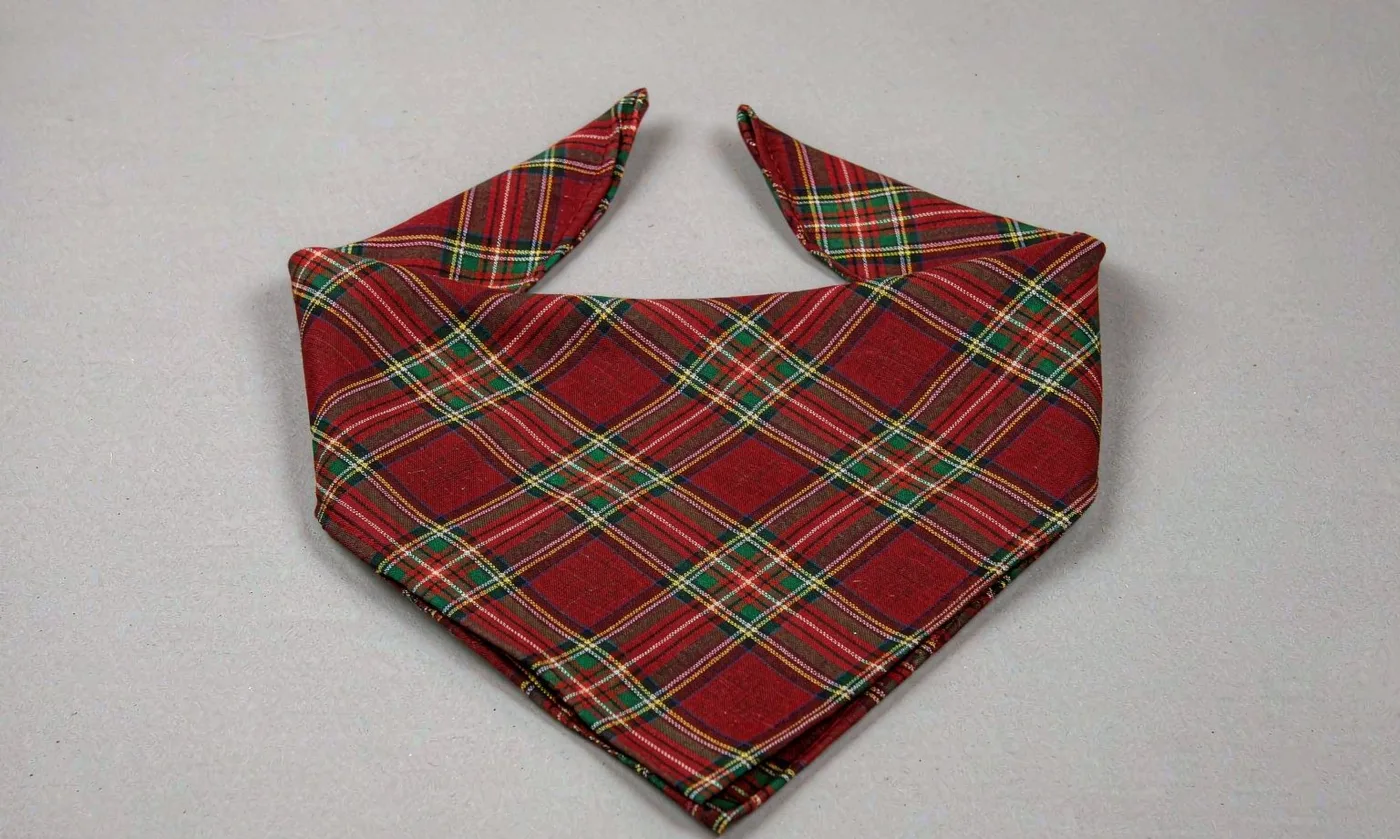
Weight, Warmth and Air Permeability
A scarf is worn on the neck, which is a region the animal cannot ventilate by panting effectively, and the thermal specification is therefore tighter than it looks. Two quantities describe it: weight in grams per square metre and air permeability in millimetres per second.
Weight sets warmth in the crude sense: more yarn means more trapped air means more insulation, up to the point where the structure is compressed. The useful range is 140-260 gsm for a scarf; below 140 it provides negligible warmth and above 260 the neck overheats in any indoor environment.
Air permeability is the number that decides whether the warmth is wearable. A fabric at 180-600 mm/s allows convective loss, and an animal that is active does not overheat. Below 120 mm/s the scarf becomes a barrier rather than a layer, and the neck beneath it becomes damp, which is uncomfortable and eventually a skin problem.
| Construction | GSM | Air permeability | Clo contribution | Moisture vapour transfer | Neck comfort index | Suits |
|---|---|---|---|---|---|---|
| Jersey, light | 140-170 | 420-620 mm/s | 0.08-0.14 | 620-880 g/m²/24h | 92 | Indoor, mild |
| Interlock, mid | 190-230 | 260-420 mm/s | 0.14-0.22 | 480-720 g/m²/24h | 86 | Autumn, general |
| Rib, mid | 200-250 | 230-380 mm/s | 0.18-0.28 | 440-680 g/m²/24h | 84 | Cool weather |
| Fleece, brushed | 200-260 | 180-320 mm/s | 0.24-0.38 | 380-580 g/m²/24h | 72 | Cold, outdoor |
| Waffle, heavy | 240-290 | 200-340 mm/s | 0.26-0.40 | 400-620 g/m²/24h | 70 | Cold, low activity |
| Laminated windproof | 220-280 | 20-80 mm/s | 0.34-0.52 | 80-220 g/m²/24h | 34 | Excluded |
The last row is excluded and it is worth explaining why. A laminated or coated windproof fabric is the obvious way to make a warm scarf, and its moisture vapour transfer of 80-220 grams per square metre per 24 hours is far below what the neck can produce. The result is a damp neck under a warm scarf, which is worse than no scarf at all.
Moisture vapour transfer is measured by the standard upright cup method and the working range on this product is 380-880 grams per square metre per 24 hours. Anything below 380 is specified only for short-duration outdoor use where the animal is moving and generating heat that keeps the layer dry.
Neck comfort index is a composite used internally, combining permeability, vapour transfer and weight into a single figure where 100 is a bare neck. It is not a published number; it exists so that a design decision can be argued with one figure rather than three, and the acceptance floor is 68.
Specify 140-260 gsm with air permeability of 180-600 mm/s and vapour transfer of 380-880 g/m²/24h, and exclude laminated constructions on vapour transfer grounds.
Edge Behaviour: Curl, Rolling and Recovery
Edge curl is the defect that makes a knitted scarf look cheap within a week. It is a property of the knit structure, it is worsened by washing, and it is controlled by three mechanisms that cost different amounts.
The mechanism is the imbalance between the face and the back loops in a single-bed knit. The structure stores strain at the cut edge and releases it by rolling. An interlock and a rib are balanced structures and curl at 1-6 degrees; a single jersey curls at 18-34 and gets worse after the first wash as the yarn relaxes.
The first control is structural: choose a balanced knit. That costs 28-34% more in yarn than a jersey and it eliminates the problem rather than managing it. The second is a bound or banded edge, at 0.16-0.38 USD, which physically prevents the roll. The third is a chemical anti-curl finish, at 0.04-0.12 USD, which reduces curl by 40-60% and washes out over 10-20 cycles.
| Method | Curl as new | Curl after 5 washes | Curl after 20 washes | Added cost (USD) | Durability | Verdict |
|---|---|---|---|---|---|---|
| Jersey, untreated | 18-28 degrees | 24-38 degrees | 28-44 degrees | None | n/a | Fails |
| Jersey, anti-curl finish | 8-14 degrees | 12-22 degrees | 20-34 degrees | 0.04-0.12 | 10-20 washes | Marginal |
| Jersey, bound edge | 2-5 degrees | 3-7 degrees | 4-9 degrees | 0.16-0.38 | Permanent | Acceptable |
| Interlock, cut edge | 2-6 degrees | 3-8 degrees | 4-10 degrees | 28% yarn premium | Permanent | Preferred |
| Rib, cut edge | 1-4 degrees | 2-6 degrees | 3-8 degrees | 34% yarn premium | Permanent | Preferred |
| Fleece, ultrasonically sealed | 0-3 degrees | 1-4 degrees | 2-6 degrees | 0.10-0.24 | Permanent on synthetics | Preferred, synthetic |
Curl is measured by conditioning a 150 mm by 150 mm specimen flat for 24 hours at 20 degrees and 65% relative humidity, then measuring the angle the edge lifts from the plane. Acceptance on this product is 12 degrees as new and 15 degrees after five washes, which only the balanced structures and the sealed edges meet.
Ultrasonic sealing is the interesting option for synthetic knits. It cuts and seals in one pass at 0.10-0.24 USD, gives no curl at all, and it is permanent because it melts the fibre rather than coating it. It does not work on a natural fibre or a high-natural blend, which restricts it to polyester and recycled PET constructions.
Washing is the accelerant for every method. A scarf tumble-dried at 60 degrees curls 20-40% more than one dried flat, and the instruction set states flat drying for that reason. The label recommendation is part of the specification rather than an afterthought, because it is the cheapest available control over the measured outcome.
Accept curl at 12 degrees as new and 15 after five washes, prefer a balanced knit or a sealed edge over a chemical finish, and specify flat drying on the label.
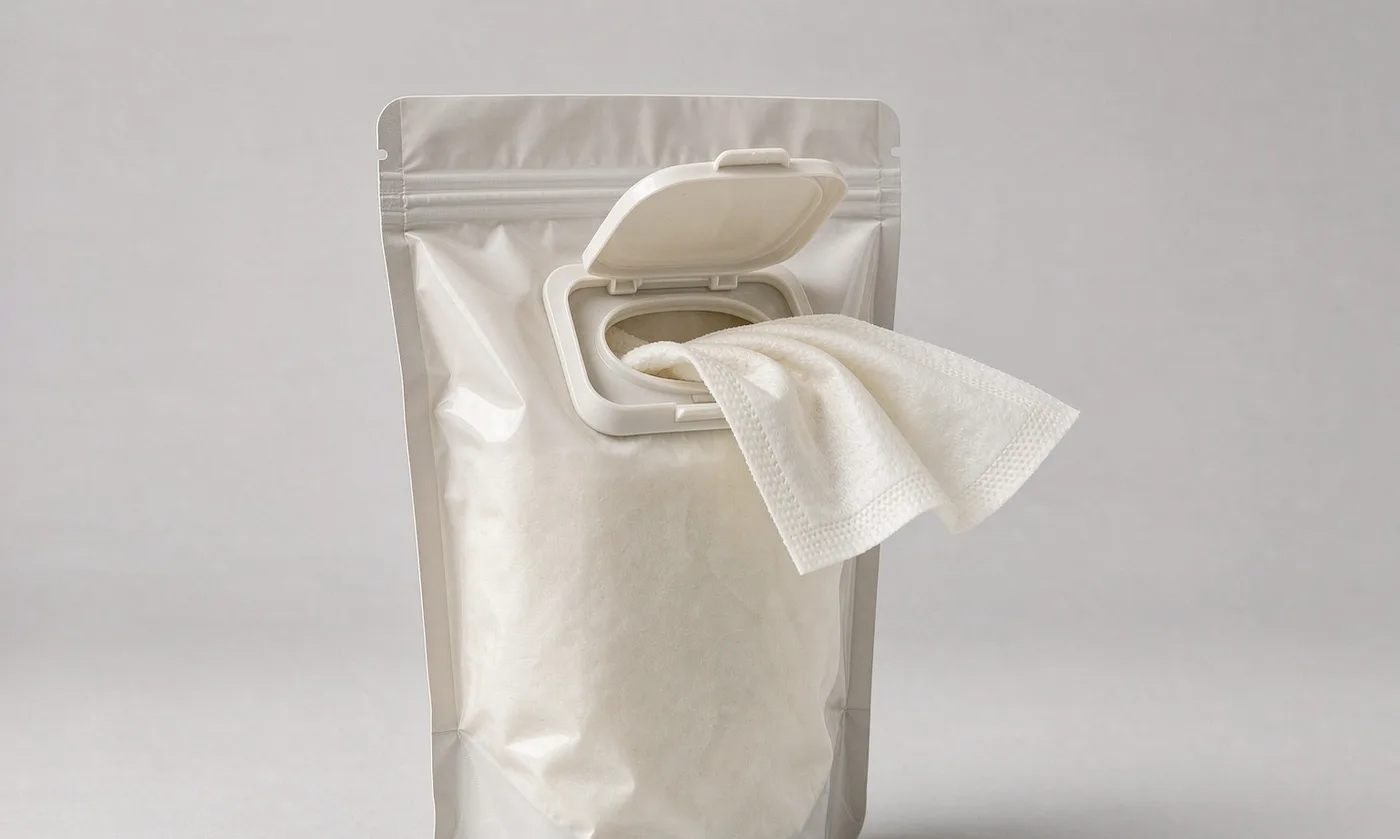
Pilling, Snagging and Abrasion Life
A scarf is rubbed by the collar, by the animal's own legs and by whatever it lies on, and its appearance after a month is decided by three properties that are testable: pilling, snagging and abrasion.
Pilling is the formation of small fibre balls on the surface, and it is a yarn and finish property more than a structure property. A staple-spun polyester with a low twist pills badly; a high-twist or filament yarn pills far less. Grading is on the standard scale after 7,000 revolutions, and acceptance is grade 3-4 or better.
Snagging is the more serious defect because it is not cosmetic. A pulled loop in a knit propagates, and a single snag can open a run down the length of a scarf. The mace test at 600 revolutions grades it, and the acceptance is grade 3 or better, which excludes waffle and cable structures from any product intended for cover.
| Yarn and structure | Pilling at 7,000 | Snag grade at 600 | Abrasion cycles | Appearance at 3 months | Cost index | Verdict |
|---|---|---|---|---|---|---|
| Staple polyester, jersey | 2-3 | 3 | 12,000-18,000 | Poor | 100 | Excluded |
| Staple polyester, high twist | 3-4 | 3-4 | 16,000-24,000 | Acceptable | 112 | Economy |
| Filament polyester, interlock | 4-5 | 4 | 24,000-36,000 | Good | 124 | Preferred |
| Filament polyester, rib | 4 | 3-4 | 20,000-30,000 | Good | 130 | Preferred |
| Acrylic, brushed fleece | 2-3 | 3 | 10,000-16,000 | Poor | 96 | Excluded |
| Recycled PET filament, rib | 4 | 3-4 | 18,000-28,000 | Good | 146 | Sustainability briefs |
Abrasion is measured on a Martindale rig at 9 kPa — lower than the 12 kPa used on a harness, because a scarf is not loaded — with acceptance at 20,000 cycles and 80% retained strength. The failure mode is thinning at the point where the collar sits, which is the same wear location that a collar itself sees.
An anti-pilling finish is available and it is worth specifying. A resin or enzymatic treatment raises the pilling grade by roughly half a grade at 0.06-0.16 USD, and on a staple yarn it is the difference between grade 2-3 and grade 3-4. It does not help a filament yarn, which is already at 4-5.
Appearance at three months is the internal check that ties the three tests together. A scarf is worn for 30 days by two animals per size block, then assessed against a panel of reference photographs. The laboratory grades predict it reasonably well, and where they disagree the laboratory grades are reconsidered rather than the field result.
Require pilling 3-4 at 7,000 revolutions, snag grade 3 at 600, and 20,000 abrasion cycles at 9 kPa with 80% retained strength.
Colour Fastness and Transfer to Coat
A scarf rubs against a coat for hours at a time, and a colour that moves is immediately visible on a light-coloured animal. The fastness specification is therefore set by the consequence rather than by convention, and it is tested wet as well as dry.
Rubbing fastness is the primary test. Dry rubbing is accepted at grade 4, but wet rubbing is where the risk is, because a damp scarf against a coat transfers dye far more readily. Acceptance for wet rubbing on this product is grade 3-4 minimum and grade 4 on any saturated or dark colourway.
Washing fastness is assessed as colour change and as staining, both at grade 4, on the scarf and on a multifibre adjacent fabric. A scarf that bleeds in the wash stains whatever it is washed with, which in a household means a customer's other laundry, and that generates complaints that are disproportionate to the product's value.
| Colour depth | Dry rub | Wet rub | Wash change | Wash staining | Light | Testing frequency |
|---|---|---|---|---|---|---|
| Pale and pastel | 4-5 | 4 | 4-5 | 4-5 | 4 | Per colourway |
| Mid tone | 4 | 3-4 | 4 | 4 | 4 | Per colourway |
| Saturated | 4 | 3-4 | 4 | 4 | 4-5 | Per colourway plus lot |
| Dark and black | 3-4 | 3 | 4 | 3-4 | 4-5 | Per lot |
| Red and deep navy | 3-4 | 3 | 3-4 | 3-4 | 4 | Per lot, plus washed retest |
| Printed multicolour | 4 | 3-4 | 4 | 4 | 4 | Per colourway |
Red and deep navy are the problem colourways and they are tested per lot rather than per colourway, because they are the two shades where a dye house can drift without the result being obvious on the fabric. A navy that bleeds is visible on a white chest within a week, and the lot-level test is what catches it.
A washed retest is specified for those two shades as well. Fastness is measured as received and again after five domestic washes, because some finishes mask a marginal dye in the new state and the margin shows afterwards. Testing only as received is how a bleeding colourway reaches a customer.
Light fastness matters less on a scarf than on a product worn in direct sun, but it is not irrelevant: a scarf worn on a sunny walk sees several hours of direct exposure a week, and grade 4 minimum is specified. On a knitted structure the dye sits differently from a woven, so the figure is measured rather than inferred from the yarn.
Testing is issued against the textile criteria published by OEKO-TEX and the chemical limits declared against ECHA guidance, with the panel per colourway at 180-420 USD.
Hold wet rubbing at grade 3-4 minimum and grade 4 on saturated shades, test red and navy per lot with a washed retest, and specify light fastness at grade 4.
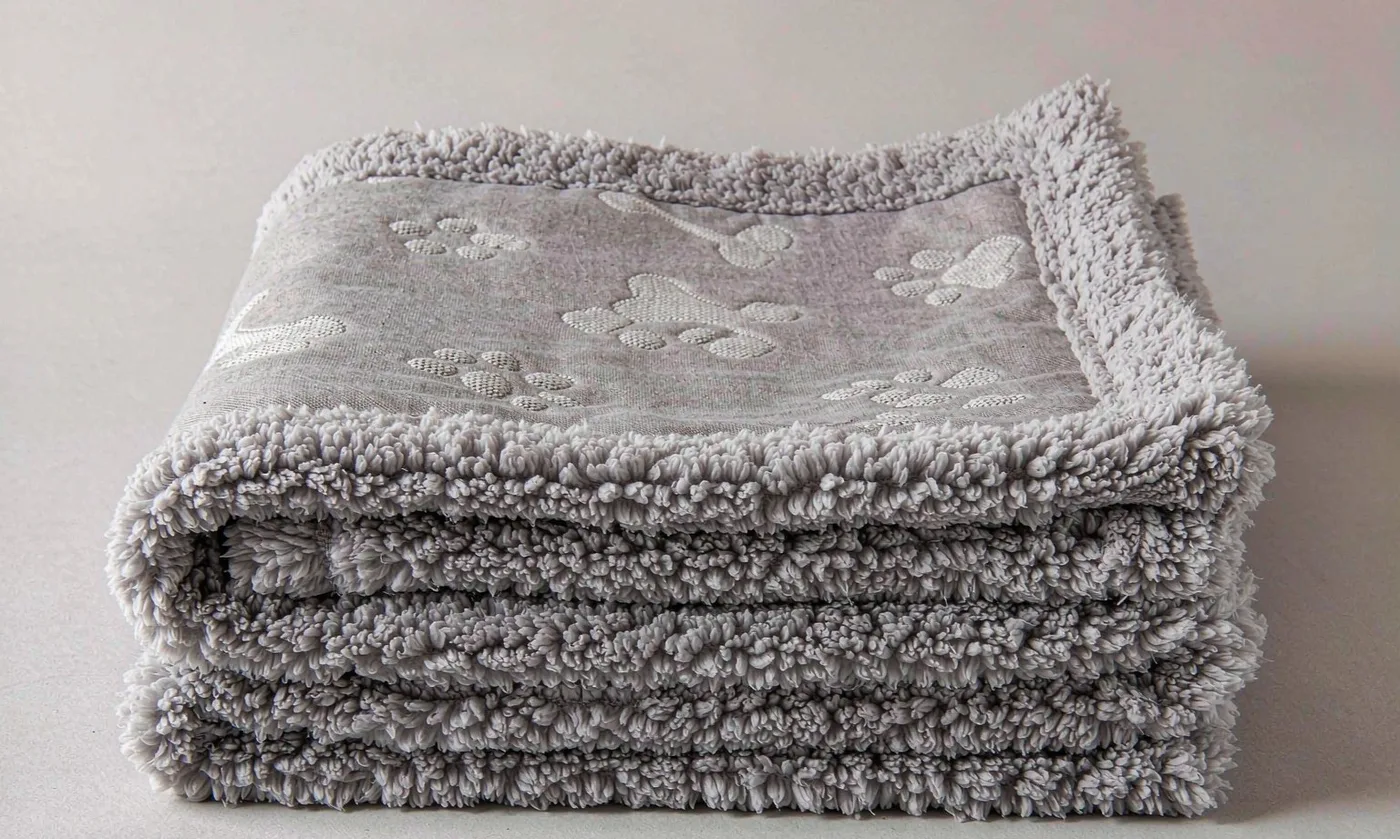
Wrap Geometry and Entanglement Control
Entanglement is the safety case for a scarf and it is addressed geometrically. Three rules cover it, each with a number, and together they convert a hazard into a controlled product.
The first rule is the length cap: 2.2 times neck circumference for a flat scarf and 2.0 times for a tube. At that length the scarf wraps once with a tail of 40-90 mm, which is enough to look right and not enough to reach the ground or to form a loop a leg can enter.
The second rule is that any closed loop carries a release element. A tube with no closure cannot come off if it catches, so it is fitted with a snap or a breakaway panel rated at 25-45 N. The band is lower than a collar band because there is no lead attached and the consequence of a release is a lost scarf rather than a lost animal.
The third rule concerns width and stiffness. A narrow stiff scarf holds a shape that can catch; a wider soft one conforms to the neck and does not. Minimum width is 60 mm on a small block and 100 mm on a large one, and the stiffness limit is a cantilever bend length of 28 mm or less.
| Block | Neck circumference | Max scarf length | Min width | Tail after one wrap | Release element | Max bend length |
|---|---|---|---|---|---|---|
| XS | 18-24 cm | 48 cm | 60 mm | 40-55 mm | Not required, open ends | 22 mm |
| S | 24-32 cm | 64 cm | 70 mm | 50-70 mm | Not required, open ends | 24 mm |
| M | 32-42 cm | 84 cm | 80 mm | 60-85 mm | Required on tubes | 26 mm |
| L | 42-54 cm | 108 cm | 90 mm | 70-95 mm | Required on tubes | 28 mm |
| XL | 54-68 cm | 136 cm | 100 mm | 80-110 mm | Required on tubes | 28 mm |
| XXL | 68-84 cm | 168 cm | 110 mm | 90-120 mm | Required on tubes | 30 mm |
Bend length is measured on a cantilever tester with the specimen overhanging until its leading edge reaches a 41.5 degree plane, and it is the standard measure of stiffness in a fabric. Below 28 mm the scarf drapes; above 34 mm it stands away from the neck and behaves like a stiff collar, which is the condition that catches.
Free ends on a flat scarf are finished to prevent them acting as a cord. An end is either hemmed flat with a mitred corner or finished with a short fringe of 30-50 mm maximum. A fringe longer than that is a collection of thin cords at the neck, and it is prohibited by the same reasoning that prohibits a drawstring.
Supervision is stated on the label because no geometry removes the risk entirely. The label carries a short, specific statement that the scarf is worn under supervision and is not a substitute for a collar, and it is printed rather than implied. Claims and warnings in this category are framed against the consumer product guidance published by the U.S. Consumer Product Safety Commission.
Apply the length cap, require a 25-45 N release on any tube, limit bend length to 28 mm, and cap any fringe at 30-50 mm.
Test Protocol, Cost and Programme Planning
The scarf protocol is seven checks at 740-1,680 USD per colourway, running 16-30 working days. Two of them are specific to this product and would not appear on a bandana or a collar: curl and bend length.
Dimensional stability is measured on three units over five washes at 40 degrees dried flat, with acceptance at 3% change in length and width and 4% in the tube circumference. Skew is measured at 3% maximum, and a tube is checked for spirality, which is the knit equivalent and is more common than skew on this product.
Seam strength applies where a scarf has one — a tube join, an end hem or a bound edge. Acceptance is 60 N with no stitch failure, tested at 100 mm per minute on five units. On a knitted structure the seam has to stretch with the fabric, so a lockstitch is used with a stretch thread or an overlock with a 4-thread construction, at 0.08-0.20 USD.
| Item | Condition | Threshold | Cost (USD) | Duration |
|---|---|---|---|---|
| Dimensional stability | 5 washes, flat dry | 3% change, 3% spirality | 90-190 | 6-10 days |
| Edge curl | 24 h conditioning, angle | 12 degrees new, 15 washed | 60-130 | 2-4 days |
| Bend length | Cantilever, 41.5 degrees | 28 mm maximum | 50-110 | 1-2 days |
| Pilling and snagging | 7,000 and 600 revs | Grade 3-4 and grade 3 | 120-260 | 4-8 days |
| Abrasion at 9 kPa | 20,000 cycles | 80% retained strength | 110-240 | 4-8 days |
| Fastness panel | Rub, wash, light | Grade 3-4 wet rub, 4 wash | 180-420 | 6-12 days |
| Release element | 0, 45, 90 degrees | 25-45 N on tubes | 110-240 | 3-6 days |
| Chemical panel | CPSIA, REACH, OEKO-TEX | Per limit | 240-600 | 8-16 days |
Unit cost is dominated by yarn, because a scarf uses more material than any other item in the accessory range relative to its price. At 500 units a mid-weight rib scarf lands at 1.62-3.40 USD; at 2,000 it lands at 1.28-2.68; at 5,000 at 1.10-2.28. The yarn line is 40-52% of content cost throughout.
Colourway count is the planning decision that matters most. A scarf programme typically runs four to eight colourways at MOQ 500 each, and because yarn is dyed to order in minimum lots of 150-400 kg, a colourway below roughly 800 units can carry a yarn surcharge of 0.18-0.46 USD per unit. Consolidating to fewer colourways at higher volume is usually the cheaper structure.
Scheduling follows the standard pattern with yarn dyeing as the long pole. Yarn runs 20-34 days dyed to order against 8-14 days for stock shades, knitting adds 8-16 days and finishing 4-9 days. Sampling takes 6-10 working days and bulk production 35-50 days after approval, with final random inspection to AQL 2.5 and curl, release function and dimensional stability in the critical class.
Budget 740-1,680 USD per colourway for the protocol, plan yarn dyeing as the long pole at 20-34 days, and put curl and release function in the critical class.
Why brands source here
- Pet carrier programs run since 2014; founding team in sewn goods since 2004
- SGS-verified production floor of 4,950 m² with 137 workers across 7 lines
- Monthly capacity of 200,000 units, audited to BSCI and ISO 9001
People Also Ask
How long should a pet scarf be?
Capped at 2.2 times neck circumference for a flat scarf and 2.0 times for a tube, so 64 cm for a 30 cm neck. Above that it wraps twice and the ends can be stepped on or form a loop.
Why does a knitted scarf curl at the edges?
A single-bed knit such as jersey has an imbalance between face and back loops that stores strain at the cut edge. Balanced structures like interlock and rib curl at 1-6 degrees against 18-34 for jersey.
What fabric weight suits a pet scarf?
140-260 gsm. Below 140 it provides negligible warmth; above 260 the neck overheats indoors, since the neck cannot be ventilated by panting effectively.
How much air permeability should a scarf have?
180-600 mm/s, with moisture vapour transfer of 380-880 g/m²/24h. Below 120 mm/s the scarf becomes a barrier and the neck beneath it goes damp.
What pilling grade is acceptable?
Grade 3-4 or better after 7,000 revolutions, with snag resistance at grade 3 or better after 600. Waffle and cable structures fail the snag requirement.
Why is wet rubbing fastness specified separately?
A damp scarf against a coat transfers dye far more readily than a dry one. Acceptance is grade 3-4 minimum and grade 4 on saturated shades.
Does an infinity tube scarf need a release element?
Yes. A closed loop that catches has no way to release, so it is fitted with a snap or breakaway panel rated at 25-45 N.
What stiffness limit applies to a scarf?
A cantilever bend length of 28 mm or less. Above 34 mm the scarf stands away from the neck and behaves like a stiff collar, which is the condition that catches.
Frequently Asked Questions
How is curl actually measured?
A 150 mm square specimen is conditioned flat for 24 hours at 20 degrees and 65% humidity, then the angle the edge lifts from the plane is measured. Acceptance is 12 degrees as new and 15 after five washes.
Why is an anti-curl finish only a partial answer?
It reduces curl by 40-60% at 0.04-0.12 USD but washes out over 10-20 cycles. A balanced knit or a sealed edge costs more and is permanent.
When does ultrasonic sealing work?
On synthetic knits only. It cuts and seals in one pass at 0.10-0.24 USD by melting the fibre, and it does not work on a natural fibre or a high-natural blend.
Why does the label specify flat drying?
A scarf tumble-dried at 60 degrees curls 20-40% more than one dried flat, so the recommendation is a control over the measured outcome rather than an afterthought.
Why is a laminated windproof fabric excluded?
Its vapour transfer of 80-220 g/m²/24h is far below what the neck produces, giving a damp neck under a warm scarf, which is worse than no scarf.
Why are gauge and yarn count specified alongside gsm?
The same gsm can be reached in several ways with different hands and durabilities. A 2x2 rib at 12 gauge in a 30/1 yarn gives 210-240 gsm; at 7 gauge in an 18/1 it gives 260-300.
Why is a filament yarn preferred to a staple yarn?
A staple-spun polyester with low twist pills at grade 2-3 and abrades out at 12,000-18,000 cycles. A filament yarn reaches grade 4-5 and 24,000-36,000.
Why is snagging treated as more serious than pilling?
A pulled loop in a knit propagates down the course and ruins the panel, so it is functional rather than cosmetic. That is what excludes waffle and cable from everyday use.
Why are red and navy tested per lot?
They are the two shades where a dye house can drift without the result being obvious on the fabric, and a bleeding navy is visible on a white chest within a week.
What is spirality and why is it checked on a scarf?
It is the knit equivalent of skew, where the courses spiral around a tube. It is more common than skew on a knitted product and is held at 3% maximum.
Why does a scarf seam need to stretch?
The fabric extends 22-80% depending on structure, so a seam that does not extend with it breaks. A lockstitch with stretch thread or a 4-thread overlock is used at 0.08-0.20 USD.
Why can a fringe be a problem at the neck?
A fringe longer than 30-50 mm is a collection of thin cords at the neck, prohibited by the same reasoning that prohibits a drawstring.
How does yarn minimum lot size affect a programme?
Yarn is dyed to order in lots of 150-400 kg, so a colourway below roughly 800 units can carry a surcharge of 0.18-0.46 USD per unit. Fewer colourways at higher volume is usually cheaper.
What is the long pole in scarf scheduling?
Yarn dyeing at 20-34 days dyed to order against 8-14 days for stock shades, with knitting at 8-16 days and finishing at 4-9 days on top.
Talk to QUANZHOU JUNYUAN BAGS about a pet carrier program: MOQ 500 pieces per colourway, samples in 6-10 working days, bulk production in 35-50 days under AQL 2.5 inspection.
Get a free quote Request a sample