Pet Carrier Search and Rescue: SAR Vest
A search and rescue vest is specified on four numbers: a shell of 500-1000 denier rated 30,000-60,000 Martindale rubs, retroreflective banding at 50 millimetres and 500-900 candela per lux per square metre, a lift and drag point proof-loaded to 1,500-3,600 newtons, and a total garment weight held under 4% of body mass.
A SAR vest is the most heavily specified garment in a working-dog range because the failure consequences are operational rather than commercial. The animal works in debris, rock, water and low light for four to ten hours, the handler needs to see it at 100-300 metres, and the garment has to accept a lift, a drag and an electronics payload without any of those becoming the weak point. This page works through it in manufacturing order: how the high-visibility package is constructed for both day and night detection, what the shell and seam specifications have to be for debris abrasion, how a GPS or tracking unit is integrated without compromising the antenna or the animal, and how the lift and drag load paths are built and proof-tested. It then covers environmental durability, the weight and thermal budget for a full working day, the identification and documentation an operational unit requires, and how the programme is structured for traceability and field spares. Commercial terms are standard: MOQ 500 pieces per colourway, prototypes in 6-10 working days, bulk production 35-50 days after sample approval, final random inspection to AQL 2.5, T/T 30/70 and FOB Xiamen.
Custom pet carrier development for pet carrier accessory starts with a tech pack: dimensions, fabric weight, hardware finish and the target test standard.
High-Visibility Package: Fluorescent Ground and Retroreflective Layout
Detection is the primary function of a SAR vest. The handler has to acquire the animal at 100-300 metres in vegetation, in low light and at night, and that needs two technologies working together rather than one.
Fluorescent ground fabric does the daytime work. A fluorescent yellow-green or orange at a defined chromaticity raises daytime detection distance by 2-4 times over a dark ground, and the coverage matters more than the shade: a garment with 55-75% fluorescent coverage is acquired at 150-280 metres where a garment with 25-40% is acquired at 60-140.
Retroreflective banding does the night work and its performance is measured, not described. A coefficient of retroreflection of 500-900 candela per lux per square metre in a 50 millimetre band is the operational specification; decorative trim at 80-250 is a visibility feature that fails as a detection aid.
| Package | Fluorescent coverage | Reflective width (mm) | Retroreflection (cd/lx/m2) | Day detection (m) | Night detection (m) | Cost (USD) |
|---|---|---|---|---|---|---|
| Dark ground, piping only | 0% | 8-15 | 150-330 | 40-90 | 60-130 | 0.35-1.10 |
| Dark ground, 25 mm bands | 0% | 25 | 300-500 | 40-90 | 120-220 | 0.60-1.90 |
| Partial fluorescent, 50 mm bands | 25-40% | 50 | 500-700 | 60-140 | 180-320 | 1.20-3.20 |
| Full fluorescent, 50 mm bands | 55-75% | 50 | 500-900 | 150-280 | 200-360 | 1.80-4.60 |
| Full fluorescent, dual band row | 55-75% | 2 x 50 | 500-900 | 150-280 | 240-420 | 2.60-6.40 |
| Fluorescent plus active LED | 55-75% | 50 plus LED | 500-900 | 150-280 | 300-600 | 4.20-11.50 |
Layout is a geometry problem and the requirement is 360-degree coverage. A continuous band around the chest plus a second band over the dorsal line gives coverage from every horizontal angle; two flank patches give about 180 degrees and leave the animal invisible from the front and rear at the moment it turns.
Band continuity is the manufacturing detail that breaks the layout. A band interrupted by a buckle, a pocket or a panel seam loses 60-200 millimetres of retroreflective length at each break, and three breaks remove 15-30% of the night signature. Routing the band over the closure rather than around it is the fix.
Wash and abrasion degradation has to be specified as a floor value rather than an initial one. A glass-bead band loses 30-60% of its retroreflection by 25-50 wash cycles; an encapsulated microprismatic band loses 10-25% by 50-100. The specification should name a minimum performance that must still hold at the rated cycle count.
Specify 55-75% fluorescent coverage with 50 millimetre banding at 500-900 cd/lx/m2, route the band continuously over the closure, and set a floor value at the rated wash count.
Shell and Seam Specification for Debris, Rock and Water
The working surface for a SAR garment is rock, concrete rubble, vegetation and water, and the abrasion duty is 3-8 times that of a normal working vest. The shell and the seam specification follow from that rather than from a generic durability target.
Denier is the starting point and it should be paired with a Martindale figure. A 500 denier nylon at 30,000-45,000 rubs is the lightest option that survives debris; a 1000 denier at 45,000-80,000 is the standard for a rubble environment at a weight penalty of 40-90%.
Tear strength is the property that decides whether a snag becomes a hole. A ripstop grid at 8-15 millimetres spacing raises tear strength by 40-120% over a plain weave at the same weight, and it is the correct specification for an environment with rebar and branch snags.
Water behaviour is a decision rather than a default. A durable water-repellent finish sheds the first 20-60 minutes of rain and keeps the garment light; a waterproof membrane keeps the animal dry and adds 80-220 grams plus a thermal penalty that matters on a working day.
| Environment | Shell | Denier | Martindale (rubs) | Tear strength (N) | Finish | Weight (gsm) | Cost (USD) |
|---|---|---|---|---|---|---|---|
| Urban, light debris | Nylon ripstop | 420-500 | 25,000-40,000 | 180-380 | DWR | 180-260 | 2.40-5.20 |
| Rural, vegetation | Nylon ripstop | 500-700 | 30,000-50,000 | 220-450 | DWR | 220-320 | 3.10-6.80 |
| Rubble and collapse | Cordura weave | 1000 | 45,000-80,000 | 400-900 | DWR plus PU | 320-460 | 4.60-10.50 |
| Water and flood | Nylon, coated | 420-700 | 25,000-50,000 | 200-450 | PU, taped seams | 240-380 | 3.80-8.40 |
| Cold and alpine | Nylon, softshell | 500-800 | 30,000-60,000 | 250-550 | DWR, fleece back | 300-480 | 4.20-9.60 |
| Hot and arid | Polyester air mesh | 600-900 | 20,000-40,000 | 180-380 | None | 200-320 | 2.80-6.20 |
Seam construction is where a strong shell is wasted. A sewn seam at 6-10 stitches per inch holds 80-110% of the shell strength and survives repeated flexing; a welded seam on a coated fabric holds 60-90% and begins to delaminate at 150-400 wash or abrasion cycles.
Stitch pattern at the load points is a separate specification. A box-and-cross of 400-900 stitches at the leash and drag points reaches 800-2,000 newtons against 200-500 for a bar tack, and this is the difference between a garment that survives a snag and one that opens at the seam.
Abrasion reinforcement is cheap insurance at the known wear sites. A 200-400 gram patch at the strap line, the ventral panel and the axilla adds 0.25-0.90 USD and typically doubles the service life at those points.
Specify 500-1000 denier ripstop at 30,000-60,000 rubs, sew rather than weld the structural seams, box-and-cross every load point, and reinforce the three known wear sites.
Electronics Integration: GPS Pouch, Antenna Clearance and Battery Access
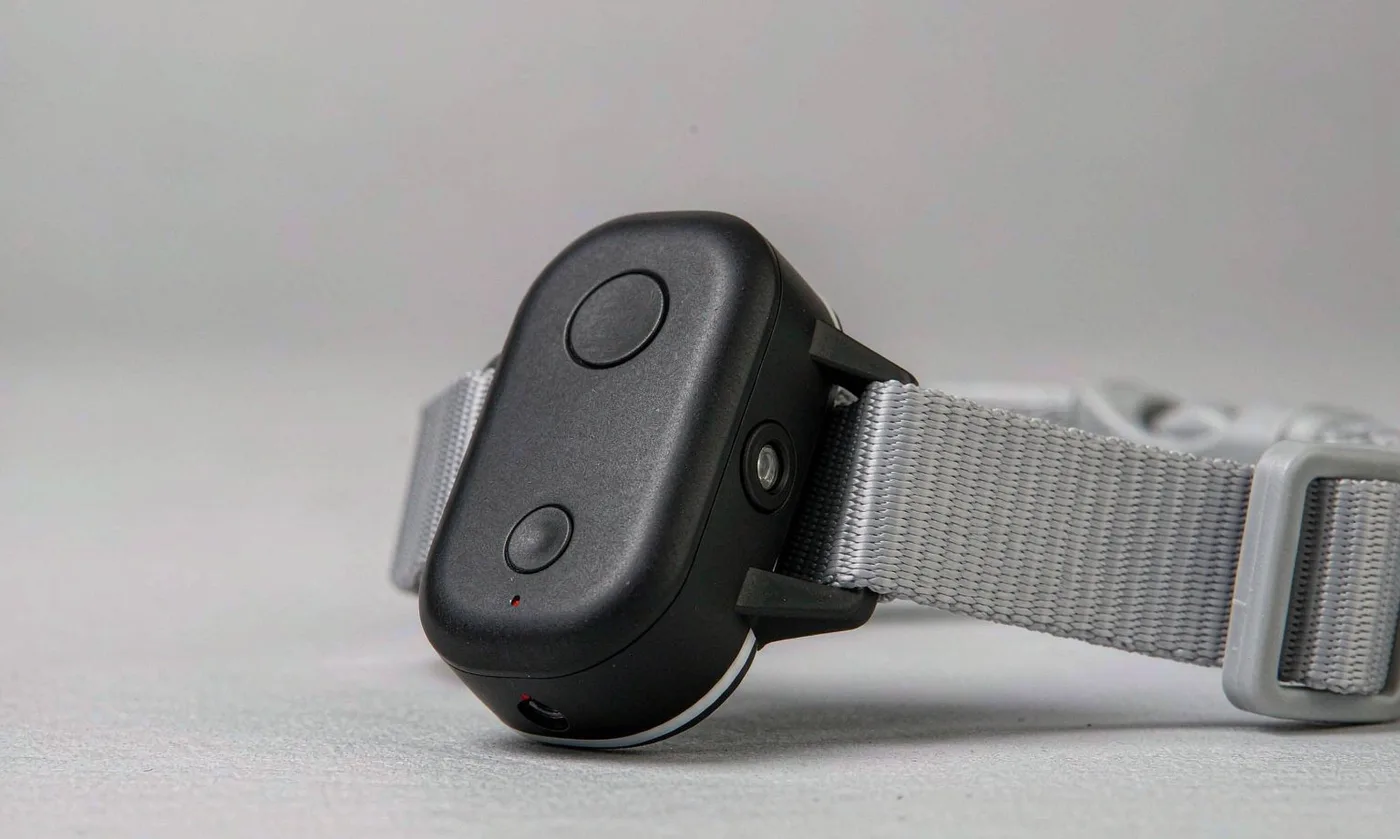
A SAR vest increasingly carries electronics — a tracking unit, a radio relay or a camera — and the integration is a specification problem rather than an accessory. The pouch geometry, the antenna environment and the battery access each have failure modes that are easy to design in.
Antenna clearance is the first and the most consequential. A GPS patch antenna needs a clear view of the sky, and a metal D-ring, a buckle or a reflective band placed within 20-50 millimetres of it detunes the antenna and costs 20-60% of the position-accuracy performance. The specification is a stated exclusion zone.
Pouch placement follows from the antenna requirement and from the animal's movement. A dorsal pouch at 40-60% of back length gives the best sky view and it is the least likely to be struck by vegetation; a flank pouch is protected but loses 25-55% of the sky view on one side.
Battery access is the operational detail that decides whether a unit is changed in the field. A pouch that requires the vest to be removed costs 2-6 minutes per change; a top-loading pouch with a 12-25 millimetre closure flap allows a change in 20-60 seconds with the garment on.
| Parameter | Specification | Rationale | Failure if ignored | Verification |
|---|---|---|---|---|
| Antenna exclusion zone | 20-50 mm clear of metal | Detuning | 20-60% accuracy loss | Position fix test |
| Pouch position | Dorsal, 40-60% back length | Sky view | 25-55% sky loss on flank | Field fix-rate test |
| Pouch interior | 60-120 x 40-80 x 20-40 mm | Unit envelope | Unit forces seam | Fit trial |
| Battery access time | 20-60 s with garment on | Field change | 2-6 min per change | Timed trial |
| Closure | 12-25 mm flap plus hook-and-loop | Retention | Unit ejected | Shake and drop test |
| Drainage | 2-4 holes at 3-5 mm | Water egress | Unit submerged | Immersion test |
| Cable routing | Internal sleeve, no exposed loop | Snag | Cable torn out | Snag trial |
| Unit weight limit | 3-6% of body mass total | Gait and thermal load | Gait change | Weigh and observe |
Drainage is the detail that destroys electronics and it is usually omitted. A pouch that takes water and cannot shed it holds the unit submerged for 20-90 minutes after a water crossing; two to four drain holes at 3-5 millimetres at the lowest point resolve it.
Cable routing, where the unit has an external antenna or a status lead, should be an internal sleeve rather than an exposed run. An exposed loop of 40-120 millimetres catches vegetation and is torn out within one to three deployments.
Weight budget has to include the electronics. A vest at 3% of body mass plus a unit at 2-3% puts the animal at 5-6%, which is above the threshold where gait changes, and the payload should be counted in the garment specification rather than added afterwards.
Define a 20-50 millimetre antenna exclusion zone, place the pouch dorsally at 40-60% of back length, add drainage holes, and count the electronics in the weight budget.
Lift, Drag and Extraction Load Paths
The structural requirement that distinguishes a SAR garment is that it may be used to move the animal. A lift into a vehicle, a drag out of a confined space or a hoist onto a litter puts loads on the garment that no other pet product sees, and the load path has to be deliberate.
A lift load is the most demanding. Lifting a 40 kilogram animal takes 392 newtons static and 780-1,570 newtons in a step or a slip, which is why the proof specification is four to eight times body weight rather than a material description.
Load distribution determines whether that load is carried or tears out. A handle stitched to the shell alone pulls through at 300-700 newtons; the same handle on a 25-50 millimetre load spreader over a 200-400 gram reinforcement reaches 1,500-3,600 newtons.
A drag load runs along a different path — horizontally, through the girth and the chest panel rather than vertically through the handle — and it needs its own anchorage. A chest drag loop on 25 millimetre webbing continuous with the girth strap reaches 900-2,200 newtons where a loop stitched to the chest panel alone fails at 300-800.
| Load path | Construction | Proof load (N) | Shock load (N) | Test cycles | Failure mode at limit | Cost (USD) |
|---|---|---|---|---|---|---|
| Dorsal lift handle | 25-50 mm spreader, reinforced | 1,500-3,600 | 2,200-5,000 | 500 lifts | Webbing elongation | 0.55-1.70 |
| Chest drag loop | 25 mm webbing, continuous with girth | 900-2,200 | 1,400-3,100 | 200 drags | Girth strap stretch | 0.30-0.95 |
| Rear lift assist | 25 mm webbing, reinforced | 700-1,800 | 1,100-2,600 | 200 lifts | Stitch pull-out | 0.28-0.85 |
| Leash point | 25 mm webbing, box and cross | 800-2,000 | 1,200-2,900 | 5,000 | Ring or webbing | 0.20-0.65 |
| Hoist attachment | 50 mm spreader, dual stitch | 2,000-4,800 | 3,000-6,500 | 100 hoists | Spreader | 0.85-2.40 |
| Pouch retention | Closure plus base anchor | 200-600 | 300-900 | Shake, 30 min | Closure opens | 0.15-0.50 |
Proof testing has to be destructive on samples and non-destructive on production. A sample garment is pulled to failure to establish the true margin, and production units are proof-loaded to a fraction of it — typically 40-60% — so the test does not consume the unit's fatigue life.
Stitch inspection at the load points is the production control that matters. A box-and-cross pattern is verified by stitch count and by a pull test on one unit per 200-500, and a drift in the stitch count is caught before it becomes a field failure.
The handle profile is the compromise with carrier use. A handle tall enough to grab with a gloved hand stands 40-70 millimetres proud and catches a top-loading zip; the resolution is a fold-flat handle that stands under 30 millimetres in transit and deploys when pulled.
Proof-load the lift path to four to eight times body weight, run the drag load through the girth rather than the chest panel, and pull-test one unit per 200-500 in production.
Environmental Durability: UV, Water, Mud and Cold
A SAR garment is stored in a vehicle, deployed in weather and dried dirty. The environmental regime is harder than the wash regime, and the test plan has to reflect that rather than repeating a domestic laundering standard.
Ultraviolet is the largest single cause of strength loss in a stored garment. A nylon shell loses 20-50% of its tensile strength after 500-1,500 hours of xenon-arc exposure, and a polyester loses 15-40%. A UV-stabilised yarn and a DWR finish that is reapplied are the controls.
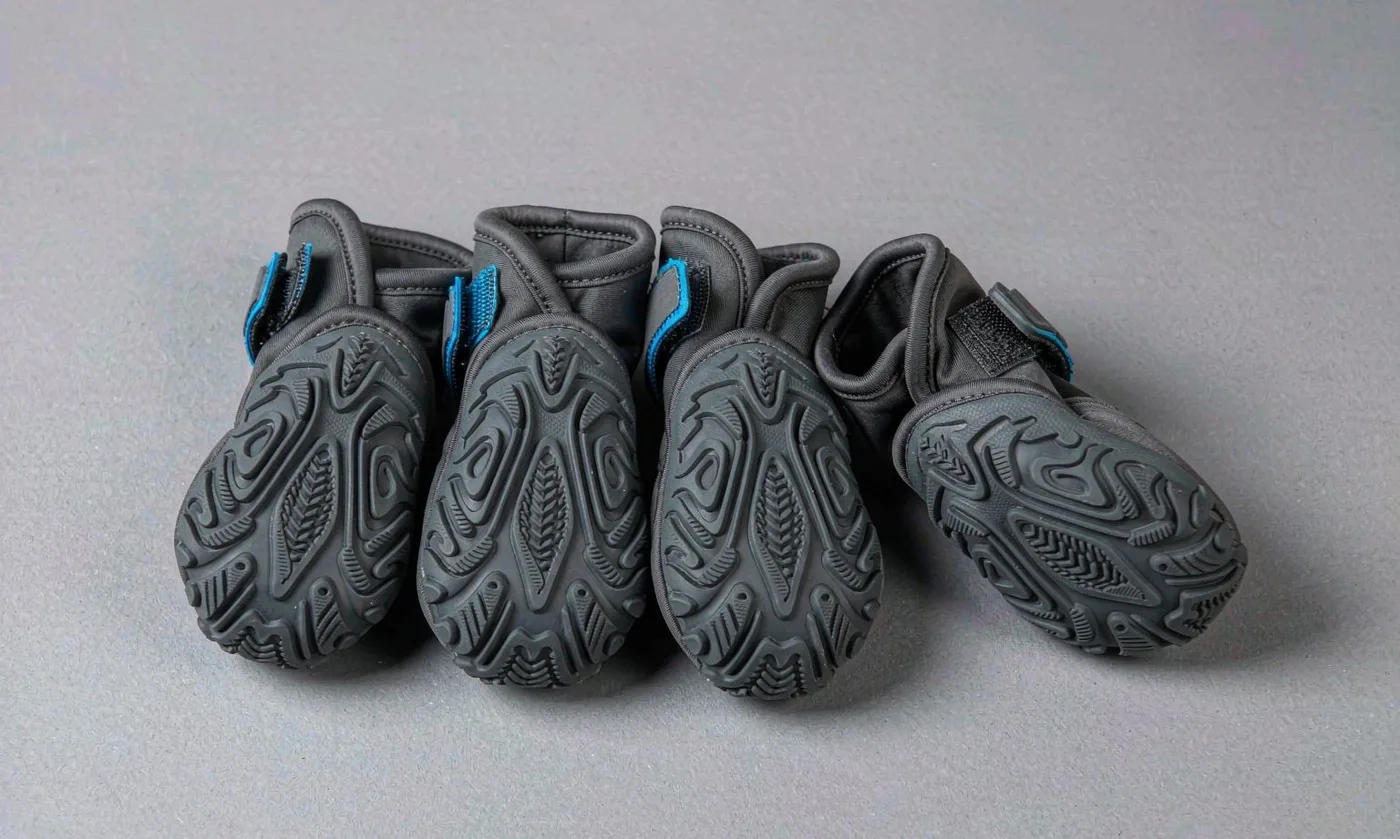
Water and mud are the operational reality and they attack the closure rather than the shell. A buckle packed with grit needs 3-8 times the actuation force and can jam; a closure with a shroud or a covered channel is the fix at 0.10-0.40 USD.
Cold performance is a specification that is rarely written and often matters. A standard nylon hook-and-loop and a polyacetal buckle perform to about -20 degrees Celsius; below that, a buckle becomes brittle and a closure loses 30-60% of its peel strength.
| Condition | Test method | Exposure | Nylon result | Polyester result | Acceptance | Mitigation |
|---|---|---|---|---|---|---|
| UV, xenon-arc | ASTM G155 | 500-1,500 h | 20-50% strength loss | 15-40% loss | 30% max loss | UV-stabilised yarn |
| Colour change, UV | ISO 105-B02 | 200-1,000 h | Delta-E 2-6 | Delta-E 1.5-5 | Delta-E 4 max | Solution-dyed yarn |
| Water immersion | In-house, 30 min | Static | Absorbs 8-25% | Absorbs 4-15% | 15% max | DWR, drainage |
| Grit in closure | In-house, 50 cycles | Contaminated | 3-8x actuation force | Same | Actuates at 3x | Covered channel |
| Cold flex, -20 C | In-house | 4-24 h | Buckle usable | Buckle usable | No cracking | Grade by temperature |
| Salt spray on hardware | ASTM B117 | 96-240 h | N/A | N/A | No red rust | Stainless or brass |
| Mud abrasion | In-house tumble | 2-8 h | Surface pile | Surface pile | No tear | Reinforced panels |
Testing standards for the textile properties are published and should be cited by name rather than paraphrased. The relevant abrasion and colourfastness methods are maintained by ASTM International and by the ISO, and a tender that names a standard also names the acceptance value, which removes the argument later.
Drying and storage instructions belong in the documentation rather than on the hangtag. A garment dried at 60 degrees Celsius loses 2-4 times the DWR life of one dried at ambient, and a garment stored wet in a vehicle loses 20-50% of its shell strength in 3-9 months.
Field repairability is the environmental control that costs nothing. A garment with a spare buckle, a spare panel and a repair instruction card in the kit is serviceable in 10-30 minutes instead of being withdrawn for 3-8 weeks.
Test UV, grit and cold rather than only laundering, cite the standard and acceptance value by name, and ship a field repair card with the garment.
Weight Budget and Thermal Load Over a Working Day
The heaviest and most protective garment is not the best one if the animal cannot work in it for six hours. Weight and thermal load are the constraints that set the upper bound on every other specification in this category.
Weight is expressed as a share of body mass because the absolute figure means nothing across breeds. A garment below 3% of body mass is unremarkable; at 3-5% it is felt; above 5% it changes gait and reduces working time by 15-40%.
Thermal load is the binding constraint in warm conditions and it is driven by coverage. A garment covering 45-70% of the body surface reduces evaporative area, and in an ambient temperature above 22 degrees Celsius with a working dog generating 300-900 watts, that is the difference between a four-hour and a two-hour deployment.
Ventilation design is the mitigation. A mesh ventral panel, an open axilla and a dorsal structure that stands 2-6 millimetres off the coat maintain convective flow and cut core temperature rise by 1-3 degrees Celsius.
| Condition | Ambient (C) | Garment mass (% body) | Coverage | Ventilation | Core temp rise (C) | Working time (h) |
|---|---|---|---|---|---|---|
| Cool, dry | 5-15 | 3-5% | 55-75% | Not critical | 0.3-0.8 | 6-10 |
| Temperate | 15-22 | 3-4% | 50-70% | Recommended | 0.6-1.4 | 4-8 |
| Warm | 22-30 | 2-3% | 40-60% | Required | 1.0-2.2 | 2-5 |
| Hot | 30-38 | 1.5-2.5% | 30-50% | Required, mesh shell | 1.6-3.0 | 1-3 |
| Cold, wet | -5 to 8 | 4-6% | 60-80% | Not required | 0 to -0.5 | 6-10 |
Sizing the specification to the deployment climate is the practical outcome. A unit working in a temperate climate can specify a 1000 denier shell at 4% of body mass; the same specification in a hot climate would cut working time by 30-60% and the correct answer is a lighter shell with the same visibility package.
Water carried in the garment is a hidden weight. A wetted shell absorbs 8-25% of its own mass by weight, so a 500 gram garment carries an extra 40-125 grams after a water crossing, which is why drainage and water-repellency are weight specifications as well as comfort ones.
Hold the garment under 4% of body mass including the electronics, and reduce coverage and shell weight as the deployment temperature rises.
Unit Identification, Traceability and Documentation
An operational unit buys differently from a retailer: the specification is written, the documentation is checked, and the garment is a managed asset with a serial number rather than a consumer product. The programme has to be built for that.
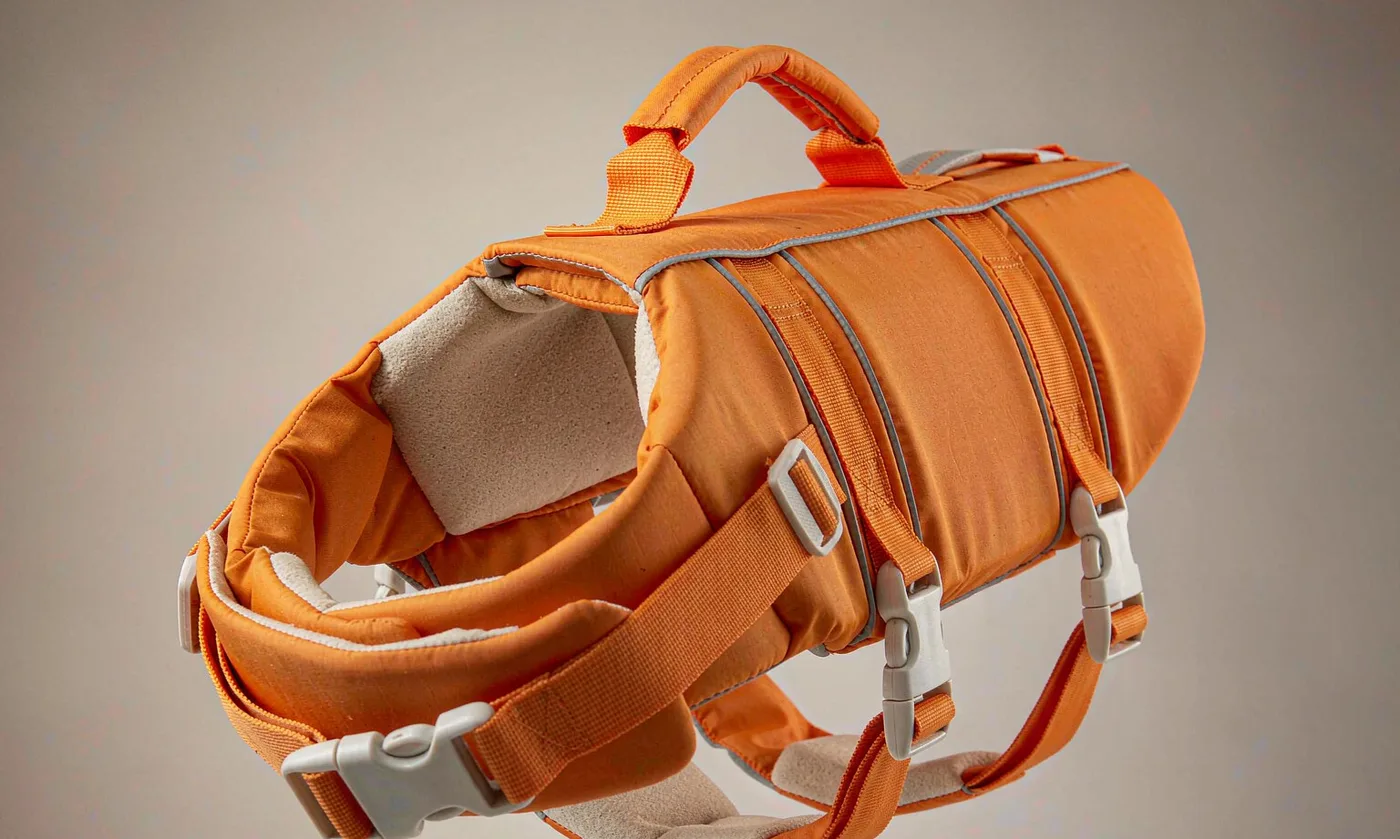
Identification on the garment is unit-level rather than generic. A unit designation, an asset number and a handler or animal identifier, at 14-28 millimetres cap height, is what an asset register needs, and it can be produced as a laser-marked label or an embroidered panel.
Traceability is the requirement that shapes production. A per-unit serial that links the garment to its material lots, its test reports and its production date costs 0.02-0.20 USD and turns a procurement question or a field failure into a database lookup.
Documentation sets are requested by standard name in most tenders. Confirming the standard and the acceptance value in writing before sampling costs nothing; a re-test after production costs 8-25 times a pre-test and delays the delivery by 3-8 weeks.
| Document | Purpose | Produced by | Cost (USD) | Validity | Typical request rate |
|---|---|---|---|---|---|
| Material composition and care | Compliance | Supplier | Included | Per programme | 100% |
| Abrasion and tear report | Durability evidence | Third party | 180-720 | Per year | 70-90% |
| Retroreflection report | Visibility evidence | Third party | 150-560 | Per component | 65-85% |
| Load proof test record | Structural evidence | Supplier plus lab | 120-480 | Per design | 80-95% |
| Colourfastness and UV report | Environmental evidence | Third party | 200-780 | Per year | 50-70% |
| Batch traceability record | Recall scope | Supplier | 0.02-0.20 | Per batch | 60-80% |
| Material declaration | Chemical compliance | Supplier | Included | Per year | 55-75% |
Chemical compliance follows the destination market. Material declarations are normally held against OEKO-TEX limits for the textile and against REACH and CPSIA limits for any metal hardware, and the declaration is a document request rather than a design constraint in most cases.
Field spares are the part of the programme that keeps a unit operational. Buckles, girth straps, panels and reflective banding held at 5-12% of annual volume turn a damaged garment into a 10-30 minute repair rather than a 3-8 week withdrawal.
Programme terms are standard: MOQ 500 pieces per colourway, prototypes in 6-10 working days for a new design and 3-6 days for a confirmation sample on an approved platform, bulk production 35-50 days after sample approval, final random inspection to AQL 2.5 including load-point proof testing, T/T 30/70 and FOB Xiamen. Production runs through the SGS-verified production base under ISO 9001 and BSCI coverage, with 4,950 square metres, 137 staff and seven lines, and textile inputs are declared against OEKO-TEX limits. Specify the visibility package and the load paths first, then buy the shell weight down to the deployment climate.
Why brands source here
- Pet carrier programs run since 2014; founding team in sewn goods since 2004
- SGS-verified production floor of 4,950 m² with 137 workers across 7 lines
- Monthly capacity of 200,000 units, audited to BSCI and ISO 9001
People Also Ask
What makes a SAR vest different from a working dog vest?
The load paths and the visibility range. A SAR garment is proof-loaded to four to eight times body weight for lift and drag and is specified for detection at 100-300 metres.
How much reflective material does a SAR vest need?
A 50 millimetre band at 500-900 cd/lx/m2, continuous around the chest and over the dorsal line. Decorative trim at 80-250 is not a detection aid.
Which shell suits rubble and debris work?
1000 denier Cordura at 45,000-80,000 Martindale rubs with a ripstop grid raising tear strength 40-120%. A 500 denier shell suits lighter debris.
Where should a GPS unit be mounted on a SAR vest?
Dorsally at 40-60% of back length, with a 20-50 millimetre exclusion zone clear of metal. A flank pouch loses 25-55% of the sky view.
How much weight can a working dog carry?
Below 3% of body mass is unremarkable; above 5% gait changes and working time drops 15-40%. Count the electronics in the budget.
How strong should the lift handle be?
1,500-3,600 newtons, achieved with a 25-50 millimetre load spreader over a 200-400 gram reinforcement. Stitched to the shell alone it fails at 300-700.
What environmental tests matter most for SAR gear?
UV at 500-1,500 hours, grit in the closure, and cold flex at -20 degrees Celsius. A domestic laundering standard does not cover any of them.
Frequently Asked Questions
Why is fluorescent coverage specified as a percentage?
Because coverage drives detection distance more than shade does. A garment at 55-75% fluorescent coverage is acquired at 150-280 metres where one at 25-40% is acquired at 60-140.
What happens if the reflective band is interrupted?
Each break at a buckle, pocket or seam removes 60-200 millimetres of retroreflective length, and three breaks cost 15-30% of the night signature. Route the band over the closure.
How much retroreflection is lost in washing?
Glass-bead tape loses 30-60% by 25-50 cycles; encapsulated microprismatic tape loses 10-25% by 50-100. Specify a floor value at the rated cycle count.
Should the seams be sewn or welded?
Sewn. A sewn seam at 6-10 stitches per inch holds 80-110% of shell strength and survives flexing; a welded seam on coated fabric delaminates at 150-400 cycles.
Why use a ripstop grid?
It raises tear strength 40-120% at the same weight, which is what stops a snag on rebar or a branch from becoming a hole.
How should the pouch shed water?
Two to four drain holes at 3-5 millimetres at the lowest point. Without them the unit sits submerged for 20-90 minutes after a water crossing.
Why is cable routing specified as an internal sleeve?
An exposed loop of 40-120 millimetres catches vegetation and is torn out within one to three deployments.
How is a drag load different from a lift load?
A drag runs horizontally through the girth and chest, not vertically through the handle. The loop has to be continuous with the girth strap to reach 900-2,200 newtons.
Why proof-load production at 40-60% of failure?
Because pulling to failure consumes the unit's fatigue life. Samples are destroyed to find the true margin; production is loaded to a fraction of it.
What is the handle profile compromise?
A handle tall enough for a gloved hand stands 40-70 millimetres proud and catches a top-loading carrier zip. A fold-flat handle under 30 millimetres deploys when pulled.
How much strength does ultraviolet exposure cost?
Nylon loses 20-50% of tensile strength after 500-1,500 hours of xenon-arc exposure and polyester 15-40%. A UV-stabilised yarn is the control.
Why does grit in a buckle matter?
A contaminated closure needs 3-8 times the actuation force and can jam. A covered channel or shroud at 0.10-0.40 USD is the fix.
How much water does a wetted shell carry?
8-25% of its own mass, so a 500 gram garment carries an extra 40-125 grams after a crossing. Repellency and drainage are weight specifications too.
What field spares should a unit hold?
Buckles, girth straps, panels and reflective banding at 5-12% of annual volume, which turns a damaged garment into a 10-30 minute repair rather than a 3-8 week withdrawal.
Talk to QUANZHOU JUNYUAN BAGS about a pet carrier program: MOQ 500 pieces per colourway, samples in 6-10 working days, bulk production in 35-50 days under AQL 2.5 inspection.
Get a free quote Request a sample