Cat Carrier Pet Chewy: Online Pet Store Supplier Readiness
Plan 6-14 weeks of vendor onboarding before the first purchase order: 2-5 weeks for the vendor file and insurance, 3-6 weeks for EDI 850/856 integration, 1-3 weeks for item setup. Packaging must pass parcel drop testing at 10 drops, holding damage under 1.8%. Freight is direct-to-consumer parcel, not palletised store delivery.
A pure-play online pet retailer buys on a different logistics model from a store chain, and most of the difference sits in packaging and data rather than in the product. Goods move as individual parcels, so the unit box has to survive a conveyor and a drop rather than a pallet wrap; the catalogue is the shelf, so item data and imagery carry the selling work that a planogram used to do; and the order cycle is continuous, so replenishment is forecast-driven rather than season-driven. This page works through that model from the manufacturing side: the vendor file and insurance thresholds, the EDI document set and what each one costs to get wrong, the packaging specification that keeps parcel damage below 1.8%, the image and attribute standard a catalogue team will accept, and the chargeback schedule that prices every mistake. It also covers the replenishment curve behind an autoship programme and the cost delta between a parcel-optimised build and a standard retail build. Standard commercial terms apply throughout: MOQ 500 pieces per colourway, prototypes in 6-10 working days, bulk production 35-50 days after sample approval, final random inspection to AQL 2.5, T/T 30/70 and FOB Xiamen, with the parcel leg quoted separately.
A pet carrier manufacturer is judged on three numbers in this category - MOQ per colourway, sample turnaround and the AQL level applied at final inspection. Ours are 500 pieces, 6-10 working days and AQL 2.5.
Vendor Onboarding: The File, the Insurance and the Timeline
Onboarding to a large online pet retailer runs in parallel with product development and takes longer than the tooling does. From first contact to first purchase order the range is 6-14 weeks: 2-5 weeks for the vendor file and insurance, 3-6 weeks for data interchange integration and testing, 1-3 weeks for item setup and imagery. A programme that treats onboarding as paperwork to finish after sampling finds the delay at the worst moment.
The vendor file itself is straightforward but it has hard thresholds. A general liability policy of 1-2 million USD per occurrence with product liability included is the usual requirement, and the certificate has to name the retailer as additional insured. W-9 tax documentation, banking details and a signed compliance manual are the rest. Where a social compliance audit is required, a ISO 9001 certificate and a current BSCI report satisfy most of the questions before they are asked, and an expired report is the single most common cause of a stalled file.
The compliance manual governs the relationship and holds the chargeback schedule; read it before quoting, not after the first PO.
| Item | Prepared by | Duration | Cost (USD) | Failure consequence |
|---|---|---|---|---|
| Vendor file and tax documentation | Supplier | 3-8 days | 0-150 | File not opened |
| General and product liability certificate | Supplier, broker | 5-15 days | 900-3,400 per year | No PO issued |
| GS1 company prefix and GTIN allocation | Supplier | 2-7 days | 250-1,050 per year | Item cannot be set up |
| Social and quality audit report, current | Supplier, scheme owner | 10-45 days | 600-2,900 | File suspended |
| EDI integration and test cycle | Both, via provider | 21-42 days | 800-4,500 | Orders by email only, slow |
| Compliance manual signature and training | Supplier | 2-6 days | 0 | PO not released |
| Item setup, attributes and imagery | Both | 7-21 days | 250-1,900 | Item not searchable |
| First article approval and packaging test | Supplier, third party | 10-25 days | 350-1,600 | Goods rejected at receipt |
GS1 identity most often stops a first shipment. The retail unit needs a GTIN-12 or EAN-13 and the shipping carton needs a GTIN-14, and both have to be allocated under the selling company prefix and registered before the artwork is printed. Reprinting a carton to correct a barcode costs 0.35-1.20 USD per unit plus the delay, which on a 3,000-unit order is 1,050-3,600 USD spent on a number.
The sequence that works is to run onboarding concurrently with sampling. While the pre-production sample is being built in the standard 6-10 working days, the file, the insurance certificate and the GS1 allocation are proceeding in parallel, and by the time bulk production starts in the 35-50 day window there is a valid identity and a live EDI channel waiting for the advance ship notice.
Budget 6-14 weeks and 2,650-13,700 USD for onboarding, and run it concurrently with sampling so the identity and the EDI channel are live before bulk production finishes.
EDI: What Each Document Does and What a Miss Costs
Electronic data interchange is how a high-volume online retailer orders, tracks and pays, and the document set is small enough to learn. Five transactions cover almost everything: the 850 purchase order, the 855 purchase order acknowledgement, the 856 advance ship notice, the 810 invoice, and the 846 inventory advice. Two more appear on some programmes: the 832 price and sales catalogue, and the 852 product activity report which feeds the forecast.
The 850 arrives with the item number, quantity, requested date and ship-to node, and the 855 has to go back inside the window stated in the manual, usually 24-72 hours. A late acknowledgement is a scored failure rather than a mere inconvenience, and repeated failures move a supplier down the routing priority. The 856 is the one that matters most operationally: it declares the carton content, the GTIN-14, the carrier and the tracking reference, and it has to be transmitted at or before the moment the trailer or container is released.
The 846 inventory advice is where a supplier helps itself. Publishing accurate available-to-promise stock weekly reduces the safety stock the retailer holds, and a programme with good 846 discipline sees 8-18% less volatility in order size.
| Transaction | Direction | Window | Content | Typical deduction on failure |
|---|---|---|---|---|
| 850 purchase order | Retailer to supplier | n/a | Item, quantity, date, node | n/a |
| 855 PO acknowledgement | Supplier to retailer | 24-72 hours | Accept, quantity, date | 50-250 per late ack |
| 856 advance ship notice | Supplier to retailer | At ship release | Carton content, GTIN-14, tracking | 250-1,500 per shipment |
| 810 invoice | Supplier to retailer | Within 2-10 days of ship | Value, quantity, terms | Payment term reset |
| 846 inventory advice | Supplier to retailer | Weekly or daily | On hand, available to promise | Higher safety stock |
| 832 price and sales catalogue | Supplier to retailer | On change | Price, pack, dimensions | Price mismatch deduction |
| 997 functional acknowledgement | Both | Within 24 hours | Receipt confirmation | Silent data loss |
Integration is usually bought rather than built. A web-form portal is the entry option at 0-60 USD a month and suits a programme under about twenty orders a year, because every document is typed by hand. A value-added network connection at 300-900 USD a month plus 800-4,500 USD of mapping and testing is the correct choice above roughly forty orders a year.
Data hygiene is the ongoing cost. Dimensions, weights and carton pack quantities declared in the 832 have to match physical reality, because the retailer uses them to compute freight, cube and warehouse slotting. A declared carton weight that is 12% below actual triggers a re-weigh programme and a per-carton deduction, and that deduction runs for as long as the bad data does.
The advance ship notice is the highest-value document in the set: 250-1,500 USD per failed shipment, and the only defence is generating it from a packing scan rather than a typed list.
Parcel-Safe Packaging: SIOC, Drop Testing and Damage Rate
A store chain receives a pallet; an online retailer receives a parcel, and that difference rewrites the packaging specification. In a palletised flow the master carton is structural and the unit box is decoration. In a parcel flow the unit box is the only protection through a conveyor, a van and a doorstep.
Ships-in-own-container is the usual requirement: the product ships in its own retail box with no overbox, so the retail carton has to pass a parcel drop sequence rather than a compression test. A standard sequence is ten drops from 460-760 mm across faces, edges and corners, followed by vibration. The unit has to arrive sellable, so the box must survive cosmetically as well as structurally.
The engineering answer is normally a two-part change: raise the board grade and add internal restraint. Moving from a 200 gsm single-wall to a 275-350 gsm single-wall or a light double-wall adds 0.18-0.55 USD per unit; moulded pulp or corrugated internal caps that stop the product moving inside the box add 0.10-0.42 USD. Together that is 0.28-0.97 USD per unit, and it buys a damage rate fall from 2.6-6.1% to 0.4-1.8%.
| Build | Board | Internal restraint | Pack cost (USD) | Damage rate | Return cost per 1,000 (USD) | Net per 1,000 (USD) |
|---|---|---|---|---|---|---|
| Retail-board grade, no restraint | 200 gsm single-wall | None | 0.62-1.05 | 4.8-6.1% | 2,880-4,760 | 3,500-5,810 |
| Retail-board grade, paper void fill | 200 gsm single-wall | Kraft void fill | 0.80-1.34 | 3.1-4.4% | 1,860-3,430 | 2,660-4,770 |
| Upgraded board, no restraint | 300 gsm single-wall | None | 0.94-1.58 | 2.4-3.6% | 1,440-2,810 | 2,380-4,390 |
| Upgraded board plus corrugated caps | 300 gsm single-wall | Corrugated end caps | 1.12-1.86 | 0.9-1.8% | 540-1,400 | 1,660-3,260 |
| Double-wall plus moulded pulp | 350 gsm double-wall | Moulded pulp trays | 1.34-2.24 | 0.4-1.1% | 240-860 | 1,580-3,100 |
| Overbox, not SIOC compliant | 200 plus 200 | None | 1.28-2.02 | 0.6-1.4% | 360-1,090 | 1,640-3,110 |
The net column ranks upgraded board plus corrugated caps as the efficient build: 1.12-1.86 USD of pack cost against 1,660-3,260 USD per 1,000 units once returns are priced. The cheapest pack is the most expensive option once damage is multiplied by a two-way parcel return.
Return cost is what surprises people: a damaged parcel costs outbound freight, inbound return freight, a replacement unit and handling labour, 28-52 USD all in on a 1.4 kg unit, or 1.40-2.60 USD per unit at a 5% damage rate.
Test before the first bulk run and repeat whenever board source or internal format changes. A third-party parcel test costs 350-1,600 USD per configuration and takes 5-12 days, and the report is what the packaging engineer will ask for. Methods are referenced to ASTM International standards for drop and vibration, and a passing report on file removes an entire category of argument.
Upgrading board and adding corrugated end caps costs 0.28-0.97 USD per unit and cuts parcel damage from 2.6-6.1% to 0.4-1.8%, which is the cheapest money in the whole programme.
Item Data and Imagery: The Catalogue Is the Shelf
In a store, a customer picks the unit up. Online, the listing has to do that work, and the listing is built from a data record plus a set of images. Both have specifications, and both are checked before an item is published.
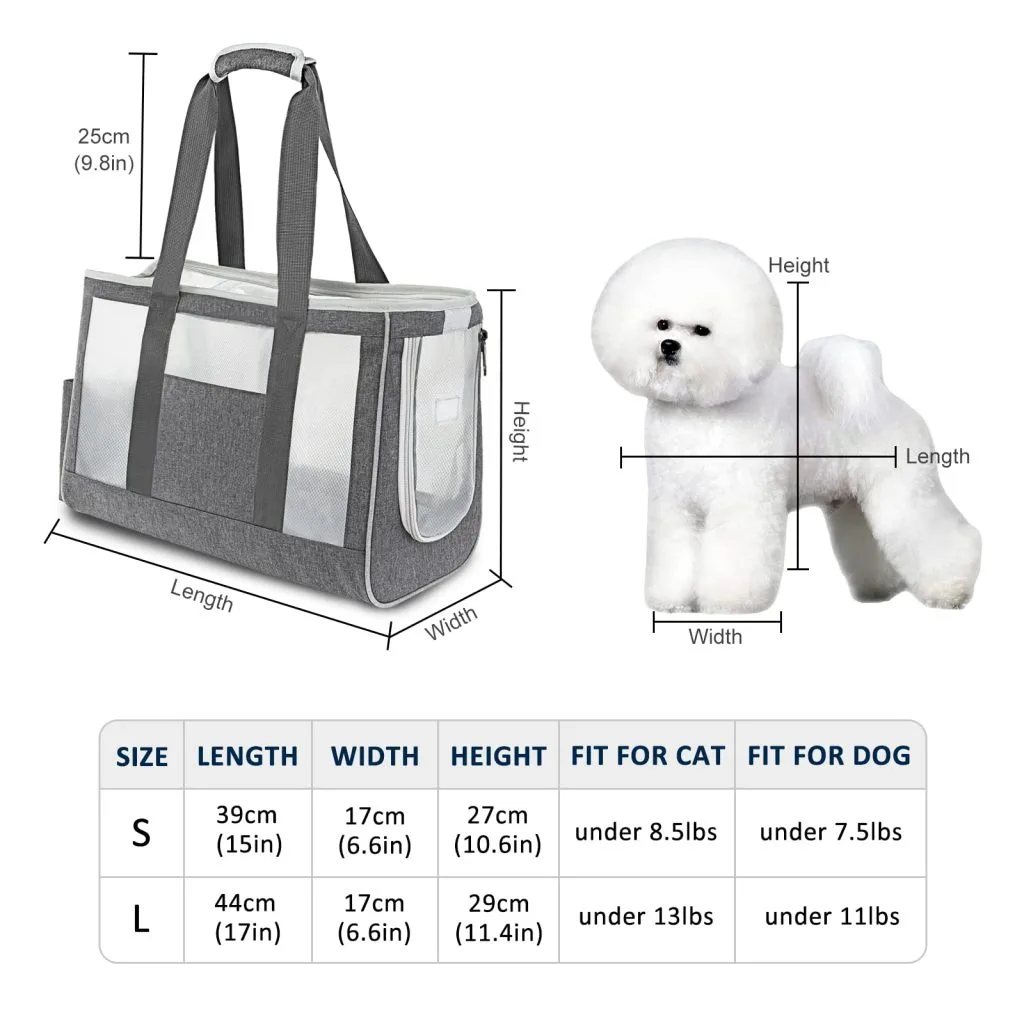
The data record starts with the title, which has a character limit and a required structure: brand, product type, key attribute, size, colour. Attribute fields are the machine-readable part and they carry more weight than prose, because filters and search run on them. A cat carrier record needs around 25-45 populated attributes: exterior dimensions, interior dimensions, recommended pet weight, material composition by percentage, closure type, ventilation area count, washability, and the safety features present.
Images are specified tightly: a primary image on a pure white ground with the product filling 85-95% of the frame, at 2,000 pixels or more on the longest edge to enable zoom. A listing runs six to nine images, and a 360-degree spin of 24-36 frames is increasingly expected on higher-value items.
| Asset | Specification | Frames or length | Production cost (USD) | Turnaround | Weight in conversion |
|---|---|---|---|---|---|
| Primary image, white ground | 2,000 plus px, 85-95% frame fill | 1 | 25-90 | 2-5 days | Critical |
| Alternate and detail angles | 2,000 plus px | 4-7 | 90-320 | 3-7 days | High |
| Lifestyle image with pet | 2,000 plus px, model released | 1-3 | 180-760 | 5-12 days | High |
| Dimensional diagram | Vector, mm and inch | 1 | 40-140 | 2-5 days | High, cuts returns |
| 360-degree spin | 24-36 frames | 24-36 | 220-780 | 4-9 days | Medium |
| Product video | 20-45 seconds, no audio | 1 | 450-2,200 | 7-18 days | Medium |
| A plus style comparison module | Table of 3-5 SKUs | 1 | 120-450 | 3-8 days | Medium |
| Attribute record, 25-45 fields | Structured data | n/a | 60-260 | 2-6 days | Critical |
The dimensional diagram is the asset with the best return and it is the one most often skipped. A pet carrier returns for one reason above all others: it does not fit the animal. A vector diagram showing interior length, width and height with the pet weight range printed on it costs 40-140 USD and measurably reduces fit-related returns, which run 11-24% of all returns in this category.
Accuracy in the attribute record is a compliance matter. Declared interior dimensions are checked against physical measurement, and overstatement is treated as misrepresentation. Measuring three units per batch keeps the published number defensible.
One more point about the record: the material composition field is a legal declaration in several jurisdictions. Stating 600D polyester with a polyurethane coating means the composition has to be verified against the bill of materials, and the verification is documentation the compliance team can request at any time. Our production team supplies that declaration with every shipment, and textile inputs are declared against OEKO-TEX criteria.
A complete asset set costs 1,185-5,000 USD per SKU and takes 2-18 days; the dimensional diagram at 40-140 USD is the single highest-return item in it.
Carton, Pallet and Container Planning for a Parcel SKU
Even though the last leg is parcel, the first leg is container, and the two have to be planned together. The unit carton size sets both the parcel dimension tier and the container utilisation, and those two pull in opposite directions: a smaller unit box reduces parcel cost but can reduce container cube efficiency if the carton dimensions fall awkwardly against the container width.
A worked example: a soft-sided medium cat carrier packs at 430 by 300 by 260 mm, giving 0.0335 m³ per unit and a dimensional weight of 6.7 kg at the 5,000 divisor. Packed eight to a master carton at 880 by 620 by 540 mm, the master is 0.2946 m³, and a 40-foot high-cube at 76 m³ usable carries 232-248 masters, or 1,856-1,984 units.
Reducing the unit carton height from 260 mm to 220 mm changes both numbers: the dimensional weight falls to 5.7 kg, which on a typical zone-4 parcel tariff saves 0.90-2.40 USD per unit, and container count rises to 2,120-2,300 units. The saving is large enough that carton height is worth engineering as carefully as the product itself.
| Pack height | Unit dims (mm) | Dim weight (kg) | Master carton | Per container | Parcel cost index | Container cost per unit (USD) |
|---|---|---|---|---|---|---|
| 280 mm, no compression | 430 x 300 x 280 | 7.2 | 8 units, 0.3175 m3 | 1,720-1,840 | 112 | 1.34-2.86 |
| 260 mm, standard | 430 x 300 x 260 | 6.7 | 8 units, 0.2946 m3 | 1,856-1,984 | 104 | 1.24-2.66 |
| 220 mm, compressed | 430 x 300 x 220 | 5.7 | 10 units, 0.2842 m3 | 2,120-2,300 | 89 | 1.07-2.29 |
| 190 mm, flat pack | 430 x 300 x 190 | 4.9 | 12 units, 0.2940 m3 | 2,180-2,360 | 76 | 1.04-2.23 |
| 160 mm, boxed flat | 430 x 300 x 160 | 4.1 | 14 units, 0.2889 m3 | 2,240-2,420 | 64 | 1.01-2.18 |
Flat-pack or compressible construction is the strongest lever here, and it is a design decision. A carrier that ships compressed and recovers its shape needs a frame tolerating compression for 26-38 days at sea, which means a spring-steel or high-resilience polymer hoop rather than a rigid moulded panel. That choice cannot be retrofitted.
Master carton spec matters at the dock: over 22.7 kg is a two-person lift that slows receiving, under 6.4 kg wastes cube. The working band is 12-20 kg, or 8-12 units on this product.
Palletisation follows the standard pattern: 1,200 by 800 mm stacked to 1.4-1.6 m, stretch-wrapped, 40-56 masters per pallet. Carton marking follows the manual syntax, a GS1-128 label on two adjacent faces with GTIN-14, purchase order and sequence number; a mismatch there is a receipt exception.
Compressing pack height from 260 mm to 190 mm lifts container count from 1,856-1,984 to 2,180-2,360 units and cuts the parcel cost index by 27%.
Compliance File for the US Market
An online retailer selling into the United States inherits the same product safety obligations as a store, and the vendor is expected to supply the evidence. The file is assembled once per product family and refreshed on material or supplier change, and it is requested at onboarding rather than at the end.
The core is children's product and general product safety. A pet carrier is not a children's product, but the CPSIA lead and phthalate limits are frequently applied by retailers as a default standard anyway because the product contains coated fabric and hardware. Third-party testing by a CPSC-accepted laboratory on the coated fabric and any plastic component is the evidence, at 340-1,400 USD per material family, and the report is valid until the material or supplier changes. Guidance and the laboratory acceptance list sit with the Consumer Product Safety Commission.
California Proposition 65 is a warning obligation rather than a limit, handled by declaration: a written statement that the product either contains no listed substance above the safe harbour level or carries the required warning, which must also appear on the product page. The levels and current list are maintained by OEHHA.
Textile and chemical declarations complete the set: a restricted substance list statement covering azo dyes, formaldehyde and nickel release, usually issued against OEKO-TEX criteria, plus a REACH declaration if the same SKU is sold into the European Union. Where the product is marketed for air travel, the airline dimension rules referenced by the International Air Transport Association live animal regulations govern the claim, and a dimensional declaration against them needs to be in the file.
| Requirement | Evidence | Cost (USD) | Validity | Refresh trigger | Requested at |
|---|---|---|---|---|---|
| CPSIA lead and phthalates | Third-party lab report | 340-1,400 | Material-locked | Supplier or coating change | Onboarding |
| General certificate of conformity | Signed declaration | 60-260 | Per shipment | Every production run | Every PO |
| Proposition 65 assessment | Warning or no-warning statement | 120-620 | 12-24 months | List update | Onboarding |
| Restricted substance declaration | OEKO-TEX or RSL statement | 180-780 | 12 months | Annual | Onboarding, annual |
| Physical safety testing | Load, seam, zip pull report | 240-1,100 | Design-locked | Structural change | Onboarding |
| Flammability, where applicable | Lab report | 180-720 | Material-locked | Fabric change | On request |
| Country of origin marking | Artwork and sewn label sample | 20-90 | Per SKU | Origin change | Receipt |
| Product liability insurance | Certificate | 900-3,400 per year | 12 months | Annual renewal | Vendor file |
The total to open and hold the file is 2,040-8,370 USD in year one and roughly 1,200-4,800 USD a year thereafter, which on a 3,000-unit annual programme is 0.40-1.60 USD per unit. That is a real cost and it is not optional; the alternative is a listing that is pulled when a marketplace audit runs.
Year one compliance cost is 2,040-8,370 USD, or 0.40-1.60 USD per unit on 3,000 units, and testing by material family rather than by SKU cuts it by up to 60%.
Chargebacks: The Price List for Getting a Detail Wrong
The supplier compliance manual contains a schedule of deductions, and reading it as a price list rather than as a legal document changes behaviour. Each line has a number attached, and the number is usually larger than the cost of doing the thing correctly.
The largest lines are the ones tied to a shipment rather than to an item. A late or missing advance ship notice at 250-1,500 USD, a routing guide violation at 150-900 USD, and a carton content discrepancy at 100-600 USD per carton are the three that hurt. A single container with four wrong cartons and no valid ASN can carry 1,400-3,900 USD of deductions against a shipment margin that might be 6,000-11,000 USD.
The second group is per-unit and it multiplies. An unreadable barcode at 0.35-1.20 USD, wrong origin marking at 0.20-0.85 USD and a labelling error at 0.30-1.40 USD are small individually and large across 3,000 units: a barcode printed at the wrong magnification costs 1,050-3,600 USD to fix a number that was free to get right.
| Failure | Deduction | Basis | Cost to prevent | Ratio | Control point |
|---|---|---|---|---|---|
| Missing or late 856 advance ship notice | 250-1,500 | Per shipment | 8-24 per shipment | 31-63x | Scan at packout |
| Routing or carrier violation | 150-900 | Per shipment | 0-15 | 10-60x | Booking checklist |
| Carton content discrepancy | 100-600 | Per carton | 2-6 per carton | 50-100x | Scan verification |
| Unreadable or wrong barcode | 0.35-1.20 | Per unit | 0.02-0.06 | 17-20x | Pre-print verification |
| Wrong or missing origin marking | 0.20-0.85 | Per unit | 0.01-0.04 | 20-21x | Artwork sign-off |
| Late PO acknowledgement | 50-250 | Per PO | 0-5 | 10-50x | Daily EDI check |
| Dimensional data mismatch | 0.40-2.20 | Per unit | 0.01-0.05 | 40-44x | Measure per batch |
| Packaging failure at receipt | Full return | Per shipment | 0.28-0.97 per unit | High | Parcel pre-test |
| Defect rate above AQL | Resort or return | Per shipment | 0.14-0.42 per unit | High | AQL 2.5 inspection |
The ratio column is the argument. Every prevention cost is one to two orders of magnitude smaller than the deduction it avoids, because prevention is a scan or a check performed once while a deduction is a manual exception processed by the retailer at their labour rate. The entire control structure for a 3,000-unit programme costs 300-1,600 USD and protects against 6,000-22,000 USD of exposure.
Final random inspection to AQL 2.5 covers the product rather than the paperwork: on 3,000 units the level II sample is 125 with 7 critical and 10 major allowed, and a failure triggers resort at 0.14-0.42 USD per unit, or 420-1,260 USD against a shipment return at 8,000-24,000 USD.
Disputes are worth pursuing on a minority of deductions: 20-35% are factually contestable, usually where a carrier scan timestamp rather than a supplier action is the cause, and documented disputes recover 60-80% at 40-160 USD each.
Prevention costs 300-1,600 USD per programme against 6,000-22,000 USD of deduction exposure, and every control point pays between 10 and 100 times its cost.
Replenishment: Autoship, Forecast Curve and Safety Stock
An autoship or subscription programme changes the demand shape. Instead of a seasonal curve with peaks, the retailer sees a baseline consumption rate that grows slowly with the subscriber base, plus a promotional overlay. That is a much easier signal to plan against, provided the supplier can hold the replenishment cycle steady.
The arithmetic is a standard reorder point calculation. Weekly consumption of 240 units with a replenishment lead time of 55-72 days (35-50 days of production plus 14-26 days of ocean transit to a west coast node, plus 4-8 days of drayage and receipt) gives a pipeline demand of 1,886-2,880 units. Add safety stock at 25-45% of pipeline demand and the reorder point is 2,357-4,176 units, with an order quantity that is usually set at four to eight weeks of consumption, or 960-1,920 units.
Because the retailer places the order against its own forecast, the supplier job is to make lead time reliable rather than fast. A supplier varying by 15 days forces the retailer to hold 15 days of extra safety stock, which appears as a smaller forward order.
| Weekly consumption | Lead time (days) | Pipeline demand | Safety stock at 35% | Reorder point | Order quantity at 6 weeks | Orders per year |
|---|---|---|---|---|---|---|
| 120 | 55-72 | 943-1,234 | 330-432 | 1,273-1,666 | 720 | 9 |
| 240 | 55-72 | 1,886-2,469 | 660-864 | 2,546-3,333 | 1,440 | 9 |
| 480 | 55-72 | 3,771-4,937 | 1,320-1,728 | 5,091-6,665 | 2,880 | 9 |
| 240 with lead time cut to 38-52 | 38-52 | 1,303-1,783 | 456-624 | 1,759-2,407 | 1,440 | 9 |
| 240 with variability cut to plus or minus 4 | 58-66 | 1,989-2,263 | 696-792 | 2,685-3,055 | 1,440 | 9 |
The last two rows show the two levers and their relative value. Cutting the mean lead time by 17-20 days reduces the reorder point by 787-926 units, a 31% reduction in working capital. Cutting the variability alone reduces it by roughly 250 units at the same mean, but it does so without any change to the production plan, which is why a stocked material bank and a reserved production slot deliver most of the benefit at a fraction of the disruption.
Two mechanisms make the cycle reliable. A material bank holds fabric, mesh, hardware and zipper chain against a rolling forecast so a reorder starts on the line rather than at the mill, removing 14-35 days. A reserved production slot converts the 35-50 day window into a confirmed start date.
Cutting lead time variability from plus or minus 15 days to plus or minus 4 days reduces retailer safety stock at no change to the production plan, and it is worth more commercially than cutting the mean.
Cost Model: Parcel-Optimised Build Against Standard Retail Build
The two builds can be compared directly on a 3,000-unit annual programme, and the comparison shows where the extra money goes and what it buys. The standard retail build assumes palletised delivery to a distribution centre with the unit box as decoration. The parcel-optimised build assumes ships-in-own-container, compressed pack height and a dedicated internal restraint.
Product cost is slightly higher in the parcel build because a compressible frame that recovers its shape costs more than a rigid panel: 14.90-16.60 USD against 13.90-15.40 USD. Packaging adds 1.12-1.86 USD against 0.62-1.05 USD. Those are the only two lines that go up, and together they add 1.50-2.01 USD per unit.
Everything else goes down. Freight falls because the compressed pack lifts container count from 1,856-1,984 to 2,180-2,360 units, spreading the same container cost across 18% more units. Damage cost falls from 2.60-6.10 USD per unit to 0.42-1.12 USD. Return handling falls for the same reason, and the dimensional diagram reduces fit-related returns by an estimated 15-30% of that category.
| Element | Standard retail build | Parcel-optimised build | Delta | Driver |
|---|---|---|---|---|
| Product cost | 13.90-15.40 | 14.90-16.60 | Plus 1.00-1.20 | Compressible frame |
| Packaging | 0.62-1.05 | 1.12-1.86 | Plus 0.50-0.81 | Board grade, caps |
| Ocean freight allocation | 1.34-2.86 | 1.04-2.23 | Minus 0.30-0.63 | Container count |
| Damage and replacement | 2.60-6.10 | 0.42-1.12 | Minus 2.18-4.98 | SIOC test pass |
| Return handling | 1.40-3.20 | 0.38-1.04 | Minus 1.02-2.16 | Damage and fit |
| Deduction exposure | 0.90-3.40 | 0.16-0.62 | Minus 0.74-2.78 | EDI and labelling control |
| Compliance amortised | 0.40-1.60 | 0.40-1.60 | Neutral | Same file |
| Catalogue assets amortised | 0.10-0.42 | 0.40-1.67 | Plus 0.30-1.25 | Full asset set |
| Total landed to node | 21.26-33.63 | 19.82-25.74 | Minus 1.44-7.89 | 6-23% saving |
The net is 1.44-7.89 USD per unit, a 6-23% saving, and the entire benefit comes from damage, returns and deductions rather than from unit price. That is the central lesson of the pure-play online model: the money is in the exception cost, not in the product cost, and a supplier who negotiates unit price while ignoring damage rate is optimising the wrong line.
The two added costs are worth stating plainly because they are real. A compressible frame is a design constraint that rules out some structural options, and a full catalogue asset set is a one-time spend of 1,185-5,000 USD per SKU. Both are affordable; neither is free.
Commercial terms frame the whole programme: MOQ 500 pieces per colourway, prototypes in 6-10 working days, bulk production 35-50 days after sample approval, final random inspection to AQL 2.5, T/T 30/70 and FOB Xiamen. Our production team runs these programmes through an SGS-verified production base operating under ISO 9001 and BSCI coverage, with physical testing referenced to ASTM International methods and chemical declarations issued against OEKO-TEX criteria. The parcel-optimised build lands 6-23% below the standard retail build on 3,000 annual units, and every dollar of the saving comes from damage, returns and deductions rather than from unit price.
Order and quality terms
- MOQ 500 pieces per colourway; samples in 6-10 working days
- Bulk production 35-50 days after approval; AQL 2.5 inspection standard
- T/T 30/70 terms, FOB Xiamen, full document set per shipment
People Also Ask
How long does vendor onboarding take for an online pet retailer?
6-14 weeks from first contact to first purchase order: 2-5 weeks for the vendor file and insurance, 3-6 weeks for EDI integration and testing, and 1-3 weeks for item setup and imagery.
What insurance does a pet product supplier need?
General liability of 1-2 million USD per occurrence with product liability included, and a certificate naming the retailer as additional insured. Annual cost is 900-3,400 USD.
What packaging standard applies to parcel-shipped pet carriers?
Ships-in-own-container with a drop sequence of ten drops from 460-760 mm across faces, edges and corners, followed by vibration. Upgraded board plus corrugated caps achieves a 0.4-1.8% damage rate.
Why is a dimensional diagram worth producing?
Fit is the leading return reason in this category at 11-24% of all returns. A vector diagram showing interior dimensions and pet weight range costs 40-140 USD and measurably reduces that.
What EDI documents does a supplier need?
The 850 purchase order, 855 acknowledgement inside 24-72 hours, 856 advance ship notice at ship release, 810 invoice, and optionally the 846 inventory advice and 832 catalogue.
How much do compliance deductions typically cost?
250-1,500 USD per failed advance ship notice, 150-900 for a routing violation, and 0.35-1.20 per unit for an unreadable barcode. Prevention costs 10-100 times less than the deduction.
Should promotional volume be pre-built or air-freighted?
Pre-built. Carrying 6-10 weeks of extra cover costs 1,320-2,640 USD on a 2,000-unit increment against 14,600-38,000 USD for an air top-up after the fact.
What is the reorder point on an autoship programme?
At 240 units weekly consumption and 55-72 days of lead time, pipeline demand is 1,886-2,469 units and the reorder point with 35% safety stock is 2,546-3,333 units.
Frequently Asked Questions
What is the most common cause of a stalled vendor file?
An expired audit report. A current BSCI or equivalent social compliance report and a live ISO 9001 certificate answer most onboarding questions before they are asked, and renewing them mid-file adds 10-45 days.
Why must GS1 numbers be allocated before artwork is printed?
The retail unit needs a GTIN-12 or EAN-13 and the carton a GTIN-14, both under the selling company prefix. Correcting a barcode after printing costs 0.35-1.20 USD per unit plus the delay.
When is a value-added network worth the cost over a web portal?
Above roughly 40 orders a year. A portal at 0-60 USD a month requires hand-typed documents, and a hand-typed 856 across 3,000 cartons is an error waiting to happen.
What does publishing accurate inventory advice actually achieve?
It reduces the safety stock the retailer holds against the supplier. Good 846 discipline typically cuts order size volatility by 8-18%, which smooths the production plan.
Why is the cheapest packaging usually the most expensive option?
A 4.8-6.1% damage rate on a 60 USD unit with two-way parcel return costs 2,880-4,760 USD per 1,000 units, exceeding the cost of the 0.28-0.97 USD upgrade that prevents it.
How often should parcel packaging be re-tested?
On first bulk run and whenever the board source or internal format changes. A third-party test costs 350-1,600 USD per configuration and takes 5-12 days.
What character and pixel specification does a catalogue image need?
2,000 pixels or more on the longest edge, product filling 85-95% of the frame, on a pure white ground for the primary. A working listing runs six to nine images.
How many attributes does a cat carrier record carry?
Around 25-45 populated fields, including exterior and interior dimensions, recommended pet weight, material composition by percentage, closure type and washability.
What master carton weight band should be targeted?
12-20 kg. Above 22.7 kg is a two-person lift that slows receiving; below 6.4 kg wastes cube in handling. On a 430 mm class carrier that is 8-12 units.
How is compliance testing cost kept down across a range?
Test by material family rather than by SKU. One coated 600D polyester in four colours is one test, not four, saving 3,060-12,600 USD across a ten-SKU range.
What proportion of deductions are worth disputing?
Roughly 20-35% are factually contestable, usually where a carrier scan timestamp rather than a supplier action caused the failure. Documented disputes recover 60-80% at 40-160 USD each.
What sample size does an AQL 2.5 inspection use on 3,000 units?
General inspection level II gives 125 units, with 7 critical and 10 major defects allowed for a pass. A failure triggers resort at 0.14-0.42 USD per unit.
Why does lead time variability matter more than mean lead time?
A supplier varying by 15 days forces the retailer to hold 15 days of extra safety stock, which appears as smaller forward orders. Tightening variability needs no change to the production plan.
What compresses the effective replenishment cycle most?
A material bank holding fabric, mesh, hardware and zipper chain against a rolling forecast, which removes 14-35 days by letting a reorder start on the line rather than at the mill.
Talk to QUANZHOU JUNYUAN BAGS about a pet carrier program: MOQ 500 pieces per colourway, samples in 6-10 working days, bulk production in 35-50 days under AQL 2.5 inspection.
Get a free quote Request a sample