Cat Carrier Pet Store: Retail Display
A cat carrier display is sized against the shelf: 400-600 mm of shelf depth, 300-450 mm of usable shelf height and a peg hook rated to 8-15 kg, which yields 3-5 facings of a boxed carrier per 600 mm bay. Shelf-ready trays with a tear-away front recover 4-9 minutes of stocking labour per tray and lift on-shelf availability by 6-14%.
Retail display is a space economics problem, and a pet store sells square metres before it sells products. Every decision in this page — carton footprint, whether the shipper becomes the shelf tray, how many facings a bay holds, where the sign sits — is constrained by a shelf with fixed dimensions and a stocking process with fixed labour. The brands that win shelf space are the ones whose packaging fits the planogram without adaptation, because adaptation is a cost the retailer bears and therefore a reason to decline the line. This page sets out the numbers a packaging and display programme has to hit, from the 400-600 mm shelf depth to the 8-15 kg peg hook rating, and shows where a small change in carton geometry produces a material change in facings. Commercial terms follow the standard programme: MOQ 500 pieces per colourway, prototypes in 6-10 working days, bulk production 35-50 days after sample approval, final random inspection to AQL 2.5, T/T 30/70 and FOB Xiamen.
Private label pet bags sit at the centre of most cat carrier briefs we handle: the buyer owns the brand, the barcode and the artwork, while our production team holds the pattern.
Retail Display Is a Space Economics Problem
A retailer's scarce resource is linear shelf metres, and every product on it is competing for a share. The measure a category manager uses is not units sold but sales per linear metre per week, sometimes extended to profit per linear metre once handling cost is included.
That measure decides the number of facings a product gets. A facing is one product width across the front of a shelf, and a typical pet store bay of 900-1,200 mm carries a category planogram dividing that width across competing lines. A brand that earns 4 facings in a 1,200 mm bay has roughly a third of the category's frontage.
Handling cost is the second input and it is where packaging earns or loses shelf space. Every minute a stockist spends unpacking, assembling or dressing a product is a minute of labour cost, and a product that arrives in a shelf-ready tray is stocked in a fraction of the time of one that arrives in a sealed carton requiring individual placement.
Shrinkage and damage are the third input. A product that is pilfered, damaged by customers or returned shop-soiled costs the retailer more than the margin it generates, and it is delisted. Pet carriers are moderately vulnerable: they are not high-value electronics, but they are desirable, portable and easy to conceal.
The three inputs interact with the packaging. Footprint determines facings; shelf-readiness determines stocking labour; and the pack's robustness and any security feature determine shrinkage. A packaging programme that optimises only for freight will arrive at a shelf and be adapted, and adaptation is expensive.
Understanding the planogram process is the practical starting point. Most pet retailers reset a category once or twice a year, the planogram is built by the category manager from sales data and supplier submissions, and the submission that wins is the one that fits the existing fixture without asking for an exception.
Shelf space is allocated on sales per linear metre net of handling and shrinkage, and the packaging controls two of those three.
Fixture Dimensions: Shelf, Peg Hook and Weight Limits
Fixtures are standardised enough to design against, and the dimensions below cover most pet specialty and mass-market pet aisles. Designing a pack to these numbers means it fits without an exception.
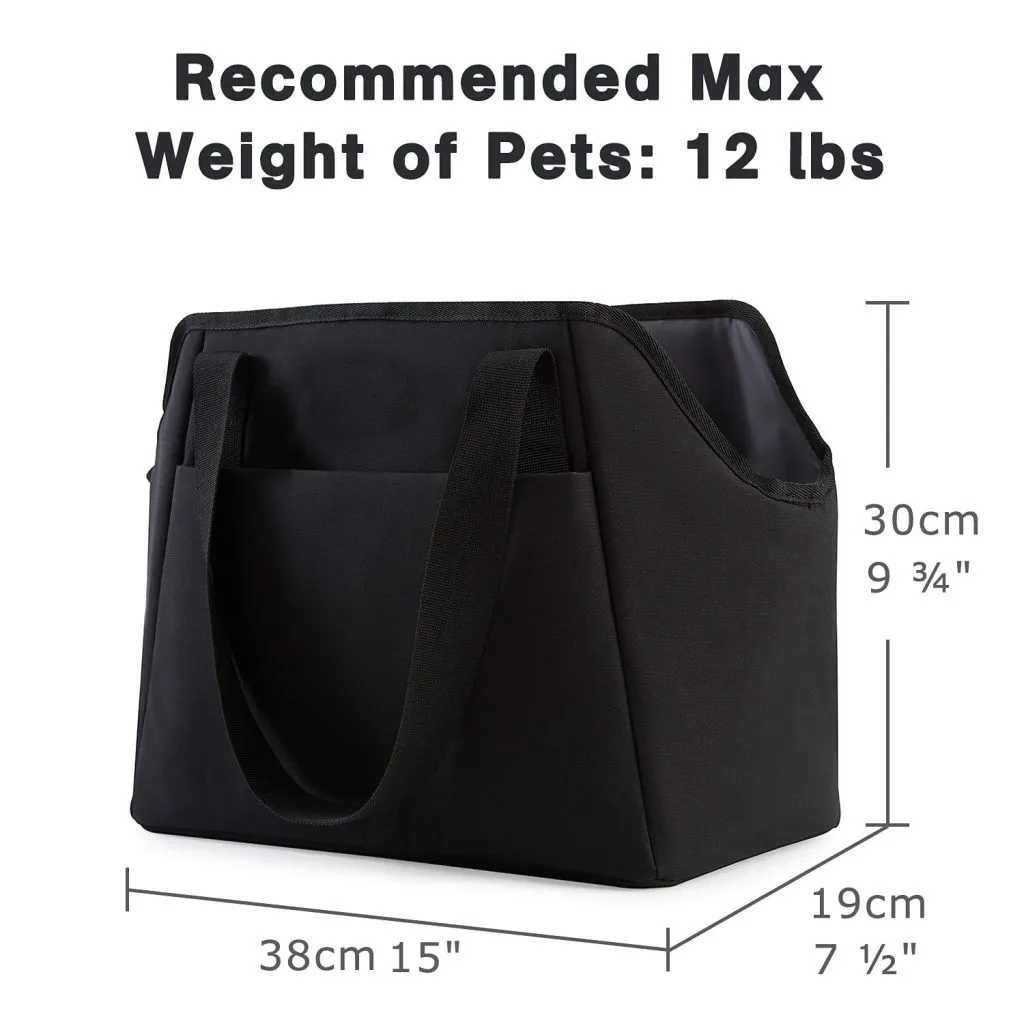
Shelf depth is the first constraint and it is narrower than most packaging assumes. Gondola shelving in a pet aisle runs 400-600 mm deep, with 450-550 mm the common range. A boxed folded carrier at 460 x 330 x 130 mm sits within that depth with room to spare; the same carrier assembled to 430 x 300 x 300 mm also fits, but only one deep in a 450 mm shelf with the depth consumed.
Shelf height is the second constraint. Usable vertical clearance between shelves is typically 300-450 mm, and a product standing 320 mm tall leaves no room for a header or a stack. A boxed carrier at 130 mm tall can be stacked three high in a 450 mm bay, which triples the units per facing and is a strong argument for shipping folded and displaying boxed.
Peg hooks are the alternative fixture and they have their own limits. A standard peg hook is 100-300 mm long and rated to 8-15 kg depending on the gauge and the backing panel. A boxed carrier at 1.4-2.6 kg is well inside that, allowing three to five units per hook, but the hook must be long enough for the pack depth plus a margin.
| Fixture | Typical dimension | Limit | Permits | Design implication |
|---|---|---|---|---|
| Gondola shelf depth | 400-600 mm | Product depth | One to two deep | Keep pack under 350 mm deep |
| Shelf vertical clearance | 300-450 mm | Product height plus header | Two to three high | Keep box under 140 mm tall |
| Bay width | 900-1,200 mm | Sum of facings | 3-6 facings | Footprint divides the bay |
| Peg hook length | 100-300 mm | Pack depth plus margin | 3-5 units | Size the hang hole for the hook gauge |
| Peg hook load rating | 8-15 kg | Total weight on hook | 3-5 carriers | Keep boxed weight under 2.6 kg |
| Endcap depth | 500-700 mm | Deeper display | Assembled display | Assembled carriers fit here |
| Dump bin footprint | 500-800 mm | Loose product | 12-30 units | Pack must survive loose handling |
Hang hole specification is a small detail with a large consequence on peg hooks. The hole should suit the hook gauge, which is typically 4-6 mm, and it should be reinforced: a hole punched in a printed carton tears out under repeated handling, and an eyelet or a reinforced slot at 0.015-0.055 USD prevents it.
Weight per facing matters for shelf loading as well as for hooks. A shelf rated to 40-80 kg distributed across a 1,200 mm bay carries five boxed carriers per facing without concern, but the same bay loaded with assembled hard-shell carriers at 4-6 kg each reaches the limit at twelve to sixteen units.
Endcaps and feature space are the exception to the tight constraints, and they are worth designing a separate display for. An endcap is 500-700 mm deep and can carry an assembled carrier, which is the only place in most stores where a customer can see the product as it will be used.
Design the pack to a 450 mm shelf depth, a 400 mm clearance and an 8 kg hook, and it will fit most pet fixtures without an exception.
Shelf-Ready Packaging and PDQ Trays
Shelf-ready packaging is the single largest labour saving available to a retailer in this category, and it is therefore the single largest argument for a buyer pitching a line. It converts the transit carton into the shelf tray in one motion.
The tear-away front is the essential feature. A perforated panel at the front of the tray is removed at the shelf, exposing the product without unpacking it. The perforation specification is 3-4 mm cut and 3-4 mm tie, which opens cleanly by hand while surviving transit. A poorly specified perforation either does not open or opens in the truck.
Tray depth should match the shelf so the tray becomes the shelf presentation. A tray 300-350 mm deep sits inside a 450 mm shelf with room for the product to be visible, and a tray taller than the shelf clearance cannot be used at all.
PDQ — product displays quickly, or a pretty darn quick shipper — is the smaller version: a corrugated tray or a counter unit holding 6-24 units, shipped filled and placed directly on a counter or a shelf. It is the standard format for a promotion, an impulse position or a new line trial.
| Format | Units held | Footprint mm | Set-up time | USD per unit shipped | Best for |
|---|---|---|---|---|---|
| Standard RSC carton | 8-12 | 460 x 330 | 4-9 min | 0.45-1.10 | Backroom stock only |
| Shelf-ready tray, tear-away | 6-12 | 400 x 300 | Under 1 min | 1.15-2.30 | Main shelf position |
| PDQ counter unit | 6-18 | 300 x 250 | Under 1 min | 1.40-3.10 | Counter and impulse |
| PDQ shelf shipper | 12-24 | 600 x 400 | 1-3 min | 1.20-2.60 | Promotion and trial |
| Freestanding display unit | 24-72 | 600 x 500 | 8-20 min | 3.20-9.80 | Feature space |
| Pallet shipper, half | 48-96 | 1,000 x 600 | None | 0.90-2.10 | Club and warehouse |
The labour arithmetic is what sells it. Stocking twelve units from a sealed carton takes 4-9 minutes: open the carton, lift each unit, place each on the shelf, face them up and dispose of the carton. The same twelve from a shelf-ready tray takes under a minute: place the tray, tear the front, adjust the facings. Across a category reset of several hundred products that is hours of labour.
On-shelf availability is the second benefit and it is measurable. Because a shelf-ready tray is restocked as a unit and the product is visible from the front, out-of-stocks are noticed and corrected faster, and the reported improvement in on-shelf availability is 6-14%.
Cost is the objection and it should be answered with the freight and damage numbers, not with the unit cost. A shelf-ready tray costs 0.70-1.20 USD more per unit shipped than a plain carton, and it saves 3-8 minutes of stocking labour per tray, which at a loaded retail labour rate is worth more than the difference.
Disposal is the last consideration and it is a real one for retailers with waste targets. A tray that is fully corrugated and unlaminated goes into the baler; one with a plastic window, a foam insert or a laminated print surface does not, and that is increasingly a reason for rejection.
A shelf-ready tray turns a 4-9 minute stocking task into under one minute, and that is the argument that wins the line review.
Freestanding Displays and Feature Space
A freestanding display unit is a different instrument from shelf packaging: it is bought for a promotional period, it occupies floor space rather than shelf space, and it is judged on units sold during the period rather than on space efficiency. That changes the design priorities.
Footprint is the first constraint, because floor space is scarcer than shelf space in most pet stores. A display footprint of 600 x 500 mm is the practical maximum for an aisle position, and 400 x 400 mm for a counter. A unit larger than that obstructs the aisle and will be moved by staff.
Height works in the display's favour up to a point. A floor unit of 1,400-1,700 mm is visible across a store and holds 24-72 units; above 1,700 mm it blocks sightlines and many retailers cap it. A header card at the top adds 200-400 mm of branding height for very little cost.
Assembly is the hidden cost and the reason many displays are never built properly. A unit requiring tools, fasteners or a sequence of more than five steps is often assembled incorrectly or left in the backroom. The specification is tool-free assembly in under five minutes with no more than five steps, which usually means a corrugated unit with pre-folded and locked panels.
| Type | Footprint mm | Height mm | Units | Assembly | USD | Life |
|---|---|---|---|---|---|---|
| Corrugated floor stand | 600 x 500 | 1,400-1,700 | 24-48 | Tool-free, 5 min | 18-48 | 8-16 weeks |
| Corrugated counter unit | 400 x 300 | 400-600 | 6-18 | None | 6-18 | 8-16 weeks |
| Metal and wire floor stand | 600 x 500 | 1,500-1,800 | 24-72 | Tool, 15-30 min | 60-220 | 2-5 years |
| Acrylic counter unit | 350 x 250 | 300-500 | 4-12 | Tool, 10-20 min | 35-140 | 1-3 years |
| Pallet skirt, printed | 1,200 x 800 | 400-800 | 48-96 | None | 24-70 | Single event |
Corrugated versus permanent is the decision with the clearest economics. A corrugated unit costs 18-48 USD and lasts 8-16 weeks, so a brand running four promotions a year spends 72-192 USD per store annually. A permanent metal stand costs 60-220 USD and lasts two to five years, so it is cheaper over time — but it has to survive being moved, it takes floor space permanently, and many retailers will not accept permanent fixtures from suppliers.
Stability is a safety requirement rather than a design preference. A floor unit 1,600 mm tall with a 500 mm base has a height-to-base ratio over three, which tips. The fixes are a wider base, a weighted bottom shelf or a low centre of gravity, and a tip test should be part of the qualification.
Graphic area is what the display is actually for, and it should be planned as sightlines. The header at 1,400-1,700 mm is seen from across the store; the shelf-edge strips at 400-900 mm are seen from the aisle; the base panel is seen only up close. Three zones, three messages, and the product name belongs in the top one.
A freestanding display should assemble tool-free in under five minutes, occupy under 600 x 500 mm, and resist tipping at a height-to-base ratio over three.
Facings, Blocking and Vertical Merchandising
Facings are the unit of shelf allocation and the number that determines how visible a line is. Understanding how a retailer decides them, and how packaging geometry influences the decision, is worth more than most display spend.
The arithmetic is straightforward. A 1,200 mm bay minus 40 mm of fixture waste gives 1,160 mm of usable width. A boxed carrier 460 mm wide gives two facings with room to spare; the same product in a 396 mm carton gives two comfortably or three tightly; and a shelf-ready tray at 300 mm gives three or four.
That is the argument for narrow packaging at shelf as well as in a container: the same 64 mm that saves 1.40 USD per unit in freight also buys a facing, and a facing is worth more than the freight.
Blocking is the second decision. Horizontal blocking runs one SKU across a shelf; vertical blocking runs it top to bottom. For a product with several sizes or colours, vertical blocking in a tall bay lets a customer compare within a brand at eye level, and it is the arrangement most pet retailers prefer for accessory categories.
| Carton width mm | Facings per shelf | Units on show | Weekly sales index | Notes |
|---|---|---|---|---|
| 560 | 2 | 6 | 100 | Baseline, wide pack |
| 460 | 2 | 6 | 104 | Standard retail box |
| 396 | 2-3 | 6-9 | 118 | Narrow pack, third facing |
| 330 | 3 | 9 | 132 | Shelf-ready tray width |
| 280 | 4 | 12 | 146 | Compact tray, dense facing |
Eye level is the third decision and it is fixed by the retailer rather than the supplier: the band from 1,200-1,600 mm from the floor is the highest-selling zone, and a brand usually has to earn it. Packaging that stacks three high lets a line occupy the eye-level shelf with three times the units, which is another argument for a flat box over a tall one.
Colour blocking matters where a line has several colourways. Running them as a gradient across the facings reads as a considered range; running them randomly reads as remaindered stock. The packing order should therefore be specified — cartons packed by colourway, and the tray holding one colourway per row.
Depth of cut is the constraint that limits all of this. A brand with one SKU gets one or two facings; a brand with three sizes gets four to six across a bay. Introducing a size range is often a more effective way to gain shelf presence than negotiating for more facings of a single SKU.
A narrower pack buys facings: the same 64 mm that saves freight per unit also converts into a third facing, which is worth more than the saving.
Signage, Product Information and the Shelf Decision
A customer standing in a pet aisle makes a decision in a few seconds, and the information available at the shelf determines whether they make it or walk on. Packaging and signage are the whole information system.
The pack itself is the primary sign and it has to work at 1-1.5 m. At that distance a customer reads a product name, a size indicator and one benefit — and nothing else. Type below about 12 pt on the front panel is not read at shelf and should not be relied on.
A size indicator on the front is the single most useful item, because size is the first question in this category. A clear statement of the maximum pet weight in a prominent position, repeated in the planogram order so the range reads small to large, answers it without the customer opening a box.
Shelf-edge labels are the retailer's own system and they should be designed for rather than worked around. A standard shelf-edge strip is 40-70 mm tall and 100-300 mm wide, and a supplier's submitted label should fit that format with the barcode, the description and the price field in the retailer's template.
| Zone | Height from floor mm | Read at | Content | Type size |
|---|---|---|---|---|
| Header or top shelf | 1,600-1,800 | 6-10 m | Brand name only | Over 60 pt |
| Eye-level front panel | 1,200-1,600 | 1-1.5 m | Product name, size, one benefit | 12 pt and over |
| Shelf-edge strip | 800-1,400 | 0.5-1 m | Description, price, barcode | Retailer template |
| Lower shelf front panel | 400-800 | 1-1.5 m | Size indicator, colourway | 12 pt and over |
| Back or side panel | Any | 0.3 m | Full specification, compliance | 1.6 mm cap height |
Compliance information stays on the pack regardless of what the front panel does. Fibre content, country of origin, importer identity and any warning have to be legible and permanent, and they sit on a side or back panel at 1.6 mm cap height. A front panel designed without room for them is a pack that fails a compliance check.
Claims on the front panel are a risk area and should be evidenced. A weight claim needs a load test, a water-resistance claim needs a hydrostatic or spray test, and an airline-compatibility claim should be qualified because airline requirements vary. Claims are the most common source of a retailer's compliance query, and the evidence should be in the line review submission.
Restricted substance and safety documentation is increasingly requested at the line review rather than after a problem. Screening evidence against the criteria published by OEKO-TEX and substance limits administered by CPSC in the submission pack shortens the review materially.
At shelf distance a customer reads a name, a size and one benefit; everything else is for the back panel, and every front-panel claim needs a test behind it.
Shrinkage, Damage and Sell-Through Measurement
What happens to a product after it is placed is what determines whether a line is retained, and there are three measures a category manager watches: shrinkage, damage and rate of sale. All three are influenced by packaging decisions made months earlier.
Shrinkage in pet accessories typically runs 1-3% of sales value, and it comes from pilferage, from administrative error and from damage. A boxed carrier in a sealed retail carton is moderately protected: the carton is too large to conceal easily and it shows damage if opened. A carrier displayed loose on a hook with a hang tag is the most vulnerable presentation.
Security tagging is the retailer's decision rather than the supplier's, but the pack should accommodate it. A flat area of at least 40 x 40 mm on a back or base panel allows a tag to be applied, and a pack with no such area forces the retailer to tag the product itself, which damages it.
Damage at shelf comes from customer handling — opening boxes, lifting by one corner, dropping — and from restacking. The packaging responses are a carton with an ECT high enough to survive being lifted by a corner, a closure that re-closes, and a pack that does not require the product to be removed for inspection.
| Measure | Typical range | Packaging lever | Effect | Cost USD/unit |
|---|---|---|---|---|
| Shrinkage | 1-3% of sales | Sealed carton, tag area | -20 to -45% | 0.00-0.08 |
| Shop-soiled damage | 0.5-2.5% of units | Higher ECT, re-closable lid | -30 to -60% | 0.20-0.70 |
| Rate of sale | Category dependent | Size indicator, shelf-ready tray | +6 to +18% | 0.70-1.20 |
| Out-of-stock time | 4-12% of trading hours | Shelf-ready tray, visible front | -25 to -50% | 0.70-1.20 |
| Stocking labour | 4-9 min per carton | Tear-away tray | -70 to -90% | 0.70-1.20 |
Rate of sale is the measure that decides the line's future, and it is reported as units per store per week. A carrier selling 0.8 units per store per week in a 400-store chain is 320 units a week, and a display that lifts that by 10% is worth 32 units a week, or about 1,660 units a year.
Restock cadence follows from rate of sale and from the shelf holding capacity. A shelf holding nine units at 0.8 units per week needs restocking every eleven weeks, which in practice means the retailer's own cycle rather than a supplier-driven one. Knowing the holding capacity is what lets a supplier propose a sensible replenishment quantity.
Measurement closes the loop and it is worth the supplier asking for the data. A monthly report of units sold, on-shelf availability and returns by store, obtained from the retailer or from a field team, is what lets a packaging change be justified with evidence at the next line review.
Shrinkage, damage and rate of sale are the three numbers a line is judged on, and packaging moves all three.
Programme Notes for a Retail Display Launch
A retail display programme has more stakeholders than a wholesale one — the buyer, the category manager, the packaging technologist and often the retailer's own compliance team — and the sequence has to accommodate all of them.
The sequence runs: product specification and sampling 6-10 working days per iteration; display and packaging artwork, which needs the approved product dimensions and is therefore dependent on the sample; pack qualification including a drop and a tip test; bulk production 35-50 days after sample approval; transit, clearance and delivery 20-45 days; and planogram submission, which most retailers need 8-16 weeks before a reset.
Planogram submission is the item that surprises suppliers with its lead time. A category reset is planned months ahead, the submission needs product dimensions, case dimensions, case quantity, barcode, weight and a photographic pack shot, and missing the window means waiting for the next reset — often six months.
Qualification testing for the display is cheap and worth doing. A drop test on the packed tray, a tip test on a freestanding unit, a perforation open-force test on the tear-away front, and a shelf-fit check against the retailer's stated fixture dimensions, together costing 400-1,600 USD, are what prevent a display arriving and being rejected.
Quantity planning should account for the display units as well as the product. A 400-store rollout at nine units per shelf is 3,600 units of product plus 400 trays, and the trays are a separate production item with their own lead time and minimum — commonly 500 to 1,000 units from a corrugated converter.
Inspection additions for a retail programme: a dimensional check on the packed tray against the stated shelf depth and clearance, a perforation check on two trays per lot, a print colour check under the retailer's specified lighting, a barcode scan-grade check on two cartons per thousand, and a drop test on one packed tray per lot. Test methods follow practice published by ASTM International. Our production team supports retail programmes with shelf-ready packing, tray sourcing and pack qualification through the SGS-verified production base under ISO 9001 and BSCI coverage, with prototypes in 6-10 working days, bulk production 35-50 days after sample approval, final random inspection to AQL 2.5, T/T 30/70 and FOB Xiamen. Submit for the planogram early, qualify the pack against the fixture, and let the tear-away tray make the labour argument for you.
Why brands source here
- Pet carrier programs run since 2014; founding team in sewn goods since 2004
- SGS-verified production floor of 4,950 m² with 137 workers across 7 lines
- Monthly capacity of 200,000 units, audited to BSCI and ISO 9001
People Also Ask
What shelf dimensions should a cat carrier pack fit?
A gondola shelf 400-600 mm deep with 300-450 mm of vertical clearance, and a peg hook rated 8-15 kg. A boxed folded carrier at 460 x 330 x 130 mm fits both and stacks three high.
What is shelf-ready packaging?
A transit tray with a perforated tear-away front that becomes the shelf presentation. It turns a 4-9 minute stocking task into under one minute and lifts on-shelf availability by 6-14%.
How many facings does a cat carrier line get?
Two to four in a 1,200 mm bay, depending on carton width. A 460 mm pack gives two; a 330 mm shelf-ready tray gives three; a 280 mm tray gives four.
Why is a flat box better than a tall one at shelf?
Because shelf clearance is 300-450 mm. A box under 140 mm tall stacks three high, tripling units per facing and letting the line occupy the eye-level shelf with three times the stock.
What perforation spec works for a tear-away front?
3-4 mm cut and 3-4 mm tie. It opens cleanly by hand while surviving transit; a poorly specified perforation either does not open or opens in the truck.
Should a display be corrugated or permanent metal?
Corrugated for promotions at 18-48 USD lasting 8-16 weeks; metal at 60-220 USD lasting 2-5 years is cheaper over time but occupies floor space permanently and many retailers decline it.
How much shrinkage should a pet accessory line expect?
1-3% of sales value. A sealed carton with a flat area of at least 40 x 40 mm for a security tag reduces it by 20-45%.
How far ahead is a planogram submission needed?
8-16 weeks before a category reset. It needs product and case dimensions, case quantity, barcode, weight and a photographic pack shot; missing the window means waiting for the next reset.
Frequently Asked Questions
What peg hook rating is needed for a boxed carrier?
8-15 kg covers three to five boxed carriers at 1.4-2.6 kg each. The hook must also be long enough for the pack depth plus a margin, typically 100-300 mm.
Why reinforce the hang hole?
A hole punched in a printed carton tears out under repeated handling. An eyelet or a reinforced slot at 0.015-0.055 USD prevents it and suits the standard 4-6 mm hook gauge.
Why do retailers prefer fully corrugated trays?
Waste handling. A tray that is fully corrugated and unlaminated goes into the baler; one with a plastic window, a foam insert or a laminated print surface does not.
What limits the height of a freestanding display?
Sightlines and stability. Most retailers cap floor units at 1,400-1,700 mm, and a unit 1,600 mm tall with a 500 mm base has a height-to-base ratio over three and will tip.
How long should a display take to assemble?
Under five minutes, tool-free, in no more than five steps. A unit needing tools or a longer sequence is often assembled incorrectly or left in the backroom.
What is vertical blocking and why is it preferred?
Running one SKU top to bottom rather than across a shelf. In a tall bay it lets a customer compare within a brand at eye level, which most pet retailers prefer for accessory categories.
Where is the highest-selling shelf zone?
1,200-1,600 mm from the floor, and a brand usually has to earn it. Packaging that stacks three high lets a line occupy it with three times the units.
Why specify packing order by colourway?
Because a gradient across the facings reads as a considered range while random colourways read as remaindered stock. Cartons should be packed by colourway with one per tray row.
What type size is legible at shelf distance?
12 pt and over at 1-1.5 m. Below that it is not read; compliance text at 1.6 mm cap height belongs on a side or back panel.
Why does the front panel need a size indicator?
Size is the first question in this category. A prominent maximum pet weight, repeated in planogram order so the range reads small to large, answers it without opening a box.
Which front-panel claims carry risk?
Weight, water resistance and airline compatibility. The first two need a load and a hydrostatic test; the third should be qualified because airline requirements vary by route.
How is restock cadence calculated?
From shelf holding capacity divided by rate of sale. A shelf holding nine units at 0.8 units per week needs restocking every eleven weeks, which in practice follows the retailer's cycle.
What qualification tests should a display pass?
A drop test on the packed tray, a tip test on a freestanding unit, a perforation open-force test and a shelf-fit check against stated fixture dimensions, together 400-1,600 USD.
What minimum applies to tray orders?
Corrugated converters commonly work to 500-1,000 units, and trays are a separate production item with their own lead time, so they need ordering alongside the product rather than after it.
Talk to QUANZHOU JUNYUAN BAGS about a pet carrier program: MOQ 500 pieces per colourway, samples in 6-10 working days, bulk production in 35-50 days under AQL 2.5 inspection.
Get a free quote Request a sample