Cat Carrier Purse: Fashionable Pet Travel
A cat carrier purse has to hide every functional feature inside a fashion silhouette, so the specification is largely about invisibility: a concealed 4 mm base panel, perforated decorative panels delivering 22-28% effective open area, a hidden closure still passing a 30 N internal pry test, and plated hardware meeting a defined salt-spray result. Colour fastness is grade 4 minimum.
Fashion-led pet products fail in a characteristic way: the appearance team wins every argument, the structural requirements are met nominally rather than genuinely, and the result looks excellent on a shelf and behaves badly with an animal inside it. This page sets out how to keep both, working through the structural paradox of the purse silhouette, the decorative material families available and their real performance, how structure and closure are concealed without being compromised, how ventilation is obtained without visible mesh, how plated hardware is specified against corrosion and wear, colour fastness and the economics of fashionable colourways, the interior construction that still has to clean even when nothing about it looks technical, and finally the quality approach required when cosmetic standards are stricter than functional ones. Programme terms apply unchanged: MOQ 500 pieces per colourway, prototypes in 6-10 working days, bulk production 35-50 days after golden sample approval, final random inspection at AQL 2.5, T/T 30/70 payment and FOB Xiamen loading.
Audit records from a dog carrier factory remain the fastest way to separate a real cat carrier production base from a trading office with a photo catalogue.
The Structural Paradox of a Purse Silhouette
A purse is expected to look like a soft handheld object with drape and slouch. An animal enclosure needs a square, stable, self-supporting interior with defined volume, and it must keep that volume while something heavy and mobile presses outward against it from within. Those two requirements pull in opposite directions, and the reconciliation happens in hidden structure rather than in compromise.
The first conflict is the base. Every other format discussed in this range treats the floor panel as a visible specification element that can be thickened freely. In a purse, a thick visible board destroys the silhouette, so stiffness has to move inside: either a concealed panel between outer shell and lining, or a moulded insert integrated into the lining construction, both invisible from outside.
The second conflict is wall stability. Purse design favours soft walls that move; an animal needs walls that do not move inward. Continuing the same logic, the stiffening goes between the layers, using interlinings at weights the apparel trade uses for structured garments, or thin moulded panels in positions where they cannot telegraph through the outer material.
The third conflict is the top line. Fashion tends toward an open curved top or a soft fold; containment requires a defined aperture that closes. The workable answer is either a closure hidden beneath a decorative flap or one integrated into the line rather than added to it.
There is also a dimensional consequence of purses being carried low. A purse held at the hand or crooked across the arm swings, and the animal experiences that swing directly. This argues for keeping interior volume tight around the animal - unlike laptop-sized accessories, a purse should not carry air the animal does not occupy.
Top-line geometry deserves the last word in this section. A purse emphasizing a soft fold discourages both handler and manufacturer from specifying any closure at all, and this is where a fashion-led programme most often crosses from difficult into unsafe. The compromise worth taking is a structured top line disguised as styling - a rolled edge containing a stiffener, which reads as craftsmanship while keeping the aperture in plane so whatever closure is concealed beneath it stays aligned.
The consequence worth stating plainly is cost. Hidden structure costs more than visible structure, because it cannot be produced by thickening what already exists. A fashion-forward carrier in this category typically carries 3.00-7.50 USD of concealed components a purely functional product of the same volume would not need.
Decorative Material Families and Their Real Performance
Five material families carry this category, and their differences are much more consequential than their appearance differences. Each has a specific failure mode worth knowing before selection.
Coated polyurethane synthetic leather is the default. It gives crisp edges, takes embossing and quilting well, accepts edge paint, and costs moderately. Its two limits are cold-crack performance, typically becoming a concern below about minus 10 °C, and long-term hydrolysis with the same chemistry discussed elsewhere in this range, which is why TPU-based variants are worth the premium in humid markets.
Quilted woven constructions have grown rapidly and suit this category well, because quilting supplies visual structure and genuine panel stiffness at the same time. Performance depends on the batting: bonded batting resists migration under washing far better than loose wadding, and quilt stitch spacing determines both the look and how much the panel can bow, with 40-70 mm spacing giving useful stiffness without losing drape in the softer zones.
Jacquard and dobby wovens carry their pattern in the weave, which means the decoration does not abrade off the way printed or coated decoration does. They need backing for stability and are more expensive per metre, but they survive years of contact better than any applied surface treatment.
Pressed felt and structured non-wovens read as homeware rather than equipment, supply stiffness with no added interlining, and cut cleanly with no fraying. They abrade more readily at contact zones and generate lint, so in this product they belong on outer surfaces rather than anywhere the animal touches.
Embossed grain deserves a word, because it is usually chosen for appearance and changes performance in both directions. A deeply embossed grain hides scuffing well and helps conceal seam irregularity, which favours it for dark colours, but embossing thins the effective coating thickness at the peaks of the grain, and a very deep grain measurably reduces abrasion life at high-contact zones. Specifying grain depth to millimetres rather than choosing from a swatch board is the practical control.
Recycled polyester equivalents across all four families are now widely available, usually at a premium reflecting certification and smaller runs, and they require transactional certificate evidence rather than a supplier declaration if the claim is going to appear on a hangtag.
| Material family | Panel stiffness | Abrasion life | Cost index | Limiting failure mode |
|---|---|---|---|---|
| PU synthetic leather | High | Medium | 100 | Cold crack, hydrolysis |
| Quilted woven with bonded batting | Medium-high | High | 115 | Batting migration if loose |
| Jacquard or dobby woven | Low-medium | Very high | 140 | Needs backing, costly per metre |
| Pressed felt or structured non-woven | Medium | Low-medium | 95 | Surface abrasion, lint generation |
| TPU-faced synthetic leather | High | High | 135 | Cost, fewer colour options |
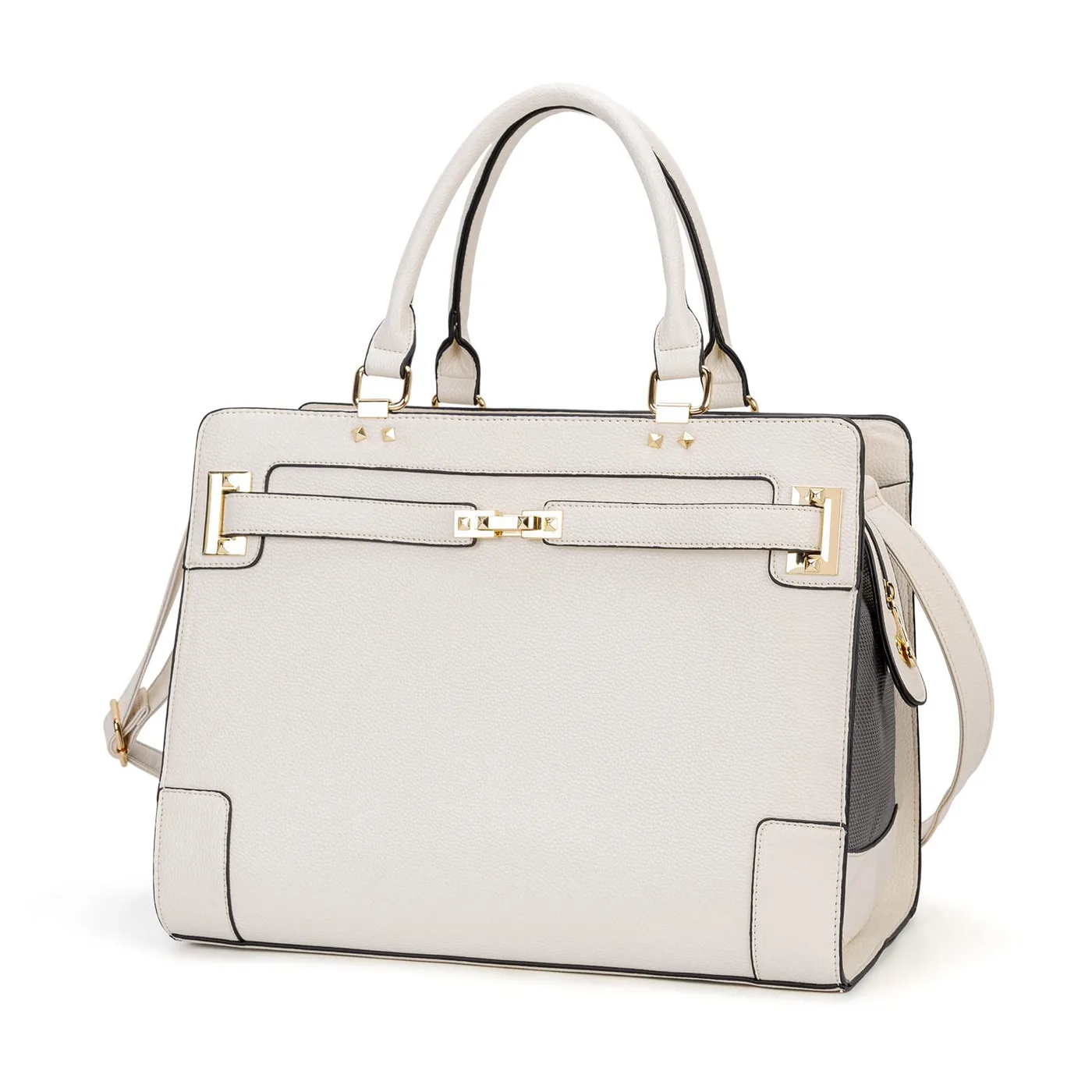
Concealing Structure Without Weakening It
Once it is agreed that stiffness goes inside, three questions decide whether the result actually works: where the panel sits, how it is held, and whether the animal can reach it.
Placement is between outer shell and lining, obviously, but the specific detail is whether it is bonded or floating. A floating insert held only at the top will migrate downward over months and end up bunched at the base. Bonded construction, either by lamination or by spot-adhesion over sufficient area, keeps position indefinitely. Where removability is required for washing, closures at the insert pocket must hold it in place rather than merely contain it.
Holding follows from that and determines how the load reaches it. A concealed panel does no good if the base load bypasses it entirely and goes into the shell seams. The construction should deliver base load into the panel deliberately, which means the base seam must either pass through it or around it intentionally rather than coincidentally.
Reachability is the safety question. Any internal element a cat can get at will eventually be attacked, and a stiffener that delaminates into strips becomes an ingestion hazard. The control is a bonded lining over every concealed panel, with the lining seam placed outside the reach zone, plus no exposed wadding anywhere inside the compartment.
The methods available for concealing the closure number three, and one further constraint applies to all of them: whatever conceals the closure must not delay the handler opening it, since a flap requiring two hands defeats the purpose of having a closure the animal cannot work and encourages people to leave it partly open. A decorative flap over a functional zipper is the most common and the most reliable, since nothing about the closure itself changes. An integrated closure where the zipper tape is sewn into a seam line so only the slider shows is elegant and reliable if done with adequate tape width. Most fragile is relying on press-studs or magnets alone for containment; these work for the component's life only if the surrounding geometry also resists prying, and in practice they need a concealed secondary.
Ventilation Without Visible Mesh
Visible mesh destroys the fashion proposition, so ventilation in this family is delivered through decoration that happens to be open. Four methods exist, and they are not equivalent.
Perforated panels are the primary method. Laser cutting gives precise, often decorative patterns with individual holes typically 1.5-3 mm; mechanical punching gives larger holes in simple grids at lower cost. Effective open area from a decorative perforation pattern commonly runs 12-22%, which is below target, meaning perforation has to be spread across multiple faces rather than concentrated in one feature area.
Spacer behind perforation is what makes the method work. Perforated synthetic leather pressed against a lining gives almost no airflow, because the lining blocks it. A three-dimensional spacer knit of 3-6 mm between the decorative outer and the lining creates the plenum the holes need, and this is the single most-often-missing element in purse designs.
Gusset ventilation is the second method and the most reliable. A side gusset of 25-50 mm depth can carry slots or a narrow mesh band entirely below the decorative zone, invisible in most presentations and delivering real cross-flow. It is the engineer's favourite because it decouples ventilation from appearance entirely.
Top-edge ventilation uses the gap along the top line where the closure sits, which exists anyway in most designs. It delivers modest area but contributes usefully to buoyancy exchange, particularly when combined with a low gusset intake.
Verification cannot be estimated here. Because every method relies on construction rather than on a catalogue part, the temperature-rise test at 30 °C with acceptance below 5 °C rise over two hours is the only reliable measurement, and the specification should also state 22-28% effective open area measured with the spacer included rather than from the perforation pattern alone.
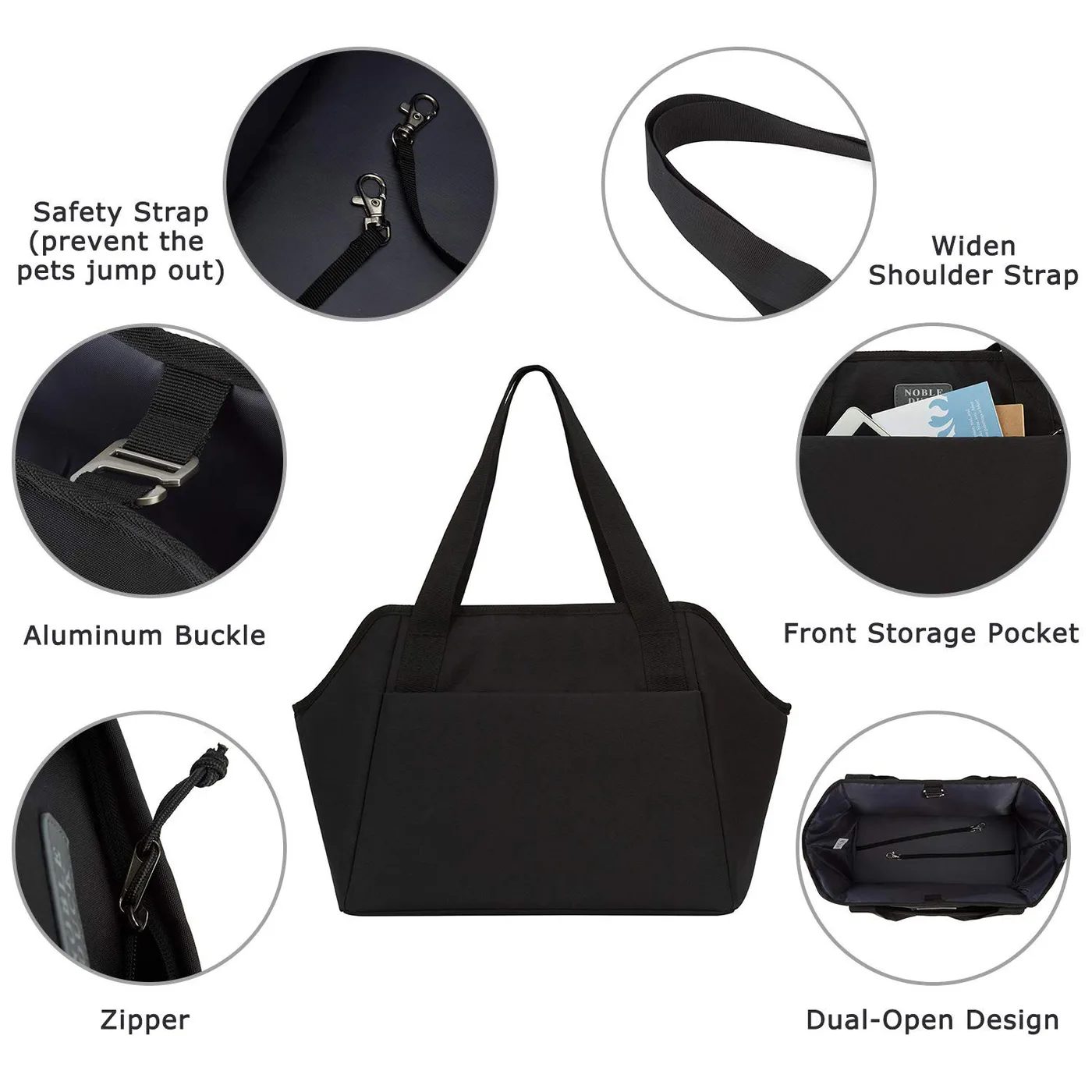
Hardware, Plating and Corrosion Control
Fashion-led products lean heavily on hardware for perceived value, and hardware is simultaneously the element most likely to fail technically in this category. Four specifications matter.
Plating type and thickness come first. Decorative finishes on zinc alloy bases - light gold, gunmetal, brushed nickel, rose - are all electroplated layers whose durability depends on thickness and on the sealer applied over them. Specifying a salt-spray duration and acceptance rating rather than a finish name is the difference between hardware that survives a coastal market and hardware that spots within a season; 24 to 48 hours of neutral salt spray with an acceptance rating below moderate tarnishing is a typical requirement.
Finish matching across components is the second specification, and it is the one that most often fails quietly. Multiple suppliers produce components whose nominally identical finishes have different colour temperatures, and the mismatch is immediately read as cheapness even when nobody can articulate why. Physical assembly of all components into a reference card, approved and retained, is the only effective control.
Weight is the third. Fashion hardware tends to be oversized, and because it sits largely outside the load path it is easy to over-specify. Using engineering plastic for purely decorative elements saves 80-200 g across a product without any structural consequence, provided no load-bearing component is substituted.
Abrasion at contact points is the fourth. Feet, corners and any element rubbing against clothing or flooring wear through plating quickly, so those specific components should be either unplated base metal or a different heavier specification than decorative elements elsewhere.
Colour Fastness and the Economics of Fashion Colourways
In this family, colour is the product to a much greater degree than usual, so the colour specification has more commercial weight and more technical risk. Two properties matter most and one commercial constraint dominates.
Crocking, or colour transfer by rubbing, is the first property, measured dry and wet against a standard cloth and rated on a grey scale. Grade 4 minimum is the working requirement for both dry and wet, and dark saturated colours are the usual offenders where the requirement is missed. Because this product rubs against the handler's clothing continuously in some formats, a marginal wet result produces visible staining on the customer's clothes, which is the single most damaging outcome in the category.
Light fastness is the second property and matters where the product sits in retail display or is left near a window. A minimum of grade 4 to Xenon exposure prevents the fading that turns a returned item into a dispute.
The commercial constraint is colourway minimums. Each colourway is a separate 500-piece commitment, so a five-colourway fashion programme is a 2,500-unit decision that has to be made before any sales data exists. Programmes handle this two ways: launching three colours and adding seasonal ones on reorder, or accepting higher unit cost to run smaller colourways - where suppliers will usually quote a surcharge below their stated minimum rather than decline the work.
Neutral versus seasonal balance is the practical answer. Two permanent neutrals carry the base volume, one or two seasonal colours carry the fashion message, and expected expiry of those seasonal options is planned rather than discovered as dead inventory.
The Interior Still Has to Clean
The interior of a purse-style carrier is where the compromise is most often made and least often forgiven, because nothing about a fashion exterior prevents what happens inside. Four requirements survive whatever the outside looks like.
A removable lining assembly is the first. Whatever the decorative exterior, the animal's contact surfaces have to lift out and go into a machine, because soiling and hair accumulation are unavoidable and because no fashion customer will buy a product that cannot be cleaned. A zip-out liner running the full interior with closed corners costs 1.20-3.00 USD and is the correct answer for this family.
Coated contact surfaces are the second. Every interior contact face should be a closed-face coated construction rather than a raw textile or pile - which also happens to suit the category aesthetically, since a smooth interior reads as better made than a fleecy one and releases hair rather than retaining it.
A sealed or bound floor is the third. Even where a welded floor is not achievable for appearance reasons, the floor seam should be bound rather than raw, and any board sleeve closed, so hair and liquid do not migrate into cavities that cannot be cleaned.
Finally, the mat. A purse interior should include its own fitted pad for the same reason every format does - animal traction and comfort - but it particularly needs to fit precisely here, since a loose pad in an unstructured-looking product reads as unfinished and gets bunched.
Chemical screening applies to the decorative materials as much as anywhere else, particularly to coated and printed surfaces, and inputs are routinely evaluated against criteria published by OEKO-TEX. Animal handling welfare framing is cross-checked against guidance published by the American Veterinary Medical Association.
Quality Standards When Cosmetics Outweigh Function
In this family the tolerance band runs the wrong way round: visually noticeable defects are usually more commercially damaging than marginal functional ones, yet functional requirements cannot be relaxed to chase appearance. Four practices resolve it.
Separate the defect lists and assign different AQL levels. Cosmetic majors - print misregistration beyond tolerance, visible quilting irregularity, plating colour mismatch, seam pucker - can be set at AQL 2.5 while functional characteristics including closure, anchors and any hazard remain at their own stricter handling with critical items still screened 100%. Mixing them into one list means either over-rejecting or under-rejecting, usually both across a season.
Create appearance reference boards rather than relying on written descriptions. Two boards per colourway - one acceptable, one not - with physical examples of acceptable pucker, acceptable shade variation within a unit and acceptable edge paint irregularity, settle arguments at inspection in minutes that would otherwise take days by email.
Handle plating and colour variation explicitly, since neither can be eliminated. Defining the acceptable range of colour temperature variation across components and across pieces, physically appealed to rather than described, prevents entire shipments being rejected for variation that every buyer would have accepted if they had seen it in context.
Finally, specify the care statement honestly, and state it plainly on the hangtag rather than burying it in a leaflet. Fashion materials frequently cannot take warm washes or tumble drying, and a customer discovering that their new purchase cannot be cleaned properly is the likeliest source of a hostile review; naming the temperature limit and the drying method costs nothing and protects the rating.
Retail presentation is the practical control here, and it belongs in the specification rather than in the margin. A decorative insert or card explaining that the product is an animal carrier and stating the maximum animal weight prevents the most common misunderstanding a fashion-led carrier encounters: being bought as a handbag and returned once the buyer discovers what it is. That single card protects a rating more cheaply than any change to the product itself. Fashion materials frequently cannot take warm washes or tumble drying, and a customer discovering that their new purse cannot be cleaned properly is the most likely source of a hostile review. Stating temperature limits and drying method plainly costs nothing and protects the rating.
Programme economics sit in the upper half of the range, typically 18-34 USD FOB driven by material family, concealed structure and hardware finish, on MOQ 500 pieces per colourway. The usual terms close it out: prototypes in 6-10 working days, bulk 35-50 days after approval, final AQL 2.5 inspection with cosmetic and functional defect lists separated, T/T 30/70 and FOB Xiamen. Related reading includes the companion pages on tote construction and custom label branding. The product succeeds when a customer cannot tell which parts are structural, because that means appearance and engineering stopped competing.
Order and quality terms
- MOQ 500 pieces per colourway; samples in 6-10 working days
- Bulk production 35-50 days after approval; AQL 2.5 inspection standard
- T/T 30/70 terms, FOB Xiamen, full document set per shipment
People Also Ask
Can a purse-shaped carrier really meet the structural requirements?
Yes, with concealed structure: a 4 mm base panel between shell and lining, buried panel stiffening, and a closure hidden under a decorative flap, typically adding 3.00-7.50 USD over a functional equivalent.
How do you ventilate a pet purse without visible mesh?
Perforated decorative panels with a 3-6 mm spacer plenum behind them, plus slotted side gussets below the decorative zone, verified by a two-hour test holding interior rise below 5 °C.
What colour fastness is required?
Grade 4 minimum for dry and wet crocking and grade 4 to Xenon light exposure. A marginal wet result stains the handler's clothing, which is the most damaging outcome in the category.
How is plated hardware specified against corrosion?
By salt-spray duration and acceptance rating rather than by finish name, typically 24-48 hours neutral spray with tarnishing below a defined level, plus retained assembly cards for colour matching.
Why does perforation alone not deliver enough airflow?
Because the lining blocks the holes. Without a spacer plenum behind the perforated face, effective open area collapses to almost nothing regardless of how much area the pattern represents.
Can press-studs or magnets contain a cat?
Not on their own. They need a concealed secondary closure, since the animals apply sustained prying loads the fasteners were never rated for.
How many colourways should a fashion pet programme launch?
Two permanent neutrals plus one or two seasonal options, since each colourway is a separate 500-piece commitment made before any sales data exists.
Frequently Asked Questions
Why is concealed structure more expensive than visible structure?
Because it cannot be produced by thickening what already exists. Every concealed panel adds components rather than mass, which is why the increment runs 3.00-7.50 USD over a functional product of the same volume.
Should a concealed stiffener be bonded or floating?
Bonded. A floating insert held at the top only migrates downward over months and ends bunched at the base, losing both its stiffening role and the silhouette it was there to preserve.
Why is the lining over a stiffener a safety requirement?
An element the animal can reach will be attacked, and a stiffener that delaminates into strips becomes an ingestion hazard. A bonded lining placed outside the reach zone removes the exposure.
How do you keep interior volume tight in a purse?
Specify around the animal rather than around an accessory format. Unoccupied volume converts directly into swing when carried low, and the animal feels every part of it.
What limits synthetic leather outdoors in winter?
Cold-crack performance, typically becoming a concern below about minus 10 °C, plus long-term hydrolysis in humid climates, which is why TPU-faced variants are worth the premium there.
What quilt spacing gives useful stiffness?
40-70 mm. Closer spacing stiffens further and loses drape in softer zones; wider spacing looks right but contributes little resistance to inward bow.
Why must batting be bonded rather than loose?
Loose wadding migrates under washing and ends unevenly distributed, which both degrades appearance and leaves zones with no stiffening at all after a few cycles.
Where do gusset vents belong?
Inside or below the decorative zone, since a gusset of 25-50 mm depth accommodates slots invisibly in most presentations while delivering genuine cross-flow.
Can feet and corners use the same plating as decorative parts?
It is better not to. Contact areas rub through plating quickly, so those components should be unplated base metal or a heavier specification than decorative elements elsewhere.
How is plating colour mismatch controlled?
With a retained physical assembly card of every component in each finish, approved before bulk, since nominally identical finishes from different suppliers routinely differ in colour temperature.
What interior must a fashion purse retain?
A zip-out full liner with closed corners, closed-face coated contact surfaces, a bound rather than raw floor seam, and a precisely fitted mat, costing 1.20-3.00 USD for the liner assembly alone.
Should cosmetic and functional defects share one AQL level?
No. Cosmetic characteristics belong at AQL 2.5 while functional ones keep stricter handling with critical items at 100% screening, because mixing the lists causes both over- and under-rejection.
How are appearance disputes settled at inspection?
With physical reference boards per colourway showing acceptable and unacceptable examples of pucker, shade variation and edge irregularity, which resolves in minutes what descriptions cannot.
What does a purse-style cat carrier cost to produce?
18-34 USD FOB depending on material family, concealed structure and hardware finish, at MOQ 500 pieces per colourway with bulk in 35-50 days.
Talk to QUANZHOU JUNYUAN BAGS about a pet carrier program: MOQ 500 pieces per colourway, samples in 6-10 working days, bulk production in 35-50 days under AQL 2.5 inspection.
Get a free quote Request a sample