Cat Carrier Tote Bag: Stylish Travel Solution
A cat tote is a square open volume carrying all its load through two handles, so the specification is dominated by three figures: a continuous webbing sling tested at five times rated load, side-wall bow under 10 mm when the animal leans, and a height-to-footprint ratio below 1.3:1 to resist tipping. Handle drop sits at 250-380 mm.
The tote is the hardest common format to engineer well and the easiest to engineer badly, because visually it is a simple rectangle with two straps and structurally it is an open box fighting to collapse inward while every newton passes through two seams. This page works through the load paths, the handle construction options with their real cost and durability differences, the wall and base structure needed to hold a square section, closure options against escape behaviour, the interior arrangement that suits how cats settle in an enclosure, stability against tipping, the materials that let a structured panel read as fashion rather than as equipment, and finally the additions needed to the standard test protocol. Standard programme terms apply: MOQ 500 pieces per colourway, prototypes in 6-10 working days, bulk production 35-50 days after golden sample approval, final random inspection to AQL 2.5, T/T 30/70 payment and FOB Xiamen loading.
A pet carrier manufacturer is judged on three numbers in this category - MOQ per colourway, sample turnaround and the AQL level applied at final inspection. Ours are 500 pieces, 6-10 working days and AQL 2.5.
The Load Path Problem That Defines This Format
A tote has no suspension system. Everything the animal weighs passes upward through two handle attachment points, and from there it either spreads into the body panels or concentrates at two seams. Whichever happens determines whether the product lasts a season or a decade, and the difference is almost invisible in a photograph.
The wrong construction terminates handle webbing at the top edge of the body panel, joining it to the shell with a stitch pattern. Every newton of load then passes through that stitch line and through the shell fabric immediately above it, which is neither strong nor stiff enough for the purpose. This configuration fails progressively: stitches elongate the fabric, the panel begins to tear along the stitch line, and eventually the handle separates. It is still offered because it is cheap and because it photographs identically to the correct construction.
The correct construction continues the webbing past the attachment point and down the body, ideally under the base, making the load path a continuous loop that carries weight in tension through the webbing itself rather than through a seam. This is sometimes called a sling construction, and it is the standard approach in every category where totes carry real weight. The additional material cost is small and measured in cents; the durability difference is roughly an order of magnitude. It also has the secondary benefit of carrying the base seam, which is otherwise one of the more heavily loaded joins in the whole assembly.
A third variation distributes into internal reinforcement rather than external webbing. Here the handle webbing terminates at an internal panel stiffener that spreads load across a wide area of the shell, which works well where external webbing would spoil the appearance. It costs more to assemble and it requires the stiffener to reach close to the base, but it is the right answer for fashion-led products.
Verification is straightforward and should always be requested. A static hold at five times rated load for 60 seconds followed by several thousand cycles at rated load through vertical travel, then repeated static: a properly slung tote shows no change, while a terminating construction deforms visibly at the panel long before it fails outright.
Handle Engineering: Drop, Width and Core Construction
Handles are the interface between product and handler, and they are specified by four numbers rather than by appearance: drop, width, core construction and grip section.
Drop is the vertical distance from the top of the handle to its attachment, and it determines how the carrier is actually carried. A short drop of 100-150 mm suits hand carry at the side, which keeps the unit close to the leg and stable but puts the handler's arm against the panel. A medium drop of 250-380 mm permits shoulder carry, is the most common choice for this category, and is what allows a customer to manage the unit hands-free briefly. Anything above about 450 mm makes the unit swing and shoulder carry unstable.
Width and thickness jointly set contact pressure on the hand. Against the loads here, a flat webbing narrower than 25 mm becomes uncomfortable quickly; the working range is 25-38 mm flat against a rolled or padded construction, with pressure relieved either by increasing width or by adding a core. Because increasing width is cheaper than adding padding and more durable, width is usually the first lever.
Core construction divides into three families. A flat webbing handle with no core is cheapest, most durable per unit cost, and least comfortable. A padded core, typically 4-8 mm closed-cell foam inside a fabric sleeve, improves comfort markedly and is standard for anything above 5 kg of animal. A moulded core, either EVA or injection-moulded TPE, gives the best combination of comfort and shape retention but adds tooling and reduces repairability.
The grip section is where most complaints originate, and it is usually a curvature problem rather than a material problem. A handle whose cross-section does not sit naturally in the hand causes the handler to adjust grip continuously, which feels heavier than it is. Rolling the webbing edges, tapering the core at the ends, and flattening the section where it contacts the palm all help.
| Construction | Load path | Unit cost index | Cycle life at rated | Best use |
|---|---|---|---|---|
| Flat webbing, terminated at edge | Through seam into shell | 100 | Low | Lightweight throwaway tier |
| Flat webbing, continuous sling | Continuous loop under base | 118 | High | Default specification |
| Padded core, internal reinforcement | Into panel stiffener | 145 | High | Fashion-led products |
| Moulded core with sewn cover | Into reinforcement or sling | 190 | High | Premium programmes |
Holding the Square: Walls, Base and Corner Structure
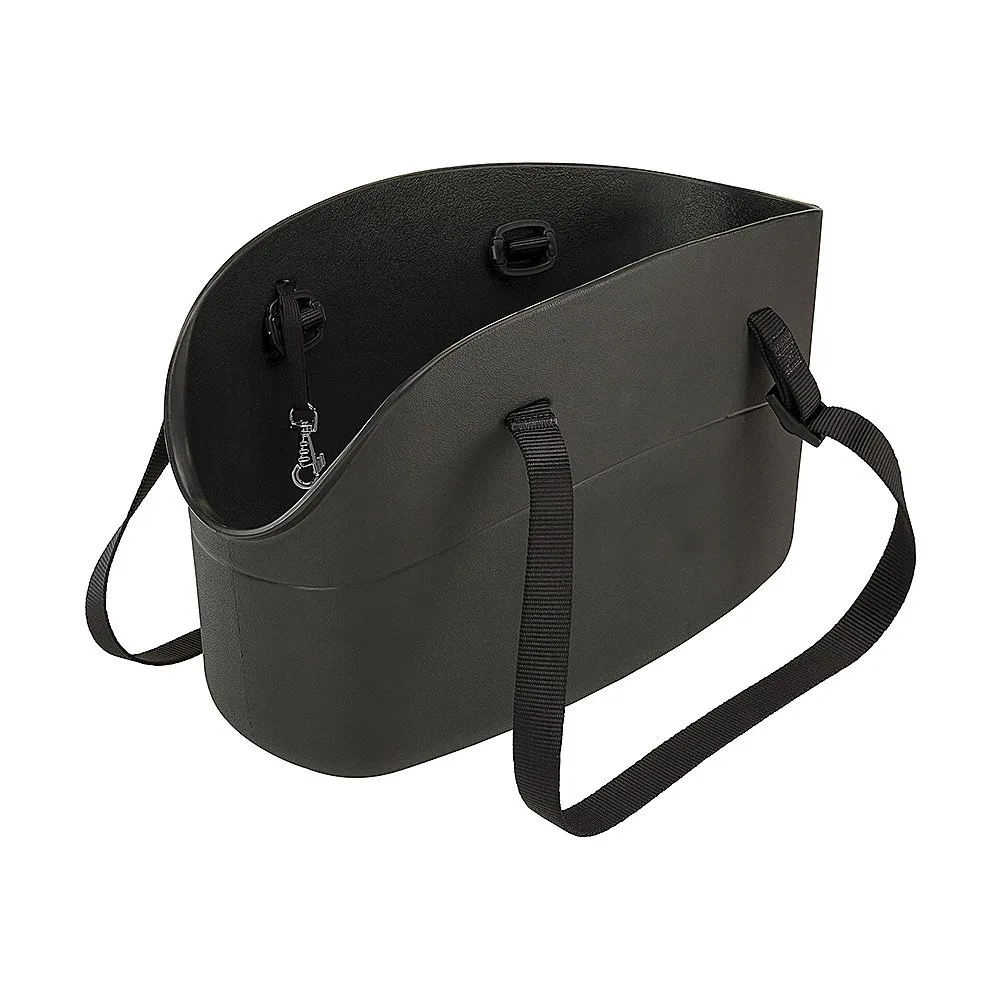
An unstructured tote collapses into a soft bundle the instant anything presses inward, and a cat pressing outward from inside does exactly that. Holding a usable rectangular section requires work at three locations: the base, the walls and the corners.
The base carries the section. For this class it means a die-cut board of 4-5 mm, or a moulded tray with a formed upstand of 20-30 mm where containment is also wanted. The board must be removable so the shell can be washed, which means a closed sleeve with a hook-and-loop or zip closure rather than a sewn-in pocket. A removable board also lets a customer replace a soiled panel rather than discarding the product.
Walls need help only where they are tall relative to the footprint. A box that is wider than it is tall generally holds its section with a bound panel and no reinforcement; once height exceeds width, the upper wall needs a stiffener - usually a laminated interlining of moderate weight, or a thin moulded sheet in wrap-around form - to prevent inward bow under leaning load. The acceptance figure used for this class is bow below 10 mm under a distributed lateral load of 40% of rated applied at mid-height.
Corners are where box shapes are won. Sharp right-angle corners in a soft textile round off immediately; a construction with a narrow vertical panel at each corner holds a crisp section and additionally gives the cat a corner to settle into, which matters behaviourally. A vertical stay, either a moulded insert or a rod sewn into the corner binding, stiffens further and is only worth it above a certain price point.
The base-to-wall junction deserves specific attention because there is where the section is lost first. The board must be captured such that the wall cannot fold inward over its edge; a sleeve with the wall sewn outside the board's footprint does this correctly, whereas a board floating loose in a pocket permits exactly the fold that ruins the section.
Top Closure Options Against Escape Behaviour
An open-topped rectangle is the defining visual of a tote and also the defining weakness, because it is the only common carrier format where the primary opening faces skyward. Three closure families solve it, each with different consequences for appearance and cost.
A zippered top panel is the most secure and the least tote-like visually. Done correctly it runs across the full top with a storm flap and a locking slider, delivering the same escape performance discussed elsewhere. Done cheaply it creates two weaknesses: the zip line sits directly above the animal's most effective climbing position, and the gap at each end where the zip terminates becomes a pry point. Where this route is chosen, the ends need reinforcement patches rather than simple bar-tacks.
A partial closure leaves the centre open and closes the ends, which reads much better visually and keeps the handler's view of the animal. Its weakness is intrinsic: the opening remains, and any gap wide enough for a head will eventually be tested. Designs using this approach need a deep open section - typically above 150 mm of unclosable depth is unacceptable - plus a secondary net or mesh panel across the opening.
A roll-top or folding closure, borrowed from dry-bag practice, gives excellent closure integrity and a distinctive appearance, and it also permits height adjustment. The objections are operational: rolling requires two hands and some practice, which matters when the other hand is restraining an animal, and the rolled barrel creates a heavy visual band around the unit. It suits some fashion positions and not others.
A fourth option deserves mention because it is commonly overlooked. A rigid internal frame that rises above the shell side then clamps shut converts the tote into a structured box with the appearance retained, giving the best closure performance with the least visual compromise, at a cost increment typically of 2.80-6.00 USD.
Interior Arrangement and How Cats Settle in a Box
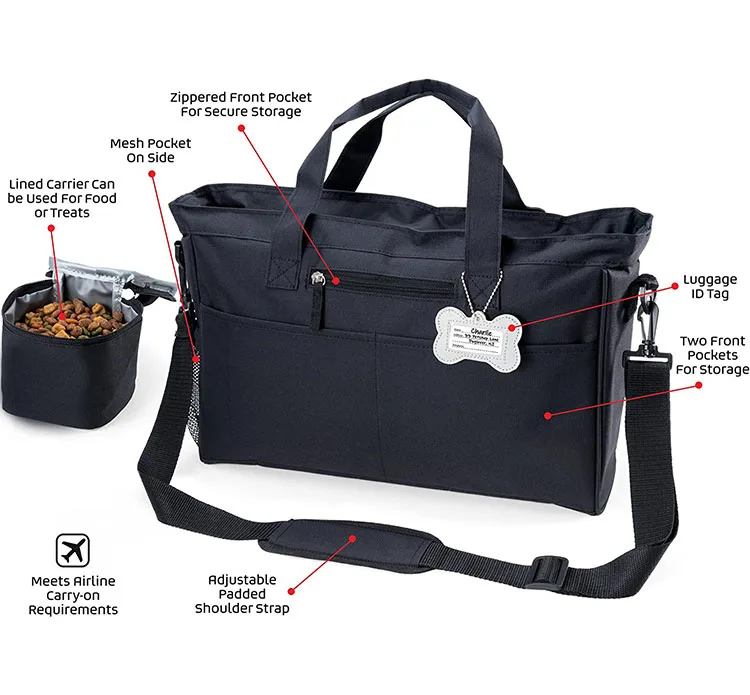
Cat behaviour inside an enclosure is specific enough to dictate interior design. A cat settles preferentially against a boundary, chooses a corner over open floor, and prefers a low ceiling over high open space. Each preference maps to an interior requirement.
Corner preference argues for crisp internal corners, as noted in the structure section, and against rounded pod-shaped interiors which, whatever their visual appeal, remove the positions cats prefer. Where a rounded exterior is required for styling, the interior can retain square corners through a box liner that sits inside a rounded shell.
Low-ceiling preference argues against unnecessary interior height. Additional headroom does not benefit the animal and it destabilises both product and animal, so the aspiration should be tight: enough for the animal to stand with ears clear, around 80-120 mm above the standing shoulder, and no more. Reducing height improves every other metric in the design.
Visual screening is the third requirement and the one with the clearest behavioural basis. Cats settle measurably better with a partial visual barrier; a fully glazed enclosure leaves them exposed in every direction. The specification therefore deliberately includes a solid panel on at least two lower faces, with ventilation and view apertures located above the animal's eye line when lying down. This is the opposite of what designers unfamiliar with the species instinctively produce.
Interior access opening size deserves a note because it interacts with everything above. The opening needs to admit the animal without the handler having to lower it through a restrictive aperture, and in this format that usually means the open dimension should exceed the animal's shoulder width by at least 60-80 mm, since handlers rarely present the animal squarely. A larger opening then makes the closure more important rather than less, which is the design tension at the centre of this format.
Accessories inside are then specified for the same reason. A mat is not optional but structural - it supplies the traction and the boundary the animal needs - and a removable pad that fits the base footprint exactly, with no loose edges to dig at, is the correct form. The tether anchor belongs low and to one side, near a corner the animal already prefers, rather than centrally.
Stability: Tip Resistance and the Leaning Load Case
Tipping is the commonest field complaint for this format and it is a geometry problem solved before anything is cut. The mechanism is simple: the animal moves to one wall, the combined centre of mass shifts beyond the base footprint, and the unit rotates.
The controlling ratio is overall height divided by the narrower plan dimension of the base. Keeping that ratio below about 1.3:1 gives a product that resists tipping under most animal movement; above 1.6:1 tipping becomes routine. Because this is a ratio, stability can be bought either by lowering height or by widening the base, and widening is usually the better trade because it simultaneously improves interior width.
The leaning load case deserves its own test rather than being inferred from static stability. A mass representing 60% of the animal's weight is applied horizontally at two-thirds of interior height, simulating the animal braced against a wall, with acceptance of no tip and no permanent deformation. This catches instability that a purely vertical assessment misses.
Feet contribute more than expected. Four moulded feet of 20-25 mm contact diameter raise the unit slightly, which marginally worsens tip resistance, but they dramatically improve grip, protecting against slip-driven tipping on smooth floors and defending the base against standing water. The balance favours feet with a defined coefficient of friction rather than no feet.
Finally, base mass helps and should be consciously deployed. Because weight low in the assembly improves stability without affecting carried perception much when hand carried, specifying a slightly heavier base board or adding a modest internal base mass can be a cheaper solution than restructuring the panels. Stability is cheapest when it is designed into the footprint, second cheapest when designed into the base, and most expensive when discovered after tooling.
Materials That Let Structure Read as Fashion
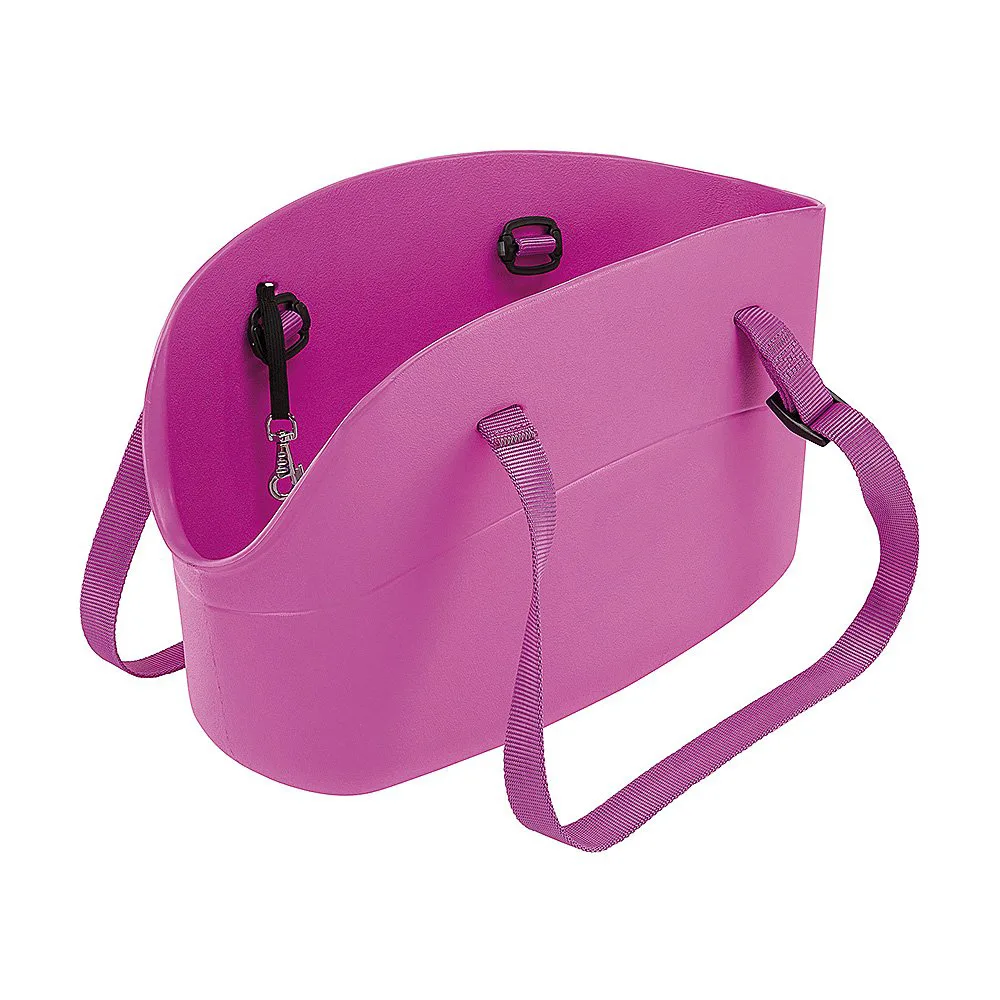
The commercial appeal of this format depends on it not looking like equipment, and material selection carries most of that responsibility. Five families cover the range, each with a different balance of structure, hand feel and cost.
Structured woven textile with heavy interlining is the default, typically 600D or 900D polyester over a laminated interlining that supplies stiffness without visible bulk. It costs least, takes print and colour well, and delivers adequate structure for wall panels. Its weakness is edge definition: soft constructions lose crispness at the top opening, which is precisely where the eye reads quality.
Coated polyurethane synthetic leather and its microfibre variants produce the crispest surface and best edge definition for moderate cost, and they allow edge paint or turn-edge finishing that genuinely lifts the perceived value. The constraints are abrasion at fold lines, cold-crack performance below about minus 10 °C, and chemical screening that must cover the coating rather than only the substrate.
Felt and pressed non-woven constructions give a distinctive matte, tactile surface that reads as homeware rather than sports equipment, and their natural stiffness helps the section hold without added interlining. They abrade more readily than woven alternatives and generate lint, so contact surfaces inside should be a different construction.
Jacquard and woven decorative textiles carry pattern in the weave rather than on the surface, which resists abrasion far better than printing and reads as premium. They are more expensive per metre and usually require a backing to stabilise them.
Colour and finish interact with the material list in a way that frequently gets overlooked at specification stage. Darker coated surfaces show scuffing at fold lines and at the top opening more readily than mid-tone ones, and metallic finishes in particular reveal any substrate irregularity beneath them, so a premium appearance usually requires a better substrate rather than a better topcoat. Selection samples should therefore be requested as folded and topstitched assemblies rather than as flat swatches, because the difference becomes obvious only in the made-up form.
Screening applies across all of them. Coated surfaces and finishes should be evaluated against OEKO-TEX criteria for restricted substances, and products intended to travel by air benefit from dimensional checking against cabin practice published by IATA.
Test Additions and Programme Notes
The standard structural protocol covers this format reasonably well, but four additions address the failure modes specific to a handled open box.
The first is the handle-to-body test described earlier: static hold at five times rated followed by several thousand vertical cycles at rated, then re-test. Samples must be taken from production rather than from the sample room, since this is a construction-sensitive result and prototype assemblies are often built more carefully than line output.
The second is wall bow under lateral load. Applying 40% of rated horizontally inward at mid-height should produce less than 10 mm of deflection with full recovery. This is the measurement that separates a tote that feels solid from one that feels limp, and it is rarely tested because it requires a fixture rather than a scale.
The third is the tip test, combining the static geometry ratio with the leaning load case: 60% of animal weight applied horizontally at two-thirds interior height with no tip permitted. Both are cheap to run at the design stage and expensive to discover in review.
The fourth is about closure durability rather than structure: cycles on the primary closure with the top loaded, since a top-mounted closure in this format experiences tension that the same closure does not experience on a side entry. Five thousand cycles followed by an internal pry check is the standard sequence.
Packaging deserves one explicit line in this format, because a structured tote ships poorly if packed flat and expensively if packed assembled. Folded shipping with a formed insert protecting the top edge is the usual compromise, and it should be validated by a drop test on the carton rather than by inspection of one unit that arrived intact.
Programme economics sit in the middle of the range. A well-built tote lands around 15-26 USD FOB depending on material family and closure type, incrementing by 2.80-6.00 USD for the rigid-frame variant. Regular terms close it out: prototypes delivered in 6-10 working days, bulk production 35-50 days after sample approval, final random inspection to AQL 2.5 with handle cycles added to the defect list, T/T 30/70 and FOB Xiamen. Related reading includes the pieces on hands-free shoulder construction and soft-sided lightweight design.
Order and quality terms
- MOQ 500 pieces per colourway; samples in 6-10 working days
- Bulk production 35-50 days after approval; AQL 2.5 inspection standard
- T/T 30/70 terms, FOB Xiamen, full document set per shipment
People Also Ask
What stops a cat tote bag collapsing inward?
A removable 4-5 mm base board captured in a closed sleeve, wall stiffening once height exceeds width, and defined corner structure - accepting bow under 10 mm at 40% of rated lateral load.
How should tote handles attach to the body?
As a continuous sling. Terminating webbing at the top edge puts every newton through one stitch line and the shell above it, and it fails progressively long before it fails outright.
What handle drop suits a cat carrier tote?
250-380 mm permits shoulder carry and brief hands-free management. A 100-150 mm drop suits side carry only, and anything above about 450 mm makes the unit swing.
How do you stop an open-top tote letting the cat out?
Close it: a zippered top with a storm flap, a mesh panel over any residual opening, or a rising internal frame that clamps shut, since any gap wide enough for a head will be tested.
Why do cats prefer square interior corners?
They settle preferentially against a boundary and choose corners over open floor, so crisp internal corners give the positions they naturally prefer, whatever the exterior shape is.
How much interior headroom should a cat have?
About 80-120 mm above the standing shoulder. Extra height brings no benefit, and it destabilises both the animal and the unit while worsening every other design metric.
What causes tipping and how is it prevented?
Shifting centre of mass moving beyond the footprint. Keep height to narrow base below 1.3:1, add high-friction moulded feet, and test 60% of animal weight applied laterally at two-thirds height.
What does a well-built cat tote cost?
15-26 USD FOB depending on material family and closure type, plus 2.80-6.00 USD for a rigid internal frame variant, on MOQ 500 pieces per colourway.
Frequently Asked Questions
Why is the sling construction only centimetres more expensive?
It adds webbing length and a pass through the base rather than much material. The cost difference is cents, while the difference in load path - continuous tension against concentrated stitch loading - is roughly an order of magnitude in service life.
What width of handle is comfortable at this load?
25-38 mm flat or rolled. Increasing width is cheaper and more durable than adding padding, so it is normally the first lever used to reduce contact pressure on the hand.
What core thickness suits a padded handle?
4-8 mm of closed-cell foam inside a sleeve, tapering at the ends so the section sits naturally in the palm and the handler is not continually adjusting grip.
Why should the base board be removable?
So the shell can be washed and soiled panels replaced rather than discarded. It needs a closed sleeve with a closure rather than an open pocket, otherwise hair and debris migrate into the cavity.
When do wall panels need stiffening?
Once interior height exceeds plan width. Below that ratio a bound panel holds section unaided; above it, a laminated interlining or thin moulded wrap is needed to resist inward bow.
What is the weak point of a zippered tote top?
The two termination points, where each ends. Handled properly they get reinforcement patches rather than simple bar-tacks, since a cat pries most effectively from directly beneath the line.
Why is a partially open top risky?
Because the opening remains. Any aperture wide enough for a head will eventually be tested, so this route requires a mesh or net secondary panel and a residual open depth below about 150 mm.
What does the roll-top closure cost and require?
It gives excellent integrity and permits height adjustment, but it needs two hands and practice to operate, which is difficult when one hand is restraining an animal.
Should interior ventilation and view be at eye level?
No. Place apertures above the animal's eye line when lying down and keep solid panels low, because cats settle measurably better with a partial visual barrier than fully exposed.
Why should the tether anchor sit near a corner?
Because that is where the cat already chooses to settle, so restraint fits its natural preference rather than fighting it, unlike a central anchor that leaves the animal unsupported.
Do moulded feet help or hurt stability?
Both, and the trade favours them. They raise the centre slightly, but high-friction contact protects against slip tipping on smooth floors and defends the base against standing water.
Where should base weight be added if needed?
In the board or as a modest internal base mass. Mass low in the assembly improves tip resistance and is barely noticed in hand carry, making it cheaper than restructuring panels.
Which material gives the crispest top edge?
Coated polyurethane synthetic leather, because it allows turn-edge and edge-paint finishing. Check cold-crack below about minus 10 °C and screen the coating itself, not just the substrate.
What does the closure cycle test look like here?
Five thousand cycles with the top loaded, since a top-mounted closure carries tension that the same specification would not experience on a side entry, followed by an internal pry check.
Talk to QUANZHOU JUNYUAN BAGS about a pet carrier program: MOQ 500 pieces per colourway, samples in 6-10 working days, bulk production in 35-50 days under AQL 2.5 inspection.
Get a free quote Request a sample