Dog Carrier Backpack for Chihuahuas: Breed-Specific
A Chihuahua-specific carrier is engineered around head protection and thermal retention rather than load: the class runs 1.5-3.0 kg with an incompletely ossified skull and a high surface-area-to-mass ratio, requiring 8-14 litres of snug volume, 25-30 mm of compliant roof padding, a rigid floor with deflection under 3 mm, a harness-only restraint interface, and an insulating shell rated to 5 °C.
This page sets out the engineering decisions behind a Chihuahua-specific carrier programme. The load is the smallest in the dog range and the structural work is trivial; the difficulty is that three non-structural hazards dominate. The breed commonly retains an open fontanelle, so the roof of the compartment is a head-injury surface rather than a cover. Its mass-to-surface ratio makes it the most cold-sensitive dog in the range, so the shell is a thermal component rather than a bag. And its trachea is vulnerable enough that any neck-loading restraint is a clinical hazard rather than a convenience. Each of those converts into a measurable specification, and none of them appear in a generic small-dog tech pack. Commercial terms follow the standard program: MOQ 500 pieces per colourway, prototypes in 6-10 working days, bulk production 35-50 days after sample approval, final random inspection to AQL 2.5, T/T 30/70 payment and FOB Xiamen loading.
Working as a pet carrier manufacturer on dog carrier backpack ranges means the technical file is shared before any quotation: pattern, bill of materials, test report and packing specification.
Mass Class, Head Geometry and the Molera Constraint
Chihuahua dimensions sit at the bottom of the dog range and the spread is narrow. Adult mass runs 1.5-3.0 kg with the standard-weight population between 1.8 and 2.7 kg, height at the withers 150-230 mm, and body length 250-350 mm. At that mass no structural element in the carrier is loaded to more than a few percent of its capacity, which is why the engineering content of this product is almost entirely non-structural.
Head geometry is the first constraint and it inverts a normal dog assumption. In most breeds the widest cross-section is the chest or the shoulder; in this breed it is frequently the skull. An apple-headed Chihuahua has a rounded cranium of 90-130 mm width with prominent, laterally set eyes, and the head is the dimension that governs the minimum opening size rather than the body. An aperture sized to the chest will not pass the head, and a designer who works from chest girth produces a carrier the animal cannot be lifted into without folding the ears.
The molera is the second head constraint and the one with real consequence. A large proportion of the breed retains an open fontanelle — a persistent unossified gap in the skull — throughout life. It is a recognised breed characteristic rather than a defect, and it means that a blow to the top of the head is transmitted directly to the brain with no bone in between. In carrier terms the roof of the compartment is a head-impact surface, and it has to be specified as one.
The roof specification follows from that: a compliant layer of 25-30 mm over the occupant's head position, using a foam of 25-35 kg/m³ indentation load deflection so it yields rather than rebounds, with a non-stretch inner lining that limits travel to 20-30 mm. A hard shell roof, or a roof padded only with decorative quilting, is the specific failure this specification exists to prevent.
Eye prominence is the third head-related item. Laterally set, shallow-orbit eyes are contacted by anything that touches the side of the head, which rules out tight elastic openings, narrow entry tunnels and any interior fitting that protrudes near the head position. Entry geometry should clear the head by at least 15 mm on all sides.
| Parameter | Value | Driver | Verification |
|---|---|---|---|
| Body mass | 1.5-3.0 kg | Breed range | Weighed sample set |
| Skull width | 90-130 mm | Sets minimum aperture | Head gauge pass-through |
| Compartment volume | 8-14 litres | Snug fit, limits slip | Displacement measurement |
| Roof compliance | 25-30 mm at 25-35 kg/m³ | Open fontanelle | Impact test, 5 J |
| Floor deflection | Under 3 mm | Fine-bone spine support | Dial gauge at 3 kg |
| Shell thermal rating | Holds 20 °C delta at 5 °C | Surface-to-mass ratio | Chamber log, 60 min |
| Restraint interface | Harness only, 150 N anchor | Tracheal vulnerability | Pull test, no neck load |
The specification is therefore a small carrier with an unusually protective roof, an unusually warm shell and an unusually generous opening relative to body size. Everything structural is overspecified; everything protective is the actual product.
Compartment Volume and Restraint: Managing a 2 kg Slip Load
The instinct in a small-breed programme is to shrink the compartment, and it is correct up to a point that is easy to overshoot. A 2 kg dog in a 20 litre compartment slides with every step the wearer takes, and sliding is the mechanism behind most of the injuries and most of the escape events in this class: the animal is thrown against a wall, it panics, and it climbs.
Volume of 8-14 litres is the working range, sized so that the animal can stand, turn and lie down with 20-40 mm of clearance at the shoulder and no more. That clearance figure is the specification that matters and it is easy to get wrong in both directions: under 20 mm and the animal is compressed and cannot change posture; over 60 mm and the slip problem returns.
Floor shape is the second control and it is cheaper than volume reduction. A shallow dished floor with a 10-15 mm upstand at the perimeter keeps a small animal centred without restraining it, and unlike a flat floor it does not rely on friction alone. The dish also collects hair and debris in one place, which is a maintenance benefit rather than a design goal but is worth having.
Restraint is the third control and it is where most programmes make the clinical error. The correct interface is a harness: a load-distributing element around the chest, attached to an internal anchor on the roof centreline rather than to a wall, rated at 150 N, with a lead of 150-250 mm. That length allows a change of posture and prevents the animal reaching the primary closure.
A collar interface is prohibited and the prohibition belongs on the label rather than only in the tech pack. The breed is predisposed to tracheal collapse, and a restraint that loads the neck during a stumble or a sudden stop is a direct cause of tracheal injury. The anchor geometry should make a collar attachment awkward — a roof-mounted D-ring reached through a short webbing loop does this better than a wall-mounted ring that a customer can clip a collar to without thinking.
Escape behaviour closes the section. A Chihuahua is light enough to be lifted by the movement of the compartment and active enough to climb a vertical surface if it can get purchase, so the closure has to be secure against a pushing load from inside rather than only against a pulling load from outside. A top closure with a rigid frame and a two-point engagement resists a push far better than a centred zipper, which lifts under internal pressure.
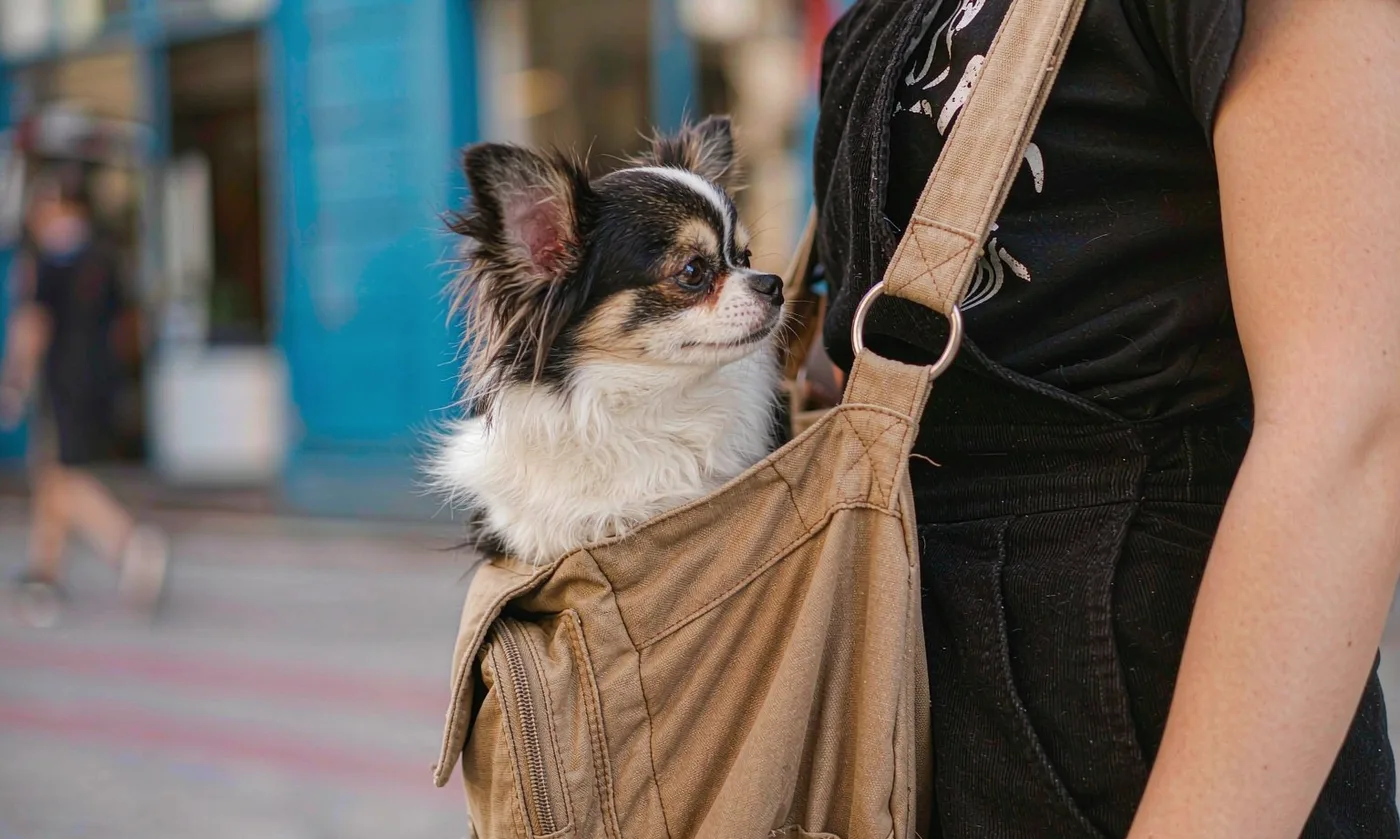
Floor Engineering and Spine Support at the Low End of the Range
It is tempting to treat the floor as non-structural at 2 kg and to build it from a single layer of board with a fabric covering. That is the most common specification failure in this class, and the reason is not load but deflection geometry: a thin board over a long span sags, and a sagging surface is exactly the unsupported spinal posture that a fine-boned dog cannot tolerate.
Deflection under 3 mm at a 3 kg load is the specification, measured at mid-span on a floor supported at its edges. That figure is the same one used for a rabbit at four times the mass, which is the point: the tolerance is set by the animal's skeletal tolerance, not by the board's strength. At a span of 380-500 mm it requires a board of 3.0-4.0 mm or a moulded tray with ribs of 8-12 mm depth.
Board material selection is influenced by temperature as much as by stiffness. Polypropylene and HDPE both stiffen and become brittle at low temperature, and a Chihuahua carrier is the one product in the dog range that is genuinely used in cold conditions, so the board is specified with a low-temperature deflection check at -10 °C rather than only at ambient. A board that meets the ambient figure and fails the cold figure is a real failure mode.
Traction is a smaller concern here than for a rabbit but not a nil one. A small dog with poor purchase slides, and sliding is the precursor to the panic-and-climb sequence. A coefficient of friction above 0.5 with a textured mat of 3-5 mm closed-cell foam gives enough grip, and it doubles as part of the thermal package described below.
Support continuity is the last floor item. The floor must be supported along its full perimeter rather than at corners, because a floor supported only at the corners deflects diagonally and produces a twist the animal cannot stabilise. The specification is a perimeter frame or a board sleeve captured in the base seam on all four sides, with a bar-tack of at least 12 mm at each corner and a corner radius of 25 mm or greater.
Thermal Engineering: Surface Area to Volume and Cold Stress
A 2 kg dog loses heat far faster than a 20 kg dog, and the reason is geometric rather than metabolic: surface area scales with the square of linear dimension while mass scales with the cube, so the ratio of heat-losing surface to heat-generating mass is roughly two and a half times worse at this size. Combined with a short, thin coat in the smooth-coat variety, this makes the Chihuahua the most cold-sensitive dog in the carrier range, with visible shivering at ambient temperatures that a larger dog finds comfortable.
Insulation is therefore a primary requirement rather than a comfort feature, and it belongs on every face rather than only on the floor. A 6-10 mm closed-cell layer in the floor, walls and roof gives a thermal resistance that holds a 15-20 °C differential between interior and ambient for an hour, which is the performance target for the class. That is two to three times the insulation thickness used on a mid-size dog carrier, and it is the largest single cost increment in the product.
Placement is asymmetric in a way that surprises designers. For most breeds the floor is the insulated surface because the animal loses heat by conduction into a cold floor; here the roof and walls matter equally because the animal's dorsal surface is the largest exposed area in a sitting posture and because the compartment volume is small enough that the walls dominate the exchange. The specification is continuous insulation with no uninsulated panel, and the ventilation path is baffled rather than open so that it does not become a thermal short.
Wind is a larger factor than still-air temperature at this size. A shell with an outer face that is air-permeable loses most of its insulation value in a 2 m/s airflow, so the outer fabric is specified as a coated woven with an air permeability low enough that the insulation is not bypassed. Air permeability is measurable and belongs in the tech pack rather than being left to fabric selection.
Warmth has a limit and the documentation should state it. Insulated carriers are used in heated vehicles and in summer in some markets, and an animal that cannot dump heat is at risk on the other side. The practical answer is a closable ventilation aperture sized generously enough — 20-28% open area with a closable section — that the same product works in both directions, plus a stated maximum ambient temperature. Thermal methods and conditioning practice follow published standards from ASTM International.
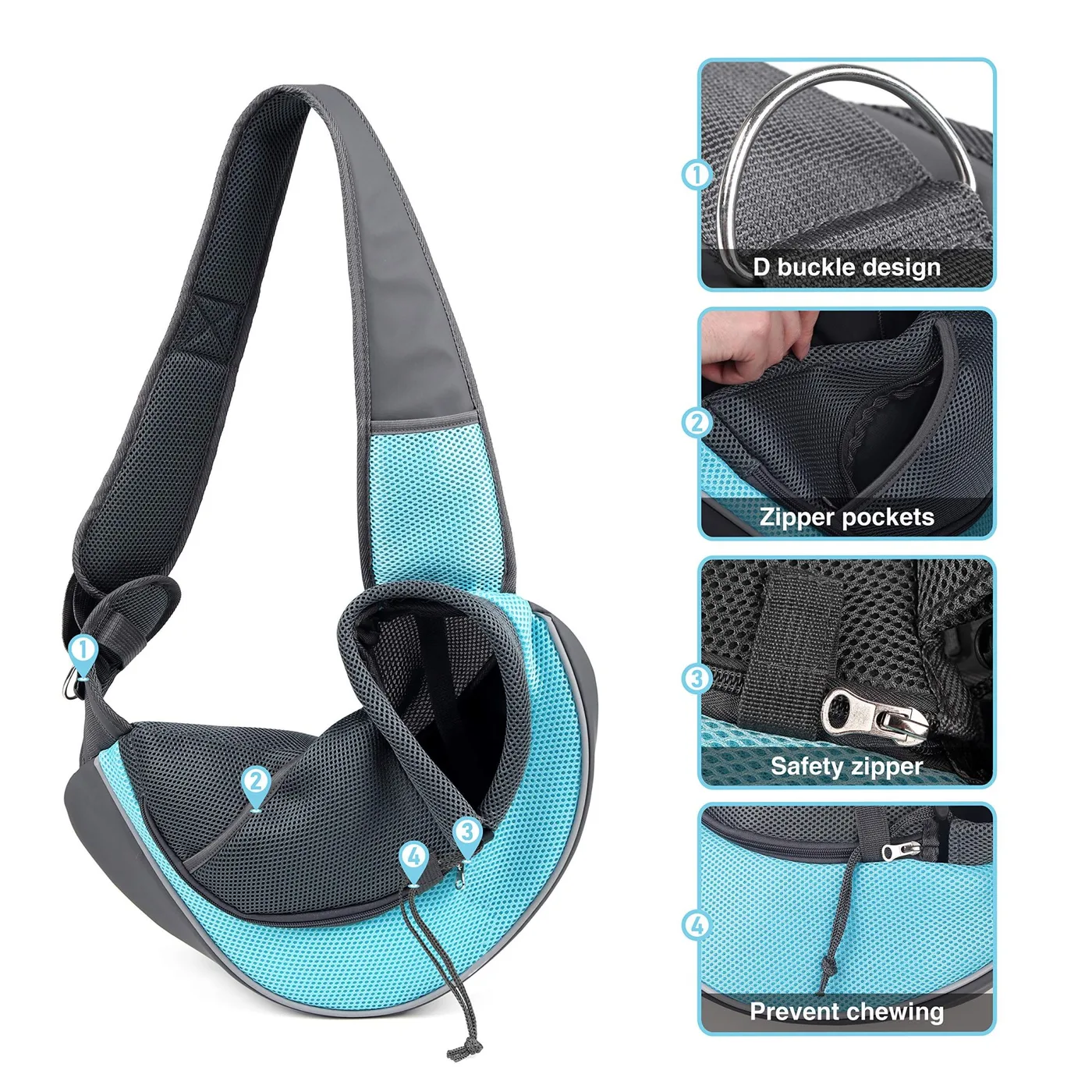
Airway, Neck and the No-Collar Rule
Tracheal collapse is strongly over-represented in this breed and it changes the restraint and the geometry of the product. The trachea is supported by cartilage rings that weaken with age and with repeated compressive loading, and once the rings flatten the airway narrows progressively. Any product element that transmits load to the neck is a contributing factor rather than a neutral one.
The restraint rule follows directly and it is absolute: the internal restraint is a harness interface and no product element may be presented as a collar attachment point. That means no D-ring positioned so a collar clip is the obvious use, no neck-adjacent loop, and — in the documentation and on the label — an explicit statement that a collar must not be used to restrain the animal in the carrier. It is one of the few places where a label warning is part of the engineering control rather than a legal formality.
Head and neck posture is the second airway item. A dog with a compromised airway breathes best with the neck extended in line with the spine, and worst with the neck flexed. A compartment that forces the animal into a curled posture with the chin toward the chest is therefore a respiratory hazard as well as a comfort problem, which is a further argument for the length figure over pure volume: interior length should exceed the animal's body length by 40-80 mm so that a fully extended posture is available.
Air quality is the third item and it is a compartment-volume problem. At 8-14 litres the enclosed volume around a 2 kg dog is small, and carbon dioxide and humidity rise faster than they would in a larger compartment. The ventilation figure of 20-28% open area is set partly by that rather than by temperature alone, and the acceptance test is a carbon dioxide reading at head height rather than a temperature reading.
Dust and fragrance sensitivity complete the airway section. Small breeds with compromised airways are disproportionately affected by airborne irritants, so the interior lining is specified low-VOC with a water-based adhesive throughout, a 72-hour cure before closure, and a headspace screen on the finished product. Textile components are screened against OEKO-TEX criteria as they are across the range.
Hardware, Trim and Small-Part Controls at Minimum Scale
Hardware on a Chihuahua carrier is specified to the same absolute loads as hardware on a larger product and then reduced in size, which is the wrong order. The loads are the same because a 2 kg dog can still apply 50-80 N in a lunge, but the panel and webbing the hardware is attached to is often lighter, so the local attachment is weaker than on the larger product. The specification response is to keep the hardware gauge and to increase the reinforcement around it.
Webbing is the clearest example. A 15 mm webbing is adequate in tensile terms for this class, but it concentrates load into a narrower panel area than a 20 mm webbing does, and it is the panel that fails. The specification is 20 mm webbing on all load paths with a bar-tack of at least 12 mm and a reinforcement patch of 200-300 g/m² behind every attachment, which is the same reinforcement used on a mid-size product.
Zippers are specified by pull load rather than by gauge. A #5 coil zipper is structurally ample here and the failure mode is manipulation rather than strength, so the specification is a reverse-coil type with a covered garage, a locking slider with a positive detent and a 70 N pull test on the closed state. Hardware finish is a declared powder coat or stainless, screened for heavy metals, with no brass or zinc die-cast anywhere in the assembly.
Small parts are controlled against a 31.7 mm gauge as they are in every small-animal product in the range, and every detachable element is pull-tested at 50 N. Interior fasteners are recessed under welded washers or covers, webbing ends are hot-knife sealed and bar-tacked, and no interior element protrudes more than 5 mm into the compartment, because a protrusion near the head position is an eye hazard for a breed with prominent, shallow-orbit eyes.
Weight is the last hardware consideration and it cuts the other way. The whole product should stay under 900-1,200 g so that the carried mass is dominated by the animal rather than by the carrier, which is achievable with a 300-420 g/m² shell, moulded rather than metal hardware where the load permits, and minimal trim. Specify hardware to the same absolute loads as a larger product and reinforce the panel rather than shrinking the fitting.
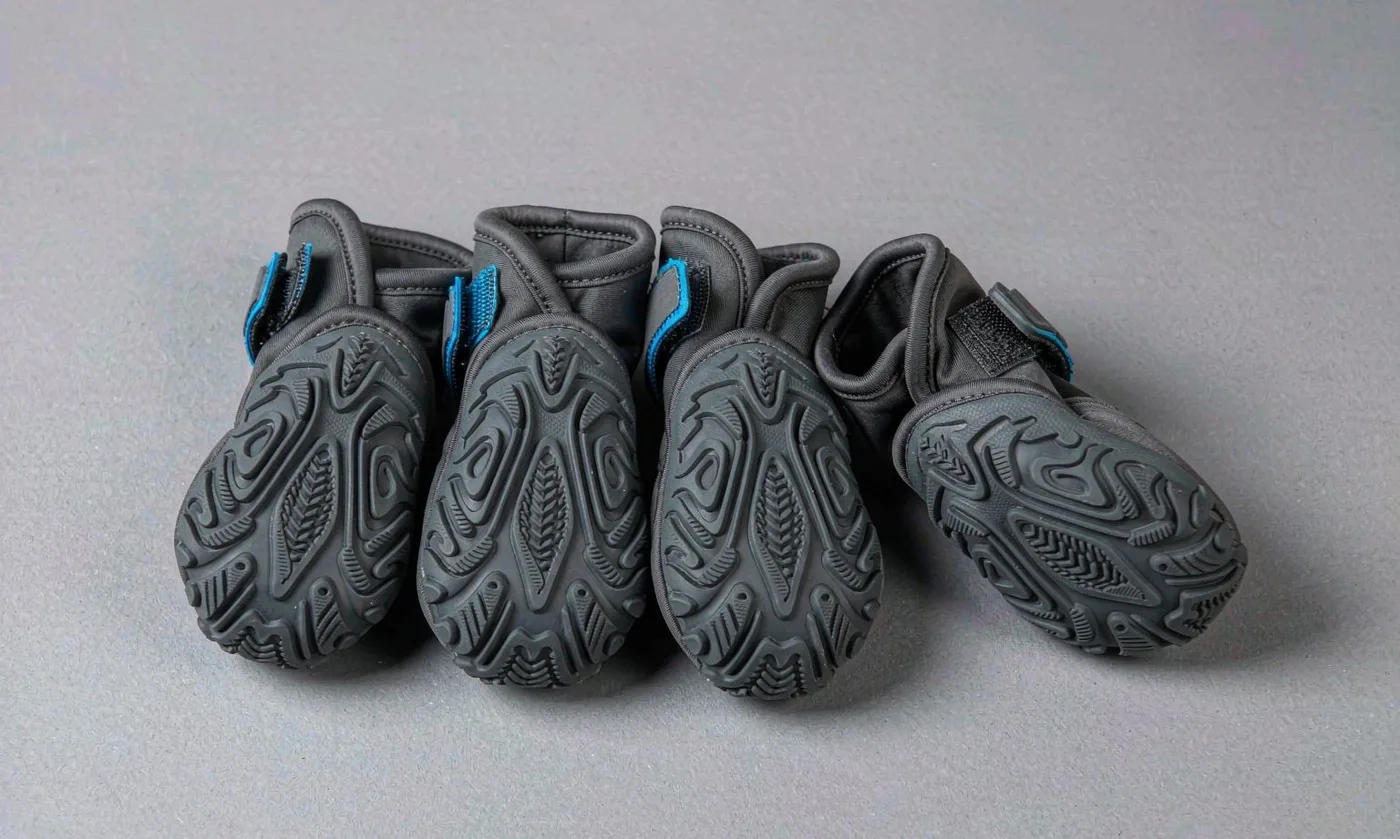
Grading and Tolerance: Why One Size Cannot Cover the Breed
The spread within this breed is small in absolute terms and large in proportion. A 1.5 kg animal and a 3.0 kg animal differ by a factor of two in mass and by roughly 60-90 mm in body length, which is a larger proportional spread than the whole mid-size dog range covers. A single compartment sized to the middle of that range is too loose for the small half and too tight for the large half, and because the class is defined by snug fit, a single size does not work.
Two grades is the standard answer and three is better where the programme supports it. A graded set at 8-10 litres and 12-14 litres covers the population with the 20-40 mm shoulder clearance rule satisfied at both ends, and grading is cheap in this product because the panels scale linearly from the same pattern. The tooling and pattern cost of a second grade is small; the return rate saved by not shipping an oversized compartment to a small animal is not.
Tolerance is where the graded specification is actually lost. The shoulder clearance rule has a 20 mm window, and a manufacturing tolerance stack of ±8 mm on the floor panel, ±5 mm on the wall height and ±4 mm on the mat thickness consumes most of it before the animal is considered. The response is to tolerance the floor panel and the mat as a matched pair rather than independently, with a combined limit of ±6 mm on the internal height dimension and a gauge check on the finished assembly rather than on the cut panel.
Foam and insulation compression is the second tolerance contributor and the one that is usually missed. A 6-10 mm closed-cell layer compresses under the animal's weight and under the compression of the shell during assembly, and a layer specified at 8 mm may measure 6 mm in the finished product. The specification is stated as thickness under a 2 kPa load rather than as nominal thickness, and it is verified on the finished assembly.
Fit sampling closes the section and it is the only reliable check. A graded programme is validated against a physical fit gauge set — rigid blocks at the lower, middle and upper body dimensions of each grade — passed through the entry aperture and seated on the floor of three production samples. A gauge that passes at the small end and binds at the large end is the signal that the grade boundary is drawn in the wrong place, and it is cheaper to find before bulk than after.
Test Protocol, Cost and Programme Notes
Chihuahua-specific release runs the small-dog protocol with three additions: a roof impact test, a thermal retention test and a restraint interface review. Structural testing is nominal — 4x rated load at 12 kg is trivial on any shell — so the protocol is dominated by thermal and protective checks.
The roof impact test addresses the molera directly. A 5 J impactor with a 40 mm hemispherical head is dropped onto the roof at the occupant's head position from 150 mm, five times, with acceptance of no contact with the inner surface and a peak transmitted force under 250 N measured by a load cell at the floor. The test is repeated at -10 °C and at 50 °C because foam stiffness varies with temperature and a foam that is compliant at ambient can be effectively rigid when cold.
Thermal retention is measured in a chamber at 5 °C with a 60 minute static soak, logging interior temperature at the resting position. Acceptance is a maintained differential of at least 15 °C, which is the figure that separates an insulated shell from a lined one. The same test is run at 30 °C in the reverse direction with the ventilation open, accepting a rise of no more than 4 °C, to confirm the product does not overheat in summer use.
The restraint review is a documented check rather than a test: confirmation that the only attachment point is a roof-centreline anchor, that a collar cannot be clipped to it without deliberate effort, and that the label carries the no-collar statement. It is repeated at the golden sample and at the first production lot because anchor geometry is a detail that drifts in cost-down exercises.
Cost is driven by the insulation package and by reinforcement rather than by material volume. The 6-10 mm closed-cell insulation adds 1.60-3.40 USD, the compliant roof build adds 0.90-2.10 USD, reinforcement patches and 20 mm webbing add 0.40-0.90 USD, and the harness-interface anchor adds 0.20-0.50 USD. Total increment over a generic small-dog carrier is 3.10-6.90 USD, landing the unit at 12-22 USD FOB, which is a smaller product at a higher unit cost than buyers usually expect.
Programme notes close the page. MOQ is 500 pieces per colourway, prototypes run 6-10 working days and bulk production 35-50 days after approval, with final random inspection to AQL 2.5 and the roof impact and thermal checks added to the defect list. Restraint and occupant-protection claims are commonly cross-checked against published work from the Center for Pet Safety, and welfare framing against guidance from the American Veterinary Medical Association.
Production capability
- SGS-verified production space of 4,950 m², 149 machines, 7 assembly lines
- Pet carrier and pet bag output since 2014 from a 137-person team
- 200,000 units shipped monthly under BSCI and ISO 9001 systems
People Also Ask
Why does a Chihuahua carrier need a padded roof?
The breed commonly retains an open fontanelle, or molera, so a blow to the top of the head reaches the brain with no bone in between. The specification is 25-30 mm of compliant padding at 25-35 kg/m³ with travel limited to 20-30 mm.
How much compartment volume suits a Chihuahua?
8-14 litres, sized so the animal can stand, turn and lie down with 20-40 mm of shoulder clearance. Under 20 mm compresses the animal; over 60 mm and the slip-and-panic sequence returns.
Can a collar be used to restrain a dog in a carrier?
No, and the prohibition belongs on the label as well as in the tech pack. The breed is predisposed to tracheal collapse, so the internal restraint is a harness interface on a roof-centreline anchor rated at 150 N.
Why are Chihuahuas so cold-sensitive?
Surface area scales with the square of linear dimension and mass with the cube, so a 2 kg dog has roughly two and a half times the heat-losing surface per unit of mass. Insulation of 6-10 mm on every face is a primary requirement, not a comfort feature.
How is the floor specified at only 2 kg?
Deflection under 3 mm at 3 kg measured at mid-span, the same tolerance used for a rabbit at four times the mass. The limit is set by skeletal tolerance rather than board strength, needing a 3.0-4.0 mm board.
What ventilation does a small-breed carrier need?
20-28% open area, set partly by carbon dioxide and humidity accumulation in a small enclosed volume rather than by temperature alone. Acceptance is a CO2 reading at head height, not a temperature reading.
Why is 20 mm webbing used on a 2 kg dog?
The load is the same — a 2 kg dog still applies 50-80 N in a lunge — but a narrower webbing concentrates it into less panel area. Keep the hardware gauge and reinforce the panel instead of shrinking the fitting.
Frequently Asked Questions
What head clearance should the entry aperture have?
At least 15 mm on all sides. The skull at 90-130 mm wide is frequently the largest cross-section in this breed, not the chest, and prominent shallow-orbit eyes are contacted by any tight elastic or narrow tunnel entry.
Why does interior length matter more than volume?
A dog with a compromised airway breathes best with the neck extended in line with the spine. Interior length should exceed body length by 40-80 mm so a fully extended posture is available rather than a curled one.
How should the floor be supported?
Along its full perimeter rather than at the corners. A floor supported only at corners deflects diagonally and produces a twist the animal cannot stabilise; the specification is a perimeter frame or a four-sided captured sleeve.
Why is the board tested at -10 °C?
Polypropylene and HDPE stiffen and become brittle in cold conditions, and this is the one product in the dog range genuinely used in the cold. A board meeting the ambient figure and failing at -10 °C is a real failure mode.
Where should insulation be placed?
On every face, not only the floor. In a small compartment the walls dominate heat exchange and the dorsal surface is the largest exposed area when the animal sits, so the specification is continuous insulation with no uninsulated panel.
Why does the outer fabric need low air permeability?
An air-permeable outer face bypasses the insulation entirely in moving air, losing most of its value at 2 m/s. Air permeability is measurable and belongs in the tech pack rather than being left to fabric selection.
What is the thermal acceptance figure?
A maintained differential of at least 15 °C after a 60 minute static soak at 5 °C ambient, measured at the resting position. The reverse check at 30 °C accepts a rise of no more than 4 °C with ventilation open.
How is the roof impact test run?
A 5 J impactor with a 40 mm hemispherical head dropped from 150 mm onto the roof at the head position, five times, accepting no contact with the inner surface and peak transmitted force under 250 N.
What pull load is the internal anchor rated to?
150 N on a roof-centreline webbing loop, with a lead of 150-250 mm so the animal can change posture but cannot reach the primary closure. Roof mounting also makes a collar clip awkward by design.
Why is a top closure preferred over a centred zipper?
The load from inside is a push, not a pull. A rigid-framed top closure with two-point engagement resists internal pressure; a centred zipper lifts under it.
What interior finish is specified for airway sensitivity?
Low-VOC lining with water-based adhesive throughout and a 72-hour cure before the shell closes, plus a headspace screen on the finished product, screened against OEKO-TEX criteria.
How much should the finished carrier weigh?
Under 900-1,200 g so the carried mass is dominated by the animal, achieved with a 300-420 g/m² shell, moulded hardware where load permits and minimal trim.
What does a Chihuahua-specific build cost?
12-22 USD FOB, an increment of 3.10-6.90 USD over a generic small-dog carrier: insulation 1.60-3.40 USD, compliant roof 0.90-2.10 USD, reinforcement and webbing 0.40-0.90 USD, anchor 0.20-0.50 USD.
How are interior protrusions controlled?
No interior element may protrude more than 5 mm into the compartment, because a protrusion near the head position is an eye hazard for a breed with prominent, shallow-orbit eyes.
Talk to QUANZHOU JUNYUAN BAGS about a pet carrier program: MOQ 500 pieces per colourway, samples in 6-10 working days, bulk production in 35-50 days under AQL 2.5 inspection.
Get a free quote Request a sampleKeep reading
- Dog Carrier Backpack for Small Dogs: Compact Design
- Dog Carrier Backpack for Pomeranians: Tiny Dog
- Dog Carrier Backpack for Yorkies: Teacup Breed
- Dog Carrier Backpack for Puppies: Safety Features
- Dog Carrier Backpack Bottom: Reinforcement Options
- Dog Carrier Backpack Size Guide: Sizing Chart and Specifications