Dog Carrier Backpack Material: 600D vs 900D Oxford
For dog carrier backpacks, 600D Oxford is usually the lighter, easier-sewing shell, while 900D Oxford offers a heavier yarn platform for higher abrasion and stiffness targets. Denier alone does not determine strength: weave density, fiber, coating, finished mass, tear values, and seam construction must be compared. A sound specification uses measured performance and keeps finished carrier weight within the rated-load design.
Executive Summary
Choosing between 600D and 900D Oxford should begin with a material data sheet and end with assembled-carrier tests. Denier describes yarn linear density; it does not certify weave density, coating quality, water resistance, abrasion life, tear strength, or chemical compliance. A well-balanced 600D polyester can outperform a loosely built 900D fabric in a particular test, while a dense 900D shell may provide useful stiffness and surface durability at the cost of mass, folding bulk, needle demand, and freight. Specify fiber, yarn denier, weave, finished weight, usable width, coating type and thickness, color, tensile and tear values, abrasion method, water test, adhesion, and restricted-substance evidence. Then evaluate seam efficiency, zipper curves, mesh interfaces, strap anchors, and base geometry on prototypes. Commercial planning uses MOQ 500 pieces per color, samples in 6-10 working days, and bulk production in 35-50 days after approval. Final workmanship inspection follows AQL 2.5, while material and structural performance require separate defined tests. The correct Oxford grade is the lightest controlled construction that passes the intended load, abrasion, weather, sewing, and appearance requirements with an adequate production margin. Approval records should identify roll source, dye lot, coating construction, and tested color so later fabric changes cannot hide behind the same denier label.
A pet carrier manufacturer is judged on three numbers in this category - MOQ per colourway, sample turnaround and the AQL level applied at final inspection. Ours are 500 pieces, 6-10 working days and AQL 2.5.
Understand What 600D and 900D Actually Specify
The “D” value is denier, a measure of yarn linear density. It indicates the mass in grams of 9,000 meters of yarn, so a nominal 900-denier yarn is heavier than a nominal 600-denier yarn when comparing the same fiber basis. That single number does not describe the finished fabric. An Oxford textile also depends on warp and weft yarns, ends and picks, basket or plain construction, filament type, twist, heat setting, dyeing, coating, and finishing. Suppliers may use the commercial grade name even when constructions differ, which is why approval by label alone creates risk.
Fiber identity matters. Polyester and nylon with similar denier can differ in abrasion behavior, moisture response, dyeing, hand feel, and cost. Recycled polyester introduces chain-of-custody and claim-evidence requirements in addition to physical testing. A backing of polyurethane, PVC, TPU, or another film changes mass, stiffness, odor, hydrolysis behavior, folding, and sewability. Face treatments can alter water repellency without making seams waterproof. Color and finish may also affect measured properties, so reports should identify the tested color and coating construction.
Finished mass per square meter is useful because it captures more of the actual textile system than denier alone, but even mass cannot replace tensile, tear, abrasion, and coating tests. Two fabrics with equal mass may distribute material differently between face yarn and backing. Compare usable width and roll defects because these influence marker yield and effective cost. Inspect shade, bow, skew, creases, coating pinholes, and selvage condition.
Purchasing language should therefore state “600D” or “900D” as one field in a broader specification. Require an approved physical swatch, supplier code, fiber declaration, construction data, mass tolerance, coating, performance limits, and change-notification rule. Denier is a yarn descriptor, not a complete durability grade for a finished dog carrier backpack. This distinction prevents a higher number from being treated as automatic proof of better quality.
Compare Construction, Mass, and Hand Feel
A typical 900D construction can deliver a more substantial hand because larger yarns and heavier coating often increase thickness and bending stiffness. That may help broad panels resist wrinkling or inward collapse, but it can also make tight curves bulky and reduce foldability. A 600D shell is often easier to turn, bind, topstitch, and compress for packaging. These are tendencies, not universal rules; weave density and backing can reverse them. Production decisions should use measured swatches and sewn samples from the nominated mill lot.
Mass affects more than marketing. The shell covers front, sides, top, bottom interfaces, pockets, and sometimes strap faces. A difference of even 80 or 120 grams per square meter accumulates over the marker area and can raise finished carrier mass noticeably. Added weight reduces the remaining payload within an overall carrying target and increases shipping weight. For a backpack, the engineer should allocate a mass budget among shell, lining, mesh, foam, base board, webbing, zippers, hardware, and packaging rather than choosing every component at its heaviest available grade.
Hand feel influences assembly and user interface. A stiff 900D laminate can preserve a clean retail shape but may create hard seam ridges near the occupied compartment. A soft 600D with insufficient support may need foam, piping, stays, or reinforcement, offsetting its weight advantage. Evaluate drape after conditioning and after folding in a carton. Some coatings develop visible white creases or block against adjacent surfaces under compression.
Thickness and friction change feeding through sewing machines. Layers can shift differently at shell-to-mesh seams, and the presser foot may mark coatings. Measure actual thickness under a defined pressure rather than relying on an informal gauge. Material selection is efficient when shell stiffness and mass are balanced with the complete support system, not specified independently from foam, board, mesh, and frame components. A carrier built with targeted reinforcement can often outperform one that simply uses the heaviest textile everywhere.
Match Oxford Grade to Structural Zones
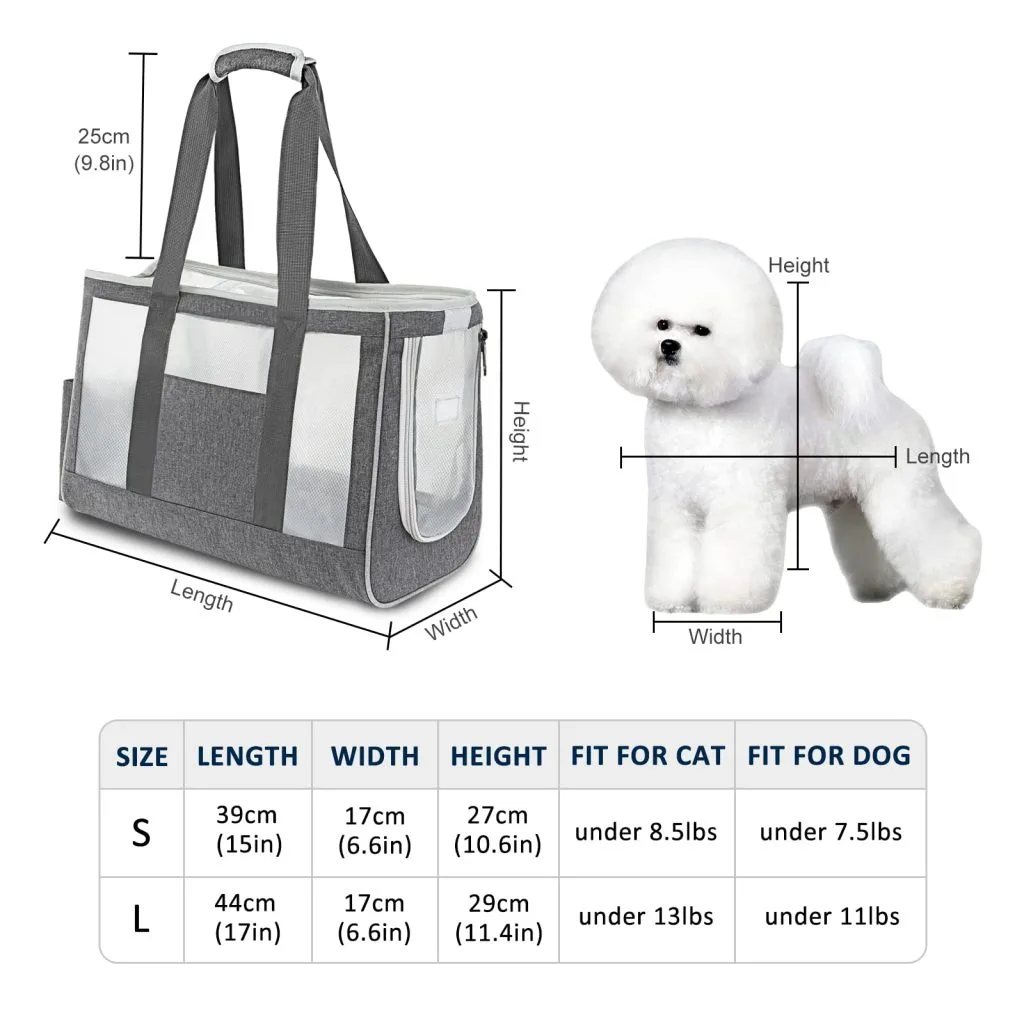
Not every panel experiences the same stress. Shoulder-strap roots, carry handles, tether mounts, lower back corners, base edges, and zipper ends carry concentrated forces. Large face panels experience abrasion and shape demands but may not be the primary load path. A uniform 900D shell can be appropriate for a rugged appearance, yet strategic construction is usually more important: reinforcement patches, webbing continuity, seam position, and adequate overlap transfer forces around needle holes and cut edges.
Map loads from the dog-supporting base into the shell and then into the shoulder harness. If webbing ends on one shell layer, the textile's tear and seam properties become critical. If webbing continues under the base or is spread through a reinforced yoke, loads are distributed across a larger area. A 600D face with an internal high-strength reinforcement can provide better anchor behavior than an unreinforced 900D face. The tech pack should show hidden patches and capture depth, not leave them to operator judgment.
Use zoning when stiffness requirements conflict. The base perimeter may use 900D or an additional abrasion layer, while upper panels use 600D to reduce mass. Tight gussets and curved zipper panels may use the construction that feeds cleanly; flat wear zones can use the heavier option. Any mixed-grade design needs clear BOM codes, cut-part identification, and shade control because similar colors can be confused in bundles.
Seam efficiency must be verified. A stronger fabric can lose advantage if a large needle, excessive stitch density, narrow seam allowance, or poor edge finish creates a perforation line. Coating can reduce yarn mobility and cause tearing along stitches. Build anchor and seam coupons with the actual thread and operation, then test them before finalizing the full carrier. The correct structural question is where and how force enters the textile system, not whether 900D is numerically greater than 600D. Zone-specific engineering puts mass and cost where they produce measurable benefit.
Evaluate Abrasion, Tear, Water, and Coating Performance
Abrasion claims require a named method, abrasive medium, load, endpoint, and specimen preparation. Results from different methods or endpoints cannot be compared directly. Face abrasion may remove color or break yarns, while flexing can damage the backing before the face appears worn. Test the nominated color and coating because pigment, finish, and process can influence performance. High-contact areas such as base corners, lower side panels, and the wearer's back interface deserve additional assembled-product review.
Tensile and tear results describe different failure modes. Tensile testing loads a strip, while tear testing examines propagation from a cut or initiated damage. Seam strength adds thread, stitch, margin, and direction. A carrier can use a textile with strong strip tensile results yet fail when an anchor concentrates force beside a seam. Record warp and weft values because Oxford constructions may behave differently by direction. Pattern grain should align important forces with the validated orientation.
Water behavior also has several meanings. A face-repellency spray rating, hydrostatic pressure result, coating continuity, and finished-bag leakage check answer different questions. Needle holes, zipper tape, mesh, bound edges, and openings limit complete-product performance. “Water resistant” should therefore be tied to a defined exposure and acceptance result. If seam tape is used, validate adhesion after flexing and aging on the actual coating.
Coating adhesion, hydrolysis resistance, cold crack, odor, blocking, and migration can matter during storage and use. Pack folded samples under temperature and humidity conditions relevant to transport, then inspect for delamination, tackiness, color transfer, and permanent creasing. A valid 600D versus 900D comparison uses the same test methods and failure criteria on finished constructions, not unverified supplier adjectives. Retain tested swatches and reports by material code and lot so later substitutions can be evaluated against the original baseline.
Environmental conditioning should reflect the distribution path as well as expected use. Compare control specimens with samples exposed to heat and humidity, low temperature, repeated flexing, and wet-dry cycles where relevant. Recheck coating appearance, bond, odor, bending stiffness, tear behavior, and seam performance after conditioning. A fabric that passes an initial water test can still crack at folds or separate from its backing after storage. Document exposure temperature, humidity, duration, specimen orientation, recovery time, and inspection lighting. These details make aging results reproducible and show whether the heavier construction actually provides a durability advantage over the complete service period.

Account for Cutting, Sewing, and Finishing Differences
Heavier or stiffer Oxford changes the production process. Cutting lays may need reduced ply height to control movement and heat. Coated faces can stick, slip, or show pressure marks. The marker must respect grain direction, directional finish, shade grouping, and defect zones. Notches should be visible without creating tear starters, and drilled marks must not enter water-exposed or load-bearing areas. Heat-cut edges can control fraying but require temperature and fume controls appropriate to the fiber and coating.
Sewing trials determine needle point, size, thread ticket, stitch length, upper and bobbin tension, presser-foot pressure, feed method, and seam allowance. A 900D stack at a bound corner may combine shell, reinforcement, foam, mesh, zipper tape, and binding, producing much more bulk than the face fabric alone suggests. Step transitions can cause skipped stitches or short stitch length. Hammering or aggressive compression can damage coating, so stack design and skiving may be preferable.
Curved zipper openings expose differences clearly. Stiffer fabric resists easing, while soft fabric can stretch or ripple. Use notches, templates, guides, and a minimum radius suited to the chain. Binding folders must match the actual combined thickness. At strap anchors, ensure bar tacks remain within reinforcement and do not perforate too close to a cut edge. Inspect the reverse side because a clean face can hide poor thread formation.
Finishing includes thread trimming, cleaning, shaping, pressing where permitted, and pack-out. Heat and solvent methods must be compatible with coating and printed logos. Heavier fabric may recover slowly from folded packaging, while coated 600D may crease if compressed against hardware. Conduct a pack-and-recovery trial before carton dimensions are frozen. A material is production-ready only after the maximum-thickness seam, tightest curve, critical anchor, logo process, and final pack-out have been demonstrated with stable workmanship.
Line setup should include measurable first-piece limits. Check stitch count over a fixed distance, seam margin, binding coverage, topstitch offset, needle-hole appearance, panel symmetry, zipper operating force, and critical finished dimensions on output from the planned machines. Inspect after several units because heat, needle wear, and feeding behavior can drift. Record approved settings and attachment codes on the operation sheet. If 600D and 900D colorways share a line, do not assume identical tension, needle, or folder settings; validate each material stack and identify changeover controls that prevent settings from carrying across incorrectly.
Compare Weight, Cost, and Application Trade-Offs
Cost comparison should use finished usable fabric, not a nominal price per yard or meter without width and defect allowance. Calculate consumption from the approved marker, add expected cutting waste, and include coating or lamination differences. Heavier fabric can increase freight and may require stronger needles, slower operations, different binding, or more robust packaging. Conversely, a lighter shell may need added reinforcement or frame elements. Unit cost must therefore compare complete constructions that pass the same performance target.
| Decision factor | 600D Oxford tendency | 900D Oxford tendency | Required evidence |
|---|---|---|---|
| Finished mass | Usually lower | Usually higher | Conditioned g/m² and marker consumption |
| Bending stiffness | Often easier to fold and turn | Often more self-supporting | Swatch and panel deflection trial |
| Abrasion target | Adequate with dense weave and sound finish | Potentially higher with controlled construction | Same-method abrasion results |
| Sewing bulk | Generally easier at curves | Greater risk at multilayer intersections | Maximum-stack sewing trial |
| Reinforcement strategy | More targeted patches may be needed | Still requires engineered load paths | Assembled anchor testing |
| Freight and pack-out | Lower weight and folding volume potential | Higher mass and recovery concern | Packed dimensions and gross weight |
Application categories help frame testing but do not replace it. A lightweight urban model may favor a controlled 600D shell with localized reinforcement. A high-abrasion outdoor model may justify 900D in exposed zones. Convertible or foldable carriers may mix grades to preserve flexibility. Color count also affects minimums and yield; custom dye lots can make a nominally cheaper fabric expensive at low volume.
The lower-cost textile is the one that meets the specification with the least total material, labor, freight, defect, and warranty exposure. Use a costed material matrix that lists performance evidence and process impact beside price. This allows buyers to see whether the 900D premium purchases a verified benefit or only a heavier name.
Specify Tests, Compliance, and Incoming Inspection
The material specification should list test method, conditioning, direction, unit, target, tolerance, and sampling frequency. Core fields can include finished mass, width, thickness, tensile, tear, abrasion, colorfastness, coating adhesion, water behavior, and dimensional response. Select tests according to product claims and risk. Method libraries from ASTM International can support technical research, but the purchase specification must name the exact method and acceptance value.
Chemical compliance is market- and material-specific. Coatings, dyes, prints, plasticizers, hardware finishes, and accessories may fall within the buyer's restricted-substance program. European-market planning can reference the regulatory resources at ECHA, while voluntary textile certification information is available from OEKO-TEX. Reports should identify the material code, color, supplier, tested substances, methods, date, and result; a generic certificate is not automatically evidence for every coating and shade.
Incoming inspection compares bulk rolls with approved standards. Verify roll identity, quantity, width, shade by lot, face appearance, coating defects, odor, mass, and selected performance checks. Use a four-point or buyer-defined defect system if agreed, and map defects that affect marker utilization. Quarantine nonconforming rolls until disposition. Do not mix dye lots within a carrier or paired visible panels unless the shade standard permits it.
Trace roll and dye-lot numbers into cut bundles and finished shipments. If a complaint or test failure occurs, this record identifies the affected quantity. Periodic verification should be risk based: new supplier, new construction, new color chemistry, coating change, or poor history increases testing. Incoming control protects the approved 600D or 900D specification by detecting material drift before cutting converts a roll problem into a finished-goods problem.
Define the incoming sample plan before delivery. Select rolls across the shipment rather than only from the top of a stack, and take specimens away from damaged roll ends or selvages unless those areas are being evaluated. Use calibrated balances, thickness gauges, width tapes, light boxes, and any required quick-test fixtures. Record roll length, net width, shade group, defects, mass, coating observations, and disposition. When full laboratory testing is not performed on every lot, establish which identity or screening checks demonstrate continuity and what result triggers quarantine and expanded testing. Supplier certificates should accompany, not replace, physical incoming verification.
Release the Selected Oxford Into Bulk Production
Selection closes with a comparison report, not an informal preference. Record supplier codes, swatch references, test values, prototype revision, shell mass contribution, sewing observations, pack-out behavior, cost, and the reason for choosing 600D, 900D, or a zoned combination. Update the BOM, drawings, patterns, operation sheet, test matrix, and color standards together. State that substitutions require written approval and affected verification.
The sample sequence normally takes 6-10 working days after nominated materials and complete specifications are available. If both grades are being compared, prepare matched prototypes with the same pattern and component set so the textile is the main variable. Adjusting foam or reinforcement in only one version makes the result a system comparison, which can still be useful but must be described accurately. Approve the construction and material code on the sealed pre-production sample.
Bulk planning at MOQ 500 pieces per color should confirm mill minimums, available yardage, shade-lot strategy, replacement allowance, and delivery dates. The 35-50 day production window includes procurement, incoming testing, relaxation, cutting, sewing, in-line quality, finishing, pack-out, and final inspection. Early line output should be checked for seam pucker, coating marks, skipped stitches, shade mixing, dimensional drift, and zipper shape associated with the selected fabric.
Final AQL 2.5 inspection evaluates sampled finished units for workmanship, dimensions, function, labels, and packing against the approved specification. It does not replace roll tests or structural verification. Keep material certificates, incoming results, roll traceability, in-line findings, and final report in the shipment file. A controlled bulk release preserves the exact Oxford construction that was tested, rather than allowing “600D” or “900D” to become permission for any fabric sold under that commercial label.
Material yield should be reconciled after cutting. Compare issued roll area, marker consumption, remnant area, rejected defects, and actual output by shade lot. An unexpected usage increase can indicate narrower usable width, excessive defects, marker changes, recuts, or inaccurate roll length. Investigate before replacement fabric is ordered, because mixing a later dye lot may create another shade-control problem. Feed confirmed consumption and defect allowance back into future quotations. This closed-loop record distinguishes the headline meter price from the true textile cost per conforming backpack and strengthens the next production forecast. It also provides objective evidence for negotiating roll allowances and replacement terms with the nominated textile source. The record supports later material-change reviews as well.
Order and quality terms
- MOQ 500 pieces per colourway; samples in 6-10 working days
- Bulk production 35-50 days after approval; AQL 2.5 inspection standard
- T/T 30/70 terms, FOB Xiamen, full document set per shipment
People Also Ask
Is 900D Oxford always stronger than 600D Oxford?
No. Denier describes yarn linear density; finished strength also depends on fiber, weave density, coating, direction, finishing, and test method.
Is 600D Oxford suitable for dog carrier backpacks?
Yes, when its tested abrasion, tear, seam, coating, and load-path performance meets the intended carrier specification with adequate margin.
Does 900D make a backpack waterproof?
No. Water performance depends on coating, seams, zippers, mesh, openings, and the exact finished-product test, not yarn denier alone.
Which Oxford fabric is lighter?
600D is usually lighter, but finished mass must be measured because weave density and backing can make nominal grades overlap.
Can 600D and 900D be used in one carrier?
Yes. Zoned construction can place heavier fabric in abrasion areas and lighter fabric in flexible panels if BOM and cutting controls prevent mixing errors.
How should Oxford fabric be approved?
Approve a coded swatch, specification, test results, color standard, sewn prototype, and change-control rule rather than a denier name alone.
Frequently Asked Questions
What does denier measure?
Denier measures yarn linear density as grams per 9,000 meters of yarn; it does not directly measure finished fabric strength.
Is polyester Oxford different from nylon Oxford?
Yes. Fiber type affects moisture behavior, abrasion, dyeing, hand feel, cost, and some durability characteristics.
Should fabric weight be specified?
Yes. Use conditioned finished mass per square meter with tolerance, but combine it with construction and performance limits.
What coating information belongs in the BOM?
State coating chemistry, application or film construction, color, relevant thickness or mass, adhesion, water target, and compliance evidence.
Why test warp and weft separately?
Yarn count and construction can differ by direction, producing different tensile and tear behavior that pattern orientation must respect.
Can heavier fabric eliminate reinforcement patches?
Not automatically. Concentrated anchors still need a designed load path, adequate overlap, seam margin, and assembled testing.
How does 900D affect sewing?
It may increase stack bulk, turning difficulty, needle demand, presser-foot marking, and feeding problems, depending on coating and construction.
What is seam efficiency?
It compares seam performance with the textile's unseamed strength and reveals losses caused by holes, thread, allowance, and construction.
Should every color be retested?
Use a risk-based plan. New dye or coating chemistry, dark shades, supplier changes, and prior failures may justify color-specific verification.
How are fabric shade lots controlled?
Approve standards under defined light, segregate dye lots, inspect incoming rolls, and keep paired visible panels within the permitted group.
Does AQL 2.5 cover fabric laboratory tests?
No. AQL samples finished-lot conformity; material performance needs separate methods, specimens, frequencies, and acceptance values.
When can bulk fabric be cut?
After the material code, shade, incoming checks, sample construction, test evidence, and current production revision are approved.
Talk to QUANZHOU JUNYUAN BAGS about a pet carrier program: MOQ 500 pieces per colourway, samples in 6-10 working days, bulk production in 35-50 days under AQL 2.5 inspection.
Get a free quote Request a sample