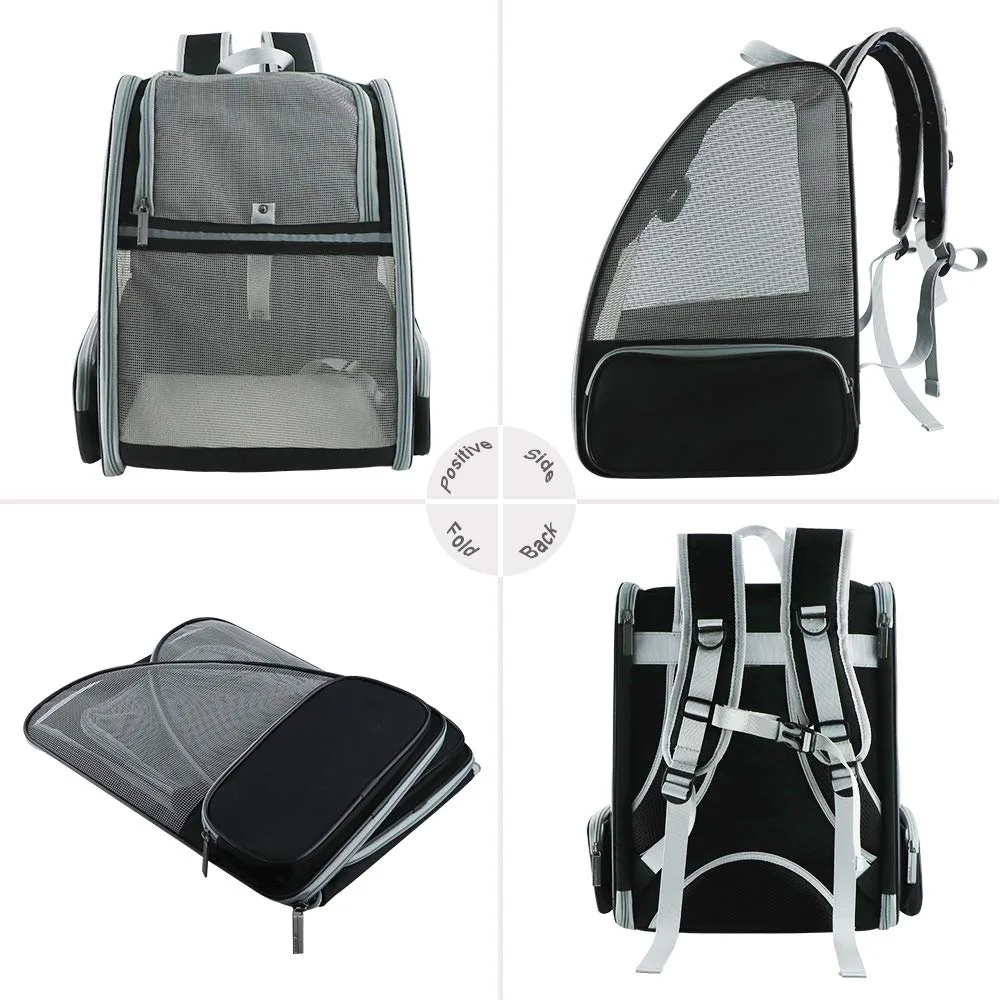
CPSIA Certified Dog Carrier Backpacks for the US Market
Wholesale pet carrier buyers usually consolidate to fill one container; for dog carrier backpack assortments our production team mixes sizes and colourways inside a single 500-piece minimum.
Where CPSIA Applies to a Pet Carrier Program
The Consumer Product Safety Improvement Act is written around children s products, which is why most dog carrier backpack programs sit at the edge of its scope rather than in the middle of it. A carrier sold through pet channels, sized for a 4-12 kg animal and finished in neutral colourways is normally treated as a general-use product. Classification changes the moment the design, graphics or retail placement signals use by a child under 12, and that shift is where most compliance failures begin.
Our production team applies the four statutory factors used to judge whether a product is a children s product: the intended use statement, the packaging and promotion, the size and decorative treatment, and the retail channel. A backpack with cartoon graphics, a reduced 30 cm shell height and placement in a toy or juvenile aisle will be treated as a children s product regardless of the pet label on the hangtag.
General-use status does not remove chemical obligations. Lead limits on surface coatings and substrates apply to consumer products generally under 16 CFR 1303, and eight phthalates remain restricted in toys and child-care articles. Importers frequently assume pet channel means no testing, then discover a marketplace listing has been pulled for a missing certificate.
- Intended use statement and marketing copy drive classification before any lab work begins
- Decorative treatment and reduced dimensions pull a carrier into children s product scope
- Coating lead limits apply to general-use goods independently of children s product status
- Channel placement on a marketplace is treated as evidence of intended audience
- Classification must be re-checked whenever the artwork or size is revised
The practical consequence is a decision made at design freeze, not at shipment. If the program is ambiguous, the cost of testing as a children s product is small compared with the cost of a recall or a delisting, and the same test data satisfies general-use requirements.
Our production team records that decision in the tech pack as a one-line compliance statement, signed off by the brand before tooling or cutting begins. The statement names the applicable rule set and the test laboratory, so the sampling plan can be written immediately. Any later change to artwork scale, colour palette or listed dimensions re-opens the statement, and the change is logged against the original decision rather than made informally by the artwork team.
Lead Testing: Substrate Versus Coating Limits
Lead is tested two ways because the legal limits differ by material form. Surface coatings such as paint, screen print inks, PU top coats and electroplated finishes are held to 90 ppm under 16 CFR 1303. Substrates including woven fabric, webbing, mesh, foam sheet and moulded plastic parts are held to 100 ppm total lead under CPSIA section 101. A single carrier will generate 15-30 discrete test points once you separate each material by colour, because pigment is the usual carrier of lead.
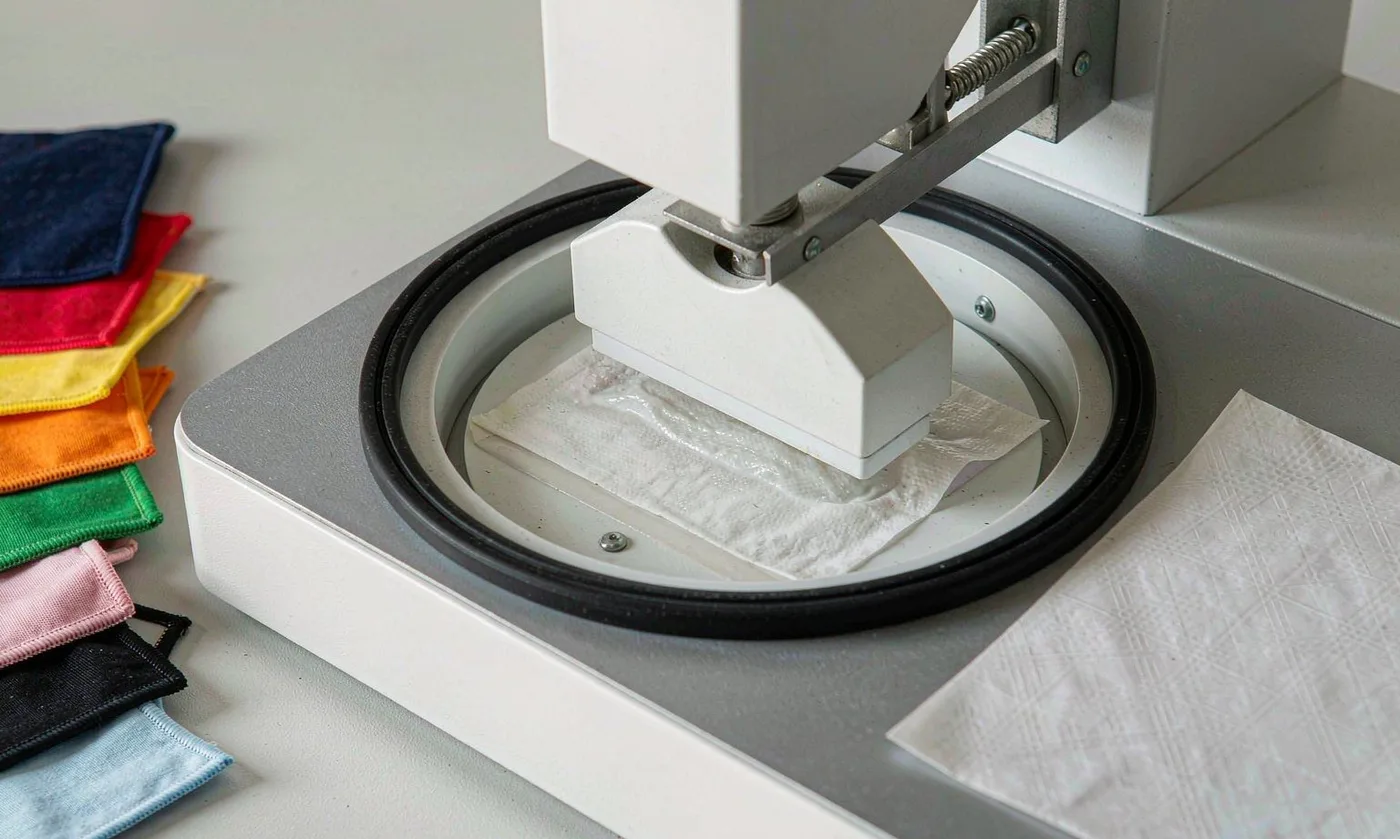
Screening is typically done by X-ray fluorescence on the finished component, with any reading above roughly 70-80 percent of the limit sent for wet chemistry confirmation. The confirmatory method dissolves the material and measures by ICP-OES or ICP-MS, giving a result that can be printed on a report. XRF alone is not accepted as a compliance demonstration for a certificate, so budget for the digestion step on any borderline component.
- Coating limit 90 ppm applies to every decorative layer including prints and transfers
- Substrate limit 100 ppm applies to base fabric, webbing, mesh, foam and mouldings
- Each colour of each material is a separate test point, not one sample per carrier
- Metal hardware is tested for substrate lead and separately for coating lead if plated
- Dark pigments, especially reds and yellows, carry the highest failure rate
Hardware deserves specific attention. Zinc alloy buckles and D-rings are commonly plated, so the base alloy and the plating must both be characterised. Our production team specifies hardware from lots that already carry a passing report, and we re-test at lot change rather than at every order, which keeps the test budget predictable across repeat programs.
Component-level reporting is what makes that approach work. The production record lists the hardware lot against each batch, so when a plating vendor changes, only the affected batch needs re-testing instead of the full program. Our production team keeps the lot register at goods-in and stamps it into the packing list, which means a retail query about a specific shipment can be answered from one document rather than a search through purchase orders.
Digestion results also carry a detection floor. A component reported as below the practical quantification limit is not the same as a component measured at 40 ppm, and the distinction matters when the same material is later used in a children s product program. Our production team records the numeric result wherever the laboratory reports one, so the file supports the stricter classification without a second round of testing.

Phthalate Control in Coated and Flexible Components
Eight phthalates are restricted at 0.1 percent by weight each in children s toys and child-care articles: DEHP, DBP, BBP, DINP, DIDP, DnOP, DIBP, DPENP and DHEXP depending on the current reading of the statute, with the permanent list covering DEHP, DBP, BBP, DINP, DIDP and DnOP. The components at risk in a carrier are exactly the ones that make it soft and flexible: PVC vinyl panels, printed plastisol logos, rubber zipper pulls, TPE trim and foam-backed synthetic leather.
The engineering answer is substitution rather than reformulation. A PVC clear window and a PVC-coated mesh will normally fail; moving that window to TPU and the mesh to a polyester knit with a PU spray finish removes the plasticizer risk entirely. The cost delta is material-specific and small at 500-piece volume compared with the cost of a failed shipment.
Screening is done by solvent extraction and GC-MS on the individual flexible component, not on the assembled carrier. Results are reported per component, so a passing zipper pull does not rescue a failing vinyl trim.
- Replace flexible PVC with TPU or PU-finished polyester before testing, not after
- Plastisol prints and rubber pulls are the two most commonly missed components
- Each flexible component is extracted and reported separately
- Ask the trim supplier for a lot-level phthalate report at the time of purchase
- Re-screen whenever a coating or print vendor changes formulation
Where a client insists on a PVC hand feel, our production team requests the compound data sheet and a lot-specific report from the mill before a single metre is cut. That single gate prevents the majority of phthalate failures we see in the category.
Screening frequency follows the material, not the order. A mill report for a coating lot covers every unit cut from that lot, so our production team dates each report and retires it when the lot is exhausted. Where two carriers in a program share the same coated fabric, one report covers both, which is the main reason to standardise flexible components across a range instead of specifying per style.
Tracking Label Design and Permanence
A tracking label is a permanent mark on the product and its packaging that allows the manufacturer to identify the production run and lets a purchaser trace the unit. For a soft goods carrier it must survive laundering and abrasion, which rules out the paper sticker used on cartons. The mark is normally applied as a woven label sewn into a side seam or a heat-transfer print on an interior panel.
The data set is fixed: producer identification, location and date of production, and cohort information such as batch or run number. Date format is month and year at minimum, and the batch code must link back to a production record that identifies the fabric lot, trim lot and line that made the unit.
- Woven polyester label with 12-point code sewn into an internal seam is the most durable option
- Heat-transfer printing works on lined panels but must pass 5-cycle abrasion and wash checks
- The same code appears on the master carton so warehouse staff can match carton to unit
- Batch numbering must resolve to a fabric lot, trim lot and production date record
- Label artwork is verified on the pre-production sample, never on the bulk unit
Permanence is tested rather than assumed. Our production team runs an abrasion check and a domestic wash cycle on the marked panel during sample approval, then photographs the result for the compliance file. A label that rubs off in transit fails the requirement even though the code was correct.
Placement matters as much as material. An interior seam under the removable liner board survives abrasion better than an exterior panel, and it stays legible through the service life of the carrier. Our production team marks the tracking position on the tech pack alongside stitch density and seam allowance, so the sewing line applies it in the same place on every unit and the inspection checklist can verify presence and legibility as a single line item.
Third-Party Testing and the Certificate Workflow
When a program falls into children s product scope, testing must be performed by a laboratory accepted by the Consumer Product Safety Commission, and the results support a Children s Product Certificate signed by the importer or domestic manufacturer. The certificate identifies the product, cites each rule the product is subject to, names the certifying party, gives the date and place of manufacture, and identifies the laboratory that performed the testing.
The laboratory is not the certifying party. That role belongs to the importer of record, which is why brand owners must hold their own certificate even when the overseas supplier provides the test report. Our production team supplies the test report, the material declaration and the production data needed to complete the certificate, but the signature stays with the brand.
Testing is scheduled against the sample cycle, not the production cycle. Budget three weeks for full chemical testing including any wet-chemistry confirmation, which means the sample must be submitted in the first week of the 6-10 working day sampling window to avoid pushing the bulk start date.
- CPSC-accepted laboratory status is checked before sample submission
- Test report supports the certificate but the importer signs the certificate
- Full chemical testing takes about three weeks including confirmation steps
- Every colourway or material change triggers a new test cycle
- Reports are typically treated as valid for one year or until the material changes
Reference material on the regime is maintained by the U.S. Consumer Product Safety Commission, and laboratory competence is governed by ISO accreditation requirements. Our production team treats both as the baseline, not the ceiling, and keeps the report set current for repeat orders.
Record retention closes the loop. Test reports, certificates and production records are held for the life of the program plus the statutory retention window, indexed by purchase order so a query years later still resolves to a document. When a marketplace asks for proof, the fastest answer is a dated report matched to a lot number, which is exactly the format our production team files. Brands that keep reports by style rather than by lot consistently fail this test.
Material Selection That Passes on the First Submission
Most failures are decided at the material-selection stage. The cheapest way to run a US program is to specify a restricted palette of components that already carry valid reports, then allow decorative variation only in ways that do not change chemistry. Print area, stitch pattern and hardware finish can vary freely; pigment supplier, coating chemistry and polymer type cannot.
Shell fabric in 600D polyester with a PU coating is a low-risk default. It has no plasticizer, the pigment load is controlled by a mill that already tests, and the coating lead result is stable across colourways from the same mill. Moving to 900D or to a recycled rPET variant re-opens the substrate test, so the change should be made once at program start rather than mid-season.
- 600D PU-coated polyester is the lowest-risk shell for lead and phthalate compliance
- TPU window film replaces flexible PVC without changing the visual result
- Water-based inks and heat-transfer prints carry lower lead risk than plastisol
- Hardware should be specified from lots with existing plating reports
- Foam, mesh and lining are tested as substrates even though they are internal
The table below summarises the decision matrix our production team applies at design freeze. It is deliberately conservative: a component rated medium risk is either substituted or tested, never assumed.
| Component | Default specification | Primary risk | Typical limit applied |
|---|---|---|---|
| Shell fabric | 600D polyester, PU coating | Coating lead | 90 ppm coating |
| Clear window | TPU film 0.3 mm | Phthalates | 0.1% each |
| Webbing | 25 mm polyester, solution-dyed | Substrate lead | 100 ppm |
| Hardware | Zinc alloy, nickel-free plating | Substrate and coating lead | 100 / 90 ppm |
| Mesh panel | Polyester knit, no PVC coat | Phthalates | 0.1% each |
| Print and logo | Water-based screen or transfer | Coating lead | 90 ppm |
| Foam padding | EVA or PU foam sheet | Substrate lead | 100 ppm |
Two entries in that matrix deserve comment. Hardware is the only line where substrate and coating limits both apply, because a plated part has a base alloy under a decorative finish, so two results are needed per item. Foam is included even though it sits behind the lining: it is a substrate with its own pigment and blowing-agent history, and it has a habit of being carried across from another program where it was never tested.
Test Cost, Sampling Plan and Schedule Impact
Compliance cost scales with the number of distinct materials, not the number of units. A carrier with eight materials in three colourways can produce 24 test points, while the same carrier in one colourway with shared neutral trim produces ten. Program managers who consolidate colourways onto a shared trim platform cut the test bill substantially without changing the retail offer.
The schedule impact is what matters more than the fee. Chemical testing runs in parallel with the sampling window, so the critical path is sample submission date. Submit on day one of the sampling cycle and the bulk start date is unaffected; submit after approval and the 35-50 day bulk window slips by the full test duration.
- Test points equal materials multiplied by colours, so consolidate trim across colourways
- Sample submission on day one keeps the bulk schedule intact
- Repeat orders re-use reports until a material or vendor changes
- Lot-change re-testing is cheaper than full re-certification
- Budget one additional week for wet-chemistry confirmation on borderline XRF results
Our production team issues a compliance schedule alongside the production schedule, showing sample submission, test completion, certificate issue and bulk start as dated milestones. That document is the reference used when a brand asks whether a shipping date can still be met.
The second cost driver is re-testing caused by late design change. Moving a zipper pull from rubber to webbing after samples are submitted is a small physical change with a full chemical consequence, because the new component has no report on file. Our production team flags every post-sample component change in the compliance schedule with its own test line, so the brand sees the schedule cost of the change before approving it rather than after the bulk start date has already slipped.
Assembling a Compliance File That Survives Audit
An audit asks four questions: what was made, from what, when, and how do you know it passed. The file must answer all four from documents, not from memory. That means a bill of materials with vendor and lot references, test reports matched to those lots, production records showing date and line, and an inspection report showing what was checked before release.
The most common gap is linkage. A test report for 600D polyester does not prove compliance for the shipment unless the fabric lot on the report matches the lot in the production record. Our production team maintains that linkage in a single register per program, updated at goods-in and again at packing.
- Bill of materials listing vendor name and lot number for every component
- Test reports keyed to those lot numbers with issue and expiry dates
- Production record with date, line identifier and quantity
- AQL 2.5 inspection report with defect counts by category
- Tracking-label register mapping carton codes to production batches
Retail and marketplace audits are increasingly document-first, and the request window is usually 48-72 hours. A file that is assembled per shipment rather than per program turns a routine request into a scramble. Our production team closes the file at packing and ships it with the document set, so the brand can respond the same day.
The final gate is internal consistency. Dates on the test report must pre-date production, the lot numbers on the bill of materials must appear in the goods-in record, and the quantity on the inspection report must match the packing list. Our production team runs that reconciliation as a checklist item before the container is sealed, because a mismatch discovered at destination is far more expensive than one discovered at packing.
Production capability
- SGS-verified production space of 4,950 m², 149 machines, 7 assembly lines
- Pet carrier and pet bag output since 2014 from a 137-person team
- 200,000 units shipped monthly under BSCI and ISO 9001 systems
People Also Ask
What is the lead limit for pet carrier fabric?
Accessible substrates are held to 100 ppm total lead and surface coatings to 90 ppm. Each material is tested separately by colour, since pigment is the usual source.
Do dog carriers need CPSIA testing?
Pet carriers are general-use products unless graphics, size or channel indicate a child audience. General-use goods still face coating lead limits; children s product classification adds third-party testing and a certificate.
Which phthalates are restricted in carrier components?
The restricted set covers DEHP, DBP, BBP, DINP, DIDP and DnOP at 0.1 percent by weight each, with further esters addressed under the interim prohibition. Flexible PVC, plastisol prints and rubber pulls are the components at risk.
What must a CPSIA tracking label contain?
Producer identification, location and date of production, and cohort data such as batch or run number. On soft goods the mark must be permanent, so a sewn woven label is preferred over a sticker.
How long does CPSIA testing take?
Full chemical testing including confirmatory wet chemistry runs about three weeks. Submitting at the start of the 6-10 working day sampling window keeps the 35-50 day bulk schedule unaffected.
Does recycled polyester change compliance requirements?
The chemical limits are unchanged, but rPET introduces a new substrate and vendor, so the lead test must be repeated. Make the material switch once at program start rather than mid-season.
Frequently Asked Questions
Is a pet carrier legally a children s product under CPSIA?
Only when intended use, packaging, size, decoration or channel indicate a child under 12. A pet-channel carrier in neutral colourways is normally treated as general use, and the decision is documented at design freeze.
Who signs the Children s Product Certificate?
The importer of record or domestic manufacturer signs it. The laboratory issues the test report and the supplier provides the production data, but neither can certify on the brand s behalf.
How many test points does one carrier generate?
Count each material by each colour. A carrier with eight distinct materials in three colourways commonly produces 20-24 test points before consolidation of shared trim.
Can XRF screening replace laboratory testing?
No. XRF is a screening tool; results near the limit must be confirmed by dissolution and ICP analysis before they can appear on a report supporting a certificate.
What happens if a component fails at 120 ppm lead?
The component is substituted or the pigment is changed and re-tested. Our production team requests a lot-level report from the mill before cutting, which prevents most failures reaching the sample stage.
Are internal components tested if the pet cannot reach them?
Accessibility drives scope, but substrates are characterised at the material level in practice. Foam and lining are included in the register because a component can migrate between designs.
Does the tracking-label code need to appear on the carton?
The requirement attaches to the product and its packaging. Matching the unit code on the master carton is standard practice and makes warehouse reconciliation possible.
How often must testing be repeated on a repeat order?
Reports remain usable while the material, vendor and formulation are unchanged, subject to the laboratory s stated validity period. A lot change or vendor change triggers re-testing of that component.
What is the cost impact of consolidating trim across colourways?
Test cost scales with material-by-colour count, so a shared neutral trim platform across three colourways can remove a third of the testing line items on a program.
Does a water-based print remove the need for coating lead testing?
It lowers risk but does not remove the obligation. The printed layer is still a surface coating and is screened at 90 ppm along with every other decorative layer.
Can compliance work run after bulk production starts?
It can, but the certificate would then post-date the goods. Our production team completes chemical work during the sampling window so the bulk run of 35-50 days starts with the file already open.
What documents should a brand keep per shipment?
Bill of materials with lots, matched test reports, production record with date and line, AQL 2.5 inspection report, and the tracking-label register mapping cartons to batches.
Talk to QUANZHOU JUNYUAN BAGS about a pet carrier program: MOQ 500 pieces per colourway, samples in 6-10 working days, bulk production in 35-50 days under AQL 2.5 inspection.
Get a free quote Request a sample