Pet Carrier OEM and ODM Programmes: Full Process
A pet carrier OEM programme builds to your drawings, tech pack and material spec; a pet carrier ODM programme starts from an already-tooled platform that you re-skin with your own fabric, colourway, hardware and branding. Both routes run on the same commercial floor: MOQ 500 pieces per colourway, samples in 6-10 working days, and bulk production in 35-50 days after sample approval. OEM carries tooling and a longer development window; ODM trades some design freedom for a shorter, cheaper launch. The choice is not about quality - it is about how much of the product you intend to own.
For a sourcing manager the practical question is never "OEM or ODM" in the abstract. It is: how much tooling budget do you have this quarter, how fast does the line need to land, and how much of the design do you need to keep out of a competitor's hands. Our production team runs both models on the same SGS-verified production base, so the gate sequence is identical - only the starting point changes.
An OEM project begins with your tech pack. We quote against it inside three working days, build a prototype in samples in 6-10 working days, and hold MOQ 500 pcs per colourway once the confirmation sample is signed. A pet carrier ODM project skips the drawing stage entirely: you pick a base model from the existing range, we cut the first sample in the same 6-10 working days window against your fabric and colour selection, and the same MOQ 500 applies. Either way, bulk production 35-50 days is the planning number you should put into your calendar, measured from confirmation sample sign-off and deposit clearance - not from the day you first sent an email.
Every bulk order is released under AQL 2.5 for major defects with a documented pre-shipment inspection report, and payment runs T/T 30/70 against FOB Xiamen unless we agree otherwise in writing. That combination - MOQ 500, samples in 6-10 working days, bulk production 35-50 days, AQL 2.5 - is the commercial spine of the programme, and everything below explains what happens at each gate and what it costs.
Where the Line Sits Between Pet Carrier OEM and Pet Carrier ODM
The two labels get used interchangeably in supplier emails, and that is where projects go wrong. In a pet carrier OEM engagement the buyer is the designer. You hand over a tech pack - dimensioned drawings, a bill of materials, stitch density, hardware part numbers, tolerance notes and a colour reference - and the manufacturer's job is to reproduce it faithfully at volume. In a pet carrier ODM engagement the manufacturer is the designer. You select an existing platform that has already been engineered, patterned and tested, then specify what changes: shell fabric, lining, colourway, logo application, zipper pulls, retail packaging. The underlying geometry, the panel engineering and the load path stay as they are.
That distinction drives four things: money, time, risk and ownership. A custom pet carrier built from a blank sheet of paper needs new patterns, new cutting dies and frequently new moulds for buckles, frames or shell panels. Tooling is real money and it is non-refundable, because the tool has no value to anyone but you. An ODM base has already absorbed that cost across dozens of previous programmes, so your entry ticket is a fabric minimum rather than a tooling invoice. Time follows the same logic: a ground-up OEM prototype usually needs two or three physical iterations before the fit and the structure behave, while an ODM sample is normally right on the first or second shot because the pattern has already been proven on a running line.
Risk sits in the opposite direction. OEM lets you build something nobody else can quote, which is the entire point if you are defending a retail listing or a design patent. ODM is faster but the same base is available to other buyers in the market, and the only real defences are your fabric, your colourway, your hardware finish and your brand execution. Plenty of brands run both at once: an ODM body for the volume line that pays the rent, and a custom pet carrier for the hero SKU that carries the margin. That is a legitimate strategy, and it is usually the one we recommend to buyers entering the category for the first time.
| Decision point | Pet carrier OEM | Pet carrier ODM |
|---|---|---|
| Who supplies drawings | Buyer supplies full tech pack | Manufacturer platform, buyer selects |
| Tooling and moulds | Buyer funds new tools, typically USD 800-12,000 per item | Usually none; existing tools reused |
| Sample iterations | 2-3 rounds typical | 1-2 rounds typical |
| Sample lead time | 6-10 working days per round | 6-10 working days per round |
| Bulk lead time | 35-50 days after sign-off | 35-50 days after sign-off |
| MOQ per colourway | 500 pcs | 500 pcs |
| Design exclusivity | Structural, if contracted | Commercial only, via fabric and branding |
| Best for | Hero SKUs, patented geometry, retail exclusives | Line extensions, fast launches, price-led ranges |
Bottom line: OEM buys you structural exclusivity at the price of tooling and iterations; ODM buys you speed and a lower entry cost at the price of a platform other buyers can also order.
Who Supplies the Drawings, and Who Pays for the Tools
Drawings and tools are two separate conversations and they should be separated in the contract. The party that produces the technical drawings normally owns them, unless the agreement says otherwise in writing. If your in-house designer produces the spec, you own it and you should say so explicitly. If our development team produces the pattern and the grading to hit a silhouette you sketched, that pattern is our work product even when the bag carries your brand - unless you have contracted for work-for-hire and paid for it. Buyers are frequently surprised by this, so settle it before the first sample, not after the third.
Tools follow a similar but cleaner rule. Whoever pays for the mould owns the mould. That sounds simple until you consider what "owning" means in practice: the physical tool usually stays on site, because shipping a 200 kg injection mould across a border costs more than the mould is worth to anyone else. What ownership actually buys you is the right to have that tool used only for your programmes, and the right to have it transferred or destroyed on request. Put both clauses in writing.
What an ODM Base Lets You Change, and What It Does Not
On an ODM platform the changeable surface is wider than most buyers assume, and the fixed floor is harder than most suppliers admit. You can normally change: shell fabric and coating, lining fabric and print, colourway across the whole body or just accent panels, webbing width and weave, zipper brand and puller design, all logo applications (woven label, rubber patch, metal plate, screen print, debossed), hardware finish, retail packaging, and the internal accessories such as a removable fleece pad, a bowl holder or a waste-bag dispenser. What you generally cannot change without stepping into OEM territory: the overall silhouette, the panel geometry, the structural load path, the frame or baseboard engineering, and anything that requires a new cutting die or a new mould.
That boundary is not arbitrary. It exists because those are the elements where the pattern, the grading and the tooling have already been amortised. Change them and you are no longer on the pet carrier ODM platform - you are funding a custom pet carrier development programme, and the quotation should be rebuilt on that basis. A good supplier will tell you which side of the line your requested change falls on before you commit to a sample round.
From Brief to Mass Production: The Eight Development Gates
Every pet carrier OEM or pet carrier ODM programme we run moves through the same eight gates. What changes is how long each gate takes, not whether it happens. Skipping a gate is the single most common cause of a failed launch: the buyer wants to compress the schedule, the supplier agrees to "work in parallel", and three weeks later a container is on the water with a logo that was never approved in its final position. Below is the sequence with realistic durations and the deliverable you should demand at each one.
| Gate | What happens | Duration | Deliverable you receive |
|---|---|---|---|
| 1. Brief | Scope, target price, market, compliance regime | 1-2 days | Written project brief with target FOB and market list |
| 2. Tech pack | Drawings, BOM, tolerances, colour refs | 2-5 days (buyer-side for OEM) | Complete tech pack + signed spec sheet |
| 3. Quotation | Costing against BOM, tooling, MOQ, packaging | 2-3 days | Itemised quote incl. tooling line and validity window |
| 4. Prototype | First physical sample built to spec | 6-10 working days | Proto sample + internal cost delta note |
| 5. Revision | Fit, structure and aesthetic corrections | 6-10 working days per round | Revised sample + marked-up change log |
| 6. Confirmation | Final signed sample, sealed and archived | 2-3 days | Confirmation sample, signed by both parties |
| 7. Pilot run | 30-50 pcs on production tooling and line | 5-8 days | Pilot units + line-issue report |
| 8. Mass production | Full run, inline QC, packing, inspection | 35-50 days | AQL 2.5 inspection report + packing list |
Note what gate 8 is measured from. Bulk production 35-50 days starts at confirmation sample sign-off and deposit clearance, not at the brief. Buyers who plan from the first email lose roughly a month against their launch date and then blame the supplier. Our production team will always give you the gate-6 date and the gate-8 date as two separate numbers for exactly this reason.
Two gates deserve more attention than they usually get. Gate 6, the confirmation sample, is the legal reference for the entire order: it is what the inspector compares bulk units against, and it is what a dispute resolves to. Insist on a physical sealed sample held on both sides. Gate 7, the pilot run, is where a design that samples beautifully reveals that it cannot be sewn at speed - a seam that takes four minutes on the sample bench and eleven minutes on the line. Catching that on 40 units costs nothing; catching it on 4,000 units costs the programme. See our OEM production process breakdown for the line-level detail of gates 7 and 8.
Bottom line: eight gates, roughly 55-80 working days from brief to vessel, and the only two you cannot compress without real risk are confirmation sign-off and the pilot run.
Gate 1 to 3: Brief, Tech Pack and Quotation
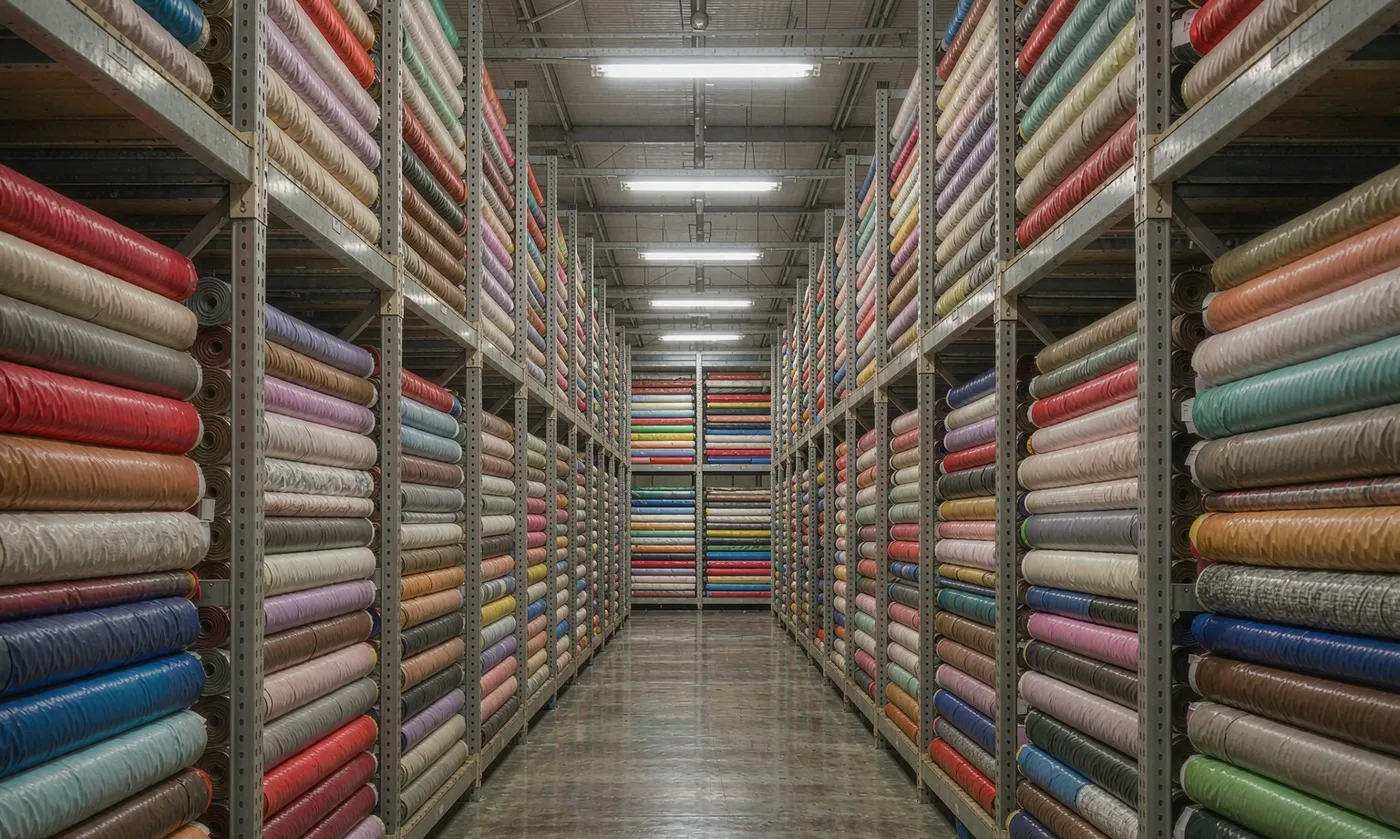
The brief is where most of the money is decided. Before any costing starts, four things need to be nailed down in writing: the target FOB unit price, the destination market (because that sets the compliance regime), the volume per colourway and per year, and the launch date. A supplier quoting without the destination market is guessing, because a custom pet carrier destined for California carries a different labelling and substance obligation than the same bag destined for Germany, and the cost difference is not trivial.
The tech pack is the buyer's responsibility in an OEM programme and it is the document that determines quotation accuracy. A usable pack contains: dimensioned views with tolerances, a full BOM with supplier and part number for every component, fabric specs including denier and coating, stitch density (SPI), thread type, hardware finish, colour references with Pantone TCX or a physical swatch, logo placement with measurements, and packing instructions. Missing any one of these and the quote contains an assumption - and assumptions surface later as a price revision. We quote against a complete pack in two to three working days, with a validity window, because raw material costs move.
Gate 4 to 6: Prototype, Revision and the Sealed Confirmation Sample
The first prototype is a learning object, not a product. Expect to find that the mesh panel you specified is too stiff to gather cleanly at the corner, that the base insert makes the bag sit proud when empty, or that your logo placement collides with a seam allowance. This is normal and it is why the revision gate exists. What is not normal is a third revision round - by then the issue is usually a spec that was never fully resolved at gate 2, not a manufacturing problem.
Revision rounds are billed and they are scheduled: each one takes samples in 6-10 working days because the sample room works on the same queue as everyone else's. Buyers who treat revisions as free and instant are the buyers whose programmes slip. Our practice is to send a marked-up change log with every revised sample - what changed, why, and what it did to the unit cost - so you are never approving a sample without knowing its price consequence. Once signed, the confirmation sample is sealed, photographed from six angles, and archived against the order.
Tooling, Moulds and Sample Costs: How the Upfront Money Is Calculated
Tooling is the line item buyers understand least and resent most, mostly because it is invoiced before anything physical exists. The honest explanation is that a tool is a capital item with a single customer. When we cut a mould for your buckle housing, that mould is worthless to every other programme on the floor. Charging you for it is not margin-padding; declining to charge for it would mean pricing it into your unit cost and invoicing you for it forever.
| Tool type | Typical cost (USD) | Lead time | Used for | Owned by |
|---|---|---|---|---|
| Cutting die (panel set) | 150 - 600 | 5-8 days | Fabric panel cutting, repeat accuracy | Buyer, if funded |
| Injection mould, small hardware | 1,200 - 4,500 | 18-25 days | Buckles, clips, custom pullers | Buyer, if funded |
| Injection mould, structural shell | 6,000 - 12,000 | 30-45 days | Hard-shell carriers, base frames | Buyer, if funded |
| Logo plate / deboss die | 120 - 400 | 5-8 days | Metal badges, debossed patches | Buyer, if funded |
| Screen / heat-transfer film set | 80 - 250 per colour | 3-5 days | Printed logos, lining prints | Buyer, if funded |
| Jig and fixture set | 200 - 900 | 7-12 days | Welding, assembly alignment | Manufacturer |
| Prototype sample (OEM) | 60 - 180 per unit | 6-10 working days | First physical build | N/A |
Three practical rules follow from this table. First, tooling cost scales with cavity count and steel hardness, not with your order size - a 500-piece run pays the same mould as a 5,000-piece run, which is why tooling rarely makes sense below about 3,000 lifetime units for the item. Second, structural shells are the expensive category; if your budget is tight, keep the geometry on an ODM platform and spend the tooling money on hardware and branding, where the visual differentiation per dollar is highest. Third, always ask what happens to the tool after three years of no orders, because the honest answer from most suppliers is that it gets recycled.
Sample charges are a separate line and they behave differently. Prototype samples are usually charged at two to three times unit cost because they are hand-made and consume sample-room capacity. Most private label pet bags programmes credit the sample fee back against the first bulk order above MOQ. Say so in the quote. On wholesale pet carriers built to an existing stock spec there is usually no tooling line at all, which is the clearest commercial difference between the two models. For wholesale pet carriers that are pure repeats of an existing spec, we normally ship a free confirmation sample because the pattern and tooling already exist - the cost of a sample is really the cost of novelty.
Bottom line: budget tooling as capital, not as cost of goods, and expect it to be justified only above roughly 3,000 lifetime units for the tooled component.
Intellectual Property: Drawings, Moulds and Design Ownership
IP in this category is less dramatic than buyers fear and more consequential than suppliers admit. There are four distinct assets and they need four distinct clauses: the technical drawings and pattern, the physical tooling, the trade dress (your logo, your colourway, your packaging artwork), and any registered design or patent you hold in your own name. Trade dress is yours automatically and is trivially protected - nobody argues about who owns your logo file. Registered rights are yours if you registered them, and a supplier cannot defeat them. The disputes always happen over the first two.
Our standard position, and the one we recommend you insist on with any supplier, is a short written schedule attached to any pet carrier OEM order: the buyer owns drawings the buyer supplied; the manufacturer owns patterns and grading it created unless work-for-hire was contracted and paid; the buyer owns any mould the buyer funded and may require its transfer, dedicated use or destruction; and the manufacturer undertakes not to offer a buyer-funded tool or a buyer-supplied design to any third party for a defined period. That last clause is the one that actually protects a pet carrier OEM investment, and it is worthless if it is verbal.
One more thing worth saying plainly: an NDA alone does not protect a bag design. Soft-goods geometry is rarely patentable and an NDA gives you a claim for damages, not an injunction. What actually protects a private label pet carrier range is a mix of contracted tooling ownership, a defined exclusivity window on the specific construction, and moving fast enough that the design has already earned its margin before anyone copies it. If you need an enforceable monopoly, file a design registration in your target market before you show the drawings to anyone. Our team has worked under buyer-side NDAs since 2014 and will sign a mutual one as standard.
Bottom line: put drawings, tools, exclusivity window and destruction-on-request into one written schedule attached to the purchase order - verbal assurances about "your design" do not survive a dispute.
Colour Matching, Dye Lots and Material Consistency
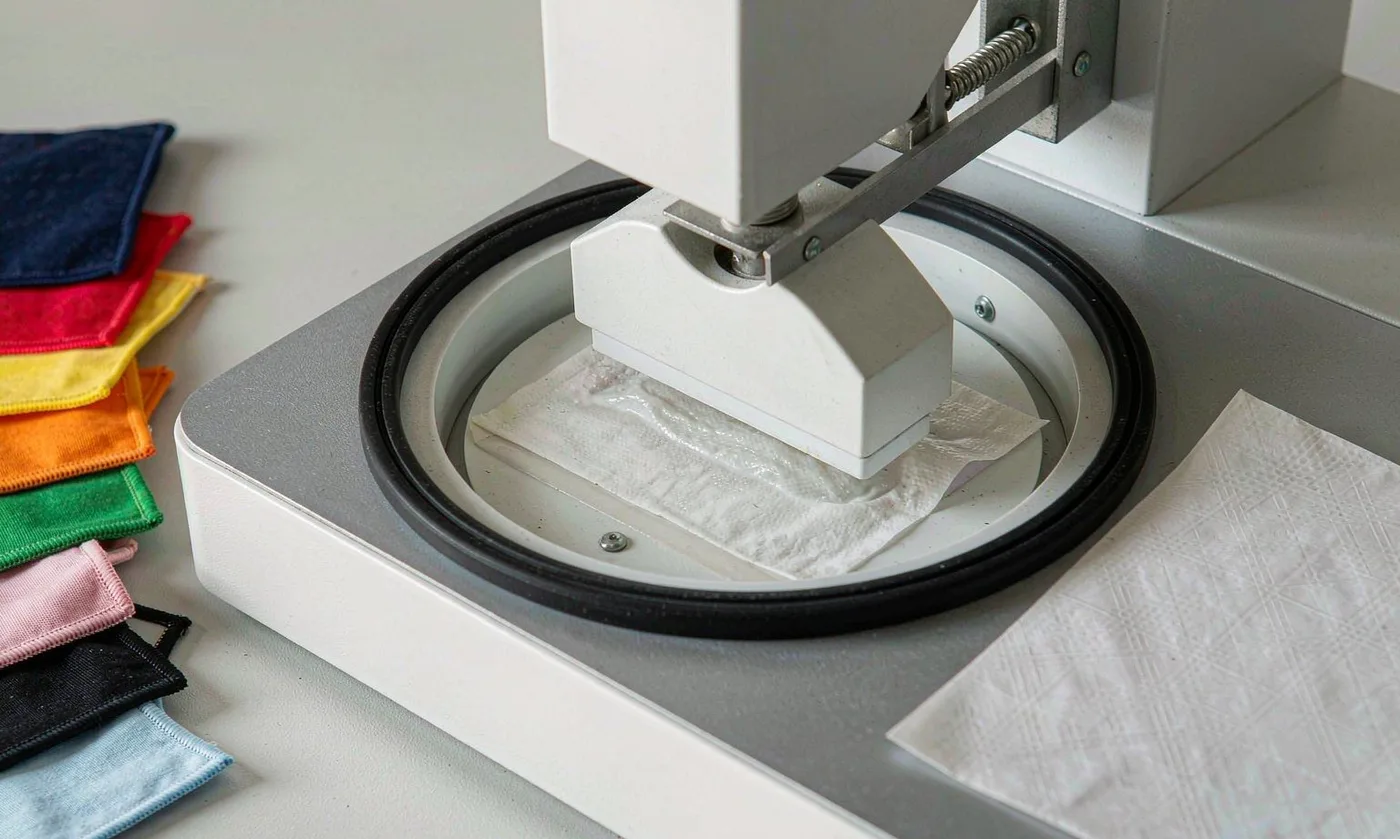
Colour is where good programmes quietly fail. A brand approves a sample in a warm showroom, signs off, and receives 4,000 units that are visibly half a shade cooler under warehouse lighting - and every unit is within the tolerance the supplier quoted. The fix is not stricter inspection; it is specifying colour the way the dye house actually works.
Start with the reference. Pantone TCX is the workable standard for textiles; a Pantone C coated chip is a printing reference and will produce arguments. Approve against a physical fabric swatch cut from the actual production lot, not from a lab dip, and approve it under a defined light source - D65 is the usual call. Then agree a numerical tolerance: Delta E of 1.0 or better on the body fabric, 1.5 on linings and webbing. Anything looser and you will see the difference on a shelf. Our production team cuts and retains a signed shade card for every colourway and references it on every repeat order, which is the only way to keep season three matching season one.
Dye lot variation is unavoidable in piece-dyed fabric and it is managed, not eliminated. The rule is that all panels for one order come from one dye lot, and that the cut is planned so no single garment or bag mixes lots. If your order is large enough to need two lots, the lots must be separated by SKU or by carton and declared on the packing list, never mixed within a carton. Printed and yarn-dyed fabrics behave better; solution-dyed synthetics behave best of all and are worth the premium on any colourway you expect to run for years.
Material consistency extends past colour. Coating weight drifts, foam density drifts, and mesh stiffness drifts, and all three change how a custom pet carrier feels and performs even when the spec sheet is unchanged. Hold a retained reference sample from the confirmation stage for every material, and require the supplier to test against it - not against the written spec alone. Where a branded input is specified, name it: a YKK zipper, an OEKO-TEX certified fabric, a ASTM referenced test method for abrasion. Named inputs cost more and remove an entire category of argument.
Bottom line: approve a physical swatch under D65 with a stated Delta E tolerance, retain signed shade cards, and never let two dye lots mix inside one carton.
Packaging and Labelling Compliance Before the Cartons Close
Packaging is decided late and it is the most expensive thing to get wrong, because a container can be held at destination for a label that costs four cents. For a private label pet carrier the obligation set differs by market and it must be settled at gate 1, not at gate 8.
For the United States, the practical checklist on a pet textile product is: permanent country-of-origin marking on the product itself, not only on the polybag; fibre content where the item is a textile article; the responsible party's name and address; a tracking label if the item is a children's product (not normally applicable to pet carriers, but confirm your classification); and CPSIA substance compliance on any component that could be construed as accessible to a child. General product safety obligations sit with the CPSC, and California adds its own layer - if you are selling into California you need a Prop 65 position on listed substances, and the reference for the current list is OEHHA. Warning placement is prescriptive; get the artwork approved before the print run, not after.
For the European Union, REACH SVHC declarations cover the substance side and the reference point is ECHA, while the packaging and waste obligations sit at member-state level with their own registration numbers. Germany's packaging register, France's EPR categories and the UK's separate regime each want a number on the paperwork or on the packaging, and each one is your obligation as importer rather than the manufacturer's. Our role is to supply the material declarations, the test reports and the correct packaging specification; the registration is yours.
Barcodes and carton marking are the unglamorous half. Buy a GS1-assigned GTIN rather than reusing a number from another product - marketplaces reject duplicates and the rejection happens after the goods land. On private label pet bags a duplicate GTIN is the single most common cause of a listing being pulled. Carton marking should state the SKU, colourway, quantity, gross and net weight, carton number in sequence, and the destination. Shipper cartons for a pet programme are typically 8-20 units depending on size; over-pack and you crush the base inserts, under-pack and you pay for air. See our packaging options page and the labelling compliance guide for the full artwork and marking specification. If any SKU is marketed as cabin-compliant, the airline reference to check against is IATA live animal guidance, because carriers publish their own dimensions and they differ.
Bottom line: settle country of origin, substance declarations, EPR registration numbers and GTIN assignment before the print run - every one of these is cheap on paper and expensive in a container.
Cost Structure: What You Pay For, and Four Levers That Actually Move It
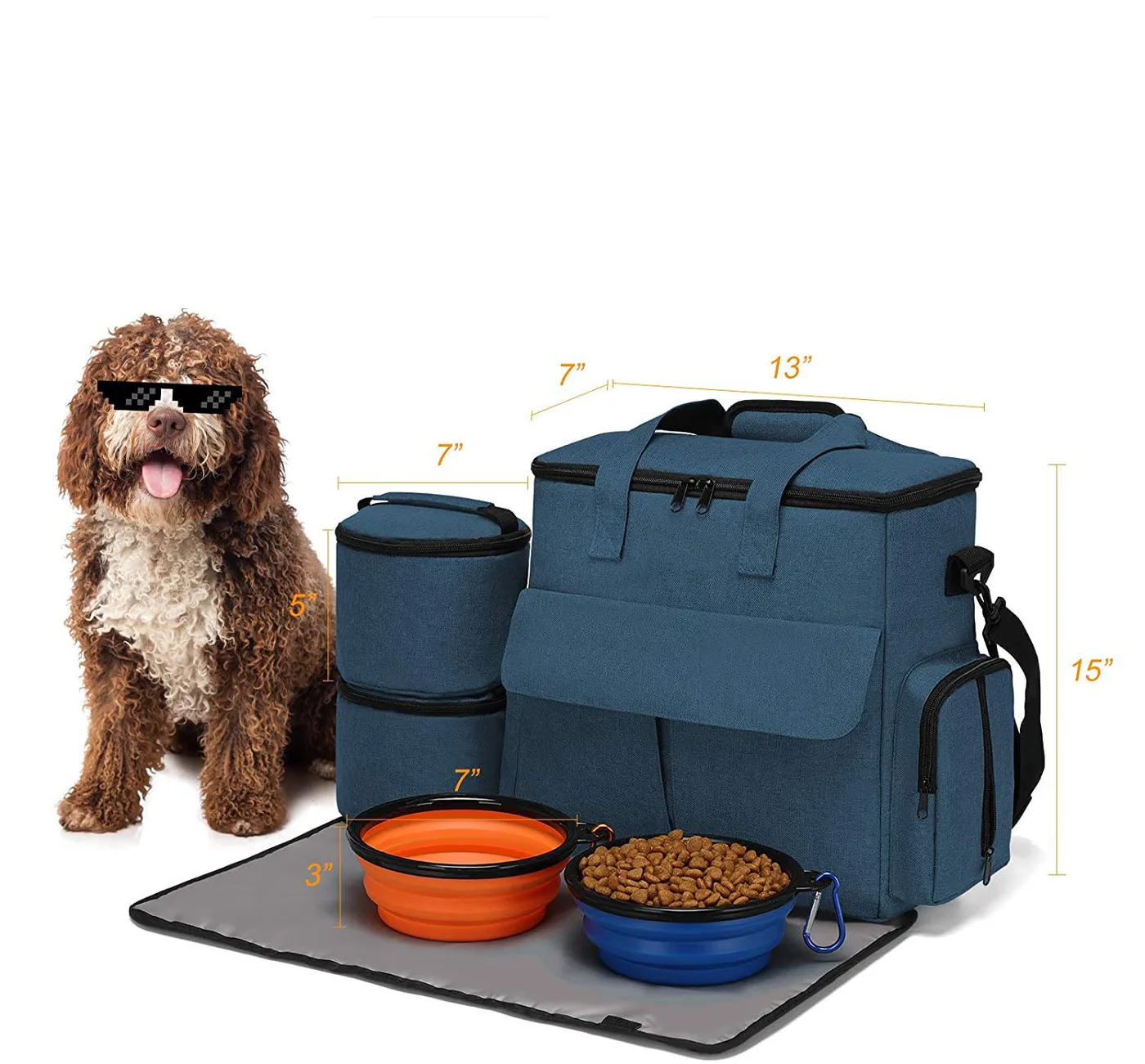
A quote is not a number, it is a structure, and the structure tells you where a price can move. On a typical soft pet carrier quoted at MOQ 500 - the shape most wholesale pet carriers take - the split looks roughly like this.
| Cost component | Share of FOB | What drives it | Flexibility |
|---|---|---|---|
| Shell and lining fabric | 28-38% | Denier, coating, branded vs commodity, dye lot size | High - biggest single lever |
| Hardware and zippers | 12-20% | YKK vs commodity, zinc alloy vs iron, finish | Medium - visible to the customer |
| Foam, padding, baseboard | 8-14% | Density, thickness, EVA vs PE board | Medium - affects perceived quality |
| Webbing and trim | 5-9% | Width, weave, branded jacquard | Medium |
| Direct labour | 14-20% | Stitch count, operation count, SPI | Low - do not push here |
| Packaging | 4-8% | Printed box vs polybag, inserts, hangtags | High - often over-specified |
| Overhead, QC, compliance | 5-9% | Testing, inspection, certification amortisation | Low |
| Manufacturer margin | 8-12% | Volume, payment terms, relationship | Low at MOQ, better at scale |
Four levers move that structure without damaging the product.
Lever one: consolidate colourways. MOQ is 500 per colourway, and every extra colourway is another fabric purchase with its own dye lot. Three colourways of 500 cost more per unit than one run of 1,500, because fabric is bought in one lot and the line is set up once. If your range needs three colours, run them as sequential orders and carry the fabric rather than the finished goods.
Lever two: specify the fabric, not the brand. A named performance fabric can carry a 30-50% premium over a commodity equivalent with identical denier and coating. Sometimes that is worth it because you are selling the name on the hangtag. Often it is not. Ask for both quotations side by side and decide with your marketing team.
Lever three: reduce operation count, not stitch count. Removing a reinforcement bar tack saves almost nothing and costs you a failure point. Removing an entire operation - a zipper garage, a second internal pocket, an extra binding pass - saves real money because it changes the line balance. Go through the tech pack operation by operation with the production team and ask which ones earn their cost. Our partner facilities run seven production lines with 149 machines on an SGS-verified 4,950 m² base, and line balancing is where the savings come from.
Lever four: right-size the packaging. Packaging is routinely over-specified on a first programme - a four-colour box with lamination and spot UV on a product that ships inside a master carton anyway. A single-colour kraft box or a printed polybag with a hangtag gets the same shelf result for a fraction of the cost. On a private label pet carrier the hardware is what the customer does touch, so reinvest there.
One lever to avoid: pushing labour cost down. On a 137-person production team with BSCI-audited conditions and ISO 9001 process control, labour has the least give and the most downside. Programmes that cut there get the savings back as defect rates and audit findings.
Bottom line: fabric consolidation, fabric specification, operation count and packaging are the four real levers; labour is not one.
MOQ Combinations That Work for Wholesale and Private Label Programmes
MOQ 500 per colourway is the floor, whether you are quoting a custom pet carrier or a stock-based wholesale line. The question buyers actually ask is how to reach a workable order when the range needs several colours or sizes. There are four legitimate constructions and one that does not work.
The first is mixed sizes, single colourway: 500 units split across sizes S / M / L within one fabric colour. This is the easiest approval because the fabric is one lot, and it is the right structure for a first season where you expect to learn which size actually sells. The second is single size, mixed colourways at 500 each: more expensive per unit, but it is what a retail shelf demands and it is the standard shape of a mature private label pet carrier range. The third is a tiered programme: open with 500 units on one colourway to validate, then commit to a seasonal 3,000-unit schedule across three colours once you have sell-through data. The fourth is a staggered release: book the annual volume up front and draw it down in 500-unit calls, which buys fabric at annual volume pricing while keeping your warehouse lean. That last one is the most underused structure in the category.
What does not work is asking for 250 units because you are "testing the market". Below 500 the fabric cannot be bought at production pricing, the line setup cost dominates, and the quoted price lands 40-60% above the MOQ price - so the test tells you nothing about your real margin. If you genuinely need a small first run, take an ODM base in a stock colourway and pay the honest premium, or buy 500 and hold the balance. Both are cheaper than a failed test, and both keep the private label pet bags artwork spend intact.
For wholesale pet carriers the arithmetic is slightly different because the product is being resold rather than branded. A wholesale buyer typically runs one spec across multiple retail customers, which means one colourway in volume - and volume is where the price improves. At 500 units you are at list; at 2,000 the fabric and the line setup both amortise better and the unit cost drops; at 5,000 you are into a different conversation and should be negotiating an annual schedule rather than a spot price. Private label pet bags sit between the two: you carry the branding cost and the packaging cost, but you also carry the margin, and the MOQ is the same 500 per colourway. See the MOQ guide for the volume-price curve in detail.
Commercial terms are consistent across all of it: T/T 30/70, FOB Xiamen, bulk production 35-50 days from confirmation sample and deposit, release under AQL 2.5. Our monthly capacity is 200,000 pieces across the partner production lines, which matters in one respect: a booked slot stays booked rather than being displaced by a larger customer.
Bottom line: 500 per colourway is the floor, the four workable structures are mixed-size, multi-colour, tiered and staggered, and the only bad option is a sub-MOQ test that produces an unusable price.
What to Send Us to Start a Programme
The fastest programmes start with a complete first email. What our production team needs is: the destination market or markets, because that sets the compliance regime; a target FOB price, even a rough one, because it determines which construction routes are worth costing; the volume per colourway and the expected annual volume; your launch date; and whatever design material you have - a tech pack, a reference sample, a sketch, or simply the ODM base model you want to start from. A reference sample of a competitor product with a note on what you would change is a perfectly good starting document and often a better one than an over-specified drawing.
You will get back an itemised quotation with tooling separated from unit cost, a stated validity window, and a gate-by-gate date plan. That plan is the document to hold us to. QUANZHOU JUNYUAN BAGS has run pet carrier programmes since 2014, with a founder in the bag trade since 2004, and the reason the process above is written down in this much detail is that written gates are the only thing that reliably survives a busy season.
If you are still deciding between pet carrier OEM and pet carrier ODM, send us the brief either way and ask for both quotations. The comparison is more useful than any amount of general advice, because it puts the tooling number and the unit cost delta next to each other in your own currency. Start with the private label programme guide if branding and packaging are the parts you are least sure about.
Bottom line: market, target price, volume, date and any design reference is enough to start; ask for OEM and ODM quotations against the same brief and let the numbers make the decision.
SGS-verified production base
- SGS-verified production floor of 4,950 m², 149 machines, 7 assembly lines
- 137-person team running pet carrier programmes since 2014
- 200,000 units monthly, audited to BSCI and ISO 9001
People Also Ask
What is the difference between OEM and ODM for pet carriers?
OEM means you supply the design and the manufacturer builds to your tech pack, usually with new tooling you fund. ODM means you start from a platform the manufacturer already engineered and specify fabric, colour, hardware and branding. OEM gives structural exclusivity and a longer development window; ODM gives speed and a much lower upfront cost. Both run on the same MOQ 500 per colourway and the same 35-50 day bulk window.
How long does it take to develop a custom pet carrier?
Plan 55-80 working days from brief to vessel. Each sample round takes 6-10 working days, OEM programmes normally need two or three rounds, and bulk production runs 35-50 days after confirmation sample sign-off and deposit clearance. ODM programmes compress the front end because the pattern already exists; the bulk window is unchanged.
Who owns the mould after I pay for it?
Whoever funded the tool owns it. In practice the physical mould stays at the production site because shipping it costs more than it is worth elsewhere, so ownership gives you the right to dedicated use, transfer on request, or certified destruction - not physical possession. Get all three clauses into the order schedule in writing, along with an undertaking that the tool will not be used for other buyers' programmes.
Can I mix sizes within one MOQ?
Yes. Mixing sizes within a single colourway is the easiest approval because the fabric is one dye lot and the line is set up once. Mixing colourways does not reduce the MOQ - the floor is 500 pieces per colourway, because each colour is a separate fabric purchase with its own dye lot.
Why is the sample fee higher than the unit price?
Prototype samples are built by hand in a sample room rather than on a production line, so they carry two to three times the labour of a bulk unit and consume capacity that is scheduled alongside everyone else's work. On most programmes the sample fee is credited back against the first bulk order above MOQ - ask for that in writing on the quotation.
What compliance documents do I need for US and EU import?
For the US: country-of-origin marking on the product itself, fibre content, responsible party details, CPSIA substance compliance and a Prop 65 position if you sell into California. For the EU: REACH SVHC declarations plus national packaging and EPR registration numbers, which are the importer's obligation. Your manufacturer supplies material declarations, test reports and packaging specs; the registrations are yours.
Frequently Asked Questions
What is the minimum order quantity for a pet carrier OEM programme?
MOQ is 500 pieces per colourway for both OEM and ODM programmes. The limit is set by fabric purchasing and line setup, not by policy: each colourway is a separate dye lot with its own mill minimum. Sizes can be mixed inside one colourway at no penalty.
How many sample rounds should I budget for?
Budget two rounds for an OEM programme and one to two for an ODM programme. Each round takes 6-10 working days and is scheduled in the sample room queue. If you reach a third round, the cause is almost always an unresolved spec from the tech pack stage rather than a manufacturing defect.
Are tooling charges refundable if I cancel the project?
No. Tooling is a capital item with a single customer, so once steel is cut it cannot be recovered or reused. What you can negotiate is a staged payment - a portion on order, the balance on first-article approval - and a defined period after which an unused tool may be recycled.
What payment terms and Incoterms do you work on?
Standard terms are T/T 30/70 - 30% deposit to book the production slot and release materials, 70% against the pre-shipment inspection report and before vessel loading. Shipments quote FOB Xiamen by default; other Incoterms can be agreed in writing on the order.
What inspection standard is applied before shipment?
Every bulk order is released under AQL 2.5 for major defects, with a documented pre-shipment inspection report issued before the balance payment is due. Inline checks run during cutting, sewing and packing, and the confirmation sample sealed at gate 6 is the physical reference the inspector works against.
Can you sign an NDA before I share my drawings?
Yes, a mutual NDA is standard and we will sign before any design material is exchanged. Be aware that an NDA gives you a damages claim rather than an injunction - soft-goods geometry is hard to protect by itself. File a design registration in your target market first if you need an enforceable monopoly.
How is colour matched across repeat orders?
We cut and retain a signed physical shade card for every colourway and reference it on every repeat order. Approve against a swatch from the actual production lot under D65 lighting with a stated Delta E tolerance - 1.0 on body fabric, 1.5 on linings and webbing.
Do I need my own barcode, or can you supply one?
You need your own GS1-assigned GTIN. Reusing a number from another product or accepting a supplier-generated code is the most common cause of marketplace rejection, and the rejection happens after the goods have landed. Register the GTIN in your own company name before the packaging print run.
Where is country of origin marked?
On the product itself, not only on the polybag or the carton. A sewn-in label is the norm for soft carriers. Carton marking is a separate requirement and states SKU, colourway, quantity, weights and carton sequence number.
What is the production capacity available for large programmes?
The partner facilities run seven production lines with 149 machines across an SGS-verified 4,950 m² base with 137 staff, at roughly 200,000 pieces per month. The practical benefit to you is that a booked production slot holds rather than being displaced by a larger customer.
Which certifications cover the production base?
The production base holds BSCI social compliance auditing and ISO 9001 quality management certification, both current and available with documentation. Material-level certification such as OEKO-TEX fabric testing is arranged per programme against the specific BOM.
What should I include in a tech pack for an OEM quotation?
Dimensioned drawings with tolerances, a full BOM with supplier and part number per component, fabric specs including denier and coating, stitch density and thread type, hardware finish, Pantone TCX colour references or physical swatches, logo placement with measurements, and packing instructions. A complete pack gets quoted in two to three working days; a partial one gets quoted with assumptions that later become price revisions.
Talk to QUANZHOU JUNYUAN BAGS about a pet carrier programme: MOQ 500 pieces per colourway, samples in 6-10 working days, bulk production in 35-50 days under AQL 2.5 inspection.
Get a free quote Request a sample