Cat Carrier Crash Tested: Safety Certification
A crash tested cat carrier is one that has been run on an instrumented sled at a 48 km/h impact with a defined deceleration pulse, retaining a simulated animal of the rated mass with under 300 mm of forward excursion, no structural failure and no release of any closure. The evidence is a dated test report from an accredited laboratory naming the exact SKU tested.
Crash tested is the most valuable claim in this category and the most abused, because no regulation defines it for pet products. A supplier can write the words on a hangtag without ever having strapped a carrier to a sled, and a buyer who accepts the claim without a report is carrying the liability. The defensible version of the claim has four parts: a defined test pulse, a defined dummy mass, pass criteria recorded against measured data, and a report from a laboratory whose accreditation can be checked. Our production team specifies crash validation as a platform programme rather than a per-order service, which means the pulse, the fixture and the instrumentation are documented once and reused, and the marginal cost per SKU is the cost of the run rather than the cost of the engineering. Commercial terms follow the standard programme: MOQ 500 pieces per colourway, prototypes in 6-10 working days, bulk production 35-50 days after sample approval, final random inspection to AQL 2.5, T/T 30/70 and FOB Xiamen.
In a private label pet carrier brief for cat carrier, the artwork file and the label compliance text are the two items that most often delay a first shipment.
What Crash Tested Means When No Regulation Defines It
For child restraint systems the regulatory picture is clear: a defined test, a defined dummy and a pass-fail threshold set in law. For pet carriers there is no equivalent, which means the phrase crash tested has no legal definition and no enforcement. In practice it has three possible meanings, and a buyer should establish which one is being offered before paying for it.
The first meaning is a supplier claim with no test attached. It is common and it is worthless. The second is an internal test, run on a supplier sled or a rig, with data that exists but was not witnessed or accredited. It has real engineering value as a development tool and limited value as evidence, because nobody outside the organisation can verify it. The third is a third-party test at an accredited laboratory, with a numbered report naming the product, the configuration, the pulse and the results. Only the third supports a public claim.
The reference programme that most buyers cite is the independent crash testing work for pet travel products published by the Center for Pet Safety at centerforpetsafety.org. It publishes its protocol, its dummy specification and its results, which means a brand can either submit a product to that programme or align its own test to the published method and say so honestly. The second route is faster and cheaper and it is the one most private label programmes take.
Two definitions are worth fixing before anything else. Crash tested means a test was performed and a result recorded; it does not mean the product passed. Crash certified, where a programme awards a mark, means a third party reviewed the result and awarded a rating, and only the awarding body can license that mark. A brand that prints a mark it has not been awarded is exposed on two fronts, trademark and misrepresentation, and that is the specific risk a documentation review is meant to catch.
| Claim | What it requires | Evidence | Typical cost | Defensible publicly |
|---|---|---|---|---|
| Crash tested | A defined sled test was run | Internal report with data | 800-2,500 USD | Only with accredited lab |
| Dynamically tested to 48 km/h | Sled pulse, dummy mass, pass criteria | Accredited report with traces | 2,000-6,000 USD | Yes |
| Third-party rated | Submission to a rating programme | Awarded rating and licence | Programme fee plus test | Yes, with the licence |
| Meets child restraint standard | Not applicable to pet products | None exists | n/a | No |
The Test Pulse and Sled Configuration
A crash test is only meaningful if the pulse is defined and repeatable. The pulse is the deceleration-time history the sled produces, and it determines the loads the product sees. Two products tested on different pulses are not comparable, which is why the pulse is the first thing to check in any report.
The pulse used for pet travel product testing is a frontal impact of 48 km/h with a peak deceleration in the region of 20-30 g and a rise time of 60-100 ms, giving a total event duration of 120-200 ms. The shape matters as much as the peak: a triangular pulse and a half-sine pulse of the same peak produce different peak loads on a restraint because the rate of loading differs. The report should include the trace, not just the peak number.
The sled carries a representative vehicle seat and seat belt. A static seat is mounted to the sled platform, the test article is installed by the technician using the product instructions, and a belt of the type used in the target market is fitted. This is the fixture that makes the test realistic: a carrier strapped to a rigid plate behaves completely differently from one strapped to a seat cushion that deforms and rotates.
The dummy is the second configuration item. A pet crash test dummy is a segmented mass of the target animal weight, normally 4-8 kg for a cat product, with a flexible spine and a centre of gravity positioned to approximate a sitting or lying cat. It is instrumented with accelerometers at the head and the centre of mass. Some programmes use a calibrated mass block instead, which is cheaper and produces a cleaner signal but does not capture the articulation that loads a closure. For a carrier, where the interesting question is whether the animal stays inside, an articulated dummy or a mass with a realistic envelope is the better choice.
Test matrix size is a budget decision. A minimum credible programme is three runs: one frontal, one frontal with the carrier installed in the second orientation the instructions permit, and one repeated frontal on a second sample to establish repeatability. Adding a side or a rear impact doubles the cost and is usually justified only where a brand is selling into a market that asks for it.

Instrumentation and Pass Criteria
Instrumentation turns a crash test from a video into evidence. The minimum channel set is three: a sled accelerometer recording the input pulse, a dummy accelerometer at the centre of mass recording the transmitted load, and a load cell in the restraint path recording the force in the webbing. High-speed video at 500-1,000 frames per second, from side and overhead, provides the qualitative record.
Pass criteria have to be written before the test, because a criterion chosen afterwards is not a criterion. The set our production team uses has five items. Retention: the dummy remains inside the carrier at the end of the event, with no part of it outside the original envelope. Excursion: the furthest forward travel of any part of the carrier or dummy is under 300 mm from the start position. Structural: no fracture, no separation of a seam in the load path, and no permanent deformation that would prevent reuse. Closure: every closure remains engaged, with no opening greater than 10 mm at any point. And geometry: no component develops a sharp edge or a protrusion that could injure the animal.
Secondary criteria are recorded but not always gating. Peak dummy acceleration should be recorded and compared with the sled peak: a well-designed restraint system transmits 0.8-1.3 times the sled peak to the dummy, and a system that amplifies above 1.5 times is doing something wrong, usually by allowing slack to be taken up late. Webbing load should be recorded and should sit below 60 % of the rated breaking strength at the peak, which is the margin that separates a pass from a lucky pass.
The failure modes the test actually finds are instructive. In our experience the ranking is: anchor pull-through at the shell, where a webbing sewn to fabric tears out at 1.2-2.0 kN; closure separation, where a zip opens under the internal load of the dummy; frame collapse, where a soft carrier folds and the animal is ejected through the resulting opening; and rotation, where the carrier tips and the animal is thrown against the closure. Each has a known fix and each is cheaper to fix at the design stage than after tooling.
Which Standards Apply and Which Do Not
The regulatory landscape for pet travel products is thin, and a buyer needs to know exactly what can and cannot be said. Three bodies of rules are relevant, and only one applies directly.
Child restraint regulation does not apply to pet products. The US Federal Motor Vehicle Safety Standard for child restraints and the European ECE regulations for child restraint systems define test pulses, dummies and pass criteria, and they are frequently cited in pet product marketing as if they applied. They do not, because their scope is defined by occupant type and mass range, and a cat carrier is outside it. A claim that a pet carrier meets a child restraint standard is not a strong claim; it is a false one, and it invites a challenge.
What does apply to a pet carrier is general product safety and general consumer protection law, which in the US is administered in part by the Consumer Product Safety Commission, whose guidance and recall process is published at cpsc.gov. These rules do not set a crash performance threshold; they require that a product not present a foreseeable hazard and that a safety claim be substantiated. That is the operative obligation, and it is met by holding a test report that supports the claim.
Voluntary standards fill the gap. The independent crash test work referenced earlier is the most cited, and there are textile and hardware test methods that apply to individual components even where no assembly standard exists: webbing tensile testing, hardware corrosion, zipper strength, and textile abrasion. Using component methods from a recognised standards body means each number in the report is traceable, and traceable numbers are what survive a challenge.
Quality system certification is a separate and often confused matter. ISO 9001 certifies that a supplier operates a documented quality management system; it says nothing about the crash performance of a specific product. BSCI or equivalent social compliance audits cover labour practice at the production base. Both are useful in a supplier assessment and neither supports a crash claim, and a buyer should not let one be presented as evidence for the other.
Laboratory Accreditation and What a Report Must Contain
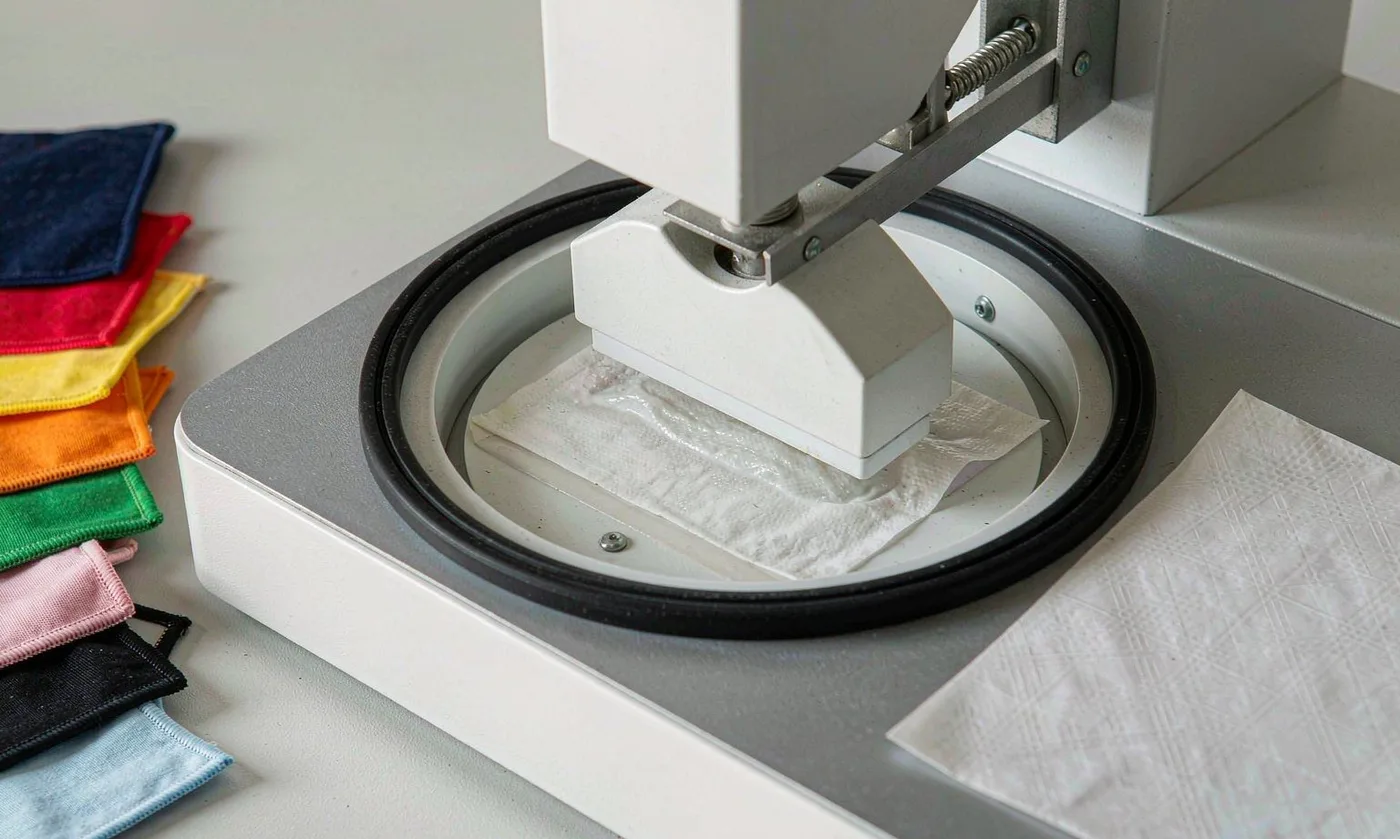
A crash test report is only as good as the laboratory behind it, and accreditation is the check. The relevant accreditation for testing laboratories is ISO/IEC 17025, which sets requirements for competence, impartiality and measurement traceability, and the standard is published by the International Organization for Standardization at iso.org. A laboratory accredited to it is audited, its instruments are calibrated against national standards, and its scope of accreditation lists the specific tests it is accredited for.
The check a buyer should perform is threefold. Confirm the accreditation is current rather than lapsed. Confirm the crash test method is within the scope of accreditation, because a laboratory accredited for textile testing is not accredited for sled impact. And confirm the report carries the accreditation mark and a report number that the laboratory will confirm if contacted. Those three checks take an hour and they are the entire difference between evidence and paper.
The report content itself should be specified before the test. Nine items are required: laboratory name, address and accreditation number; report number and date; a full identification of the article tested, including SKU, colourway, size and any removable components; a description of the installation, including the seat, the belt type and the routing; the dummy specification and mass; the target pulse and the measured pulse trace; the instrumentation and channel list; the measured results against each pre-declared pass criterion; and photographs or video stills of the article before and after. A report missing any of these is not usable as evidence.
Retention of samples matters too. Our production team retains the tested article and a reference sample from the production batch that corresponds to it, held for the warranty period, because a claim that cannot be reproduced on a retained sample is a claim that will eventually be tested and lost.
Wording the Claim: What Survives Review
The claim on the packaging and the product page is where the legal exposure actually sits, and the wording matters more than the test. Four rules keep a claim defensible.
State the test rather than the conclusion. Dynamically tested at 48 km/h with a 6 kg dummy, retaining the animal with 210 mm of forward excursion, is a statement of fact supported by a report. Crash proof is a conclusion and cannot be supported, because there is no crash a product is proof against.
Name the SKU. A test applies to the article tested, and a carrier tested in one size and one colourway has not been tested in another. Where a platform covers several sizes, either test each or state the size tested and say the others share the construction. A blanket claim across a range that includes an untested size is the commonest defect in this category.
Do not use a mark that has not been awarded. A rating programme mark is licensed, and unlicensed use is both a trademark issue and a misrepresentation. Where a brand wants a mark, the route is submission to the programme and payment of the fee; the alternative is to describe the test in words, which costs nothing and is just as persuasive to a careful buyer.
Avoid the word certified unless a third party certified it. Certified implies an external body reviewed and approved. A supplier can say tested; only a programme or a certification body can say certified. That single distinction is the one most often got wrong, and it is the one a marketplace compliance team checks first.
One positive framing is worth adopting. A brand that publishes the test method, the pulse and the measured results is making a claim no competitor can match with an adjective, and it converts a compliance exercise into a marketing asset. Our production team supplies the report, the photographs and a plain-language summary suitable for a product page precisely so that buyers can do this.
Labelling, Hangtags and Custom Brand Marks
Once a test exists, the physical product has to communicate it, and the labelling is a specification item with its own cost and lead time. Three elements are normally used, and each is cheap.
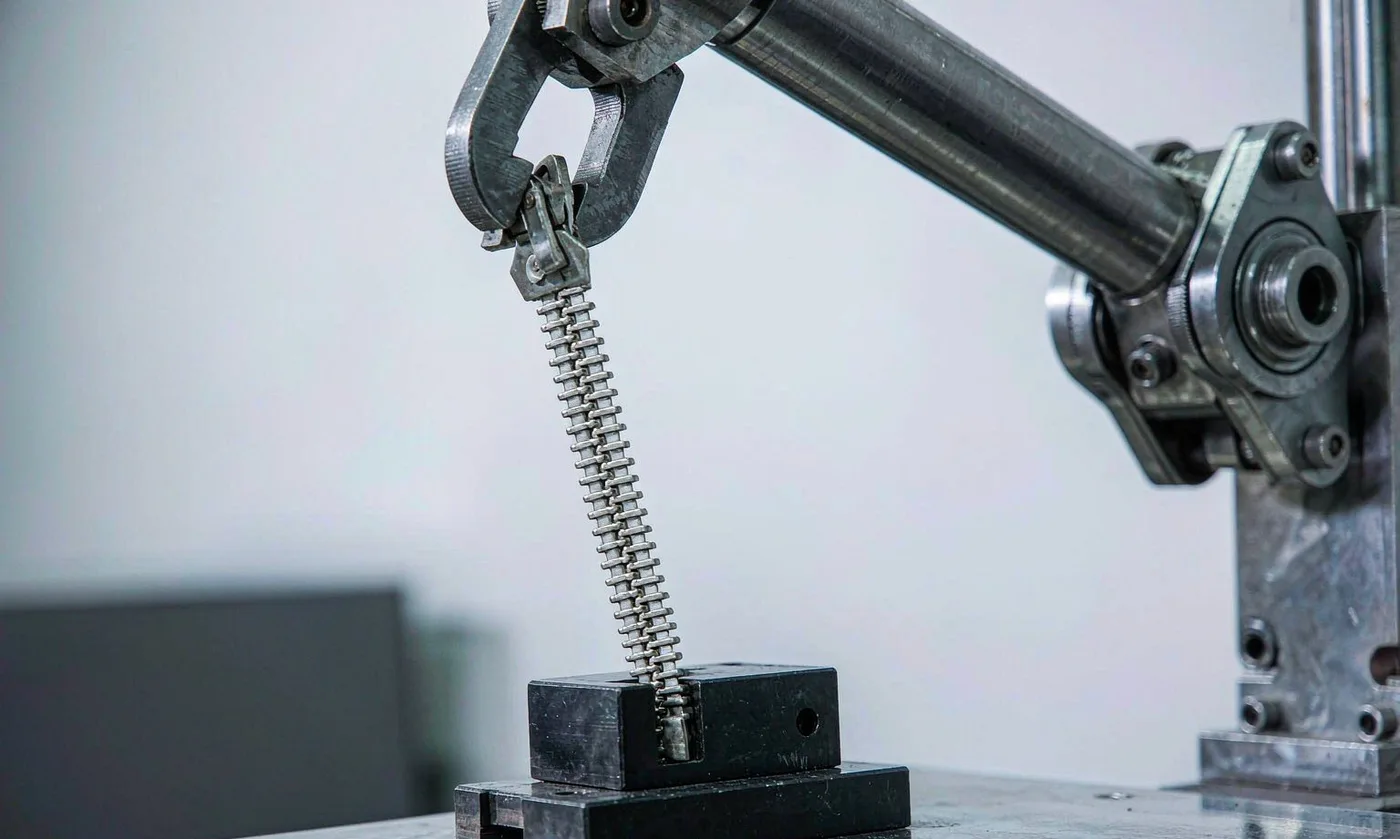
A woven label sewn into a seam, 20-45 mm wide, carrying the brand mark and the test statement, costs 0.06-0.14 USD and is the most durable option. A printed satin label with the same content costs 0.02-0.06 USD and is used where the text is long, because a woven label cannot carry small print legibly below about 1.5 mm character height. A hangtag, printed two-sided on 300-350 g/m² board at 55 × 90 mm, costs 0.09-0.22 USD and carries the room a product page cannot: the test method, the dummy mass and the measured excursion.
The custom label programme is where private label buyers get the most value from this work. A brand that has paid for crash validation should own the wording, and the label should carry the brand mark alongside the test statement so the two are associated in the customer mind. Artwork is supplied as a vector file, the label is sampled before the bulk cutting order, and a first-article label is approved against the Pantone reference before production.
Labelling has to be accurate about the SKU. Where a tested platform includes sizes that were not tested, the label should be specific, either by printing the tested size or by printing a statement that covers the shared construction. A generic label across an entire range is the risk item described in the previous section, and it is cheaper to print two label versions than to defend one.
Documentation that ships with a crash tested programme is larger than for a standard one: the test report, the laboratory accreditation reference, photographs of the tested configuration, the installation instruction sheet, and a bill of materials tying the tested article to the production article. Buyers should request the last item explicitly, because it is the document that proves the product shipped is the product tested.
Programme Planning: Budget, Schedule and Specification Line
Crash validation is a platform investment with a predictable budget, and planning it as such prevents the two failures that actually occur: running the test too late to change the design, and running it on an article that is not the production article.
Budget: an accredited sled programme of three runs costs 2,000-6,000 USD depending on instrumentation and on whether a second sample is included. Development sled runs on an internal rig, which are cheaper and faster and should be used to debug the design before the accredited run, cost 300-900 USD each. A documentation package and photography adds 200-500 USD. Total first-platform budget is 2,500-7,400 USD, amortised over the platform rather than the first order.
Schedule: design and development with internal sled runs takes 4-8 weeks depending on how many iterations are needed. Accredited testing books 2-5 weeks out and takes 1-2 weeks including reporting. Samples in 6-10 working days and bulk in 35-50 days after approval run in parallel where possible, but the accredited test must be on a production-representative sample, which normally means it starts after the second sample round.
The sequencing rule that saves the most time and money is to run internal sled testing on the first sample rather than static pull testing alone. A static test will pass on a design that fails dynamically, and discovering that after an accredited run has been booked costs four to six weeks and the full test fee. Our production team runs a static screen and an internal dynamic run together on every restraint design.
The specification line for a tech pack reads: dynamically tested at 48 km/h with a defined pulse and a 6 kg articulated dummy, retaining the dummy with under 300 mm of forward excursion, no structural failure, all closures engaged with no opening above 10 mm, peak webbing load below 60 % of rated breaking strength, tested at a laboratory accredited to ISO/IEC 17025 with the method in scope, report naming the SKU tested and accompanied by a bill of materials tying the tested article to production. Written that way, the claim is verifiable, the marketing is defensible and the liability is where it belongs.
Production capability
- SGS-verified production space of 4,950 m², 149 machines, 7 assembly lines
- Pet carrier and pet bag output since 2014 from a 137-person team
- 200,000 units shipped monthly under BSCI and ISO 9001 systems
People Also Ask
Is there a legal standard for crash testing pet carriers?
No. Child restraint standards exist and their scope does not cover pet products. What applies is general product safety law, which requires that a safety claim be substantiated, met by holding an accredited test report.
What speed is a pet carrier crash tested at?
48 km/h frontal impact with a peak deceleration of 20-30 g over a 60-100 ms rise time, on a sled carrying a representative seat and belt. The pulse trace should be in the report, not just the peak.
What are the pass criteria for a crash tested carrier?
Retention of the dummy, forward excursion under 300 mm, no structural failure or seam separation in the load path, all closures engaged with no opening above 10 mm, and no sharp edge created by the event.
What laboratory accreditation should a crash test have?
ISO/IEC 17025, with the crash method within the scope of accreditation. A laboratory accredited for textile testing is not accredited for sled impact, and that is the check buyers most often skip.
Can a brand say a carrier meets a child restraint standard?
No. The scope of child restraint regulation is defined by occupant type and mass range and a cat carrier is outside it. The claim is false rather than strong and it invites a challenge.
What is the difference between crash tested and crash certified?
Crash tested means a test was run and a result recorded. Certified implies a third party reviewed and approved, and only a programme or certification body can license that wording or mark.
How much does crash validation cost?
2,000-6,000 USD for an accredited three-run programme, plus 300-900 USD per internal development run. A first-platform budget of 2,500-7,400 USD is amortised over the platform.
Does one crash test cover an entire size range?
No. A test applies to the article tested. Either test each size or state the size tested and that the others share the construction, and print two label versions if necessary.
Frequently Asked Questions
What should a crash test report contain?
Nine items: laboratory details and accreditation number, report number and date, full article identification, installation description, dummy specification and mass, target and measured pulse, instrumentation list, results against each pre-declared criterion, and before-and-after photographs.
Why is the pulse shape as important as the peak?
Because the rate of loading differs. A triangular and a half-sine pulse with the same peak produce different peak loads on a restraint, so two products tested on different pulses are not comparable.
Should a pet crash dummy be articulated?
For a carrier, yes, because the interesting question is whether the animal stays inside and articulation loads the closure. A calibrated mass block gives a cleaner signal but misses that behaviour.
What is a normal peak acceleration transmitted to the dummy?
0.8-1.3 times the sled peak for a well-designed restraint. A system amplifying above 1.5 times is usually taking up slack late in the event.
How much webbing load margin should a pass show?
Peak webbing load should sit below 60 % of rated breaking strength. That margin is what separates a genuine pass from a lucky one.
What failure modes do these tests actually find?
In order of frequency: anchor pull-through at the shell, closure separation under internal load, frame collapse of a soft carrier, and rotation that throws the animal against the closure.
Does ISO 9001 certify crash performance?
No. It certifies a documented quality management system. BSCI or equivalent covers labour practice. Neither supports a crash claim and neither should be presented as doing so.
What is the Consumer Product Safety Commission role here?
It administers general product safety and recall in the US. It sets no crash threshold for pet carriers but it does require that safety claims be substantiated, which the test report provides.
How should a hangtag state the claim?
With the method, the dummy mass and the measured result, for example dynamically tested at 48 km/h with a 6 kg dummy retaining the animal at 210 mm of excursion. Avoid crash proof and avoid unawarded marks.
What does a custom label cost on a crash tested programme?
A woven brand label costs 0.06-0.14 USD, a printed satin label 0.02-0.06 USD and a two-sided hangtag on 300-350 g/m² board 0.09-0.22 USD, with artwork approved against a Pantone reference before cutting.
How long does a full validation programme take?
4-8 weeks of design and internal sled runs, plus 2-5 weeks of laboratory booking and 1-2 weeks for testing and reporting, normally starting after the second sample round.
Why test on a production-representative sample?
Because the report has to name the article tested and a bill of materials must tie it to the production article. A test on a hand-made prototype supports no claim about what ships.
Talk to QUANZHOU JUNYUAN BAGS about a pet carrier program: MOQ 500 pieces per colourway, samples in 6-10 working days, bulk production in 35-50 days under AQL 2.5 inspection.
Get a free quote Request a sample