Dog Carrier Backpack Sample Lead Time: What's Normal
Six to ten working days is the normal sample lead time for a dog carrier backpack, measured from approved tech pack to dispatched sample. The window covers pattern making, marker and cutting, sewing, hardware fitting and a dimensional report. It does not include freight, buyer review time, or any element that needs a new tool.
Executive summary. This note defines what a sampling window actually contains, which variables extend it, and how to plan the calendar around it. The standard figure of 6-10 working days is real and it is achievable, but it is measured from an approved technical package rather than from a first enquiry, and it excludes shipping and buyer review. Programmes that treat those two exclusions as part of the window are the ones that miss their launch dates. Commercial terms sit behind the sample: MOQ 500 pieces per colourway, bulk production in 35-50 days after approval, release under AQL 2.5 inspection with critical defects at zero acceptance. The sample is the reference against which that inspection is judged, so the way it is approved and retained matters as much as how quickly it is produced. The sections below set out the day-by-day breakdown, the four variables that extend the window, and the realistic limits of rush sampling. Every figure comes from programmes currently running through the sample room, and the ranges reflect queue conditions rather than optimism.
A dog carrier manufacturer is expected to hold the dog carrier backpack pattern card for at least twelve months, so a reorder matches the approved sample rather than drifting.
What the 6-10 Working Day Window Actually Covers
A sampling window is a production window in miniature, and it is measured in working days at the production site rather than in calendar days. Six to ten working days means roughly one and a half to two calendar weeks, plus freight. That distinction is the source of most scheduling confusion, because a buyer counting ten calendar days will expect the sample a week before it can physically arrive.
The window starts when the technical package is approved, not when it is sent. Approval means the drawing, the material schedule, the hardware schedule, the colourway references and the labelling requirement are all confirmed and no open question remains. A package sent with three open questions does not start the clock, because the sample room cannot order material against an open question, and the questions have to be resolved before anything else can proceed.
Inside the window there are six operations. Pattern making translates the drawing into a graded set of pattern pieces. Marker and cutting converts the pattern into cut panels, usually in stock or substitute fabric on a first round. Sewing assembles the panels. Hardware fitting installs buckles, zippers and adjusters. Finishing applies labels and binding. And the dimensional and weight report records the result against the drawing. Each operation has a queue behind it, and the queue is why the window has a range rather than a fixed value.
What the window does not cover is equally important. It does not cover fabric dyeing, which adds 10 to 15 working days when a custom colour is specified. It does not cover hardware tooling, which adds 15 to 25 working days. It does not cover laboratory testing beyond the basic dimensional report, and it does not cover freight or buyer review. A first round in production materials with a full test protocol is realistically four to six weeks of calendar time even though the sewing itself takes eight days.
Buyers should also know that the sample room works in parallel with the bulk lines rather than behind them. That is what makes the window reliable: a sample room with its own equipment and operators does not queue behind production, and it is the single structural feature worth confirming when evaluating a supplier.
One more boundary is worth stating because it causes repeated misunderstanding: the window is quoted per round, not per programme. A buyer who hears six to ten working days and plans a single two-week block for all development is planning for one round, and the gap between that expectation and the six to eight weeks that three rounds actually take is where most launch dates are lost. Asking how many rounds the supplier expects, in writing, at the start of the programme is the cheapest schedule insurance available.
Day-by-Day Breakdown of a Standard Sample Cycle
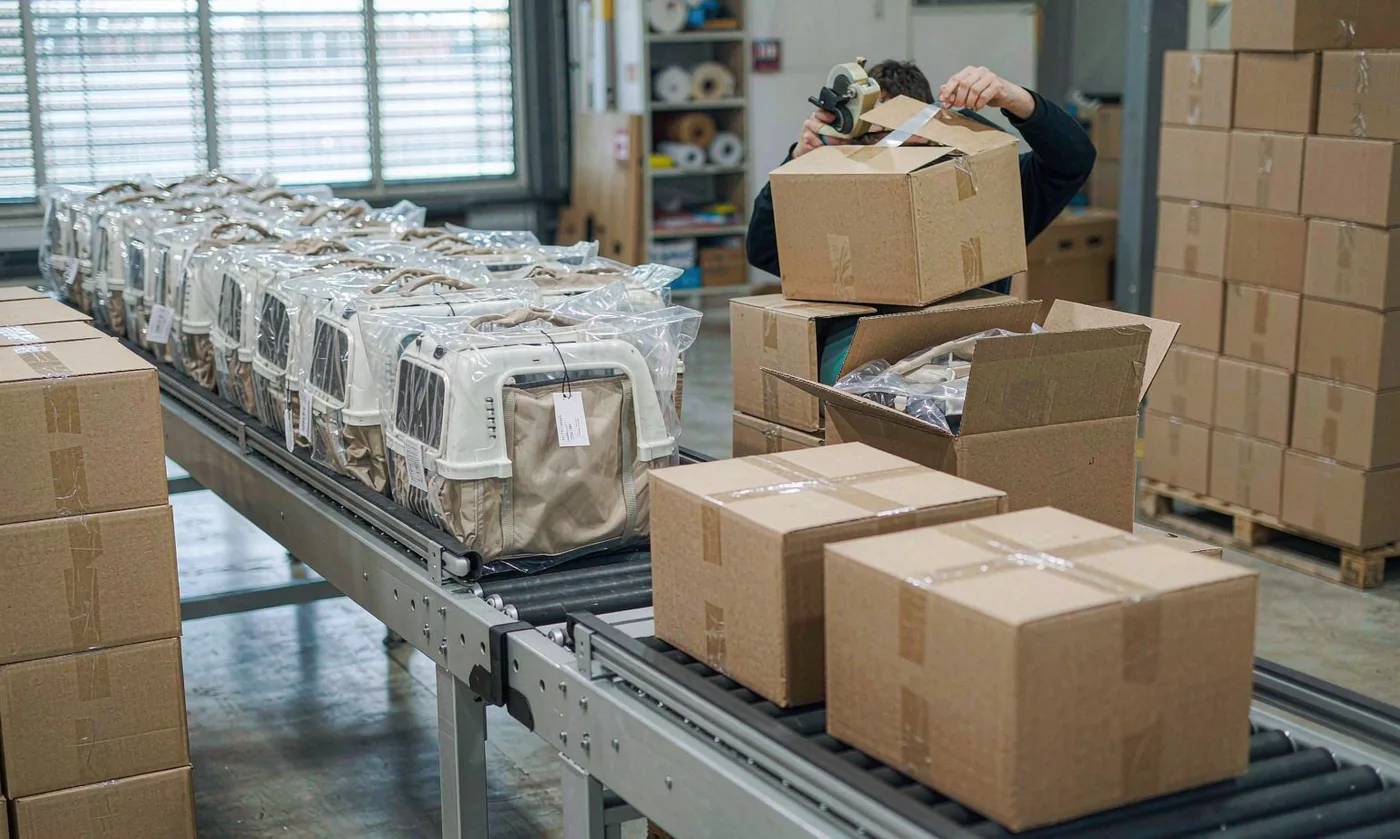
The distribution of time inside the window is uneven, and knowing where it sits helps a buyer ask the right question when a sample is late. Pattern making and cutting consume the first two to three days, sewing and hardware the next three to four, and finishing and reporting the last one to two. The longest single operation is usually cutting, because the marker has to be generated and graded before anything can be assembled.
| Day | Operation | Output | Common delay |
|---|---|---|---|
| Day 1 | Tech pack review and pattern drafting | Graded pattern set | Open questions in the pack |
| Day 2 | Marker generation and fabric issue | Cut panels | Substitute fabric not in stock |
| Day 3 | Panel preparation and printing | Printed panels | Artwork not print-ready |
| Days 4 to 5 | Shell assembly and seam closing | Assembled shell | Construction ambiguity in the pack |
| Day 6 | Hardware fitting and trim | Complete unit | Hardware not in stock |
| Day 7 | Finishing, labels and cleaning | Finished sample | Label artwork approval |
| Day 8 | Dimensional, mass and function report | Sample report | Report requested late |
| Days 9 to 10 | Internal review and photography | Dispatch pack | Photography requested after dispatch |
Two entries in that table are worth acting on before the sample starts. Artwork that is not print-ready pushes day three into day five, and label artwork approval is the most common single cause of a late dispatch. Both are buyer-side items, and both are free to prepare in advance.
The report on day eight is the other item to request explicitly. A sample dispatched without a dimensional and weight report deprives the buyer of the only objective basis for comparing rounds, and it is routinely produced on request rather than automatically. Ask for it when the sample is commissioned, not when it is late.
The Four Variables That Extend the Window
Four variables account for almost every extension beyond ten working days, and all four are visible at the point the sample is commissioned. Naming them early is the difference between a two-week window and a six-week one.
The first is custom fabric. A stock or substitute fabric is on the shelf and costs nothing in time. A dyed-to-order fabric adds 10 to 15 working days for the lab dip and the bulk dyeing, and the lab dip approval loop itself takes three to five days. Where a programme needs a custom colour, the dip should be approved before the sample is commissioned, which removes the loop from the critical path.
The second is custom hardware. Any part that needs a new tool adds 15 to 25 working days, and that figure is dominated by tool making and trial shots rather than by injection. The mitigation is to build the first sample with the closest catalogue part and to commission the tool in parallel, so the second round carries the custom part and the first round validates everything else.
The third is laboratory testing. A dimensional report is produced inside the window. A full protocol with abrasion, seam strength, colour fastness and cycle testing adds 8 to 12 working days of laboratory time, most of it in conditioning and in machine queues. Where a buyer needs the protocol before approval, it should be requested at commissioning so the laboratory booking is made at the same time as the cutting.
The fourth is the buyers own review loop. In practice this is the largest variable of all. A sample that sits unopened for a week, or that is reviewed across three departments sequentially rather than in one meeting, adds more calendar time than any production variable. Consolidating the internal review into a single session with a written decision is the single most effective thing a buyer can do to protect the schedule.
Custom Hardware and Tooling: Their Effect on Sampling
Tooling and sampling interact in a specific way that is worth understanding before a programme commits to a custom part. A new tool cannot be cut before the design is fixed, and the design is rarely fixed before the first sample exists. That circularity is why custom hardware almost always lands on the second round rather than the first.
The standard sequencing is therefore: round one in catalogue hardware to validate geometry, fit and construction; commission the tool at round one approval; round two in production hardware to validate function and appearance. Total elapsed time is typically seven to nine weeks against four to five weeks for a programme using catalogue parts throughout, and the difference is entirely tool making and trial shots.
- Tool making: 12 to 18 working days for a single-cavity mould, longer for multi-cavity.
- Trial shots and adjustment: 3 to 5 working days, sometimes a second iteration.
- First articles: 2 to 3 working days for dimensional verification against the drawing.
- Commissioning point: at round one approval, not at order placement, or the schedule extends further.
- Fallback: always build round one with a catalogue equivalent so the tool delay does not block development.
Cost interacts with the same decision. A custom buckle tool is 3,500 to 6,000 USD and it is only economic above roughly 5,000 units. A programme planning 500 units should use catalogue hardware and spend the customisation budget on the woven label and the zipper pull, which carry minimums of 1,000 pieces and a low tool cost respectively and are far more visible to the end customer than a buckle profile.
Where a custom part is genuinely required, the mechanical test methods should be agreed at the same time. Reference methods from bodies such as ASTM are not interchangeable with internal methods, and agreeing which applies before the tool is cut avoids a situation where a part passes one method and fails the buyers own protocol.
Iteration Rounds: How Many Are Normal
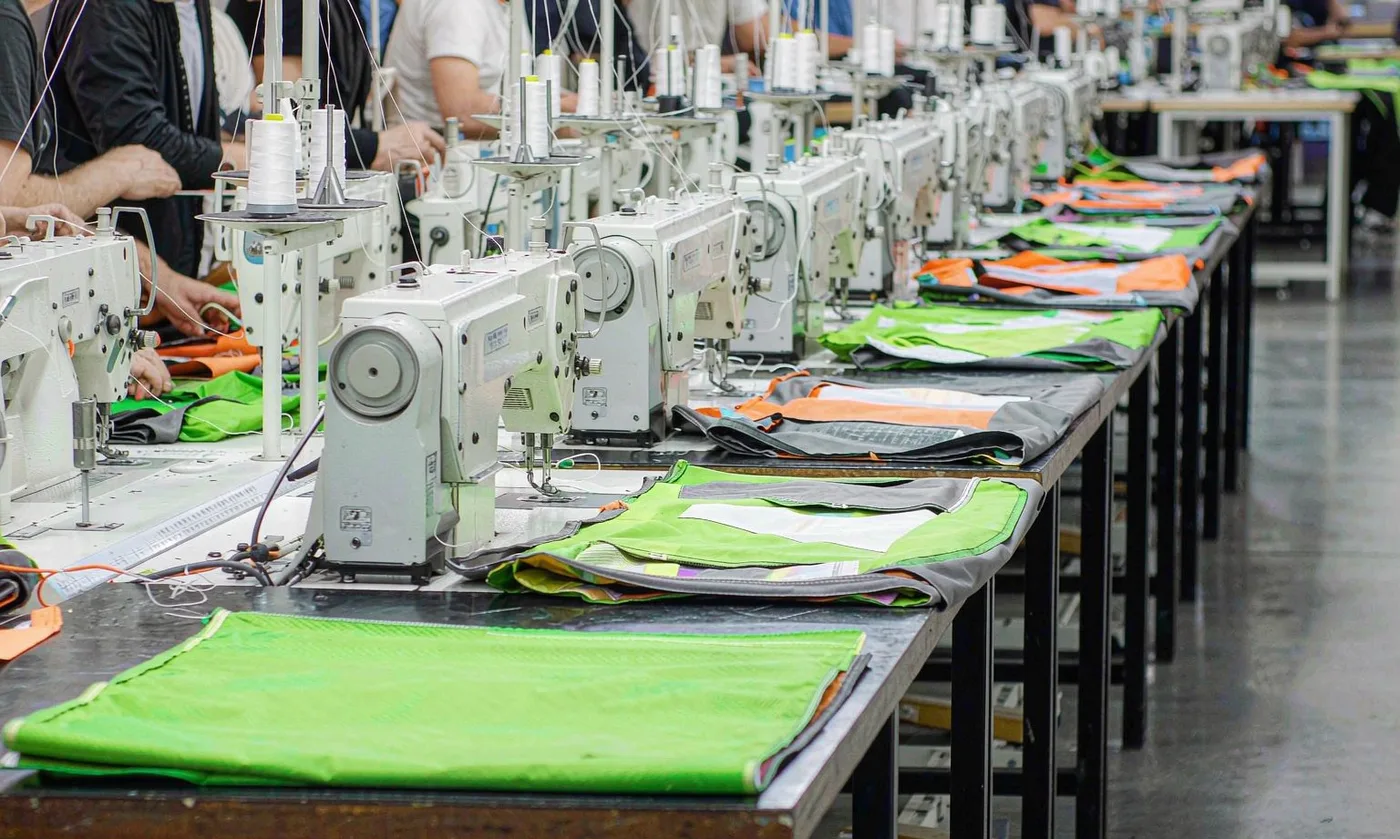
Three rounds is normal for a new product and two for an adaptation of an existing one. Fewer than that usually means the buyer accepted compromises rather than achieved efficiency, and more than that usually means the specification was not settled when sampling started.
Each round has a defined purpose. Round one validates geometry, fit and construction, and it is normally built in substitute fabric with catalogue hardware. Round two validates materials and compliance, and it is built in production fabric with production hardware and carries the laboratory protocol. Round three is a pre-production unit built on the bulk line, and it becomes the inspection reference for the order. Skipping round two is the most common and most expensive shortcut in this category, because it migrates material problems into bulk production where they cost an entire lot rather than a single sample, and it is the shortcut that most reliably turns a small problem into a large one.
Records from the sampling phase are held inside the quality system maintained to ISO 9001, which is what allows a second season to reference the first rather than repeat it. A programme that keeps its sample reports and its approved reference can reorder on a shortened validation path; one that cannot will be treated as new.
The elapsed calendar time for three rounds is realistically six to eight weeks. Each round is 6-10 working days, freight adds three to five days each way, and buyer review adds three to seven days depending on how the internal approval is organised. A buyer who needs three rounds and plans for four weeks will be disappointed, and that disappointment is a planning failure rather than a supplier failure.
The way to reduce rounds without accepting compromise is to make the first round do more work. Supply a complete tech pack, specify the construction rather than leaving it to interpretation, and review the sample in one session with all decision makers present. Programmes that do those three things regularly finish in two rounds, and the saving is four to six weeks of calendar time.
Where a round fails rather than merely needs adjustment, the cause is worth diagnosing before the next one is commissioned. Failure splits into two types: the sample does not match the drawing, which is a pattern or interpretation issue and is resolved by a clearer tech pack; or the sample matches the drawing and the drawing is wrong, which is a design issue and is resolved by changing the drawing. Confusing the two produces a sequence of rounds in which the supplier keeps faithfully reproducing a specification that does not work.
Rush Sampling: What Is Achievable and What It Costs
Rush sampling is possible but it is narrower than most buyers hope. The achievable reduction is from 6-10 working days down to 3-4 working days, and it is bought by removing queue time rather than by working faster. Everything that physically has to happen still has to happen.
The mechanism is priority in the sample room: the pattern goes to the head of the draft queue, the marker is generated same day, and the unit is assembled by a single operator start to finish rather than passing through stations. That last point is the key one. A normal sample passes through four or five operators and waits in each queue; a rush sample is built by one skilled operator in a single sitting, which is why the time collapses and why the cost rises.
What rush sampling cannot do is compress upstream processes. A custom dye lot still takes 10 to 15 working days. A new tool still takes 15 to 25. Laboratory conditioning still takes its full duration. Rush sampling works on stock fabric, catalogue hardware and a dimensional-only report, and it does not work on anything that requires an external process. Buyers should therefore treat rush as a way to accelerate a first geometry check rather than a way to accelerate a full approval.
- Achievable: 3-4 working days on stock fabric with catalogue hardware.
- Not achievable: any compression of dyeing, tooling or laboratory conditioning.
- Typical surcharge: 40 to 120 USD per sample depending on complexity.
- Best use: a geometry or fit check before the main sample round.
- Report: dimensional and mass only; a full protocol cannot be rushed.
Rush sampling also carries a quality caveat that buyers should weigh. A unit built by one operator in a single sitting will not show the process variance that bulk production will, so a rush sample is a geometry check rather than a production predictor. Where the decision resting on the sample is a large one, the standard window is worth the wait.
Approval, Reference Retention and Handover to Bulk
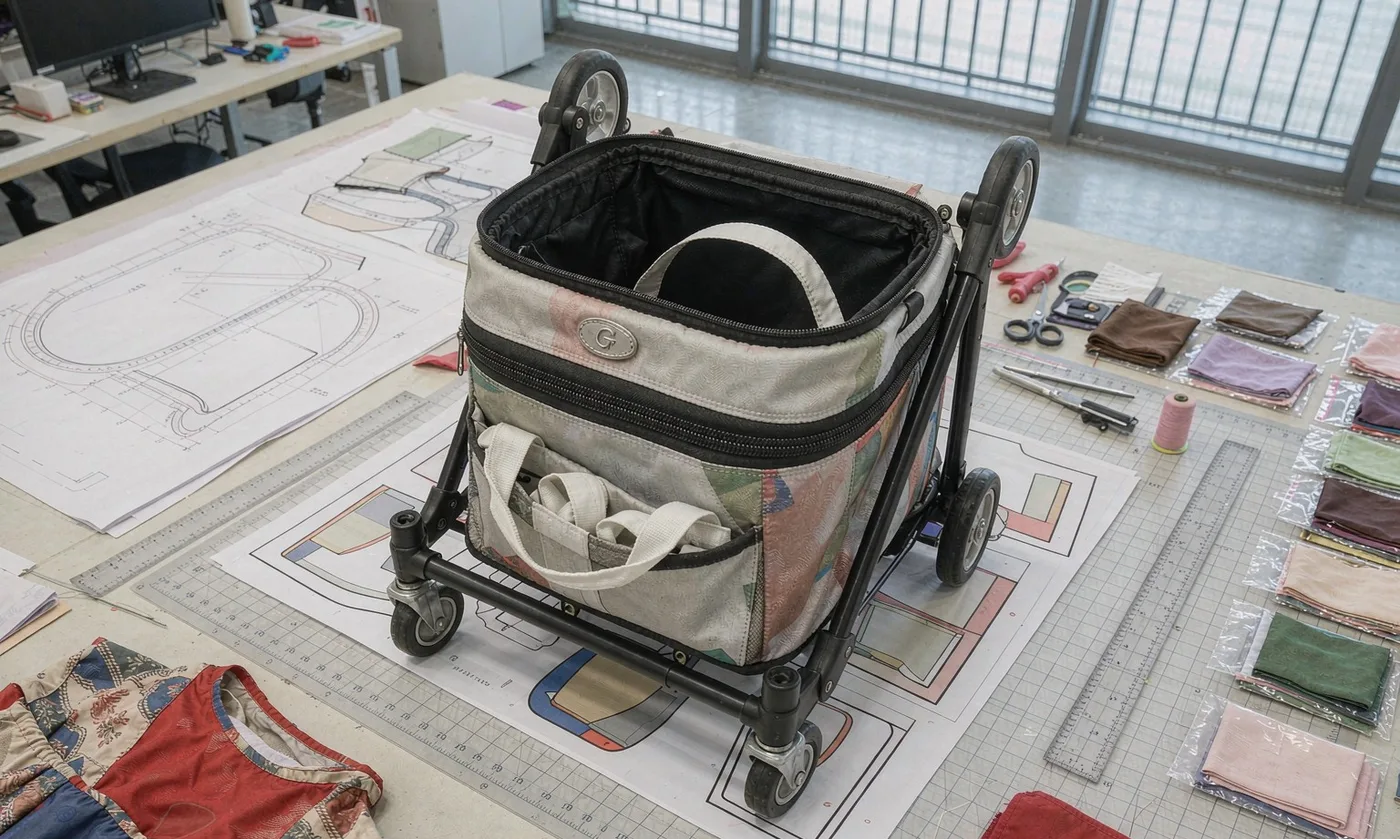
Approval is the decision that ends sampling and starts the bulk clock, and it should be explicit and written. The approval document names the approved sample, records its identifier, confirms the material and hardware schedules, and states any agreed deviations from the original drawing. Without that document, the bulk order is built against a memory and the first disagreement has no reference.
Retention matters as much as approval. The approved sample is the physical reference for AQL 2.5 inspection, for any colour comparison and for any dispute about construction. It should be retained at both ends, sealed against light and dust, and replaced after about 12 months because fabric colour and foam dimensions drift in storage. A faded or distorted reference invalidates every comparison made against it.
Handover to bulk then follows a fixed sequence. The approved sample is signed and retained. The material schedule is released to purchasing, which is when dye-lot and plating-lot lead times start. Tooling, if any, is released for production. The laboratory protocol is booked against the first production lot. And the production slot is confirmed against the output plan. Those five steps are what the 35-50 day bulk window consists of, and the longest of them is almost always material rather than sewing.
The two handover actions that most reliably shorten the bulk window are reserving fabric at approval and confirming hardware orders in the same week. Both are free in cash terms beyond a refundable deposit, and both remove 10 to 15 days from the schedule by starting the upstream clock before the order paperwork is complete.
Planning the Sample Window Inside the Programme Calendar
Sampling should be planned backwards from the bulk window rather than forwards from the enquiry. A programme that needs goods on a shelf at a fixed date should work back through clearance, transit, the 35-50 day bulk window, and then the sampling rounds, and the answer it arrives at is usually uncomfortably early. That is the correct answer.
| Phase | Duration | Starts from | Compression risk |
|---|---|---|---|
| Tech pack and specification | 1 to 2 weeks | Brief | High, every later phase depends on it |
| Sampling rounds | 4 to 8 weeks | Approved tech pack | Medium, rush can cut one round only |
| Approval and material release | 3 to 5 banking days | Signed approval | Low, but blocks everything after |
| Bulk production | 35-50 days | Material availability | Medium, material slots set the range |
| Inspection and release | 3 to 7 days | Packed goods | Low if the catalogue was agreed early |
| Transit and clearance | 25 to 45 days | Vessel sailing | Low, but buffer is essential |
Adding those ranges gives 16 to 24 weeks from brief to delivered goods, and the widest range sits in sampling because it is the phase most controlled by the buyer. A programme that compresses sampling by two weeks compresses the total by two weeks, and no amount of pressure on the bulk window recovers more than a few days.
Buffer should be added at two points rather than spread evenly. Two weeks before the launch date is the obvious one. The less obvious one is between the last sampling round and material release, because that is where an unexpected test failure has to be absorbed, and absorbing it there costs days rather than weeks.
One closing practicality: book the freight before the goods are packed. Vessel space on the relevant lane is a real constraint in peak season, and a shipment that misses its booking waits for the next sailing rather than a few days. That booking can be made against the planned production date and amended later, and doing so removes one of the few remaining risks that no amount of good specification work can mitigate.
Finally, treat the sample report as a permanent asset. It is the baseline against which the second season is quoted, against which any drift in production is measured, and against which a warranty claim is assessed. Programmes that keep their sample reports make better decisions in year two than programmes that remember roughly what the sample was like.
Order and quality terms
- MOQ 500 pieces per colourway; samples in 6-10 working days
- Bulk production 35-50 days after approval; AQL 2.5 inspection standard
- T/T 30/70 terms, FOB Xiamen, full document set per shipment
People Also Ask
How long does a pet carrier sample take?
6-10 working days from an approved tech pack to dispatch, which is about two calendar weeks plus freight. A first round in production materials with a full test protocol is realistically four to six weeks.
Does the sample window include shipping?
No, and it does not include buyer review time either. Freight adds three to five days each way and internal review typically adds three to seven days, which is why three rounds take six to eight weeks of calendar time.
How many sample rounds are normal?
Three for a new product and two for an adaptation. Round one validates geometry in substitute fabric, round two validates materials and compliance, and round three is a pre-production unit retained as the inspection reference.
What delays a pet carrier sample most often?
Artwork that is not print-ready, label approval, hardware not in stock, and a tech pack with open questions. The first three are buyer-side items and are free to prepare in advance.
Can sampling be rushed?
Down to 3-4 working days on stock fabric with catalogue hardware, at a surcharge of 40 to 120 USD per sample. It cannot compress dyeing at 10 to 15 days, tooling at 15 to 25 days, or laboratory conditioning.
When should custom hardware tooling be commissioned?
At round one approval, not at order placement. Build round one with the closest catalogue part and commission the tool in parallel, so the second round carries the custom part.
What happens after sample approval?
The sample is signed and retained as the inspection reference, material is released to purchasing, tooling is released, the laboratory protocol is booked and the production slot is confirmed. Bulk production then runs 35-50 days.
Frequently Asked Questions
When does the 6-10 working day window start?
When the technical package is approved, not when it is sent. Approval means drawing, material schedule, hardware schedule, colourway references and labelling are all confirmed with no open question.
What operations happen inside the window?
Pattern drafting, marker generation and cutting, panel preparation and printing, shell assembly, hardware fitting, finishing, and the dimensional and mass report, followed by internal review and photography.
Is the dimensional report included automatically?
It is produced on request rather than automatically. Ask for it when the sample is commissioned, not when it is late, because it is the only objective basis for comparing rounds.
How long does a custom fabric colour add?
10 to 15 working days for the lab dip and bulk dyeing, with the dip approval loop itself taking three to five days. Approving the dip before the sample is commissioned removes that loop from the critical path.
How long does a full laboratory protocol add?
8 to 12 working days of laboratory time, mostly conditioning and machine queues. Book it when the sample is commissioned so the laboratory booking runs alongside the cutting.
What is the cost of a custom hardware tool?
3,500 to 6,000 USD for a single-cavity mould, with 12 to 18 working days of tool making plus 3 to 5 days of trial shots. It is only economic above roughly 5,000 units.
How much does rush sampling cost?
40 to 120 USD per sample depending on complexity. The reduction comes from removing queue time and building the unit with one operator start to finish rather than through the normal station sequence.
How should the approved sample be stored?
Sealed against light and dust at both the buyer and the production end, and replaced after about 12 months because fabric colour and foam dimensions drift in storage.
What does the approval document need to contain?
The approved sample identifier, the confirmed material and hardware schedules, and any agreed deviations from the original drawing. Without it the bulk order is built against a memory.
How is the bulk window shortened after approval?
Reserve fabric at approval and confirm hardware orders in the same week. Both start the upstream clock before the order paperwork is complete and typically remove 10 to 15 days.
How long should the full programme take?
16 to 24 weeks from brief to delivered goods, covering specification, sampling, approval, 35-50 days of bulk production, inspection, and 25 to 45 days of transit and clearance.
Where should schedule buffer be placed?
Two weeks before the launch date, and between the last sampling round and material release. The second buffer absorbs an unexpected test failure in days rather than weeks.
Should freight be booked before goods are packed?
Yes. Vessel space is a real constraint in peak season and a missed booking waits for the next sailing. Bookings can be made against the planned production date and amended later.
Talk to QUANZHOU JUNYUAN BAGS about a pet carrier program: MOQ 500 pieces per colourway, samples in 6-10 working days, bulk production in 35-50 days under AQL 2.5 inspection.
Get a free quote Request a sample