How to Source Dog Carrier Backpack from China
Sourcing a dog carrier backpack from China runs eight stages and about 20 weeks on a first programme: specification, shortlist, RFQ, sampling, negotiation, order placement, production with inspection, and logistics. Shortening it below 14 weeks is possible only by running sampling and material reservation in parallel, and it requires a locked specification before RFQ.
Executive summary. This is a process note for buyers who have decided to source a dog carrier backpack from China and want the sequence, the gates and the realistic durations. The eight stages below are the ones our production team sees programmes move through, with the decision required at the end of each and the documents that should exist before the next begins. Standard terms apply throughout: MOQ 500 pieces per colourway, samples in 6-10 working days, bulk production in 35-50 days after approval, AQL 2.5 release, T/T 30/70 payment and FOB Xiamen. The most common failure is not a bad supplier; it is a specification that is still moving while material is being ordered, which produces either a delay or a change order, and usually both. The second most common is treating inspection as the final step rather than as a gate with its own preparation. The remaining four stages are largely administrative once the first four are done well, and programmes that invest time in specification and sampling consistently finish earlier than ones that rush them.
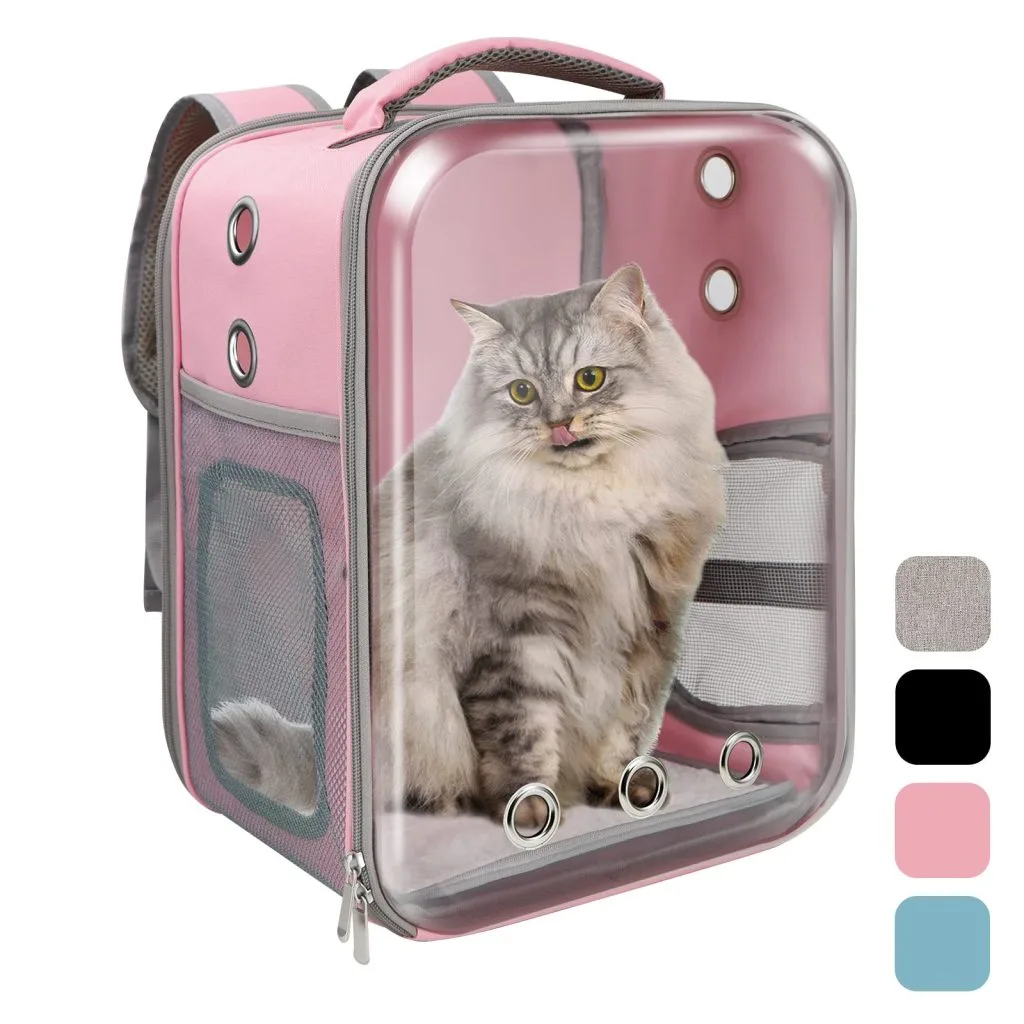
Pet carrier OEM builds to your drawing, while pet carrier ODM adapts an existing dog carrier backpack platform and removes the tooling cost. Both start from the same tech pack.
The Sourcing Map: Eight Stages From Brief to Landed Goods
Sourcing is a sequence with dependencies, and the dependencies are what set the calendar. A first programme takes about 20 weeks from brief to goods received at the destination warehouse. Repeat programmes on an established specification take about 12 weeks, because three of the eight stages collapse into a single confirmation step. The difference is entirely in specification stability, not in supplier speed.
The eight stages are: specification and cost target; supplier shortlist and RFQ; sample evaluation and specification lock; negotiation and contract; order placement and deposit; production with in-process monitoring; inspection and release; and logistics, customs and delivery. Each ends with a decision, and no stage should begin before the previous decision has been made in writing, because the cost of revisiting a decision rises with every stage passed.
Where the schedule is tight, two stages can be run in parallel without much risk. Sampling and material reservation can overlap, provided the reserved material is the stock specification rather than a custom one. Negotiation and the second sample round can also overlap, because the price drivers are already visible after the first round. What cannot be overlapped safely is specification and tooling: cutting a tool before the specification is locked is the single most expensive shortcut in this process.
A buyer should also decide the sourcing model early. Buying from a single production partner concentrates risk but produces better pricing and faster corrective action. Splitting across two suppliers diversifies risk but doubles development cost and usually produces visible variation between the two outputs. For a first programme under 5,000 units, the single-partner model is almost always correct.
Buyers should also decide at this stage who owns the freight relationship. A buyer with an established forwarder books its own space and controls the routing, which is the usual arrangement under FOB and the reason FOB is the default incoterm for experienced importers. A buyer without one can ask the supplier to arrange carriage, but that converts the transaction toward a landed model and the cost of that convenience is typically 18 to 32 percent above FOB. Deciding early avoids a mid-programme change of incoterm, which is awkward to unwind once commercial terms are agreed.
Stage One: Specification and Cost Target
The specification is the deliverable of stage one, and it is the artefact that everything else depends on. It has three parts: a dimensioned description of the product, a material and component schedule, and a performance requirement with test methods. A specification that contains only the first part is a drawing; a specification with all three is a contract input.
The performance requirement is the part most often missing and the part that determines whether a dispute can be resolved. It should state the rated load, the seam strength minimum, the cycle life for zippers and buckles, the dimensional tolerance, the mass tolerance and the substance restrictions by market. Each of those has a number and a method, and each can be tested. Anything expressed as an adjective cannot be enforced later.
- Dimensions: external envelope per size, plus interior usable floor area.
- Materials: per panel, with GSM, denier, coating and colour reference.
- Load rating: rated animal mass and the safety factor applied.
- Mechanical minimums: seam strength, buckle engagement, zipper cycles.
- Market restrictions: substance limits and labelling content per destination.
The cost target belongs in the same document, stated as a target FOB band rather than a single number. A band lets the supplier propose material substitutions that hit it, which is where most of the achievable saving sits. A single number invites the supplier to meet it by quietly reducing specification, which is exactly the outcome a written protected list prevents. State the band, state the protected list, and the resulting proposal will be both cheaper and honest.
Finally, state the volume. Annual volume, opening order quantity and the expected reorder pattern each change the quote, because tooling, mill minimums and line allocation are all amortised against them. Withholding that information in the hope of a better opening price reliably produces the opposite.
Stage Two: Shortlisting and RFQ Distribution
A shortlist of three to five suppliers is enough. More than five produces analysis paralysis without improving the outcome, because the discriminating information arrives at sample stage rather than at quotation stage. Sources for the shortlist are trade directories, industry exhibitions, referrals from non-competing brands, and the supply networks already used by the buyer for adjacent categories.
Send the identical RFQ package to every supplier on the shortlist. Identical inputs are what make the responses comparable; a package that varies by recipient produces quotes that cannot be ranked. The comparison should be made on four axes rather than on price alone: quoted price against the band, question quality in the response, stated lead time, and willingness to disclose capability and audit data. A supplier quoting 6 percent above the lowest bid but returning twelve substantive questions about the specification is frequently the better choice.
| Evaluation axis | What good looks like | Weight |
|---|---|---|
| Price against target band | Inside the band with a stated material schedule | 30 percent |
| Quality of questions | Questions on load path, tolerance and market documents | 25 percent |
| Lead time and its conditions | Stated from approved sample, with the material assumption named | 20 percent |
| Disclosure | Capability data, audit reports, sample room independence | 15 percent |
| Communication | Response inside three working days, written and specific | 10 percent |
Reference checks are worth doing and are easy. Ask each finalist for two current clients in a non-competing market and ask those clients about schedule reliability and how a problem was handled. Most suppliers will provide references; the useful information is not whether the reference is positive, which it always is, but whether the client describes a specific corrective action, which indicates one happened and was resolved.
One further filter speeds up the whole process. Ask each candidate to state in writing which of the eight stages it expects the buyer to lead and which it will lead itself. A partner that expects to lead material sourcing, tooling and inspection while the buyer leads specification, approval and logistics is describing the standard division of labour, and the programme will run smoothly. A partner that expects the buyer to nominate the fabric mill and the hardware supplier is describing a trading arrangement, which can be acceptable but should be understood as such before an order is placed.
Stage Three: Sample Evaluation and Specification Lock
Sampling is where the programme becomes real. Budget three rounds for a new product and two for an adaptation of an existing one. Round one confirms structure and geometry, round two confirms materials and compliance, and round three is a pre-production unit built on the bulk line and retained as the inspection reference. Each round takes 6-10 working days plus shipping, so three rounds plus freight is realistically six to eight weeks of calendar time.
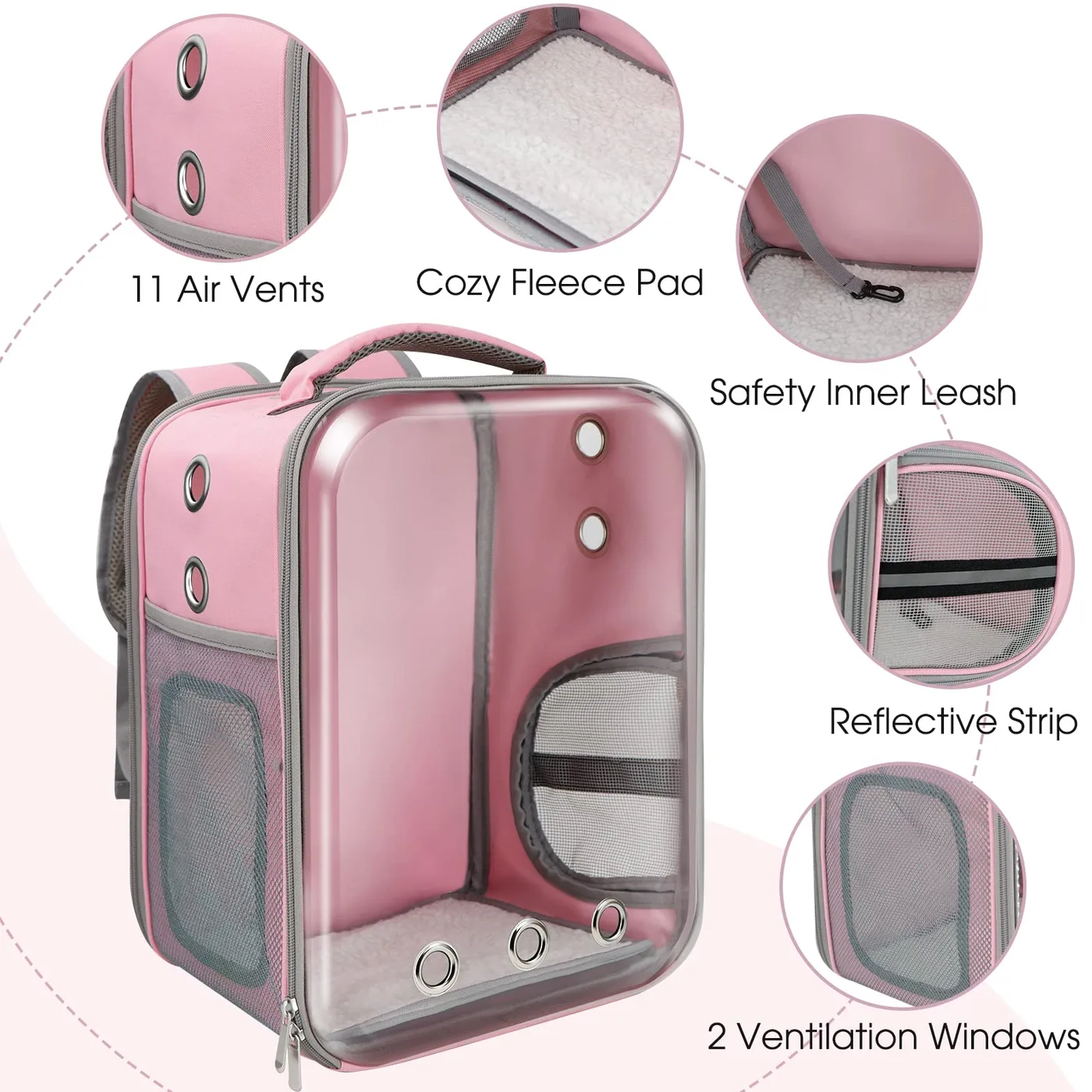
Evaluate the sample against the written specification rather than against an expectation. Measure the envelope, weigh the unit, cycle every zipper and buckle, and check the interior for free edges and for anything a paw could catch. Where the sample deviates, record the deviation in writing with a photograph, because a verbal comment in a video call is not a change request and will not appear in the next round.
- Dimensional: every axis, at four corners and mid-span, recorded against the drawing.
- Mass: against the target, with a component breakdown requested for the first round.
- Function: every closure cycled, every adjuster moved through its range.
- Load: static load at the rated mass, deflection measured at mid-span.
- Interior: free-edge check with a 40 mm probe along all seams.
Specification lock is the decision that ends this stage, and it should be explicit. Locking means the drawing, the material schedule and the performance requirement are frozen, and any subsequent change is handled through the change procedure with its classification and its cost and schedule consequence. A programme without a formal lock keeps drifting, and the drift always resolves itself as either a delay or a compromise on the protected list.
Stage Four: Negotiation, Contract and Order Placement
Negotiation on a sourced programme covers more than unit price. The four items that matter are price, payment terms, inspection standard and change procedure, and the last of those is usually worth more than a 3 percent price concession because it governs what happens when reality intervenes.
Price negotiation should be structured rather than iterative. Ask for a breakdown by cost element, then negotiate the elements that are genuinely variable: packaging, hardware selection, fabric construction and order quantity. Do not negotiate the protected list. A supplier told that seam strength is non-negotiable will find the saving elsewhere; a supplier told only to hit a number will take it from wherever it is easiest, which is exactly where it should not come from.
The contract should carry seven clauses at minimum: product specification with the attached drawing and schedule, quantity and colourway split, price and its validity, payment terms, delivery window and its definition, inspection standard with the defect catalogue, and the change procedure. Warranty and intellectual property clauses are added as needed. A one-page purchase order covering price and quantity only is not adequate for a first programme, because it leaves every failure mode to be negotiated later, at the worst possible moment.
Order placement triggers the deposit, which is 30 percent under T/T 30/70. The deposit releases material procurement, so the effective start of the bulk window is the day the deposit clears rather than the day the order is signed. Buyers working to a fixed launch date should treat the payment transfer as a schedule item and allow three to five banking days for it.
Two negotiation points are frequently overlooked and both are cheap to agree. The first is spare parts: agreeing a 1 to 2 percent spare allocation for wear items such as buckles, sliders and wheels is straightforward at order placement and awkward afterwards, because a later allocation ships as a separate consolidation with its own customs entry. The second is a defect allowance on the packing list, where a small percentage of units is packed separately against future warranty claims; again, this costs nothing to agree now and is expensive to arrange later.
Stage Five: Production Monitoring and Inspection
Production monitoring is a weekly discipline, not a final inspection. The information a buyer should receive during the run is output against plan, material arrival status, in-process checkpoint results and any non-conformance raised. A supplier that reports only at the end is hiding the only window in which a problem can still be fixed cheaply.
The critical path during production is material, and the two items that most often slip are fabric dyeing and hardware plating. Both are upstream of the sewing line and both have their own queues at the mill. A buyer should ask, in week one of the bulk window, whether both are confirmed with dates, because that single question predicts the delivery date better than anything else in the process.
Inspection is the gate at the end. It is run to AQL 2.5 at general inspection level II on standard programmes, with ten cartons drawn at random across the lot and findings recorded per unit by defect class. Critical defects carry zero acceptance and stop the shipment regardless of the arithmetic. The sampling plan itself follows the standard acceptance sampling structure, and the quality system that governs the records around it is maintained to ISO 9001, which is what makes a report from one season usable as evidence in the next. Where a buyer appoints a third-party inspector, the defect catalogue should be agreed before production so both sides classify the same way; classification differences, not counting differences, account for most disagreements.
Release then produces the document set: the inspection report with per-unit findings, the laboratory test summary with lot references, the input lot register, and the packing list. Requesting that set in the contract rather than after the inspection is the difference between receiving it in two days and receiving it in two weeks, and it is the difference between having evidence and having a promise if a dispute arises later.

Stage Six: Logistics, Customs and Landing Cost
Landing cost is where a good FOB price can be undone. The elements are freight, insurance, duty, customs clearance, inland delivery and the cost of capital during transit, and together they typically add 22 to 45 percent to the FOB value depending on the lane, the mode and the duty classification.
| Element | Typical share of FOB | Driver | Control lever |
|---|---|---|---|
| Ocean freight | 6 to 14 percent | Cube, lane, season | Flat packing, consolidation |
| Air freight | 40 to 90 percent | Chargeable weight | Unit mass reduction |
| Duty | 0 to 20 percent | Classification, origin | Outer surface material, correct HS code |
| Insurance | 0.3 to 0.6 percent | Declared value | Annual policy rather than per shipment |
| Clearance and delivery | 2 to 5 percent | Documents, port | Complete document set before sailing |
| Cost of capital | 1 to 3 percent | Transit plus payment timing | Balance against inspection release |
Classification is the item most worth getting right, because it is a specification decision dressed as a paperwork task. Pet carriers are usually classified by their outer surface material, and the difference between a textile-led and a travel-goods-led classification can be several duty points. Confirm the code with the importer before production, and confirm it with the broker rather than assuming the supplier code is correct for the destination market.
Documentation for US-bound goods should be prepared with the applicable consumer product rules in mind, and the relevant entry requirements are published by the responsible agencies; buyers unfamiliar with them should review the guidance available from the US Consumer Product Safety Commission and from the animal health authorities before the first shipment rather than at the port. Missing origin marking and an incomplete document set are the two most common causes of a clearance delay, and both are preventable in week one.
Mode selection closes the logistics decision. Ocean freight is correct for anything above about 1,500 units of cube-efficient product; air freight is justified when the launch date is fixed and the margin carries it, or when the product is light enough that chargeable weight stays below volumetric. A carrier that flat packs well usually ships by sea, and one that does not is a candidate for air at a cost penalty that should be modelled before the order is placed.
Transit buffer deserves explicit planning because it is where launch dates are lost. Ocean transit from Xiamen to a European or North American port runs 22 to 38 days depending on the service and transhipment, and clearance adds three to seven working days on a complete document set. A buyer planning backwards from a launch date should add a two week buffer on top of those figures, because a missed vessel sailing is common and costs the full interval to the next one rather than a few days.
Timeline and Risk Register for a First Programme
A realistic first programme calendar runs about 20 weeks. Weeks one to two cover specification and cost target. Weeks three to five cover shortlisting, RFQ and reference checks. Weeks six to thirteen cover three sample rounds with freight between them. Week fourteen covers negotiation and contract. Weeks fifteen to twenty-one cover the 35-50 day bulk window. Weeks twenty to twenty-four cover inspection, ocean transit and clearance. The overlap between the last two lines is intentional: inspection and booking can run together.
Five risks deserve an entry in a written register. Specification drift, which costs two to three weeks per drift event. Material slot loss, which costs two to five weeks and is prevented by reserving at sample approval. Tooling delay, which costs 15 to 25 days and is prevented by not cutting tools before lock. Inspection failure, which costs a full re-work cycle and is prevented by agreeing the defect catalogue early. And clearance delay, which costs one to three weeks and is prevented by preparing documents in week one of the bulk window.
Each entry should have a trigger and a mitigation, and the register should be reviewed weekly alongside the production status. The point of writing it down is not documentation for its own sake; it is that a risk with a named trigger gets noticed when the trigger appears, while a risk held in someones head gets noticed when the delay arrives.
Two closing practicalities make the difference on most first programmes. First, plan the second order before the first ships, because material continuity and amortisation both improve with it, and the supplier can only plan for what it knows. Second, retain the approved sample under controlled conditions at the buyers end as well as at the production end, because every future dispute resolves against a physical reference, and a reference that has been handled, faded or distorted resolves nothing. Both ends should store the reference in a sealed bag away from light, and both should record the date it was sealed, since a reference stored for more than about 12 months drifts enough in colour to be unreliable.
Why brands source here
- Pet carrier programs run since 2014; founding team in sewn goods since 2004
- SGS-verified production floor of 4,950 m² with 137 workers across 7 lines
- Monthly capacity of 200,000 units, audited to BSCI and ISO 9001
People Also Ask
How long does it take to source pet carriers from China?
About 20 weeks for a first programme from brief to goods received, and about 12 weeks for a repeat on a locked specification. The difference is specification stability, not supplier speed.
What is the minimum order when sourcing from China?
MOQ 500 pieces per colourway is standard, set by dye-lot and hardware plating economics. Below that, stock colourways carry a 9 to 14 percent material premium that usually exceeds the saving.
How many sample rounds should I plan for?
Three for a new product and two for an adaptation. Each round takes 6-10 working days plus freight, so three rounds is realistically six to eight weeks of calendar time.
What does landed cost add to an FOB price?
Typically 22 to 45 percent, covering freight, insurance, duty, clearance, inland delivery and the cost of capital. Air freight alone can add 40 to 90 percent where chargeable weight drives the rate.
Should I use one supplier or two?
One for a first programme under 5,000 units. Splitting diversifies risk but doubles development cost and usually produces visible variation between the two outputs.
What is the biggest sourcing risk?
Specification drift. A specification still moving while material is being ordered produces either a delay or a change order, and usually both. The fix is a formal specification lock.
How is pet carrier duty classification determined?
Usually by the outer surface material, and the difference between a textile-led and a travel-goods-led classification can be several duty points. Confirm the code with the broker before production.
Frequently Asked Questions
What should a sourcing specification contain?
A dimensioned description, a material and component schedule, and a performance requirement with test methods and numbers for load, seam strength, zipper cycles, tolerances and substance restrictions.
How many suppliers should be shortlisted?
Three to five. More produces analysis paralysis without improving the outcome, because the discriminating information arrives at sample stage rather than at quotation stage.
How should quotes be compared?
On four axes: price against the target band at 30 percent weight, quality of the questions asked at 25 percent, lead time and its stated conditions at 20 percent, and capability disclosure at 15 percent, with communication responsiveness at 10 percent.
What is a specification lock?
The decision that freezes the drawing, the material schedule and the performance requirement, after which every change is handled through a change procedure with a stated cost and schedule consequence.
What clauses should the contract carry?
Specification with drawings attached, quantity and colourway split, price and validity, payment terms, delivery window and its definition, inspection standard with the defect catalogue, and the change procedure, plus warranty and intellectual property as needed.
When does the bulk production window actually start?
When the deposit clears, since that releases material procurement. Allow three to five banking days for the transfer and treat it as a schedule item rather than as an administrative formality.
What should be monitored during production?
Output against plan, material arrival status, in-process checkpoint results and any non-conformance. Confirm in week one whether fabric dyeing and hardware plating have confirmed dates, since those two predict the delivery date best.
How is the inspection sample drawn?
At random across the lot rather than from the start or end of the run, with a minimum of ten cartons, and findings recorded per unit by defect class so the report can be used as a corrective action input.
What documents should be requested in the contract?
The inspection report with per-unit findings, the laboratory test summary with lot references, the input lot register and the packing list. Requesting them in the contract rather than after inspection cuts the delivery of the set from weeks to days.
How much does ocean freight add to unit cost?
6 to 14 percent of FOB value depending on cube, lane and season. Flat packing and colourway consolidation are the main levers, since they reduce cube and allow a single shipment.
When is air freight justified?
When the launch date is fixed and the margin carries it, or when the product is light enough that chargeable weight stays below volumetric. Model the penalty before placing the order rather than discovering it at booking.
What causes customs clearance delays most often?
Missing origin marking and an incomplete document set. Both are preventable in the first week of the bulk window if the destination requirements are reviewed before production starts.
Why should the second order be planned before the first ships?
Material continuity and tooling amortisation both improve on a repeat, and the supplier can only plan for what it knows. A single-order relationship is priced as a single order, while a two-season relationship is priced with amortisation.
Talk to QUANZHOU JUNYUAN BAGS about a pet carrier program: MOQ 500 pieces per colourway, samples in 6-10 working days, bulk production in 35-50 days under AQL 2.5 inspection.
Get a free quote Request a sample