Foldable Dog Carrier Backpack: Production Techniques
A foldable dog carrier backpack collapses by removing or folding the base board and letting the shell fold along engineered crease lines, cutting packed volume by 55-70%. The engineering cost is a 25-40% reduction in side-wall stiffness, so the shell, the perimeter band and the fold-line hinges must be specified for it. MOQ 500 per colourway, samples in 6-10 working days, bulk production 35-50 days, AQL 2.5.
Executive Summary. Foldability is a structural decision disguised as a convenience feature. Every method of making a carrier collapse removes something the structure was relying on, and the production techniques described here are about giving that structure back without losing the collapse. The reward is substantial: a foldable programme typically cuts carton cube by 55-70%, which is the single largest freight lever available in this product class.
Commercial terms: MOQ 500 pieces per colourway, samples in 6-10 working days, bulk production 35-50 days after gold seal, inspection to AQL 2.5. The QUANZHOU JUNYUAN BAGS production network runs 7 partner production lines with 149 machines and 137 people across an SGS-verified production base of 4,950 m2, producing 200,000 units per month under BSCI and ISO 9001, on T/T 30/70 and FOB Xiamen. This article covers four collapse mechanisms, the board and crease engineering behind them, the shell and seam treatments required at fold zones, the freight economics, and the cycle testing that predicts whether a foldable product survives a season.
Wholesale pet carrier buyers usually consolidate to fill one container; for dog carrier backpack assortments our production team mixes sizes and colourways inside a single 500-piece minimum.
What Foldability Takes Out of the Structure
A carrier holds its shape because its base board resists bending and its perimeter resists the shell's tendency to fold. Foldability requires that at least one of those two be released, and the consequences should be quantified before the design starts.
Removing the board entirely is the simplest collapse and the largest structural loss: side-wall stiffness falls by 35-50% and the base loses its flat load path altogether. Folding the board at engineered lines retains most of the stiffness in the deployed state and loses roughly 15-25%, because the hinge zones are compliant. A soft-frame approach, where a wire or a tape perimeter replaces the board's stiffening role, retains the most structure and costs the most to engineer.
- Board removed: stiffness -35% to -50%, packed volume -60% to -70%
- Board folded on hinge lines: stiffness -15% to -25%, packed volume -55% to -65%
- Twist-fold format: stiffness -25% to -35%, packed volume -50% to -60%
- Soft-frame perimeter: stiffness -8% to -15%, packed volume -40% to -50%
Write the stiffness loss into the load case and specify the shell and the perimeter band for the reduced figure rather than for the original one. Our production team applies a higher dynamic amplification factor to foldable designs for exactly this reason: a compliant structure transmits more of the animal's movement to the wearer, and a 12 kg dog in a foldable carrier is a harsher load than the same dog in a framed one.
There is a second structural consequence that is easy to overlook: the perimeter. In a framed carrier the perimeter is held by the board and by the shell together; once the board folds, the entire job falls to the perimeter band. That band therefore has to be specified more heavily on a foldable product than on an equivalent fixed one, typically a 32 mm rather than a 25 mm webbing band, and it must be continuous through the fold rather than interrupted at it. An interrupted perimeter band is the single most common cause of a foldable carrier that deploys crooked.
Decide the collapse direction too, because it determines where the fold lines sit and therefore where the reinforcement goes. A carrier that folds along its length places the fold lines across the base, which is where the load is; one that folds along its height places them on the side walls, which carry less. Our production team prefers folding along the height for exactly this reason, and where the geometry will not allow it, the base fold line needs a reinforcement patch on both faces.
Four Collapse Mechanisms and Their Production Cost
The mechanism determines the pattern, the board specification and the assembly sequence, and each of the four in production use has a distinct profile. The removable board is the cheapest and the most common: the board sits in a slip pocket and is lifted out, after which the shell folds flat. The hinged board keeps the board captive, folding along tape hinges at one or two lines. The twist-fold format uses a compliant perimeter that twists into a flat disc, familiar from soft storage products. The soft-frame uses a spring-wire or a tape perimeter and no board at all.
| Mechanism | Stiffness retained | Packed volume | Added operations | Added cost | User effort |
|---|---|---|---|---|---|
| Removable board in slip pocket | Low | -65% | 1 | $0.40-$0.90 | Low |
| Hinged board with tape hinges | Good | -58% | 3 | $1.10-$2.10 | Low |
| Twist-fold perimeter | Moderate | -55% | 2 | $0.95-$1.80 | Medium |
| Soft-frame wire perimeter | High | -45% | 4 | $1.90-$3.20 | Medium |
The removable board has a failure mode worth naming: the board gets lost. In field data across this product class, a removable board is the part most often misplaced by the customer, and a carrier without its board is a soft bag that sags. Where the programme can afford it, the hinged board is the better answer because the board cannot be separated from the product.
The twist-fold format has the opposite issue: it is easy to deploy and difficult to re-fold correctly the first few times, which generates returns for a reason the customer will describe as the product being broken. If a twist-fold is specified, the folding instruction has to be on the product, not only on the insert card.
Assembly sequence differs by mechanism and it is worth planning at the line-layout stage rather than at the start of bulk. A removable board needs one additional operation, board insertion at packing, and it is the simplest. A hinged board needs three: hinge tape application, board insertion into a sewn channel, and edge binding to capture the tape. A soft-frame wire needs four, including a wire-end capture operation that is genuinely difficult to perform consistently and is the main reason our production team recommends it only above 3,000 units per programme, where the line has time to stabilise.
There is also a sampling consequence. A foldable product has a failure mode that only appears after deployment, so the inspection protocol must include a deploy-and-measure step on every inspection sample rather than only a visual check of the packed unit. That adds under two minutes per sample and it is the only way to catch a hinge defect before the goods ship.
Board Engineering: Hinge Lines and Crease Memory
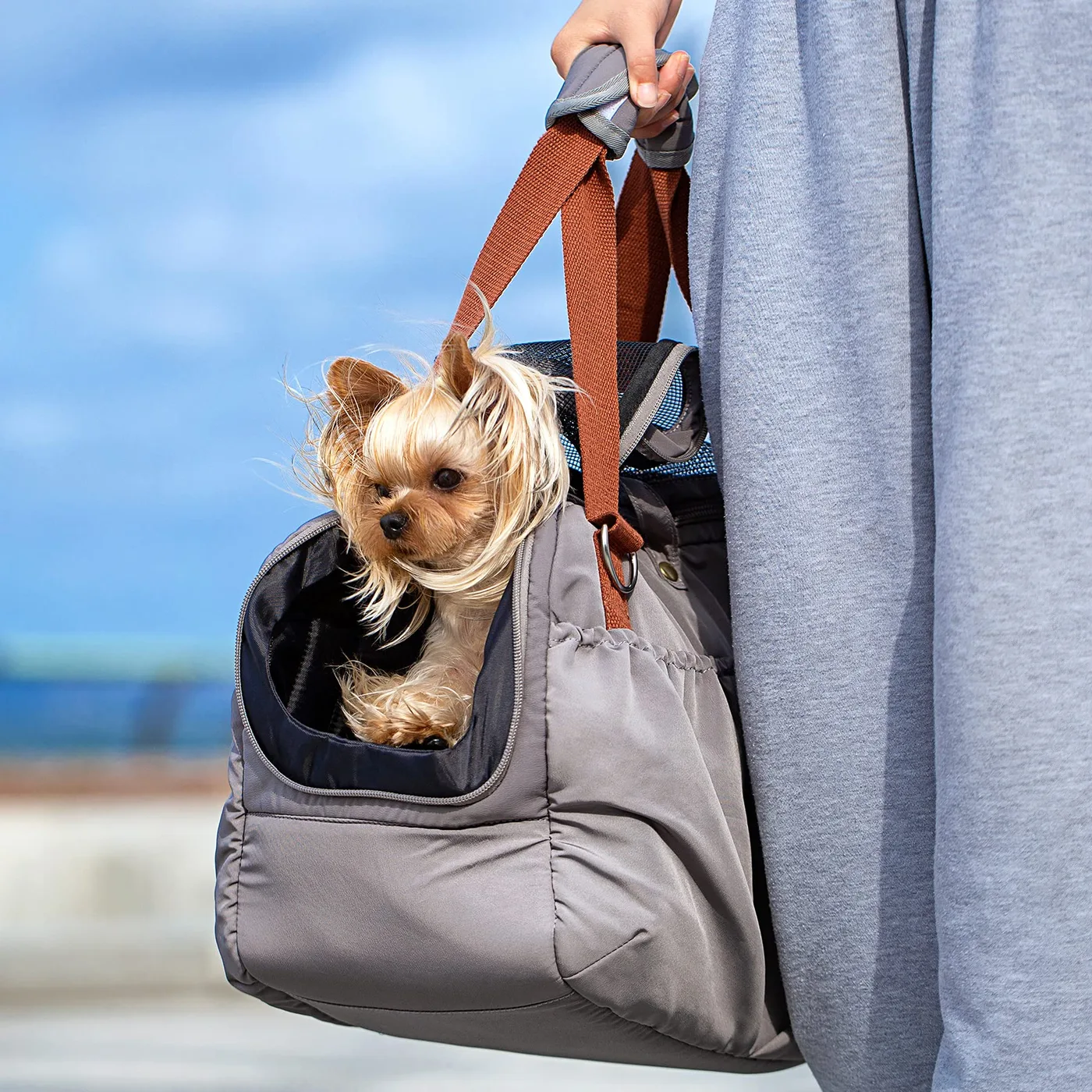
A hinged board is the most technically interesting component in a foldable carrier and the one most likely to fail in the field. The hinge must fold hundreds of times without breaking, it must not create a hard edge the animal can feel through the insert, and it must not reduce the board's deployed stiffness more than necessary.
Two hinge constructions are used. A tape hinge bonds a woven or a film tape across the fold line on both faces, so the board folds by flexing the tape rather than by cracking; it is the reliable choice and it costs three operations. A scored hinge compresses or partially cuts the board along the fold line so it folds at that point; it is cheaper and it weakens the board, and it is the usual origin of a board that cracks in year two.
- Hinge tape: 25-40 mm woven polyester tape, bonded both faces, 500-fold minimum rating
- Score depth: no more than 40% of board thickness if used at all
- Hinge count: one centre line for small units, two lines offset from centre for medium and large
- Deployed flatness: no more than 4 mm deviation across the board with hinges fitted
- Edge treatment: bound or taped, so the hinge tape cannot peel from the board edge
Crease memory is the other board consideration. Polypropylene and PE boards hold a fold if they are stored folded under load for long enough, and a board that arrives from a compressed shipment may not lie flat for 24-72 hours. Our production team specifies boards with a recovery check and states the recovery period on the inspection protocol, so a dimensional check is not performed before the board has recovered.
Board material selection interacts with the hinge choice and it deserves a line in the specification. Honeycomb polypropylene has excellent stiffness and poor hinge behaviour, because the fold crushes the cell structure rather than flexing it; it suits a removable board but not a hinged one. PE board folds well and takes a tape hinge reliably, which is why it is the default for hinged designs. EVA is the most tolerant of folding and the most prone to creep, so it suits a lightweight foldable unit in the 3-8 kg band and nothing above it.
The board channel is the last board detail. In a hinged design the channel must hold the folded board without letting it migrate, because a board that shifts inside its channel in the folded state will not deploy square. Our production team specifies a close-fitted channel with a bound edge and a hook-and-loop or a snap retention tab at the open end, which costs $0.20 and prevents the most common deployment complaint.
Shell Selection for a Folding Product
The shell of a foldable carrier is asked to do something a normal shell is not: fold repeatedly at the same lines without marking. Two failure modes dominate. Crease whitening occurs when a coating is flexed past its elastic limit and the polymer crazes at the fold, leaving a permanent white line; it is the most visible ageing defect in this category. Coating cracking is the same mechanism taken further, and it eventually becomes a water path.
Coating chemistry governs both. Polyurethane coatings flex well at 0.20-0.30 mm and begin to mark above roughly 0.40 mm when folded sharply. PVC coatings mark earlier and at lower thickness, and they stiffen in cold weather, which makes a fold performed in winter more likely to craze. TPU laminates are the best of the three at resisting crease whitening and they are the correct choice for a foldable product sold into a cold or a humid market.
Shell mass matters too, and here the requirement runs against the instinct to specify heavy. A lighter shell at 150-210 gsm folds more sharply and recovers better than a heavy shell at 280-330 gsm, because there is less material to compress at the fold. Our production team recommends a 600D at 210 gsm with a light PU coating for foldable units, with the stiffness the structure needs supplied by the perimeter band rather than by the shell.
Seam and Binding Treatment at Fold Zones
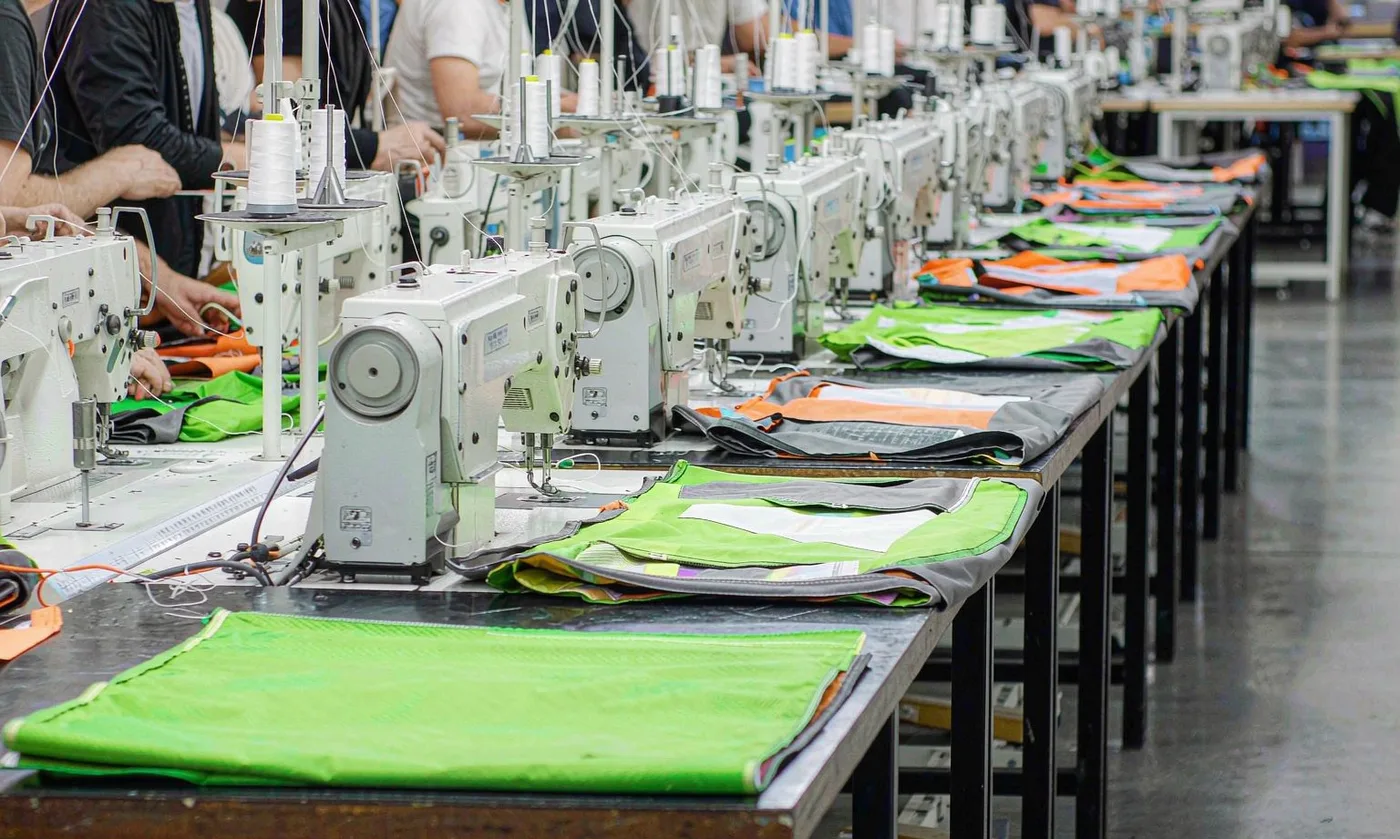
The fold line is a stress concentration, and any seam or binding that crosses it is a candidate for failure. Two rules govern the treatment. No stitch should run across a fold line perpendicular to it without reinforcement, because the stitch line becomes the hinge and the thread is not designed for repeated flexing. And no binding should terminate at a fold line, because the binding end is a stress riser where a crack starts.
Where a seam must cross a fold, the treatment is a reinforcement patch on the inside face: a 40-60 mm wide tape or fabric patch bonded or sewn across the fold, which spreads the flex over a wider area and removes the concentration. Where a binding must pass a fold line, it should be continuous through the fold rather than terminated at it, which is a pattern decision rather than a sewing instruction.
Seam type matters at the periphery. A bound seam flexes better than an overlocked one because the binding distributes the fold; an overlocked edge concentrates it at the stitch line and will show wear first. On a foldable product our production team binds every external seam, which adds one operation per seam and removes the most common ageing defect in the category.
Hardware placement is the last fold-zone consideration, and it is a pattern decision. A buckle, a D-ring or a triglide positioned on a fold line will either obstruct the fold or be damaged by it, and both outcomes are common in first samples. Keep all hardware at least 30 mm clear of any fold line, and where the geometry will not allow that, move the fold rather than the hardware, because the hardware position is usually constrained by the load path.
Finally, plan the fold line into the artwork. A logo or a printed motif that straddles a fold will crack and look defective within weeks even though the product is functioning correctly. Our production team marks fold lines on the artwork template as exclusion zones in the same way it marks weld zones on a waterproof programme, and for the same reason: the artwork file is where the mistake is cheapest to fix.
Compression Packing and the Freight Arithmetic
Freight is the reason foldable programmes exist. A structured medium carrier ships at roughly 0.072 m3 per unit in its carton; the same carrier folded to 55% of that volume ships at 0.040 m3, which at typical container rates is worth $1.10-$2.60 per unit depending on the lane and the season. On a 5,000-unit programme that is $5,500-$13,000, and it usually exceeds the entire added cost of the foldable engineering.
The arithmetic has to be done on the carton, not on the product. Folding the product and then packing it into an oversized carton captures none of the benefit, so the carton has to be designed to the folded envelope with a tight fit. A 10 mm carton oversize on each axis wastes 8-12% of the saving. Our production team designs the master carton to the folded envelope and specifies a compression strap or an internal divider so the folded units cannot re-expand in transit.
There is a limit to compression worth respecting. Compressing foam and board beyond roughly 40% of their free thickness for an extended transit increases the recovery time and, at the extreme, causes permanent set. The practical rule is to compress to the folded envelope and no further, and to hold transit plus storage under 60 days where the packing is tight.
The second freight lever is units per master carton. A folded carrier is small enough that a master pack of 12 or 16 becomes practical where a structured product allowed 8, and the larger master pack reduces carton count, reduces DC handling cost per unit, and improves container utilisation by filling voids a bulky carton leaves. Together with the cube reduction, a foldable programme can cut total freight and handling per unit by 40-55% against a structured equivalent.
Run the calculation per programme rather than in the abstract, because the answer depends on the lane and on whether the product is sold on shipping cube or on weight. Our production team provides the folded envelope and the carton specification at quotation stage precisely so the freight comparison can be made before the design is frozen, rather than discovered when the first container is booked.
Cycle Testing: What Predicts a Season of Use
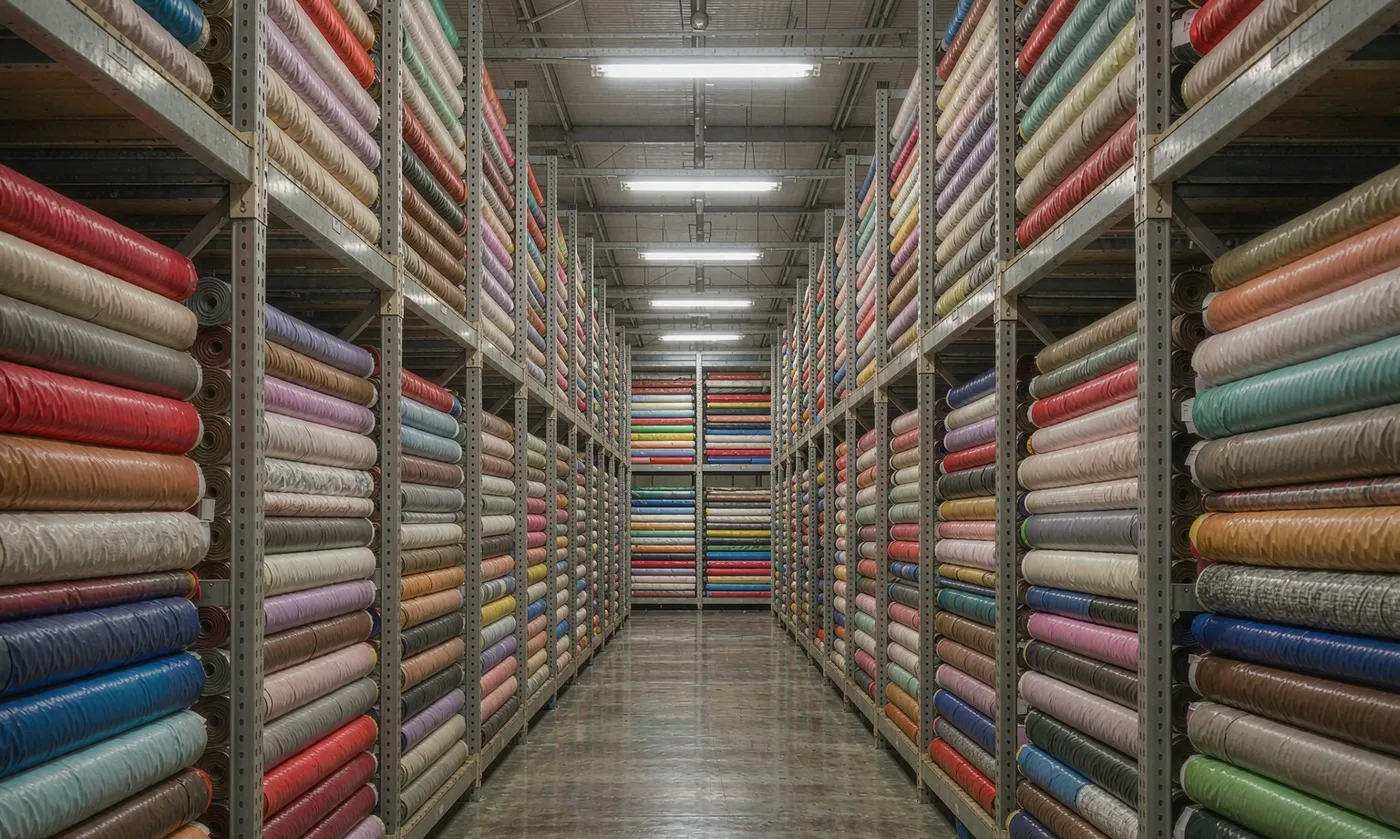
Foldable products fail by accumulating damage rather than by a single event, so the test protocol is a cycling protocol. Four tests cover the field failure modes, and each has a specific acceptance figure.
- Fold cycle test: 500 fold-and-deploy cycles on a production unit. Acceptance: no hinge cracking, no tape delamination, no crease whitening visible at one metre.
- Deployed stiffness check: measure base deflection under rated load at cycle 1 and at cycle 500. Acceptance: deflection growth under 20%.
- Crease recovery: fold, compress at 2 kPa for 72 hours, then deploy and measure. Acceptance: flat within 4 mm after 24 hours.
- Carton compression: stack test the packed master carton at the stated stacking height for 24 hours. Acceptance: no carton failure, product deploys correctly afterwards.
Run the cycle test on units that have already been through a container transit simulation if the programme is shipping compressed, because the combination of compression and folding is what produces permanent set. Test methods for the textile and board components are published by ASTM International, and the quality system governing the records is described by ISO. Where a foldable carrier is marketed for air travel, note that the deployed envelope is the one that matters in the cabin; the folded state is a storage convenience and the live animal provisions maintained by IATA apply to the deployed product.
Our production team adds one practical check: deploy the unit after simulation and load it to rated mass, then walk it for 30 minutes. It catches the failure no bench test finds, which is a carrier that deploys correctly and then slowly collapses under a moving load because a hinge has lost its tension.
Retail Presentation and Instructions
A foldable carrier arrives at retail folded, and that is a merchandising problem as much as a packaging one. A customer who cannot tell whether the product is a bag or a flat panel will not buy it, so the retail package needs a deployed image on the front face and the folded dimensions on the back, both in the same numeric format as the product page.
The folding instruction belongs on the product, not only on an insert card, because the card is discarded and the product is not. A woven label with a three-step fold diagram sewn inside the base pocket costs $0.10 and removes the most avoidable contact in this category, which is the customer who cannot re-fold the product they have just used.
Finally, decide whether the product ships deployed or folded. Shipping folded saves freight and risks crease memory; shipping deployed costs freight and arrives looking correct on shelf. For a product whose first impression matters, our production team recommends shipping deployed in a retail carton sized to the deployed envelope, and letting the customer capture the folding benefit on the return trip. That recommendation is programme-specific and it is a cost decision rather than an engineering one, but it should be made deliberately rather than by default.
Production capability
- SGS-verified production space of 4,950 m², 149 machines, 7 assembly lines
- Pet carrier and pet bag output since 2014 from a 137-person team
- 200,000 units shipped monthly under BSCI and ISO 9001 systems
People Also Ask
How much space does a foldable pet carrier save?
Typically 55-70% of packed volume. A medium unit at 0.072 m3 ships at about 0.040 m3 folded, which is worth roughly $1.10-$2.60 per unit in freight depending on the lane.
What is the best way to make a pet carrier foldable?
A hinged board with tape hinges. It keeps the board captive so it cannot be lost, retains good deployed stiffness, and cuts packed volume by around 58% at an added cost of $1.10-$2.10.
Does folding damage the fabric?
It can. Crease whitening occurs when a coating is flexed past its elastic limit, and PU coatings above roughly 0.40 mm mark most readily. TPU laminates resist it best.
How many times can a foldable carrier be folded?
Specify 500 fold-and-deploy cycles as the acceptance test, with no hinge cracking, no tape delamination and no crease whitening visible at one metre afterwards.
Can a foldable carrier still carry a large dog?
Yes up to about 15 kg. Above that the stiffness loss makes the load uncomfortable for the wearer, and a framed or a wheeled format is the better answer.
Why does my folded carrier not lie flat after shipping?
Crease memory. Boards compressed for a long transit take time to recover, typically 24-72 hours. Allow the recovery period before measuring or judging the product.
Should a foldable carrier ship folded or deployed?
Deployed, if shelf presentation matters: it arrives looking correct and the customer captures the folding benefit later. Folded shipping saves freight but risks crease memory in transit.
Frequently Asked Questions
What is a tape hinge on a base board?
A 25-40 mm woven polyester tape bonded across the fold line on both faces, so the board flexes at the tape rather than cracking. It is more reliable than a scored hinge, which weakens the board.
How thick can a coating be on a foldable shell?
Up to about 0.30 mm for PU without marking. Above 0.40 mm crease whitening becomes likely, and a TPU laminate is the better route when higher water resistance is needed.
Should a foldable carrier use a heavy shell fabric?
No. A 600D at 210 gsm folds more sharply and recovers better than a 900D at 300 gsm. Supply the stiffness the structure needs from the perimeter band instead.
Why should binding not terminate at a fold line?
The end of a binding is a stress riser, and a fold line is a stress concentration. Together they are where a crack starts. Binding should run continuously through the fold.
What is the acceptance for deployed flatness?
No more than 4 mm deviation across the board with the hinges fitted, both at first deploy and after 500 cycles with deflection growth under 20%.
How tight should the master carton be?
Designed to the folded envelope with a tight fit. Ten millimetres of oversize on each axis wastes 8-12% of the freight saving the folding was meant to deliver.
Is there a limit to how much the product can be compressed?
Yes. Beyond roughly 40% compression of foam and board thickness, recovery time rises sharply and permanent set becomes possible. Hold tight packing under 60 days in transit.
Do I need a sternum strap on a foldable carrier?
Yes. The compliant structure transmits more of the animal's movement to the wearer, and a foldable unit above 8 kg benefits noticeably from both a sternum strap and a load spreader.
Can the board be removed instead of hinged?
Yes, and it is the cheapest route at $0.40-$0.90, but the board is the part most often lost by the customer. A carrier used without its board sags.
What causes a foldable carrier to collapse slowly under load?
A hinge that has lost tension, usually a tape that has begun to delaminate at the board edge. Bound or taped board edges prevent it.
How do I present a foldable carrier at retail?
With a deployed image on the front of the pack, folded dimensions on the back, and a woven three-step fold diagram sewn inside the product rather than only on an insert card.
Does folding affect the waterproof specification?
Yes, adversely. A fold line is the most likely place for a coating to craze and become a water path, so a waterproof foldable product should specify a TPU laminate and a welded or taped treatment at the fold.
Talk to QUANZHOU JUNYUAN BAGS about a pet carrier program: MOQ 500 pieces per colourway, samples in 6-10 working days, bulk production in 35-50 days under AQL 2.5 inspection.
Get a free quote Request a sampleKeep reading
- How to Choose the Right Dog Carrier Backpack for Your Brand
- Best Dog Carrier Backpack Materials: A Complete Comparison
- Dog Carrier Backpack Bottom: Reinforcement Options
- Waterproof Dog Carrier Backpack: Manufacturing Standards
- Dog Carrier Backpack Packaging: Custom Options
- Expandable Dog Carrier Backpack: Design Features and Benefits